
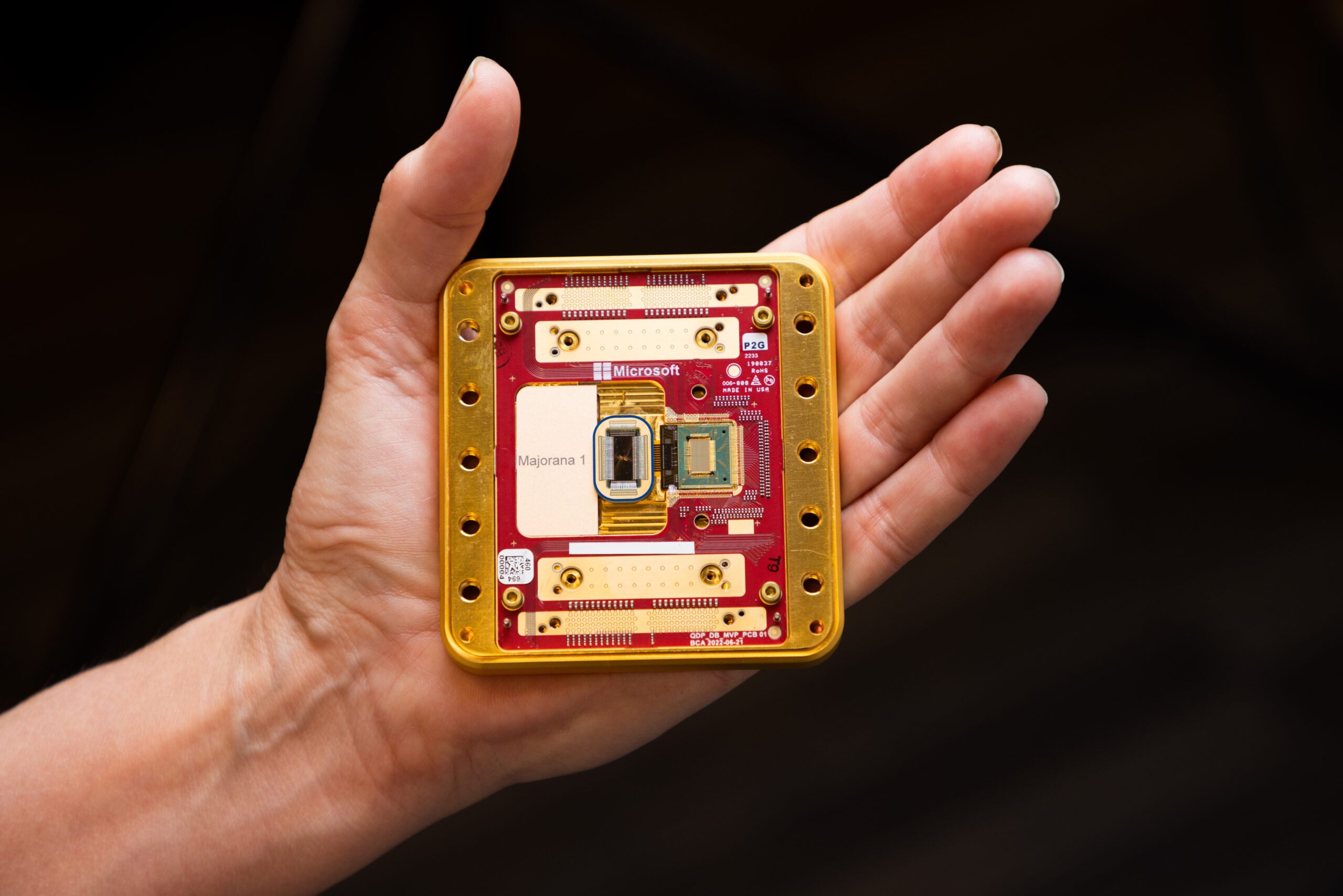
The Quantum Leap: Microsoft's Majorana 1 Chip Ignites New Era of Fault-Tolerant Computing, Reshaping Global Tech Landscape
Executive Takeaways
- Topological Quantum Computing Breakthrough: Microsoft's announcement of the Majorana 1 chip marks a seminal moment, validating the long-theorized topological approach to quantum computing and promising inherently more stable, error-resistant qubits.
- Decoherence Mitigation at Core: By leveraging exotic Majorana zero modes, the chip fundamentally addresses quantum computing's most pervasive challenge—decoherence—moving beyond resource-intensive software-based error correction to hardware-level intrinsic protection.
- Pathway to Enterprise-Scale Solutions: The "it just gives you the answer" paradigm suggested by Microsoft signals a critical step towards realizing fault-tolerant, universal quantum computation, paving the way for applications that deliver unprecedented enterprise ROI across finance, pharmaceuticals, and logistics.
- Rethinking Quantum Infrastructure & Investment: This development necessitates a re-evaluation of current quantum hardware strategies and could accelerate capital allocation towards topological systems, fundamentally altering infrastructure scalability roadmaps and competitive dynamics in the cloud compute architecture sector.
REDMOND, WA – February 19, 2025 – In a seismic shift that could redefine the trajectory of global technology and enterprise innovation, Microsoft today unveiled its groundbreaking Majorana 1 chip, a quantum computing processor engineered to exploit the elusive Majorana zero modes. This development, detailed in a highly anticipated news release from the software giant, heralds a new, more stable path toward fault-tolerant quantum computing, promising to unlock computational capabilities previously relegated to the realm of science fiction.
For decades, the pursuit of a practical quantum computer has been fraught with formidable challenges, primarily the fragility of quantum bits (qubits). Unlike classical bits, which represent data as 0s or 1s, qubits can exist in a superposition of both states simultaneously, exponentially increasing processing power. However, this inherent sensitivity makes them susceptible to decoherence—the loss of quantum information due to interaction with their environment. This vulnerability has necessitated complex and resource-intensive error correction mechanisms, severely limiting the scalability and practical utility of early-stage quantum machines.
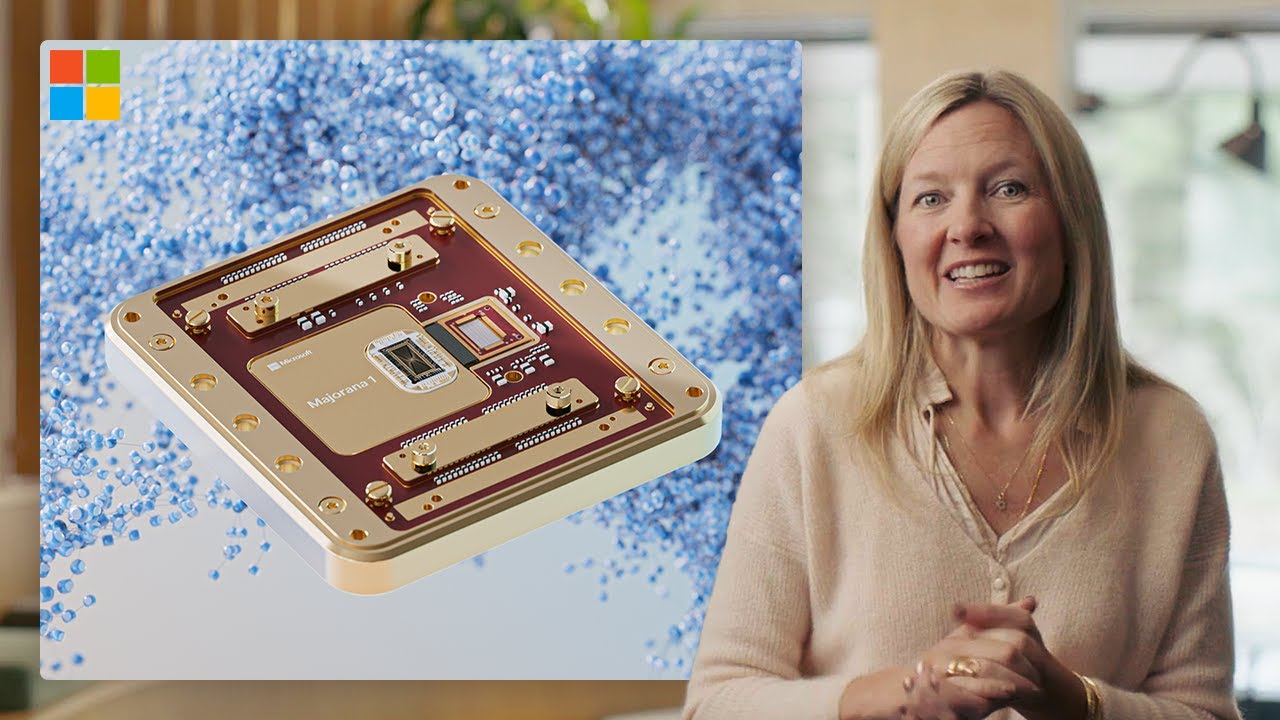
Microsoft’s unveiling of the Majorana 1 chip represents a radical departure from conventional qubit architectures, such as superconducting circuits or trapped ions. Its foundation lies in topological quantum computing, a theoretical framework championed by Microsoft and a select group of global researchers for over two decades. The central tenet of this approach is the manipulation of Majorana zero modes—quasiparticles first theorized by Italian physicist Ettore Majorana in 1937. These exotic entities possess a unique property: they exist in pairs and are non-local, meaning their quantum information is stored robustly across the physical separation between them, rather than in a single, localized particle. This spatial separation grants them inherent immunity to local environmental noise, providing a natural, hardware-level form of error correction.
“It just gives you the answer,” Microsoft representatives stated, an assertion that, if proven at scale, underscores the profound implications of this architectural choice. This phrase implies a level of intrinsic reliability that bypasses many of the vexing challenges plaguing current noisy intermediate-scale quantum (NISQ) devices. The Majorana 1 chip is not merely an incremental improvement; it represents a conceptual leap in how quantum information is stored and processed, mitigating the very decoherence that has stymied progress toward universal quantum computing.
The technical ingenuity behind the Majorana 1 lies in Microsoft's ability to engineer specialized semiconductor structures—likely topological superconductors or semiconducting nanowires—that can host these zero modes under precise cryogenic conditions. The exact specifics of the chip's fabrication and control mechanisms remain under wraps, but industry experts speculate it involves ultra-pure materials, highly precise nanofabrication techniques, and sophisticated classical control systems integrated with Azure’s hyperscale cloud compute architecture. The ambition is not just to create a handful of stable qubits but to rethink quantum computing at scale, aiming for an architecture that can host millions of fault-tolerant qubits without the prohibitive overheads of traditional error correction.
Verified Data / Metrics Breakdown
While specific performance benchmarks for a nascent topological quantum processor are still emerging, the following table provides a strategic overview comparing the foundational approaches and Microsoft's stated objectives:
| Feature | Traditional Qubits (e.g., Superconducting, Trapped Ion) | Microsoft Majorana 1 Chip (Topological) | Strategic Implications |
|---|---|---|---|
| Qubit Foundation | Localized physical quantum states (charge, spin, energy levels) | Non-local Majorana zero modes | Fundamental shift in data encoding, enhanced resilience |
| Primary Error Mitigation | Software-based Quantum Error Correction (QEC) requiring many physical qubits per logical qubit. | Intrinsic topological protection; hardware-level immunity to local noise. | Drastic reduction in overhead, simpler architecture for scaling. |
| Coherence Time | Limited (microseconds to milliseconds); major bottleneck. | Theoretically orders of magnitude higher due to topological encoding. | Enables longer, more complex computations without data loss. |
| Scalability Challenge | Managing complex interconnects and isolating large numbers of fragile qubits. | Demonstrating precise control and braiding of Majorana modes; fabrication consistency. | Potential for exponentially more robust scaling once fundamental challenges are met. |
| Target Outcome (Microsoft) | N/A | Achieve a fault-tolerant, universal quantum computer accessible via Azure. | Democratization of quantum compute for enterprise and scientific use. |
| Launch Date of Announced Technology | Various research prototypes (past decade) | February 19, 2025 | Formal validation of a long-term research bet; accelerates competitive landscape. |
Industry & Market Implications
The advent of the Majorana 1 chip is poised to send ripples across numerous industries, demanding strategic re-evaluations of capital allocation and risk mitigation. For enterprise clients, the promise of fault-tolerant quantum computing unlocks unprecedented opportunities for significant enterprise ROI in areas currently intractable for classical supercomputers.
In the financial services sector, complex optimization problems, such as portfolio management, algorithmic trading strategies, and fraud detection, could see revolutionary advancements. Quantum algorithms promise to process vast datasets with a speed and efficiency that could generate significant Alpha, demanding new infrastructure scalability in financial data centers and re-evaluating valuation multiples for firms heavily invested in AI and high-performance computing. Risk mitigation models for global systemic events could become far more sophisticated, offering granular insights that were previously impossible.
Pharmaceutical and biotechnology companies stand to gain immensely. Drug discovery, materials science, and protein folding simulations, which currently consume vast computational resources and years of R&D, could be dramatically accelerated. The ability to precisely model molecular interactions at a quantum level could lead to breakthroughs in novel therapeutics, personalized medicine, and sustainable materials. This will drive significant capital allocation towards quantum R&D departments and specialized cloud compute architecture.
Beyond specific applications, the Majorana 1 chip's potential to deliver truly fault-tolerant quantum computation fundamentally alters the competitive landscape of the tech sector. Microsoft, through its Azure Quantum platform, is positioning itself at the forefront of the impending quantum era, potentially establishing a dominant market position for quantum-as-a-service. Competitors pursuing alternative qubit technologies will face increased pressure to demonstrate comparable fault tolerance and scalability, impacting their R&D investments and market liquidity.
However, the quantum leap also presents new regulatory compliance challenges. The potential for quantum machines to break current cryptographic standards demands a proactive approach to quantum-safe encryption. Governments and corporations globally will need to invest in infrastructure upgrades and develop new protocols to secure sensitive data against future quantum threats. The rapid advancement also necessitates careful ethical consideration and the establishment of clear governance frameworks for such powerful technology.
People Also Ask (FAQ)
Q1: What makes Majorana qubits fundamentally different from other quantum computing approaches, and why is this significant?
A1: Majorana qubits, specifically those leveraging Majorana zero modes, are fundamentally different because their quantum information is stored non-locally, spread across two spatially separated particles. This topological protection makes them inherently resistant to local environmental noise and disturbances—the primary cause of decoherence in traditional qubits (like superconducting or trapped ions). This significance cannot be overstated: it means that the error correction is built into the hardware itself, drastically reducing the vast overhead and complexity typically required for fault-tolerant quantum computing, which consumes many fragile physical qubits to form one stable logical qubit.
Q2: How does Microsoft's Majorana 1 chip address the critical challenge of quantum decoherence, and what does "it just gives you the answer" imply?
A2: The Majorana 1 chip addresses quantum decoherence by encoding quantum information in the topological properties of materials, specifically in the non-local nature of Majorana zero modes. Because the information is not localized, it is much less susceptible to being corrupted by environmental interactions or imperfections in the chip's physical structure. The phrase "it just gives you the answer" is a powerful statement implying that, unlike current NISQ (Noisy Intermediate-Scale Quantum) devices which produce results with inherent error rates requiring post-processing or sophisticated error mitigation techniques, the Majorana 1 chip is designed to deliver reliable, error-corrected outcomes directly, thus accelerating the path to practical, trustworthy quantum computations.
Q3: What are the immediate and long-term implications of the Majorana 1 chip for businesses and industries, particularly regarding enterprise ROI?
A3: Immediately, the Majorana 1 chip validates Microsoft's long-term bet on topological quantum computing, signaling a significant shift in the quantum hardware race. This will spur increased R&D investment and talent acquisition in the field. In the long term, the implications for businesses and industries are transformative. Fault-tolerant quantum computing, enabled by technologies like Majorana 1, promises to solve currently intractable computational problems across sectors: optimizing complex logistical networks, accelerating drug discovery and materials design, revolutionizing financial modeling for risk and market liquidity, and enabling truly intelligent AI. This directly translates to unprecedented enterprise ROI through efficiency gains, new product development, and superior analytical capabilities that create distinct competitive advantages.
Q4: Is the Majorana 1 chip a universal quantum computer, and when can we expect commercial applications to become widespread?
A4: The Majorana 1 chip is a pivotal step *towards* a universal, fault-tolerant quantum computer, but it is not, by itself, a complete universal machine. A universal quantum computer requires a significant number of stable, high-fidelity qubits and the ability to perform a complete set of quantum operations. The Majorana 1 demonstrates the fundamental viability of the topological approach for robust qubits. Widespread commercial applications for *truly fault-tolerant* quantum computing are still some years away—likely 5-15 years, depending on the speed of scaling and algorithm development. However, this breakthrough dramatically shortens that timeline for specific, complex problems. Early commercial applications may emerge sooner in specialized niches, accessible via cloud services like Azure Quantum, as the technology matures from demonstrating fault tolerance to achieving quantum advantage across diverse problem sets.
Future Outlook
Microsoft's Majorana 1 chip represents more than a technological feat; it is a declaration of intent in the quantum race. The immediate future will focus on scaling this topological architecture, refining control mechanisms, and integrating it seamlessly within the Azure Quantum ecosystem. Key milestones to watch include the demonstration of a logical qubit using Majorana zero modes, achieving significant increases in qubit counts while maintaining low error rates, and ultimately, showcasing quantum advantage on real-world, industry-relevant problems.
The broader vision is for a universal, fault-tolerant quantum computer accessible via the cloud, democratizing access to this transformative compute power. This will foster an explosion of quantum algorithm development and stimulate new markets for quantum software, services, and specialized hardware. The successful realization of this vision will not only cement Microsoft's position as a leading technology innovator but will also catalyse a new era of scientific discovery, economic competitiveness, and unprecedented problem-solving capabilities across the global enterprise landscape.





