Executive Takeaways
- Fiscal Gridlock as a Stabilizer: Split-party control post-midterms historically limits sweeping fiscal expansion, dampening inflationary impulse while muting dramatic adjustments to capital allocation and enterprise tax regimes.
- Treasury Yield Pressures: Lingering structural deficits and statutory debt-ceiling showdowns continue to test market liquidity, forcing institutional portfolio managers to reevaluate risk mitigation and duration risk.
- Sector-Specific Arbitrage: Regulatory compliance shifts—particularly across defense, energy transition, and health-tech—will dictate valuation multiples and corporate governance strategies for the next congressional cycle.
- Monetary Policy Divergence: Fixed-income desks are pricing in complex macro headwinds as fiscal policy friction forces the Federal Reserve to navigate delicate interest-rate corridors independently.
As election season enters its critical final sprint, global capital markets are quietly recalibrating. For institutional investors, family offices, and corporate treasurers, the looming midterm elections represent far more than a shifting political landscape—they are a seismic catalyst for sovereign debt trajectories, corporate governance, and asset pricing models. In boardrooms from Wall Street to the City of London, the primary operational focus is shifting toward rigorous risk mitigation, stress-testing valuation multiples against potential regulatory pivots, and optimizing portfolio liquidity.
Historically, midterm cycles introduce a distinct macro-economic rhythm. The traditional expectation of legislative gridlock—where power is divided between the executive branch and a newly configured legislative majority—acts as a natural brake on aggressive fiscal stimulus. Yet, in an era defined by multi-trillion-dollar national debt, persistent inflation prints, and complex sovereign debt auctions, this gridlock cuts both ways. While it prevents sweeping regulatory overhauls, it also complicates structural deficit reduction, leaving bond vigilantes and primary dealers on high alert.
The Fiscal Impasse: Sovereign Debt Dynamics and the Yield Curve
Test Our Free AI & Tech Utilities Suite
Calculate LLM API token costs, analyze article dwell-time, or simulate tech DCA returns.
At the heart of the post-midterm market equation lies the United States federal deficit. With the national debt eclipsing historic thresholds, the mechanics of Treasury issuance have become a primary driver of market liquidity. When legislative power fragments, the probability of reaching bipartisan consensus on long-term entitlement reform or discretionary spending caps diminishes significantly.
This political friction frequently manifests as brinkmanship around the statutory debt ceiling. For institutional asset allocators managing multi-asset portfolios, these legislative standoffs inject unnecessary volatility into the short-end of the yield curve. Bill yields experience erratic dislocations as risk-averse institutional investors temporarily shun paper maturing near anticipated X-dates—the precise moment the Treasury exhausts its extraordinary measures.
| Legislative Scenario | Estimated Deficit Impact | Primary Market Reaction | Valuation Multiple Effect |
|---|---|---|---|
| Divided Government (Gridlock) | Neutral to Moderately Lower Outlays | Steepening yield curve; reduced issuance shock | Expansion for tech and defensives due to policy stability |
| Unified Sweep (Expansionary) | Significant Increase in Structural Deficits | Upward pressure on long-term Treasury yields | Compression in rate-sensitive sectors; sector-specific tailwinds |
| Unified Sweep (Austerity) | Aggressive Spending Cuts | Flight to safety; compression of short-term rates | Near-term contraction; long-term stability |
Furthermore, structural supply dynamics in the bond market cannot be overstated. Primary dealers are forced to absorb unprecedented volumes of sovereign debt. If midterms result in a configuration incapable of passing meaningful fiscal consolidation bills, market liquidity in secondary Treasury markets may experience intermittent liquidity crunches, driving up term premiums and spilling over into broader corporate borrowing costs.
Equity Markets, Sector Rotation, and Valuation Multiples

For equity analysts, the calculus centers on corporate earnings durability and regulatory compliance costs. Midterm elections frequently reset the committee chairmanships in Congress, directly altering the oversight trajectory for critical sectors such as technology, energy, healthcare, and financial services.
Technology and Enterprise IT
The tech sector remains uniquely vulnerable to regulatory headwinds, regardless of which party holds legislative sway. However, a divided government drastically reduces the likelihood of radical antitrust legislation passing into law or major overhauls to Section 230 liability protections. Consequently, enterprise software, cloud compute architecture providers, and semiconductor giants can model future enterprise ROI and infrastructure scalability with greater predictability, supporting premium valuation multiples.
Energy Transition and Traditional Commodities
Energy markets face acute divergence based on legislative shifts. Incentives tied to the clean energy transition—such as tax credits for renewable energy deployment, battery storage, and electric vehicle infrastructure—are heavily defended by progressive coalitions. A shift in congressional momentum could trigger intense legislative battles over permitting reform and domestic fossil fuel leasing, directly influencing capital expenditure plans and long-term asset valuations for both oil majors and clean-tech startups.
Financial Services and Market Liquidity
Banking institutions and asset managers closely monitor committee assignments following midterms. Regulatory compliance frameworks governed by agencies operating under congressional oversight—such as the SEC, CFTC, and Federal Reserve—often feel the trickle-down effects of legislative posturing. A gridlocked Congress minimizes the risk of sudden, sweeping regulatory overhauls, allowing compliance officers to streamline long-term capital allocation strategies without fearing abrupt statutory pivots.
Monetary Policy vs. Fiscal Dominance
One of the most profound macro-economic debates among chief economists is the interplay between monetary policy and fiscal dominance. When governments run persistent structural deficits regardless of the economic cycle, central banks face an uphill battle in cooling inflationary pressures.
If the midterm elections fail to produce a credible pathway toward fiscal discipline, the Federal Reserve may be forced to maintain a restrictive stance for an extended duration. This dynamic complicates debt servicing costs for both the sovereign and corporate issuers. High-yield and leveraged balance sheets face severe refinancing cliffs, requiring sophisticated debt restructuring and rigorous risk mitigation protocols.
For global currency markets, this dynamic underpins the resilience of the US dollar. Despite escalating national debt, foreign capital continues to seek shelter in US dollar-denominated assets during periods of geopolitical and domestic political uncertainty, reinforcing the greenback's status as the world's primary reserve currency even as domestic fiscal metrics deteriorate.
Frequently Asked Questions (People Also Ask)
How do midterm elections historically impact stock market performance?
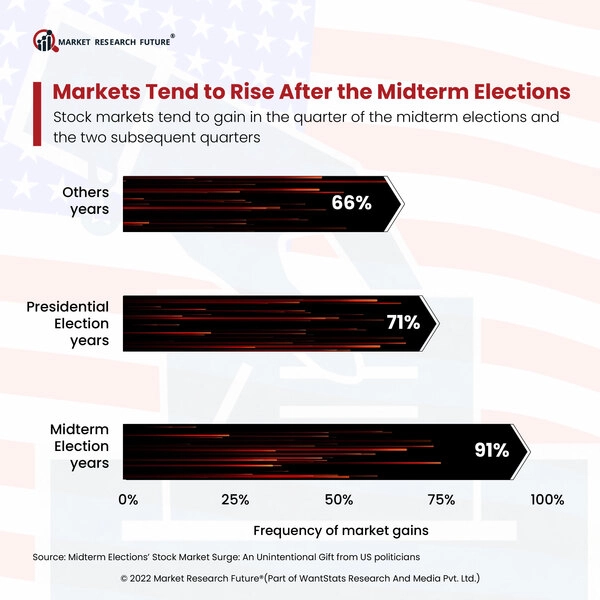
Answer: Historically, the stock market enters a period of heightened volatility leading up to midterm elections due to policy uncertainty. However, once the election concludes and the political composition of Washington is locked in, equities have demonstrated a strong tendency to rally. According to historical data spanning several decades, the 12-month period following a midterm election has yielded some of the most consistent positive returns of the entire four-year presidential cycle, largely because the uncertainty surrounding regulatory changes is lifted.
What happens to the federal debt ceiling during a divided government?
Answer: A divided government—where one party controls the White House and the opposing party holds one or both chambers of Congress—frequently turns the debt ceiling into a high-stakes leverage point for fiscal negotiations. While markets often experience bouts of volatility and technical dislocations in short-term Treasury bills as the deadline approaches, a bipartisan compromise is historically reached before any technical default occurs. Nonetheless, these standoffs can prompt rating agencies to scrutinize sovereign creditworthiness.
Which sectors benefit most from legislative gridlock after midterms?
Answer: Legislative gridlock generally benefits sectors that thrive on regulatory stability and predictability, such as large-cap technology, defense contractors, and established financial institutions. Because gridlock significantly reduces the probability of sweeping tax hikes, aggressive antitrust enforcement, or radical industry restructuring, corporate management teams can execute long-term capital allocation and share buyback programs with greater confidence.
How do foreign investors view US midterm elections and sovereign debt?
Answer: International institutional investors monitor US midterms primarily through the lens of governance stability and policy continuity. While the rising trajectory of US sovereign debt is a persistent structural concern, foreign capital often views the checks and balances of a divided US government as a stabilizing mechanism that prevents extreme fiscal or monetary policy swings, preserving the relative attractiveness of US capital markets.
Future Outlook: Milestones for Institutional Allocators
As the political dust settles and the new legislative session takes shape, institutional portfolio managers must maintain a disciplined macro framework. The upcoming quarters will be defined by several critical milestones:
- The Statutory Debt Limit Deadlines: Monitoring Treasury cash balances and extraordinary measure exhaustion dates to avoid short-term liquidity squeezes in the repo market.
- Federal Reserve Rate Trajectory: Assessing how ongoing fiscal deficits impact labor market resilience and sticky inflation prints, dictating the timing of eventual rate cuts.
- Committee Chair Confirmations: Tracking legislative leadership appointments in key congressional committees to gauge regulatory enforcement priorities for antitrust, energy, and financial tech sectors.
- Corporate Earnings Revisions: Evaluating how margin pressures, refinancing costs, and changing tax environments impact forward valuation multiples across cyclical and defensive equities.
Ultimately, while the political theater surrounding midterm elections generates significant media noise, the sophisticated investor looks past the headlines. By focusing on structural liquidity, rigorous debt management, and disciplined asset allocation, market participants can successfully navigate the fiscal realities and valuation shifts defining the modern economic landscape.