Executive Takeaways
- Unprecedented Cadence: SpaceX capped off October by executing its historic 700th Falcon 9 launch, cementing the vehicle's status as the most prolific orbital-class rocket in human history.
- Infrastructure Scalability & Enterprise ROI: Reusability metrics have fundamentally altered capital allocation strategies across the aerospace sector, compressing cost-per-kilogram metrics and accelerating revenue realization for commercial payloads.
- Valuation Multiples & Market Disruption: Legacy aerospace defense contractors face severe structural pressures as SpaceX captures an expanding share of institutional, defense, and commercial launch markets.
- 미래 Future Outlook: Attention now shifts from low-Earth orbit dominance to operationalizing Starship, setting the stage for the next phase of enterprise infrastructure deployment.
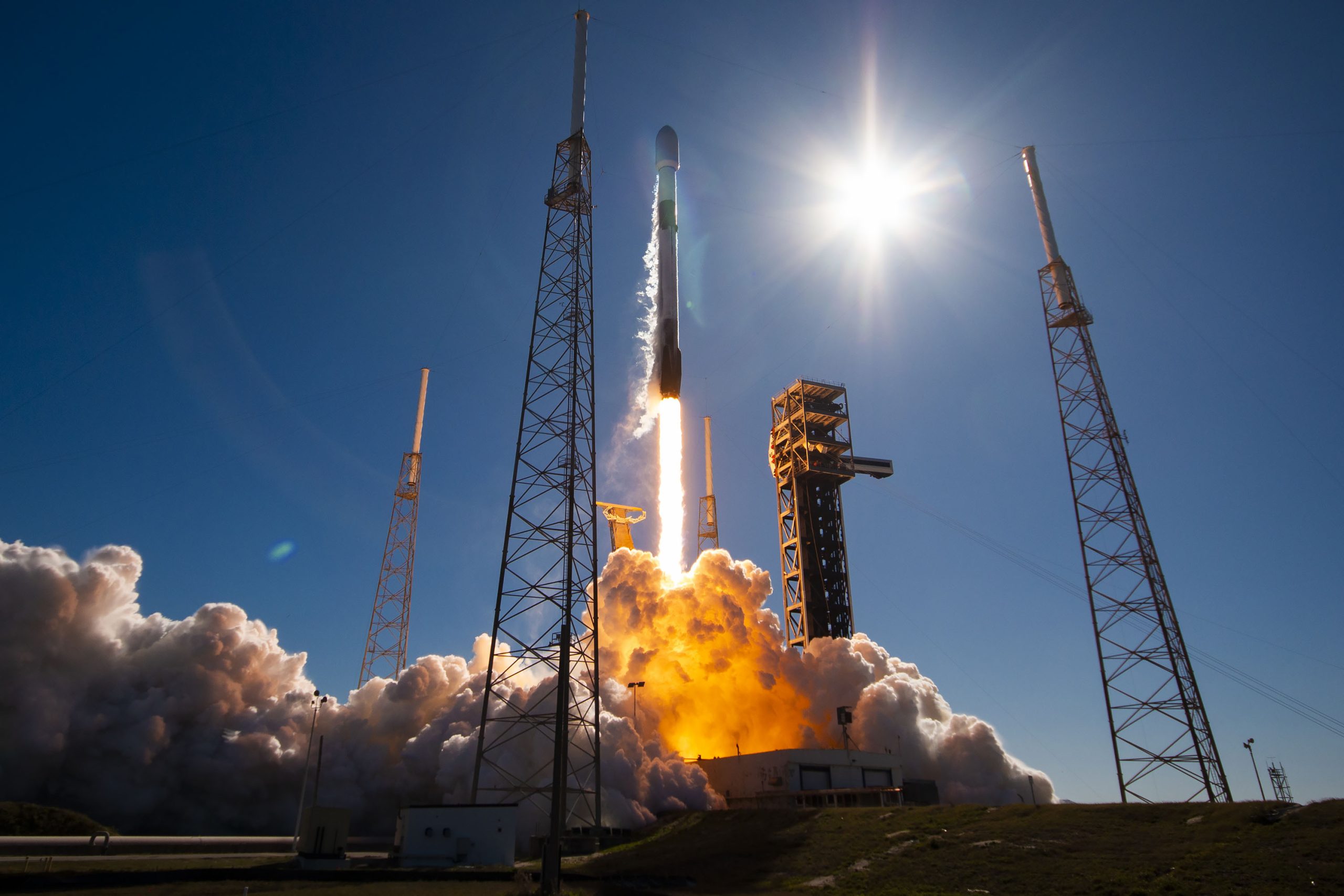
WASHINGTON & HAWTHORNE — In the high-stakes theater of commercial spaceflight, milestones are frequently announced with hyperbole, but few carry the empirical weight of SpaceX’s latest operational triumph. As October drew to a close, the aerospace behemotin spearheaded by Elon Musk successfully executed its 700th Falcon 9 mission, a watershed achievement that underscores both the technical maturity of the reusable launch architecture and its profound disruption of global telecommunications, defense logistics, and capital markets.
For institutional investors, aerospace engineers, and geopolitical strategists, this 700th flight is not merely a numerical marker; it is a masterclass in infrastructure scalability. What began as a high-risk gamble on vertical landing and propulsive recovery has metastasized into an industrial assembly line of orbital delivery, systematically dismantling legacy pricing models and redefining risk mitigation strategies for satellite operators worldwide.
The Catalytic Evolution: From Experimental Prototyping to Industrial Rhythm
Test Our Free AI & Tech Utilities Suite
Calculate LLM API token costs, analyze article dwell-time, or simulate tech DCA returns.
To understand the magnitude of the 700th Falcon 9 launch, one must contextualize the historical velocity of aerospace development. For decades, orbital launch vehicles were treated as bespoke, exquisitely expensive artisan products—flown once and discarded into the briny depths of the Atlantic or Pacific. This traditional paradigm demanded immense capital allocation, protracted regulatory compliance cycles, and exorbitant insurance premiums.
When the Falcon 9 first achieved orbit in 2010, incumbent aerospace giants viewed reusable first-stages as a quixotic engineering distraction. Yet, through relentless iterative design, rapid prototyping, and empirical data gathering, SpaceX optimized its cloud compute architecture and telemetry systems to refine landing algorithms. By achieving routine first-stage booster recovery and fairing retrieval, the company engineered a structural moat that rivals cannot easily replicate.
The cadence acceleration has been exponential. While the first 100 launches took nearly a decade to accumulate as the system matured, subsequent increments have rolled off the pad with the predictability of commercial aviation. This rhythm has transformed launch services from a bottlenecked, supply-constrained market into a high-liquidity commodity market, fundamentally shifting the balance of power in the global space economy.
Financial Mechanics: Capital Allocation, Unit Economics, and Valuation Multiples
In the boardrooms of Wall Street and private equity firms, the 700th launch serves as tangible proof of superior enterprise ROI. By amortizing development costs across hundreds of flights and repeatedly flying flight-proven boosters—some reaching upwards of 20 successful re-flights—SpaceX has driven its marginal cost per launch down to levels that defy traditional economic modeling.
This operational efficiency directly impacts the valuation multiples of downstream enterprises. Companies deploying constellations for Earth observation, broadband connectivity, and national security intelligence can now budget for predictable, rapid deployment schedules. The reduction in payload delivery costs mitigates the financial exposure of satellite failures, encouraging venture capital and sovereign wealth funds to channel greater liquidity into space-tech asset classes.
Conversely, legacy prime contractors are locked in a painful strategic pivot. Incumbents burdened by cost-plus contracting models, legacy supply chains, and rigid bureaucratic structures struggle to compete against a vertically integrated entity capable of launching payloads at a fraction of historical costs. The widening margin differential forces defense and civil space agencies to aggressively re-evaluate procurement frameworks to avoid paying legacy premiums for commoditized services.
Verified Data & Metrics Breakdown
A rigorous examination of the Falcon 9 program reveals the staggering scale of its operational footprint. The following metrics illustrate the trajectory of the vehicle from its maiden voyage to its 700th milestone:
| Metric Category | Early Phase (2010–2016) | Scaling Phase (2017–2021) | Hyper-Cadence Era (2022–Present) |
|---|---|---|---|
| Cumulative Launch Count | ~30 Launches | ~100 - 130 Launches | Approaching & Surpassing 700 |
| Booster Reuse Record | Expended / Experimental Landings | 1 to 5 Flights per Booster | Up to 20+ Flights per Single Booster |
| Primary Payload Focus | Commercial Comms & NASA Resupply | Mixed Commercial & Early Starlink | High-Density Starlink Constellation & National Security |
| Average Turnaround Time | Months between flights | Weeks between flights | Days between re-flights across pads |
Industry & Market Implications: Winners, Losers, and Macroeconomic Shockwaves
The ripples of the 700th Falcon 9 flight extend far beyond Cape Canaveral and Vandenberg Space Force Base. The macroeconomic impact is restructuring the global aerospace value chain:
- The Winners: Commercial satellite manufacturers, agile NewSpace startups, telecommunications providers requiring low-latency global backhaul, and defense agencies prioritizing rapid resilience in contested orbital domains. These stakeholders benefit directly from compressed lead times and slashed unit costs.
- The Losers: International launch providers reliant on state subsidies or high-margin sovereign contracts that cannot compete on price-per-kilogram. European and legacy domestic launch initiatives face acute existential pressures as their projected vehicles enter a market already saturated by Falcon 9's proven reliability.
- Geopolitical Realignment: Allied nations are increasingly forced to choose between domestic protectionism and pragmatic reliance on American commercial launch infrastructure to maintain sovereign space capabilities. This dynamic reshapes international defense partnerships and export control discussions.
Frequently Asked Questions (People Also Ask)
What makes the Falcon 9 rocket uniquely reliable compared to competitors?
The Falcon 9’s reliability stems from its multi-engine Merlin architecture—which allows for engine-out capability during ascent—coupled with thousands of flight hours of empirical data, rigorous hardware qualification standards, and continuous software iteration driven by high flight frequency.
How many times can a single Falcon 9 first-stage booster be reused?
SpaceX has successfully flown individual first-stage boosters upwards of 20 times. Engineering inspections, refurbishment protocols, and material degradation analyses continue to push these boundaries, setting new industry benchmarks for hardware longevity.
What impact does the 700th launch have on the broader satellite communications industry?
Reaching 700 launches cements routine, low-cost access to space, enabling operators to deploy massive constellations (like Starlink and competing broadband networks) with minimal financial risk. This liquidity and predictability accelerate the rollout of global enterprise cloud connectivity and remote sensing networks.
Will the Falcon 9 eventually be retired in favor of Starship?
While Starship represents SpaceX’s long-term vehicle for interplanetary transport and heavy-lift missions, the Falcon 9 remains the operational workhorse for medium-to-heavy commercial and national security payloads. Both systems will operate in tandem until Starship achieves total parity across all mission profiles and regulatory clearances.
Future Outlook: Navigating the Horizon Beyond 700
As SpaceX integrates the data and operational learnings from this landmark 700th mission, executive focus is visibly bifurcating. On one hand, the engineering teams continue to optimize the Falcon 9 production and recovery cycle, squeezing every last drop of efficiency out of the mature platform. On the other hand, monumental capital and intellectual resources are pouring into the operationalization of Starship.
For the broader financial markets, the trajectory is clear: space is no longer an experimental domain reserved for sovereign superpowers with bottomless treasuries. It is an industrial utility layer underpinning global finance, communications, and national security. As the Falcon 9 continues to rack up missions on its path toward subsequent milestones, it serves as a relentless reminder that market dominance belongs to those who master iterative engineering, capital efficiency, and unyielding execution velocity.