Executive Takeaways
- Strategic Pivot: Motorola, owned by Lenovo, is abandoning its strictly mid-range comfort zone to capture high-margin enterprise and luxury consumer segments with the new $1,600 'Signature' flagship device.
- Capital Allocation & Valuation: The move represents a critical test of brand equity and valuation multiples, forcing the manufacturer to compete directly with Apple and Samsung in tiers where customer acquisition costs are notoriously high.
- Enterprise ROI & Security: Designed with advanced hardware-level encryption and zero-trust framework compatibility, the Signature phone aims to secure procurement contracts among Fortune 500 executives seeking robust risk mitigation.
- Market Disruption: While consumer sentiment reacts to aggressive pricing, channel distributors and carriers are closely monitoring retail sell-through rates to assess inventory liquidity and ecosystem stickiness.
For more than a decade, the global smartphone ecosystem has operated under a strict duopoly at the apex of the pricing pyramid. Apple and Samsung have comfortably commanded the four-figure threshold, capturing the lion's share of industry profits while lower-tier competitors fought fiercely for volume in the commoditized mid-market. Today, that structural status quo faces an aggressive challenge. Motorola—a brand whose historical legacy is matched only by its prolonged post-millennium corporate restructuring—is breaking out of the value segment. With the debut of its $1,600 “Signature” phone, the company is staging a calculated assault on the ultra-premium tier.
Behind this launch lies a complex calculus involving corporate parent Lenovo’s global capital allocation strategy, shifting consumer upgrade cycles, and the relentless pursuit of margin expansion. As enterprise customers demand more sophisticated mobile infrastructure and high-net-worth consumers exhibit growing fatigue with incremental yearly spec bumps, Motorola is betting that its resurrected brand equity can support a luxury price tag. Yet, in an environment shaped by macroeconomic headwinds, stringent regulatory compliance, and entrenched brand loyalty, the road to ultra-premium profitability is fraught with strategic peril.
The Catalytic Shift: Moving Beyond the Mid-Tier Trap
Test Our Free AI & Tech Utilities Suite
Calculate LLM API token costs, analyze article dwell-time, or simulate tech DCA returns.
To understand the significance of the $1,600 Signature device, one must examine Motorola’s recent trajectory. Over the past several years, the Chicago-headquartered manufacturer engineered a remarkable volume recovery, largely by dominating the sub-$500 category in North America and Latin America. Through clever supply chain management and deep carrier partnerships, Motorola secured the number-three spot in the United States by shipment volume. However, volume does not automatically equate to sustainable enterprise ROI or superior valuation multiples.
In the hardware sector, gross margins in the budget and mid-tier segments remain perpetually compressed due to fierce competition, component cost inflation, and heavy promotional allowances demanded by telecommunications carriers. Recognizing that long-term enterprise scalability required a fundamental pivot, Lenovo leadership initiated a top-to-bottom product overhaul. The objective was clear: engineer a halo device capable of elevating the entire brand architecture, driving average selling prices (ASPs) upward, and capturing high-margin corporate procurement budgets.
The $1,600 price point is not chosen at random. It places the Signature device squarely in competition with Apple’s iPhone Pro Max lineup and Samsung’s top-tier Galaxy Ultra models. To justify this valuation, Motorola’s engineering teams focused heavily on proprietary innovations, spanning advanced cloud compute architecture integration, bespoke materials science, and enterprise-grade security protocols tailored for risk-averse corporate buyers.
Engineering the Ultra-Premium Offering: Hardware, Software, and Security
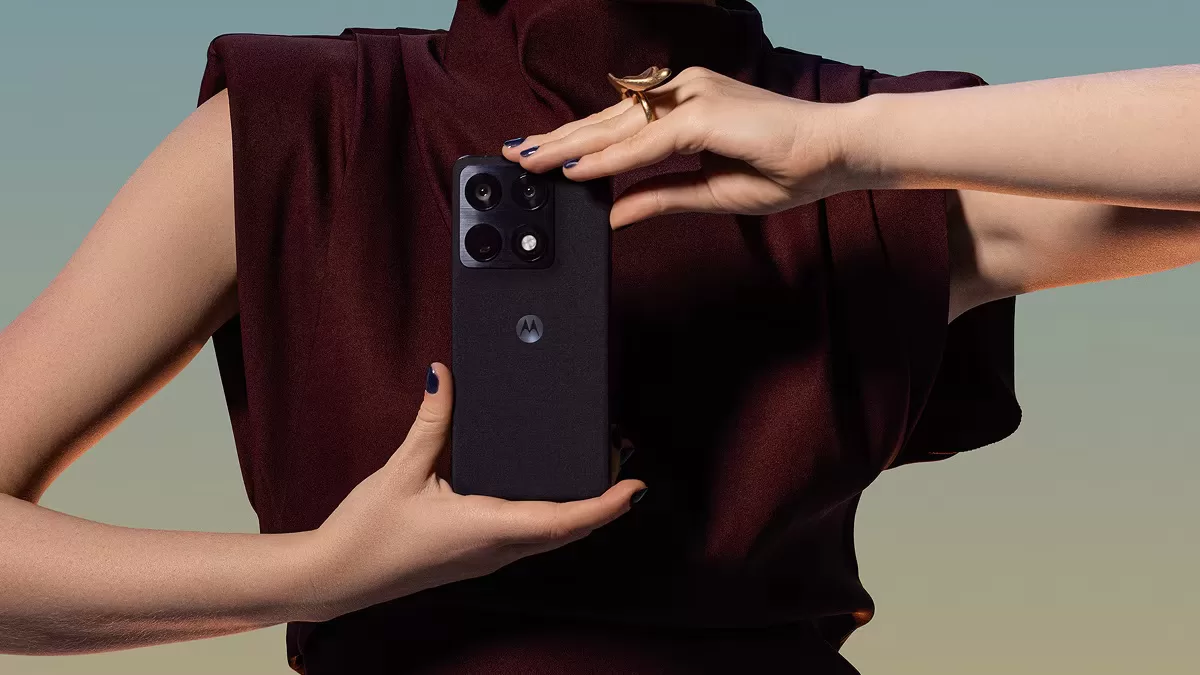
At an MSRP of $1,600, enterprise procurement officers and discerning consumers alike demand uncompromising specifications. The Signature phone departs from Motorola’s traditional utilitarian design language, utilizing aerospace-grade titanium chassis elements, sustainable ceramic back panels, and bespoke glass formulations designed to withstand rigorous drop testing without sacrificing tactile elegance.
Beneath the exterior aesthetic lies a powerhouse of processing capability. Equipped with the latest silicon architecture optimized for on-device generative artificial intelligence, the phone handles complex local machine learning workloads without offloading sensitive data to external servers. This architecture directly addresses growing enterprise compliance demands regarding data privacy and GDPR/CCPA alignment.
Furthermore, Motorola has integrated its proprietary ThinkShield security suite—leveraging Lenovo’s enterprise PC heritage—into the mobile OS layer. For Chief Information Security Officers (CISOs), this hardware-backed root of trust represents a vital risk-mitigation tool. By offering seamless integration with existing enterprise mobility management (EMM) platforms and zero-trust network architectures, Motorola is positioning the Signature device not merely as a luxury consumer gadget, but as an indispensable enterprise productivity node.
Verified Data: Motorola Signature vs. Market Benchmarks
Evaluating the viability of Motorola's new flagship requires a direct comparative analysis against entrenched market leaders across key technical, financial, and distribution metrics.
| Metric / Feature | Motorola Signature | Apple iPhone 16 Pro Max | Samsung Galaxy S24 Ultra |
|---|---|---|---|
| Base MSRP | $1,600 | $1,199 | $1,299 |
| Chassis Material | Aerospace Titanium & Ceramic | Grade 5 Titanium | Titanium Frame & Armor Glass |
| Enterprise Security Suite | ThinkShield Mobile + Hardware Root of Trust | Secure Enclave / iOS Enterprise APIs | Samsung Knox Vault |
| Primary Target Audience | Enterprise Executives & Luxury Consumers | General Consumer / Prosumer Ecosystem | Power Users / Enterprise / Creators |
| Ecosystem Integration | Lenovo PC / Cross-Platform Synergy | Closed Apple Ecosystem (Mac/iPad) | Windows / Samsung SmartThings |
Industry & Market Implications: Who Wins, Who Loses?
The introduction of a $1,600 Motorola device triggers immediate ripples across the global tech economy. Channel distributors and tier-one carriers stand to benefit from higher commission structures associated with ultra-premium hardware sales. Furthermore, enterprise procurement departments gain a viable third alternative to iOS and standard Android deployments, fostering healthier vendor negotiations and reducing single-source dependency risks.
Conversely, the incumbent giants face a minor, albeit symbolic, erosion of their pricing exclusivity. While Apple and Samsung retain overwhelming market share dominance, Motorola’s credible push into the luxury segment signals that the ultra-premium tier is no longer immune to disruption. For regional brands struggling to maintain relevance in lower tiers, Motorola’s upstream migration leaves additional room to capture mid-market volume, though at razor-thin margins.
From a financial perspective, Lenovo’s capital allocation strategy will be scrutinized closely by institutional investors. Successfully establishing an ultra-premium brand requires substantial marketing expenditures and customer acquisition costs. If sell-through rates meet internal projections, the resulting margin expansion could re-rate Lenovo’s valuation multiples upward. However, any prolonged inventory stagnation could necessitate aggressive retail discounting, undercutting the prestige positioning essential for a $1,600 device.
Frequently Asked Questions (People Also Ask)
Why is Motorola pricing the Signature phone at $1,600?
The $1,600 price point reflects Motorola's strategic transition from a volume-driven mid-market player to an ultra-premium manufacturer. By targeting this tier, Motorola aims to capture higher gross margins, compete directly with Apple and Samsung flagships, and fund advanced research and development in materials science, on-device AI, and enterprise-grade security.
How does the Motorola Signature phone appeal to enterprise buyers?
Enterprise appeal is anchored by the integration of ThinkShield mobile security, hardware-level encryption, and seamless compatibility with zero-trust network frameworks. Leveraging Lenovo’s enterprise IT heritage, the device offers corporate CISOs advanced risk mitigation and compliance features that standard consumer phones often lack.
Can Motorola successfully compete with Apple and Samsung in the luxury segment?
While Apple and Samsung command immense brand loyalty and airtight ecosystems, Motorola possesses strong brand recognition and established carrier relationships. Success will depend heavily on sustained marketing investment, retail execution, and convincing high-net-worth consumers and enterprise buyers that the hardware and software experience justifies the four-figure investment.
What impact will this launch have on Motorola's overall financial valuation?
If the Signature phone successfully drives average selling prices (ASPs) higher and secures profitable enterprise contracts, it could significantly enhance Lenovo's mobile division profitability and improve the parent company's valuation multiples. Conversely, high customer acquisition costs present a calculated risk if retail sell-through falters.
Future Outlook: Milestones and Market Watchpoints
As the Motorola Signature phone rolls out across global markets, industry analysts and financial stakeholders will be monitoring several critical key performance indicators (KPIs) over the next four quarters:
- Initial Sell-Through Velocity: Tracking retail absorption rates during the primary holiday and enterprise procurement cycles will reveal whether luxury consumers are willing to embrace Motorola at a four-figure price point.
- Enterprise Procurement Adoption: Measuring the volume of bulk corporate orders secured through Lenovo’s enterprise sales channels, particularly within regulated sectors like finance, healthcare, and government contracting.
- Ecosystem Expansion: Evaluating how effectively Motorola integrates the Signature device with Lenovo’s broader hardware ecosystem, including laptops, tablets, and cloud-connected productivity suites.
- Margin Impact in Financial Disclosures: Analyzing Lenovo’s upcoming quarterly earnings reports for improvements in mobile division gross margins and overall Average Selling Price (ASP) metrics.
Motorola’s leap into the ultra-premium tier represents one of the most daring corporate gambles in recent mobile history. Whether the Signature phone becomes a foundational pillar of long-term profitability or a cautionary tale of pricing overreach will be determined by execution, brand resonance, and the unforgiving dynamics of the global tech market.