Executive Takeaways
- Unprecedented Valuation Compression: The Nasdaq Composite faces mounting downward pressure, threatening a staggering $2 trillion market capitalization evaporation as institutional investors re-evaluate enterprise AI monetization timelines.
- Capital Expenditure Anxiety: Hyperscale cloud providers and enterprise software giants are facing intense scrutiny over massive, front-loaded capital allocations toward GPU clusters and data center infrastructure without immediate, quantifiable enterprise ROI.
- Liquidity Shift: Portfolio managers are aggressively rebalancing institutional portfolios, rotating out of high-multiple tech equities and into defensive, yield-generating asset classes.
- Systemic Risk Mitigation: Chief Investment Officers are deploying stringent risk mitigation frameworks, focusing heavily on infrastructure scalability, cash flow durability, and proven operating margins.
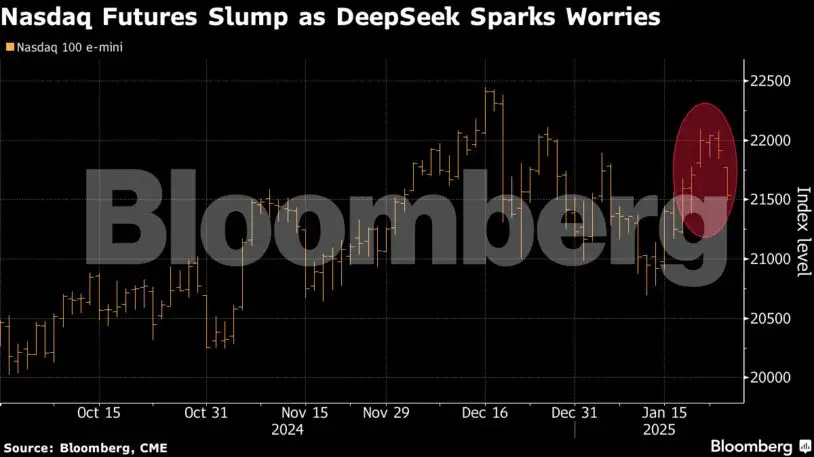
NEW YORK & LONDON — Wall Street is bracing for a historic reckoning as structural anxiety over artificial intelligence spending reaches a boiling point. The Nasdaq Composite, long the undisputed engine of global equity appreciation, is staring down the barrel of a potential $2 trillion valuation wipeout this October. What began as mild skepticism among quantitative analysts has metastasized into a broad-based institutional reassessment of the tech sector's foundational business model: massive, front-loaded capital expenditure chased by elusive enterprise returns.
For months, the narrative driving the post-pandemic bull market was unequivocal: generative AI represented a paradigm shift on par with the dawn of the internet or the mobile revolution. Mega-cap technology monoliths—including Microsoft, Alphabet, Amazon, and Meta Platforms—unleashed an unprecedented wave of capital allocation, funneling hundreds of billions of dollars into high-performance GPUs, custom silicon, and specialized cloud compute architecture. However, as quarterly earnings loom and corporate clients demand proof of tangible productivity gains, the market’s tolerance for speculative growth is evaporating.
The Catalyst: When Exponential Spending Meets Linear Monetization
Test Our Free AI & Tech Utilities Suite
Calculate LLM API token costs, analyze article dwell-time, or simulate tech DCA returns.
The roots of the current October correction lie in a fundamental economic mismatch: the speed of infrastructure scalability versus the velocity of enterprise software adoption. Hyperscalers have committed staggering sums to build out state-of-the-art data center facilities, locking themselves into long-term energy contracts and multi-billion-dollar hardware procurement cycles. Yet, corporate buyers across Fortune 500 boardrooms are exercising caution, demanding rigorous proof of concept before deploying large-scale AI software across their legacy operations.
"We are witnessing a classic collision between utopian market projections and pragmatic balance sheet management," notes a senior Chief Investment Officer at a premier global asset management firm in London. "The Street gave Big Tech an extended grace period to build out the plumbing of the AI economy. But plumbing costs money every single day, and if the end-user demand curve flattens, the valuation multiples assigned to these earnings streams must compress violently."
This sentiment shift has triggered aggressive position-unwinding among institutional funds. Algorithmic trading desks, reacting to deteriorating technical indicators and rising bond yields, have accelerated sell-programs across semiconductor manufacturers, networking equipment providers, and enterprise software-as-a-service (SaaS) leaders. The concentration risk that drove the Nasdaq to record highs earlier this year has now inverted, turning market leadership into a systemic vulnerability.
Anatomy of the Correction: Key Metrics and Market Dynamics

The sheer velocity of the October downturn has caught many retail and institutional participants flat-footed. As forward price-to-earnings (P/E) ratios for the "Magnificent Seven" and their primary suppliers contract from historical highs, portfolio managers are re-evaluating risk models that previously assumed perpetual double-digit earnings expansion.
Below is a granular breakdown of the macroeconomic indicators, capital allocation shifts, and market metrics defining the current Nasdaq contraction:
| Metric / Parameter | Previous Baseline (Q2 2024) | Current Projection (October) | Market Implication |
|---|---|---|---|
| Combined Big Tech CapEx | ~$210 Billion (Annualized) | ~$280+ Billion (Projected) | Compressed Free Cash Flow |
| Average Nasdaq P/E Multiple | 32.4x Forward Earnings | 24.8x Forward Earnings | Valuation Reset / Liquidation |
| Semiconductor Sector Volatility | Elevated (Beta 1.6) | Extreme (Beta 2.4) | Aggressive Institutional Hedging |
| Enterprise ROI Timeline | 6 to 12 Months | 18 to 36 Months | Delayed Revenue Realization |
Industry & Market Implications: Winners, Losers, and Systemic Ripples
The impending $2 trillion valuation adjustment is not merely a paper loss for tech-heavy index funds; it carries profound structural ramifications for the broader global economy. The ripple effects are dividing the corporate landscape into distinct camps of winners and losers.
The Losers: High-Multiple Infrastructure Plays and Unprofitable Innovators
Companies that derived their lofty valuations entirely from projected AI hardware demand—ranging from pure-play semiconductor fabricators to networking component suppliers—are bearing the brunt of the correction. When hyperscalers signal even a marginal deceleration in data center build-out velocity, upstream suppliers experience immediate margin compression. Furthermore, unprofitable software startups relying on venture capital and high-yield debt to subsidize high customer acquisition costs are finding capital markets effectively closed.
The Winners: Cash-Rich Incumbents and Defensive Sectors
Conversely, capital is finding refuge in balance sheet fortresses. Mega-cap entities with diversified revenue streams, conservative debt profiles, and immense organic cash flows are proving resilient. Additionally, non-tech sectors such as healthcare, regulated utilities (which are ironically seeing renewed demand to power data centers, albeit with tighter underwriting), and consumer staples are experiencing a resurgence in institutional inflows as portfolio managers execute defensive risk mitigation strategies.
Frequently Asked Questions (People Also Ask)
Why is AI spending causing a potential Nasdaq correction?
The market is reacting to a growing gap between massive upfront capital expenditures by tech giants and the slower-than-expected monetization of artificial intelligence products by enterprise customers. Investors are demanding clear evidence of return on investment (ROI), and the delayed timeline is forcing a downward revision of tech stock valuation multiples.
Which specific sectors within technology are most vulnerable?
High-multiple semiconductor manufacturers, specialized cloud compute providers, and enterprise software firms that trade at premium price-to-earnings ratios face the highest risk. These segments experienced explosive growth driven by AI hype, leaving them acutely exposed to any slowdown in corporate technology budgets.
How are institutional investors managing this market volatility?
Institutional portfolio managers are actively rotating capital out of speculative growth equities and into defensive, cash-generating assets. Risk mitigation strategies include reducing portfolio beta, hedging equity exposure through derivatives, and prioritizing companies with pristine balance sheets and proven operating margins.
Does this correction signal the end of the artificial intelligence boom?
Financial experts emphasize that this is a valuation reset rather than a structural collapse of the technology itself. While the era of indiscriminate, speculative investing in AI is ending, the underlying secular trend toward automation and machine learning remains intact, though capital will henceforth be directed toward disciplined, profitable execution.
Future Outlook and Critical Milestones to Watch
As the market navigates through October, all eyes remain fixed on upcoming corporate earnings calls and macroeconomic data releases. The path forward for the Nasdaq will be dictated by several critical milestones:
- Q3/Q4 Earnings Guidance: Big Tech executives must provide transparent, realistic guidance regarding their upcoming capital expenditure budgets and early enterprise adoption metrics. Vague optimism will no longer suffice; institutional investors require audited proof of margin durability.
- Macroeconomic Monetary Policy: The interplay between Federal Reserve interest rate decisions and equity valuations remains paramount. Higher-for-longer interest rates inherently penalize long-duration tech assets, magnifying the impact of any operational missteps.
- Enterprise Software Renewal Cycles: Monitoring corporate IT budget allocations will reveal whether Chief Information Officers are cutting back on discretionary software spending or doubling down on productivity-enhancing AI deployments.
Ultimately, the $2 trillion threat facing the Nasdaq serves as a sobering reminder of market realities. The transformative potential of artificial intelligence is undisputed, but the laws of corporate finance—demanding disciplined capital allocation, sustainable cash flows, and verifiable enterprise ROI—remain absolute.