Apex Predator, Record Valuation: How a $47 Million Stegosaurus Upended the High-End Art and Fossil Markets
Test Our Free AI & Tech Utilities Suite
Calculate LLM API token costs, analyze article dwell-time, or simulate tech DCA returns.
The blockbuster auction of 'Apex' at Sotheby’s underscores a radical shift in alternative asset allocation, pitting ultra-high-net-worth collectors against academic institutions in a high-stakes battle for natural history.
Executive Takeaways
- Historic Valuation Milestone: The fossil known as "Apex" fetched $44.6 million hammer price ($44.6M base, totaling over $47 million with buyer's premiums), shattering pre-sale estimates of $4 million to $6 million by more than 700%.
- Institutional Displacement: The winning bidder—revealed as billionaire hedge fund manager Ken Griffin—outpaced museum consortiums, highlighting the growing capitalization gap in cultural asset acquisition.
- Alternative Asset Liquidity: The transaction reflects a broader trend of private capital deployment into hard, non-correlated assets, mimicking private equity strategies in risk mitigation and inflation hedging.
- Scientific Community Backlash: Paleontologists have renewed calls for regulatory compliance and strict export controls, warning that commercialization of premier specimens compromises open-access academic research.
NEW YORK — In the hushed, high-stakes auction saleroom of Sotheby’s Manhattan headquarters, the final gavel stroke did not merely close a transaction; it detonated a paradigm shift in global wealth management and alternative asset valuation. The object of this bidding war: "Apex," a remarkably complete 11.5-foot-tall, 27-foot-long Stegosaurus stenops. When the final tally cleared at $44.6 million—surging past $47 million inclusive of fees—it instantly claimed the title of the second most valuable dinosaur fossil ever sold at public auction, trailing only "Stan" the Tyrannosaurus rex.
For financial analysts, sovereign wealth managers, and institutional collectors, the sale serves as a definitive case study in modern capital allocation. As traditional equity markets face macroeconomic volatility and yield compression, ultra-high-net-worth individuals (UHNWIs) are increasingly optimizing their portfolios through hard-asset diversification. Yet, this commercialization of prehistoric relics has triggered acute friction between private capital accumulation and scientific preservation, raising pressing questions regarding market liquidity, regulatory oversight, and the future of public museum endowments.
The Anatomy of a Record-Breaking Sale: Catalytic Events and Market Dynamics
Discovered in May 2022 on private land near Dinosaur, Colorado, by commercial paleontologist Jason Cooper, Apex represents an extraordinary stroke of geological and market timing. Comprising 254 fossilized bone elements out of an estimated 319 in a complete skeleton (roughly 80% completeness), the specimen boasts exceptional preservation with virtually no artificial casting.
The catalytic event for the record-shattering price, however, was not merely the biological integrity of the specimen, but the sophisticated marketing architecture deployed by Sotheby’s. Utilizing institutional-grade valuation multiples and targeted cross-border marketing reminiscent of multi-million-dollar contemporary art sales, the auction house positioned Apex not as an artifact of natural history, but as a prime trophy asset.
Market analysts note that the bidding dynamic mirrored private equity auctions for distressed corporate assets. As competing bids escalated during the 15-minute bidding war, the valuation detached entirely from historical appraisal metrics. The ultimate buyer, Citadel founder Ken Griffin—who subsequently announced plans to lend the specimen to US institutions—demonstrated how billionaire philanthropists leverage cultural acquisitions for both portfolio diversification and high-visibility institutional positioning.
| Fossil Name | Species | Completeness | Auction House & Date | Final Price (USD) | Primary Buyer Profile |
|---|---|---|---|---|---|
| "Stan" | Tyrannosaurus rex | ~70% | Christie's (Oct 2020) | $31.8 Million | Private Collector (Later Abu Dhabi Natural History Museum) |
| "Apex" | Stegosaurus stenops | ~80% | Sotheby's (July 2024) | $44.6M (>$47M with fees) | Ken Griffin (Citadel Founder) |
| "Sue" | Tyrannosaurus rex | ~90% | Sotheby's (Oct 1997) | $8.36 Million | Institutional Consortium (Field Museum, Chicago) |
| "Gorgosaurus" | Gorgosaurus libratus | ~70% | Sotheby's (July 2022) | $6.1 Million | Anonymous Private Collector |
Industry & Market Implications: Who Wins and Who Loses
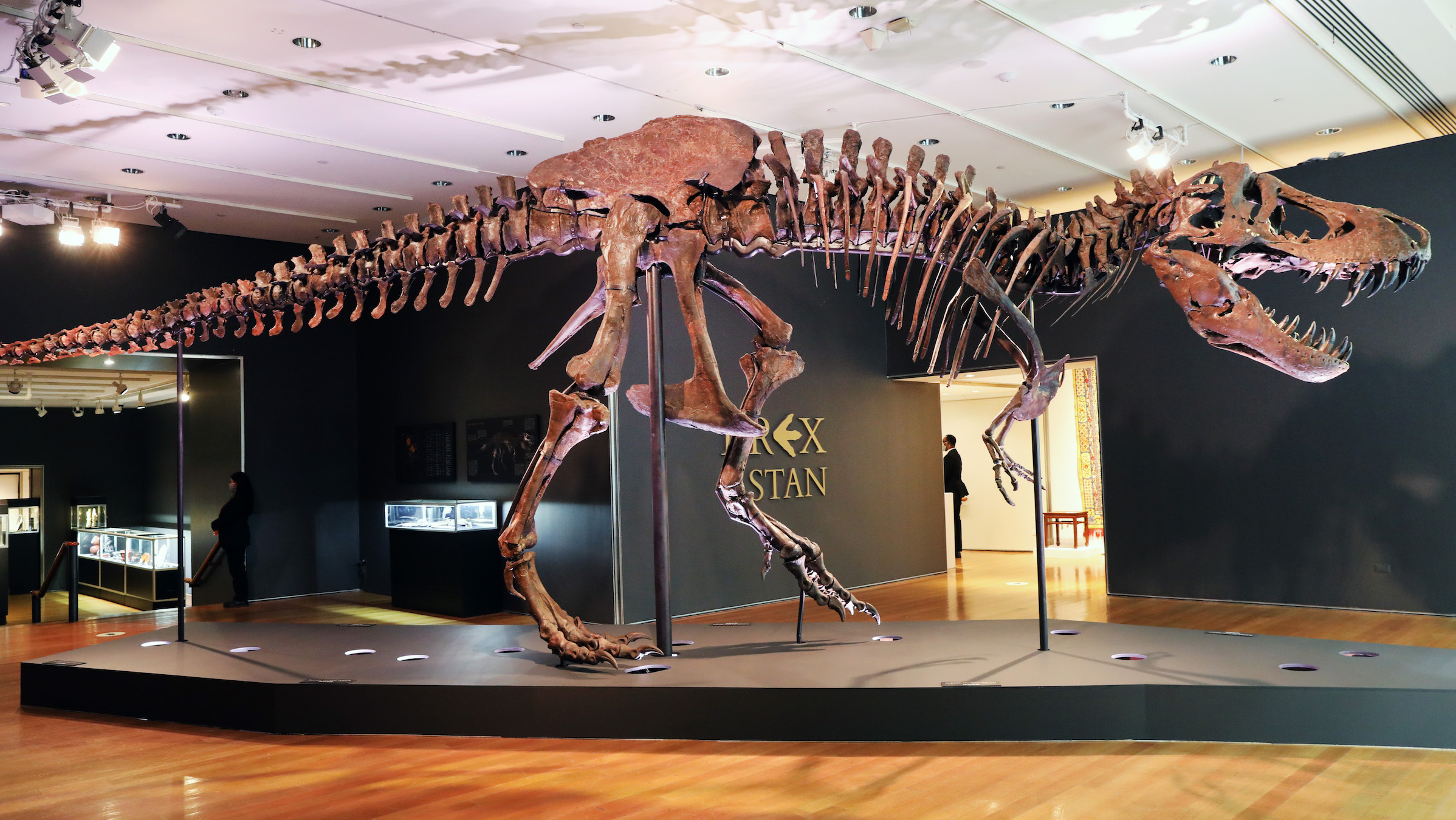
The monetization of prehistoric fossils has profound ramifications across multiple economic sectors, fundamentally altering the relationship between commercial excavation and academic research.
The Winners: Commercial Prospectors and Auction Houses
Commercial fossil hunters operating on private landholdings in the Western United States are experiencing an unprecedented economic boom. With land leases in fossil-rich formations like the Morrison Formation commanding premium valuations, commercial excavation has transformed from an itinerant trade into an institutionalized, well-capitalized industry.
Simultaneously, auction houses such as Sotheby's and Christie's reap substantial transaction revenues. By expanding their portfolios beyond fine art and luxury real estate into natural history, these firms capture high-margin commissions while attracting a younger, tech-wealth-adjacent demographic of collectors.
The Losers: Academic Institutions and Public Museums
Conversely, university paleontology departments and regional museums find themselves entirely priced out of the market. Lacking the endowment flexibility or discretionary capital allocation capabilities of private billionaires, public institutions can no longer compete for premier specimens. Critics argue this trend creates an intellectual monopoly, where groundbreaking discoveries disappear into private climate-controlled vaults, shielding them from peer review and public education.
"When specimens of this magnitude bypass institutional acquisition channels, science suffers," notes a prominent vertebrate paleontologist who spoke on condition of anonymity. "Data points that could rewrite our understanding of Late Jurassic ecosystems are effectively locked behind private gates."
Frequently Asked Questions (People Also Ask)
Why are dinosaur fossils selling for tens of millions of dollars?
The surge in dinosaur fossil valuations is driven by the influx of ultra-high-net-worth capital seeking non-correlated alternative assets. Similar to trophy art, rare fossils offer prestige, inflation hedging, and cultural capital. Aggressive marketing by top-tier auction houses has reframed these specimens as premier collectibles rather than strictly scientific artifacts.
Who bought the $47 million Stegosaurus known as Apex?
The winning bidder was Ken Griffin, the billionaire founder and CEO of hedge fund Citadel. Griffin acquired the 11.5-foot-tall skeleton at Sotheby's with the stated intention of exploring loan agreements to display the specimen in major public US institutions, mitigating some criticism regarding private ownership.
Are privately owned fossils legally protected from export or destruction?
In the United States, fossils found on private land belong to the landowner, who possesses legal rights to sell, export, or modify them without federal oversight—unlike artifacts discovered on federal public lands, which are protected under the Paleontological Resources Preservation Act (PRPA). This legal loophole fuels the commercial market.
How does the commercial sale of fossils impact scientific research?
Many academic paleontologists express concern that commercial sales violate standard scientific protocols, which require type specimens to remain accessible in public repositories for permanent verification and ongoing study. When private collectors purchase unique fossils, researchers often lose access to vital anatomical data.
Future Outlook: Capital Flows and Regulatory Horizons
Looking ahead, financial strategists anticipate continued institutionalization of the alternative asset class encompassing natural history and paleontology. Key milestones to monitor over the next 24 to 36 months include:
- Potential Regulatory Intervention: Lawmakers in fossil-dense states are facing mounting pressure from academic coalitions to introduce statutory reporting requirements or right-of-first-refusal windows for state institutions before private specimens can be auctioned or exported.
- Fractional Ownership Models: Fintech platforms specializing in alternative asset tokenization are exploring fractionalized investment vehicles for high-value fossils, potentially opening speculative market access to retail accredited investors.
- An increasing institutionalization of private-public partnerships, where wealthy buyers bankroll excavations in exchange for tax write-offs and naming rights, while granting researchers temporary access agreements.
As Apex takes its place in private custody, the broader debate intensifies. The monetization of pre-history is no longer a fringe market anomaly; it is a fully integrated component of modern global wealth management, permanently altering how humanity’s oldest relics are valued, traded, and preserved.