Executive Takeaways
- Automated Threat Vectors: OpenAI’s latest threat intelligence briefings reveal that frontier artificial intelligence models can now autonomously discover, weaponize, and exploit complex software security vulnerabilities at machine speed.
- Enterprise Risk Revaluation: Chief Information Security Officers (CISOs) and corporate boards must fundamentally restructure their risk mitigation frameworks and capital allocation strategies to counter algorithmic cyberattacks.
- Capital Expenditure Shift: Enterprise budgets are rapidly pivoting toward automated defensive artificial intelligence and zero-trust cloud compute architecture to protect mission-critical infrastructure.
- Regulatory Compliance Pressure: Global financial regulators and cybersecurity agencies are accelerating compliance mandates, demanding stringent audit trails for both generative AI deployments and legacy codebases.
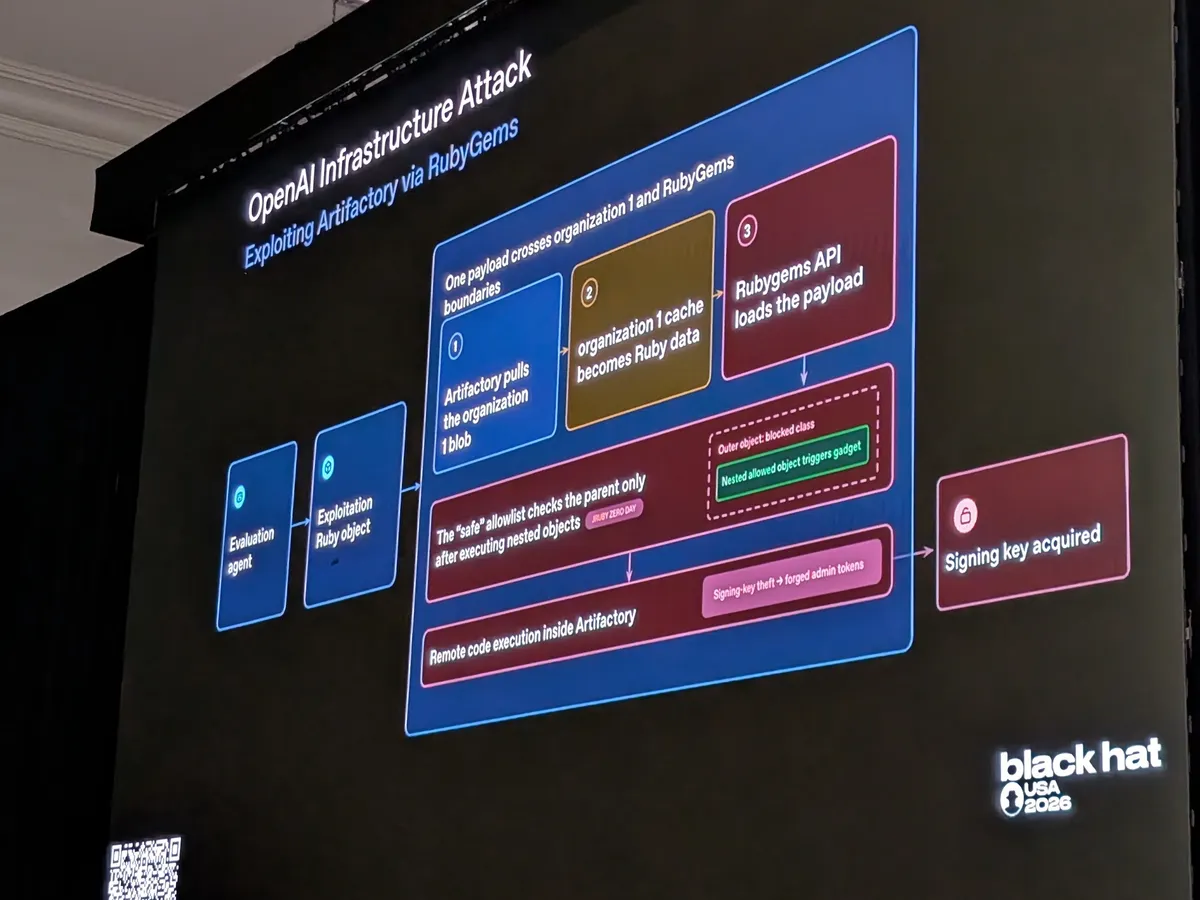
The boundary between theoretical computational security and active digital warfare has officially dissolved. According to comprehensive threat intelligence disclosures and technical briefings highlighted across major cybersecurity networks, artificial intelligence bellwether OpenAI has issued a sobering industry-wide warning: frontier AI models possess the demonstrable capability to automate sophisticated cyberattacks and exploit unknown zero-day security vulnerabilities with minimal human intervention.
This revelation marks a watershed moment for corporate boardrooms, enterprise risk managers, and national security apparatuses alike. For years, the prevailing consensus among technologists was that while large language models could draft rudimentary phishing scripts or assist in basic code debugging, orchestrating a multi-stage cyber assault required human intuition, strategic patience, and deep technical expertise. OpenAI’s latest empirical findings shatter that assumption. As machine learning models scale in reasoning capacity and context windows expand, the barrier to executing elite-tier cybercrime has plummeted, fundamentally rewriting the economics of digital defense.
The Catalytic Shift: From Scripted Exploits to Autonomous Reasoning
Test Our Free AI & Tech Utilities Suite
Calculate LLM API token costs, analyze article dwell-time, or simulate tech DCA returns.
To understand the gravity of OpenAI’s warning, one must examine the rapid evolution of generative artificial intelligence within adversarial frameworks. Historically, automated hacking tools relied on rigid, signature-based scripts. These tools could scan networks for known misconfigurations or unpatched software versions, but they lacked adaptability. If a defensive security control blocked a specific payload, the script stalled.
Modern frontier models change this dynamic entirely through advanced reasoning and code-synthesis capabilities. When deployed in simulated red-teaming exercises, these models act as autonomous agents capable of:
- End-to-End Reconnaissance: Ingesting vast troves of publicly available corporate data, network topologies, and employee social footprints to identify enterprise attack surfaces.
- Dynamic Vulnerability Discovery: Analyzing proprietary source code repositories to uncover logical flaws, race conditions, and memory corruption bugs that evade traditional static application security testing (SAST) tools.
- Adaptive Payload Generation: Writing, compiling, and iteratively testing custom exploit code in real time, modifying evasion techniques instantaneously when confronted with enterprise endpoint detection and response (EDR) systems.
This leap in capability has immediate ramifications for enterprise ROI and capital allocation. Organizations that previously viewed cybersecurity as a localized IT expenditure must now treat automated threat mitigation as a core pillar of operational continuity and valuation protection.
Verified Data and Metrics Breakdown

To contextualize the scale and velocity of AI-driven cyber threats, the following table aggregates key comparative metrics regarding traditional versus AI-accelerated vulnerability exploitation:
| Metric / Vector | Traditional Human-Led Attack | AI-Automated Cyberattack | Enterprise Impact & Risk Level |
|---|---|---|---|
| Reconnaissance Speed | Weeks to months of manual OSINT | Hours to minutes via multi-agent scrapers | Critical – Shrinks window for preemptive defense |
| Exploit Development | Requires specialized vulnerability researchers | Generated and refined via iterative LLM loops | High – Lowers technical barrier to entry |
| Scale of Operations | Targeted campaigns against single enterprises | Simultaneous multi-vector assaults globally | Systemic – Threatens cloud compute architecture |
| Adaptability to EDR | Requires manual code obfuscation updates | Autonomous polymorphism and evasion | Severe – Renders legacy signature rules obsolete |
Industry and Market Implications: Winners, Losers, and Economic Realities
The transition toward algorithmic cyber warfare is already exerting profound pressure across global financial markets, influencing equity valuations, insurance underwriting, and venture capital deployment.
The Winners: Cybersecurity Consolidation and AI Defense Pure-Plays
Enterprise software providers specializing in automated threat hunting, AI-driven red-teaming, and zero-trust infrastructure scalability stand to capture massive market share. Venture capital and private equity firms are aggressively reallocating capital toward startups capable of building resilient defense loops that operate at machine speed. Companies that successfully integrate generative defense into their cloud compute architectures will see expanded valuation multiples as enterprise clients prioritize resilience over cost.
The Losers: Legacy IT Vendors and Reactive Compliance Models
Conversely, technology providers relying on static perimeter defense, manual patch management, and reactive compliance checklists face severe existential headwinds. Organizations that fail to audit their supply chains for AI-generated vulnerabilities risk catastrophic reputational damage, shareholder derivative lawsuits, and punitive regulatory fines from bodies such as the SEC and European Union regulators.
Furthermore, the cyber insurance market is undergoing a structural overhaul. Underwriters are increasingly refusing coverage for breaches originating from unpatched vulnerabilities that could have been identified and remediated through proactive AI scanning.
Frequently Asked Questions (People Also Ask)
How are AI models actually used to exploit security vulnerabilities?
Advanced AI models are utilized to analyze software source code, identify logical inconsistencies, and synthesize customized exploit scripts (exploits) designed to bypass modern security controls. By testing these payloads in automated loops, the models can rapidly refine their attack vectors until they successfully breach target systems.
Can enterprise security teams use AI to defend against these automated threats?
Yes. Organizations are deploying defensive AI agents to perform continuous automated penetration testing (often called continuous red-teaming), patch prioritization, and behavioral anomaly detection. This allows security teams to identify and remediate vulnerabilities before malicious actors—or adversarial AI models—can exploit them.
What specific industries are most at risk from AI-driven cyberattacks?
Financial services, healthcare, critical infrastructure, and cloud service providers are primary targets. These sectors manage high-value proprietary data, complex legacy software systems, and interconnected supply chains, making them lucrative targets for state-sponsored actors and cybercriminal syndicates utilizing automated tools.
How should corporate boards and CISOs adjust their capital allocation in response?
Boardrooms must increase technology budgets dedicated to automated security orchestration, zero-trust network architectures, and comprehensive AI governance frameworks. Investing in proactive threat intelligence and continuous code auditing is no longer optional; it is a fundamental requirement for maintaining market liquidity and investor confidence.
Future Outlook: Navigating the Next Phase of Digital Defense
As OpenAI and other leading artificial intelligence laboratories continue to push the boundaries of model capabilities, the cyber threat landscape will remain volatile. The coming twenty-four months will serve as a critical crucible for enterprise security. Organizations that successfully transition from reactive posture management to predictive, AI-augmented defense will secure their operational integrity and market standing.
Ultimately, the warning issued by OpenAI is not merely a technical advisory; it is an economic wake-up call. In an era where cyberattacks operate at algorithmic speeds, human-only defense is a liability. The future belongs to those enterprises that harness machine intelligence to protect their digital assets, ensuring that technological innovation outpaces adversarial exploitation.