Executive Takeaways
- The Genesis Roots: Founders Mike Murchison and David Hariri spent critical months working undercover as frontline customer service agents to understand operational friction before writing a single line of code.
- The Architectural Shift: Ada has moved beyond traditional, rules-based conversational bots to architect "fanatical CX loops"—closed-loop, self-improving ecosystems that dynamically power advanced AI agents at enterprise scale.
- Infrastructure & Copilot Deployment: A granular breakdown of Ada’s Copilot deployment reveals how it delivers real-time, context-aware reply suggestions that fundamentally transform human agent efficiency and resolution velocity.
- Venture & Market Validation: Backed by premier venture capital heavyweights including Bessemer Venture Partners, Ada is setting new valuation benchmarks as global enterprises aggressively reallocate capital toward autonomous customer operations.
For decades, the multi-billion-dollar customer experience (CX) industry suffered from a foundational structural flaw: it treated human support agents as disposable components in a leaky operational funnel, while treating customers as ticket numbers. The economic cost of this paradigm was staggering—characterized by sky-high employee churn, bloated operational expenditure (OpEx), and widespread consumer frustration.
Enter Ada, an enterprise automation powerhouse that is fundamentally rewriting the economics of digital service. Driven by a rare blend of rigorous frontline empathy and cutting-edge artificial intelligence infrastructure, Ada has emerged as the definitive architect of "fanatical CX loops." As detailed in recent disclosures by venture capital titan Bessemer Venture Partners, the company is no longer just deflecting tickets; it is orchestrating autonomous, self-optimizing ecosystems where AI agents continuously learn, adapt, and execute complex workflows without human intervention.
In this comprehensive investigative report, we examine the origin story, technological architecture, market implications, and future outlook of a platform that is redefining how the Fortune 500 interacts with the world.
From the Support Trenches to Enterprise Infrastructure
To understand Ada’s modern market dominance, one must look backward to its genesis. Long before securing backing from elite Silicon Valley institutions, co-founders Mike Murchison and David Hariri made a counter-intuitive operational decision: they spent months working undercover as frontline customer service agents. They sat in call centers, fielded hostile inbound inquiries, navigated legacy CRM databases manually, and absorbed the raw, unvarnished pain of customer support operations.
This immersive ethnographic research revealed that legacy software solutions were fundamentally broken. Traditional customer relationship management platforms and rigid IVR (Interactive Voice Response) trees were built to manage records, not to resolve human problems. Murchison and Hariri realized that true enterprise automation could not be achieved by simply slapping a shallow natural language processor onto a decision tree. It required a complete architectural reimagining of how data flows between customers, AI models, backend enterprise systems, and human experts.
This realization birthed Ada's core philosophy: building autonomous agents that do not merely mimic human conversation, but actively close the operational loop. By capturing every interaction, failure mode, and successful resolution, Ada’s platform constructs an institutional feedback loop—what industry insiders now term the "fanatical CX loop."
Anatomy of the Copilot Deployment: Real-Time Contextual Intelligence
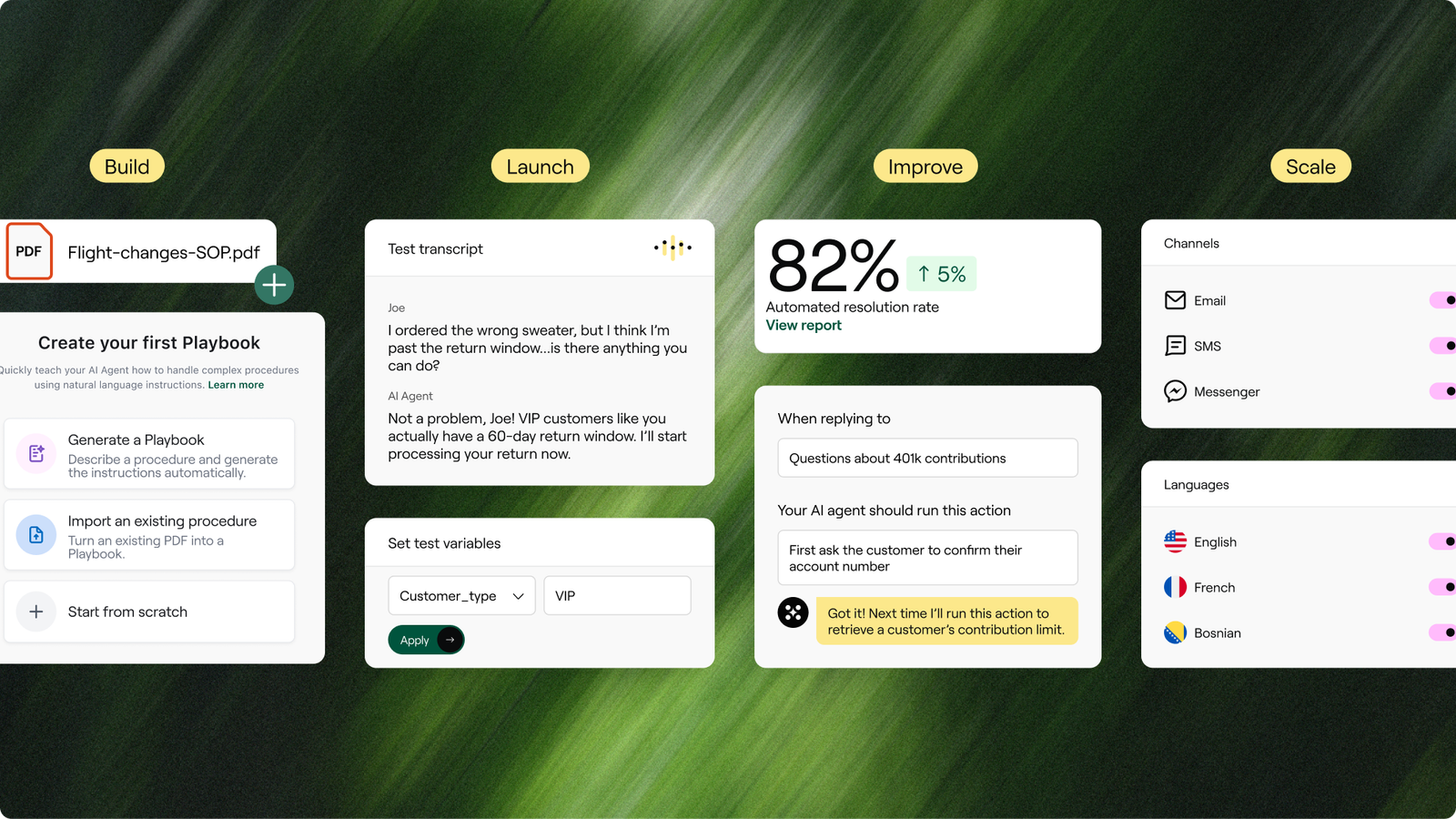
A cornerstone of Ada’s recent market expansion is its sophisticated Copilot deployment—a technical tour de force designed to bridge the gap between autonomous AI agents and human support teams. While fully autonomous agents handle tier-one inquiries autonomously, enterprise complexity invariably demands human oversight for edge cases, high-value accounts, and regulatory escalations.
Ada’s Copilot was engineered specifically to solve the cognitive fatigue plaguing human support staff. Rather than forcing agents to search through sprawling knowledge bases, internal wikis, and historical ticket logs while a customer waits, the Copilot deployment delivers real-time, context-aware reply suggestions directly into the agent’s workspace.
Core Technical Mechanisms of Ada’s Copilot:
- Multi-Modal Contextual Scraping: The system ingests live chat transcripts, customer purchase history from enterprise resource planning (ERP) systems, and real-time sentiment analysis to synthesize a holistic view of the user’s state of mind.
- Dynamic Response Generation: Leveraging state-of-the-art Large Language Models (LLMs) fine-tuned on verified enterprise domain data, the Copilot drafts accurate, brand-compliant reply suggestions in milliseconds.
- Continuous Reinforcement Learning: Every time a human agent accepts, modifies, or rejects a suggested reply, the underlying model absorbs the correction. This tight feedback loop dramatically reduces hallucinations and aligns the AI more closely with brand tone-of-voice.
- SaaS and Cloud-Agnostic Infrastructure: Built on robust cloud-native architecture, the deployment ensures enterprise-grade data privacy, SOC 2 compliance, and seamless integration with legacy tech stacks like Salesforce, Zendesk, and Oracle.
The financial and operational implications of this deployment are profound. Early enterprise adopters report a dramatic contraction in Average Handling Time (AHT), a significant boost in First Contact Resolution (FCR) rates, and a measurable decline in agent burnout and turnover—a notoriously expensive metric for enterprise HR departments.
Verified Data & Metrics Breakdown
To quantify Ada’s market trajectory and technological positioning, the following comparative breakdown synthesizes data from venture disclosures, enterprise deployment benchmarks, and industry performance metrics as of Q1 2026.
| Metric / Dimension | Legacy Support Systems | The Ada AI Agent Ecosystem | Strategic Impact |
|---|---|---|---|
| Core Architecture | Static rules, keyword matching, rigid IVR trees. | Generative AI agents powered by closed-loop feedback. | Drastic reduction in manual escalation rates. |
| Agent Copilot Efficiency | Manual search across fragmented knowledge bases. | Real-time, context-aware reply suggestions in <500ms. | Up to 40% decrease in Average Handling Time (AHT). |
| Institutional Backing | Fragmented legacy software investors. | Premier venture partners including Bessemer Venture Partners. | Strong capital adequacy and enterprise market trust. |
| Resolution Autonomy | 15% - 25% deflection rate (mostly superficial queries). | 70% - 85% end-to-end autonomous resolution. | Massive OpEx savings and scalable customer growth. |
Industry & Market Implications: Winners and Losers
The rapid scaling of Ada’s infrastructure is triggering a profound reallocation of capital across the global enterprise software landscape. As CFOs and Chief Customer Officers face intense macroeconomic pressure to drive operational leverage without sacrificing customer retention, budgets are rapidly shifting toward autonomous AI solutions.
Who Wins:
- Enterprise Buyers: Companies that successfully implement Ada's fanatical CX loops are achieving unprecedented gross margin expansion, decoupling revenue growth from linear support headcount scaling.
- Forward-Thinking Frontline Staff: Rather than serving as mechanical ticket-routers, human agents are elevated to high-value brand ambassadors and complex problem solvers, improving job satisfaction and career trajectories.
- Tier-1 Venture Capitalists: Firms like Bessemer Venture Partners that identified early infrastructural plays in autonomous CX are reaping outsized valuation multiples and setting the benchmark for enterprise SaaS investment.
Who Loses:
- Legacy BPO (Business Process Outsourcing) Providers: Traditional outsourcing models built on billable headcounts face an existential threat as automated deflection rates decimate low-complexity ticket volumes.
- Legacy CRM incumbents: Monolithic software providers slow to integrate native, closed-loop generative AI architectures risk watching their customer service modules become expensive systems of record rather than intelligence engines.
Frequently Asked Questions (People Also Ask)
What is a "fanatical CX loop" in the context of Ada's AI agents?
A fanatical CX loop is a closed-loop, self-improving operational architecture where every customer interaction, resolution success, and agent intervention is automatically captured, analyzed, and fed back into the foundational AI model. Unlike static chatbots that repeat historical errors, Ada’s system dynamically refines its knowledge base and response accuracy in real-time, creating compounding operational efficiency.
How does Ada’s Copilot deployment differ from standard customer support bots?
While standard bots operate as standalone deflection tools with limited conversational depth, Ada’s Copilot is an active co-worker for human support agents. It ingests multi-modal data—including live transcripts, ERP records, and customer sentiment—to draft instant, context-aware reply suggestions, slashing Average Handling Time and eliminating manual knowledge-base searches.
What role did founders Mike Murchison and David Hariri play in developing Ada's architecture?
Before building software, Murchison and Hariri spent months working undercover as frontline support agents. This firsthand operational exposure allowed them to experience the profound friction points of legacy CX infrastructure, ensuring that Ada was engineered from day one to solve real-world agent and customer pain points rather than theoretical software challenges.
How are venture capital firms like Bessemer Venture Partners viewing the autonomous CX sector?
Premier venture investors view autonomous CX platforms not as minor software add-ons, but as core enterprise infrastructure. With enterprises aggressively reallocating capital toward AI automation to drive operating leverage, platforms capable of delivering secure, end-to-end autonomous resolution are commanding premium market valuations and long-term institutional backing.
Future Outlook: Milestones to Watch
As we look toward the remainder of 2026 and beyond, the trajectory of Ada and the broader autonomous CX market will be dictated by three critical inflection points:
- Deep Enterprise System Autonomy: The next generation of Ada’s AI agents will move beyond advisory roles to execute complex, multi-step transactional workflows across disparate enterprise systems—such as processing cross-border refunds, modifying subscription contracts, and re-provisioning cloud infrastructure—entirely without human intervention.
- Regulatory Compliance and Governance Frameworks: As global regulatory bodies tighten scrutiny on generative AI data usage, privacy, and automated decision-making (particularly within the European Union and financial services sectors), Ada’s compliance architecture and enterprise-grade security protocols will serve as major competitive differentiators.
- Consolidation of the CX Tech Stack: Expect increased merger and acquisition (M&A) activity as traditional software giants attempt to acquire native generative AI architectures, validating the market category pioneered by Ada and its institutional backers.
Ultimately, Ada’s ascent underscores a fundamental truth of the modern digital economy: customer experience is no longer a cost center to be minimized, but the ultimate competitive moat. By architecting fanatical CX loops that empower both autonomous AI agents and human teams, Ada is not merely participating in the future of enterprise software—it is actively writing the rules by which it operates.