Executive Takeaways
- Precision Manipulation: Parasitic fungi and microscopic organisms bypass host immune defenses to exert absolute neurochemical control, rewriting motor functions and behavioral patterns with zero margin for error.
- Bio-Economic Disruption: Agricultural sectors face escalating risk mitigation costs as zombie-inducing pathogens threaten global food security, timber yields, and livestock supply chains.
- Biotech Innovation: Pharmaceutical R&D divisions are heavily capitalizing on natural neuro-active compounds harvested from parasitic organisms to accelerate drug discovery and neurological treatment pathways.
- Capital Allocation Shift: Venture capital and enterprise biotech funds are aggressively reallocating capital toward genomic sequencing tools capable of tracking rapid evolutionary adaptations in pathogenic strains.
For centuries, the concept of a zombie—a once-living entity stripped of free will and driven entirely by an external parasitic directive—was relegated to gothic folklore and dystopian cinema. Today, however, front-line researchers across molecular biology, mycology, and evolutionary ecology are tracking a very real, highly sophisticated bio-industrial arms race. Across tropical canopies, temperate forests, and intensive agricultural fields, specialized fungi and parasitic organisms are engineering complex behavioral modifications in their hosts. These are not random mutations; they are masterclasses in biochemical engineering, executed with clinical precision.
As global supply chains navigate unprecedented volatility, understanding the mechanics of these natural manipulators has transcended academic curiosity. With multi-billion-dollar stakes in agricultural yield protection, pharmaceutical discovery, and ecological risk mitigation, institutional investors and enterprise risk officers are paying close attention. The intersection of synthetic biology and ancient parasitism is unlocking new paradigms in how we view contagion, behavioral control, and ecosystem resilience.
The Mechanics of Bio-Control: How Pathogens Hijack Host Architecture
Test Our Free AI & Tech Utilities Suite
Calculate LLM API token costs, analyze article dwell-time, or simulate tech DCA returns.
To understand how a parasite transforms a living organism into a compliant vehicle, one must examine the molecular orchestration at play. Take, for instance, the entomopathogenic fungi of the order Hypocreales, most notably Ophiocordyceps unilateralis. When microscopic spores of this fungus breach the exoskeleton of an unsuspecting carpenter ant, the invasion is both subtle and systematic. Rather than immediately overwhelming the host, the fungal cells proliferate within the hemolymph, selectively consuming non-essential tissues while leaving the central nervous system intact.
As the infection matures, the fungus releases an arsenal of bioactive secondary metabolites—including alkaloid compounds that mimic neurotransmitters. These molecules cross the blood-brain barrier, effectively seizing the ant’s motor control centers. The host is compelled to leave its canopy colony, scale a specific vegetation height, and lock its mandibles into a leaf vein at a precise micro-climatic elevation optimal for fungal sporulation. This "summit disease" ensures the ultimate dissemination of the next generation of spores, maximizing reproductive output at the absolute expense of the host organism.
This level of host manipulation is not isolated to insects. From Toxoplasma gondii modifying rodent behavior to eliminate innate fear of feline predators, to hairworm parasites compelling aquatic crickets to commit suicidal drowning, nature is replete with masterclasses in behavioral override. From an infrastructure scalability perspective, these biological systems demonstrate how minimal initial energy inputs can yield maximum systemic disruption—a dynamic that modern systems architects and cybersecurity experts study closely when analyzing cascading network failures.
Agricultural Vulnerabilities and Economic Impact
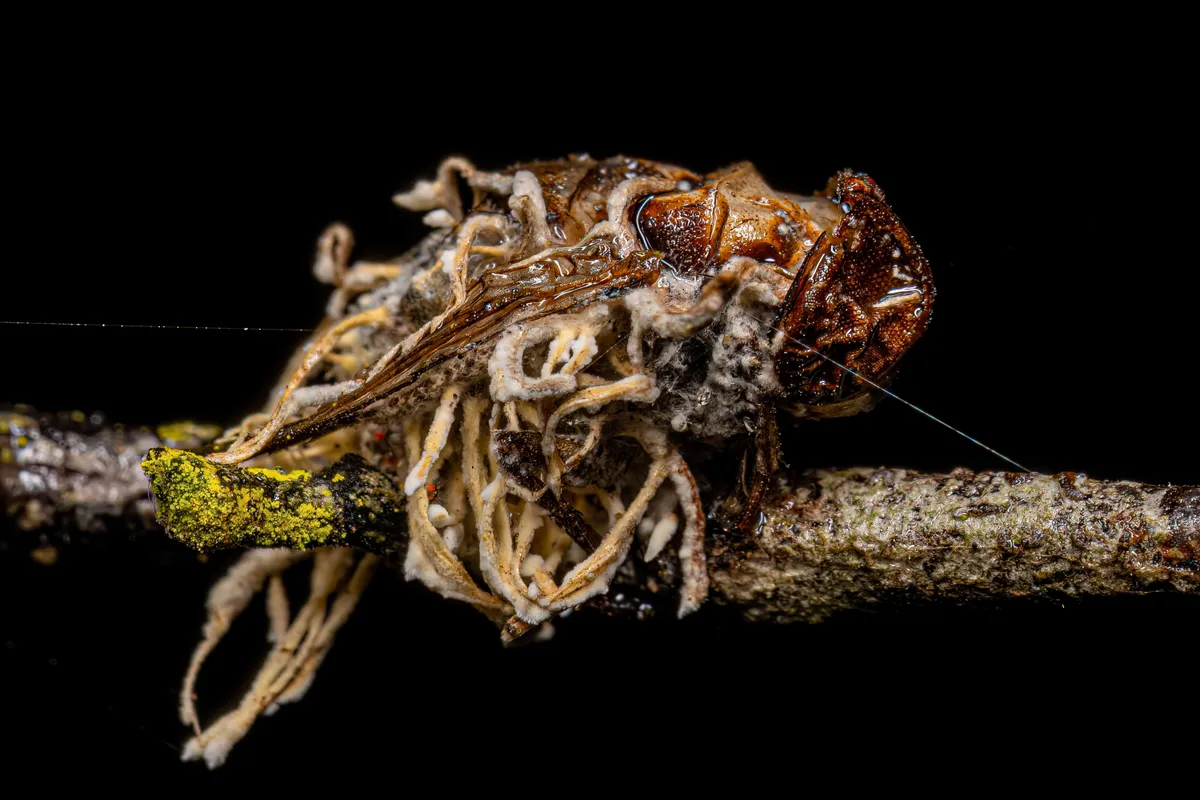
The implications of zombie-creating pathogens extend far beyond forest floors; they present a direct, quantifiable threat to global agricultural output and asset valuations. Staple crops and livestock supply chains are increasingly vulnerable to specialized fungi and parasites that manipulate host physiology to accelerate transmission rates.
In commercial forestry, pathogens such as Ophiostoma novo-ulmi (the agent behind Dutch elm disease) utilize vector insects, essentially turning beetles into unwitting carriers programmed to bore into healthy timber. The resulting destruction of capital assets runs into the billions of dollars annually, forcing forestry firms to upgrade their risk mitigation frameworks and adopt advanced genomic surveillance.
| Pathogen / Parasite | Primary Host | Behavioral / Physiological Manipulation | Economic & Market Impact |
|---|---|---|---|
| Ophiocordyceps unilateralis | Carpenter Ants | Induces fatal climbing and mandibular lock ("summit disease"). | Ecosystem balance disruption; niche forestry impact. |
| Toxoplasma gondii | Rodents / Felines | Eliminates innate fear of cat urine, attracting host to predators. | Public health monitoring costs; livestock contamination risks. |
| Eicrocide / Hairworms | Cricket / Grasshoppers | Drives host to seek water and submerge, ensuring parasite exit. | Local aquatic food web alteration; minor agricultural nuisance. |
| Entomophthora muscae | Houseflies | Forces female flies to climb high surfaces before death to release spores. | Livestock vector management overhead and disease control costs. |
Financial analysts monitoring agtech valuations note that companies developing biological crop protection—leveraging competing fungal strains or precision biopesticides—are seeing accelerated venture capital inflows. As regulatory compliance regarding chemical pesticides tightens globally, capital allocation is shifting decisively toward targeted, nature-based bio-controls capable of neutralizing parasitic threats before systemic crop failure occurs.
Frequently Asked Questions (People Also Asks)
Frequently Asked Questions
Can zombie-creating fungi or parasites infect humans?
To date, there is no scientific evidence that entomopathogenic fungi like Ophiocordyceps can infect humans or alter human behavior. The physiological barrier, internal human body temperature (98.6°F / 37°C), and sophisticated human immune architecture prevent these specific organisms from establishing colonies or exerting neurochemical control. However, certain protozoan parasites like Toxoplasma gondii do chronically infect a significant portion of the human population, typically remaining dormant without causing overt behavioral modification in healthy individuals.
How do these fungi locate and select their specific hosts with such high accuracy?
Parasitic fungi rely on a combination of chemical signaling, pheromone detection, and evolutionary co-adaptation. Spores are engineered to germinate only when encountering specific cuticle hydrocarbons unique to the target host species. Once inside, the pathogen's metabolic pathways are finely tuned to interact exclusively with the host's specific neurotransmitter receptors, ensuring high-fidelity behavioral manipulation.
What are the commercial and pharmaceutical applications of studying these parasites?
Pharmaceutical and biotech enterprises study these organisms to isolate novel secondary metabolites, immunosuppressants, and neuro-active compounds. Because these parasites have evolved millions of ways to cross blood-brain barriers and modulate neurological responses, bioprospecting in this field accelerates drug discovery pipelines for neurological disorders and targeted oncology treatments.
Are climate change and shifting weather patterns expanding the range of these pathogens?
Yes. Rising global temperatures and shifting humidity gradients are altering the geographical distribution of many fungal and parasitic species. As traditional climate boundaries shift, agricultural entities and public health organizations are forced to recalibrate their risk models and infrastructure investments to handle expanding pathogen ranges.
Future Outlook: Strategic Milestones and Market Trajectory
As we look toward the next decade, the convergence of high-throughput genomic sequencing, artificial intelligence-driven protein folding, and ecological field data will redefine our understanding of host-parasite dynamics. For enterprise leaders, the mandate is clear: proactive monitoring and adaptive biosecurity are no longer optional line items—they are foundational to long-term valuation stability.
Key milestones to watch over the next 24 to 36 months include:
- Genomic Surveillance Integration: Deployment of real-time environmental DNA (eDNA) sensors across critical agricultural zones to detect early-stage pathogen proliferation before visible symptoms emerge.
- Parametric Risk Modeling: Expansion of specialized insurance products covering biological and parasitic supply chain disruptions, complete with dynamic valuation multiples based on micro-climatic data.
- Therapeutic Pipeline Advancements: Clinical trials leveraging fungal-derived neuro-modulators for human neurological treatments, unlocking new revenue streams for tier-1 biotech conglomerates.
Ultimately, the phenomenon of nature's real-life zombies serves as a stark reminder of evolutionary ingenuity. In an interconnected global economy, studying these hyper-specialized biological systems provides invaluable insights into resilience, risk mitigation, and the delicate balance governing natural and financial ecosystems alike.