The $1,500 Disaster That Made Millions: How China’s ‘Worst Animated Movie’ Sparked a Box Office Gold Rush
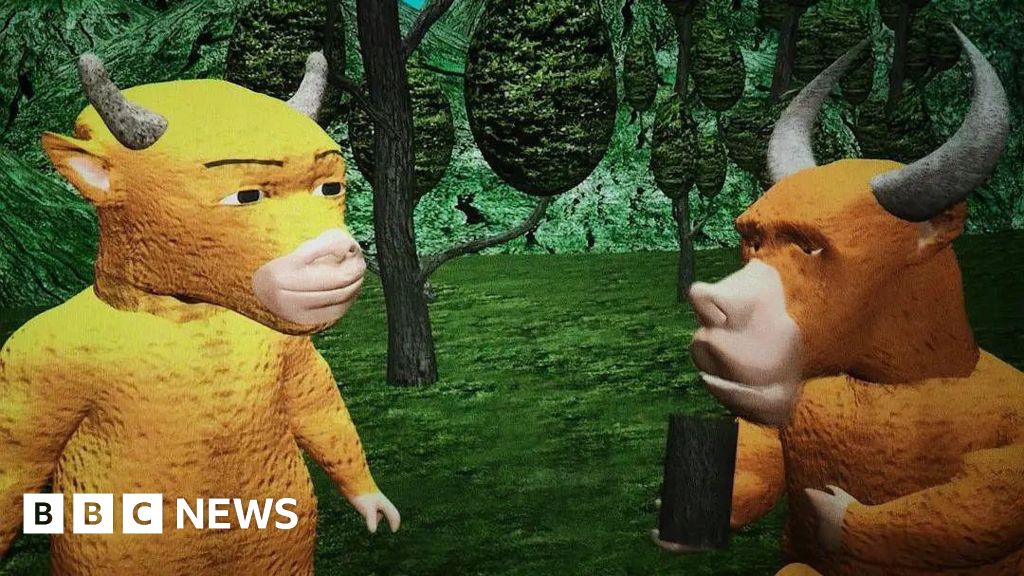
In an era where Hollywood and global production houses pour hundreds of millions of dollars into hyper-realistic CGI, a bizarre cinematic anomaly has turned the world’s second-largest theatrical market on its head. Niu Lai (translated as "The Ox is Coming" or "Return of the Ox"), an indie animated feature produced on a near-zero budget, has transitioned from an absolute box office flop to a multi-million-yuan cultural phenomenon. Its secret weapon? Some of the most objectively terrible, low-effort animation ever projected on a commercial screen.
The film’s unprecedented financial trajectory highlights a major shift in consumer behavior, illustrating how social-media-driven "hate-watching" and meme culture can weaponize irony to generate massive box office returns. For film executives and marketing strategists globally, the success of Niu Lai is a masterclass in the unpredictable dynamics of the modern attention economy.
Executive Summary: Key Takeaways from the Niu Lai Phenomenon
- The Ultimate Turnaround: In its first 10 days of release, the film grossed a microscopic 7,705 yuan ($1,140 USD). Weeks later, fueled by viral social media momentum, it surged past 11.4 million yuan ($1.6 million USD).
- Asymmetric Financial Returns: Reportedly produced by a skeleton team of just two people for approximately 10,000 yuan (around $1,500 USD / Rs 1 Lakh), the film’s return on investment (ROI) sits at an astronomical, unprecedented percentage.
- Social-Media-Driven Arbitrage: The film's resurgence was entirely organic, driven by users on Chinese social platforms Douyin (TikTok’s sister app), Bilibili, and Xiaohongshu who mocked its Microsoft Paint-style aesthetics.
- A Shift in Gen Z Consumption: Traditional markers of cinematic quality—star power, high production value, and narrative depth—were bypassed entirely in favor of ironic, shared collective experiences.
Anatomy of a Flop: From Empty Theaters to Sold-Out Screenings
When Niu Lai first debuted in Chinese theaters, it went almost entirely unnoticed. Its visual style, characterized by stiff character models, backgrounds that resembled default PowerPoint templates, and erratic frame rates, was initially deemed unwatchable. In a crowded market dominated by high-budget domestic blockbusters, the film quietly whimpered into obscurity, bringing in just $1,140 over its first week and a half.
However, the internet operates on its own set of rules. A handful of local film reviewers and content creators on Bilibili discovered the movie and began posting screen grabs and short clips of its most egregious animation errors. Instead of repelling audiences, the sheer audacity of the film's low quality captivated Gen Z netizens. Within days, the hashtag #NiuLai began trending. To see the "masterpiece" in person became a badge of honor, a real-life meme that demanded theater attendance to fully appreciate.
The Economics of "Hate-Watching"
Unlike Western viral phenomena like Sony’s Morbius—where internet memes failed to translate into actual ticket sales during a disastrous theatrical re-release—Niu Lai successfully converted online mockery into cold, hard cash. Chinese audiences didn't just laugh at the film online; they actively bought tickets to watch it with friends, transforming quiet cinema halls into communal hubs of laughter, commentary, and social media check-ins.
Niu Lai: Financial Metrics and Performance Breakdown
To understand the sheer scale of this box office anomaly, consider the financial breakdown of the film's lifecycle:
| Metric | Early Release (First 10 Days) | Post-Viral Stage (Peak Run) | Total Growth Factor |
|---|---|---|---|
| Box Office Gross (CNY) | 7,705 yuan | Over 11,400,000 yuan | ~1,480x Increase |
| Box Office Gross (USD Equivalent) | $1,140 USD | Over $1.68 Million USD | — |
| Estimated Production Budget | ~10,000 yuan ($1,500 USD) | Fixed cost | — |
| Estimated Return on Investment (ROI) | Underwhelming Flop | Estimated >113,000% ROI | World-Class Yield |
Why the Traditional Film Industry is Taking Note
For major entertainment conglomerates, the success of Niu Lai presents a deeply polarizing case study. On one hand, it highlights the democratization of distribution in the internet age. A two-person team using rudimentary tools can theoretically bypass the gatekeepers of traditional media to achieve massive commercial success. On the other hand, it challenges the fundamental business models of studios that spend years and millions of dollars mitigating financial risks through polish, star power, and safe, focus-tested narratives.
"The consumer today is no longer a passive recipient of culture; they want to participate in it," says senior entertainment analyst Dr. Helen Zhang. "With Niu Lai, the audience felt they 'discovered' and 'built' the success of the film themselves. The movie itself was merely the raw material; the real entertainment was the community's collective reaction to it."
Can This Phenomenon Be Replicated?
The short answer is: rarely, if ever, on purpose. History shows that when corporations try to manufacture "authentic" cringe or ironic virality, audiences smell the corporate calculation immediately and reject it. The magic of Niu Lai lies in its earnest, albeit highly flawed, execution. It was not built to be a meme; it became one organically.
Future Outlook: The Rise of Micro-Budget Cinema in China
As theatrical distribution networks adapt to shifting consumer tastes, we are likely to see an influx of low-budget, experimental films aiming to capture lightning in a bottle. While Niu Lai may remain a rare exception in terms of its astronomical ROI, it has firmly established a new blueprint for guerrilla marketing: when your product has glaring flaws, don't hide them—let the internet turn them into a feature.
Frequently Asked Questions (FAQ)
1. Who actually made the movie 'Niu Lai' and why is the animation so bad?
The movie was reportedly put together by an extremely small team of just two people on an estimated budget of 10,000 yuan (approximately $1,500 USD). Lacking the capital, advanced software, rendering farms, and professional staff of traditional animation studios, the creators had to rely on highly basic, rudimentary 3D modeling and animation software, resulting in the stiff, glitchy, and unfinished look that ultimately made the film famous.
2. Did the creators of the film profit directly from this viral box office surge?
Yes. Because the film was picked up by major theater chains once the social media buzz reached a fever pitch, the creators and their localized distribution partners benefited enormously. Given the microscopic initial overhead of the project, almost the entirety of the 11.4 million yuan box office gross (after standard theater cuts and taxes) represents pure profit, making it one of the most financially successful indie film ventures in recent Chinese cinema history on an ROI basis.