Executive Takeaways
- Capital Allocation Shift: Automakers are pivoting from ultra-expensive, centralized industrial machining to decentralized, low-cost additive manufacturing nodes, drastically improving enterprise ROI and optimizing inventory holding costs.
- Infrastructure Scalability: By deploying accessible, high-performance polymer and metal 3D printers directly onto factory floors, firms like Ford and Rivian are circumventing global supply chain bottlenecks and mitigating long-tail parts procurement risks.
- Valuation Multiples & Margins: The integration of agile 3D printing architectures compresses prototyping cycles by up to 80%, providing a structural margin expansion tailwind as EV makers race to achieve operational break-even.
- Regulatory Compliance & Testing: Additive manufacturing is moving beyond rapid prototyping into end-use production parts, requiring advanced cloud compute architecture and rigorous digital twin validation to satisfy stringent automotive safety standards.
DETROIT, NEW YORK, & LONDON — In the cavernous validation labs of Normal, Illinois, and the storied corridors of Dearborn, Michigan, a quiet industrial revolution is fundamentally altering the balance sheets of the global automotive sector. The era of waiting months for outsourced tooling and spending millions of dollars on bespoke metal molds is rapidly giving way to localized, on-demand additive manufacturing. Driven by intense margin pressure, volatile commodity markets, and the urgent mandate to accelerate vehicle development cycles, automakers such as Rivian Automotive Inc. and Ford Motor Co. are successfully “democratizing 3D printing.”
This strategic pivot is far more than a tactical upgrade in factory floor tooling. It represents a fundamental restructuring of capital allocation, supply chain risk mitigation, and inventory management. By placing industrial-grade polymer and metal printers directly into the hands of line engineers, these companies are compressing design iterations from weeks to mere hours, fundamentally redefining how modern electric and internal combustion vehicles are conceived, tested, and brought to market.
The Catalytic Shift: Moving Beyond Rapid Prototyping
For decades, additive manufacturing—commonly referred to as 3D printing—was siloed in high-security R&D basements. Restricted by slow print speeds, expensive proprietary materials, and limited structural integrity, the technology was largely relegated to creating visual mockups and preliminary ergonomic models. Traditional tier-one suppliers maintained a tight monopoly over hard tooling, imposing prohibitive minimum order quantities (MOQs) and lengthy lead times that regularly crippled product development schedules.
Today, that paradigm has evaporated. The confluence of open-source material ecosystems, dramatically lower hardware acquisition costs, and breakthroughs in laser-sintering and fused deposition modeling has democratized access to enterprise-grade manufacturing capabilities. Ford Motor Co. has integrated additive manufacturing directly into its assembly operations, utilizing advanced printing cells to produce functional assembly aids, ergonomic fixtures, and select end-use replacement parts on demand. This decentralized approach slashes capital expenditure (CapEx) associated with traditional injection molding and CNC machining.
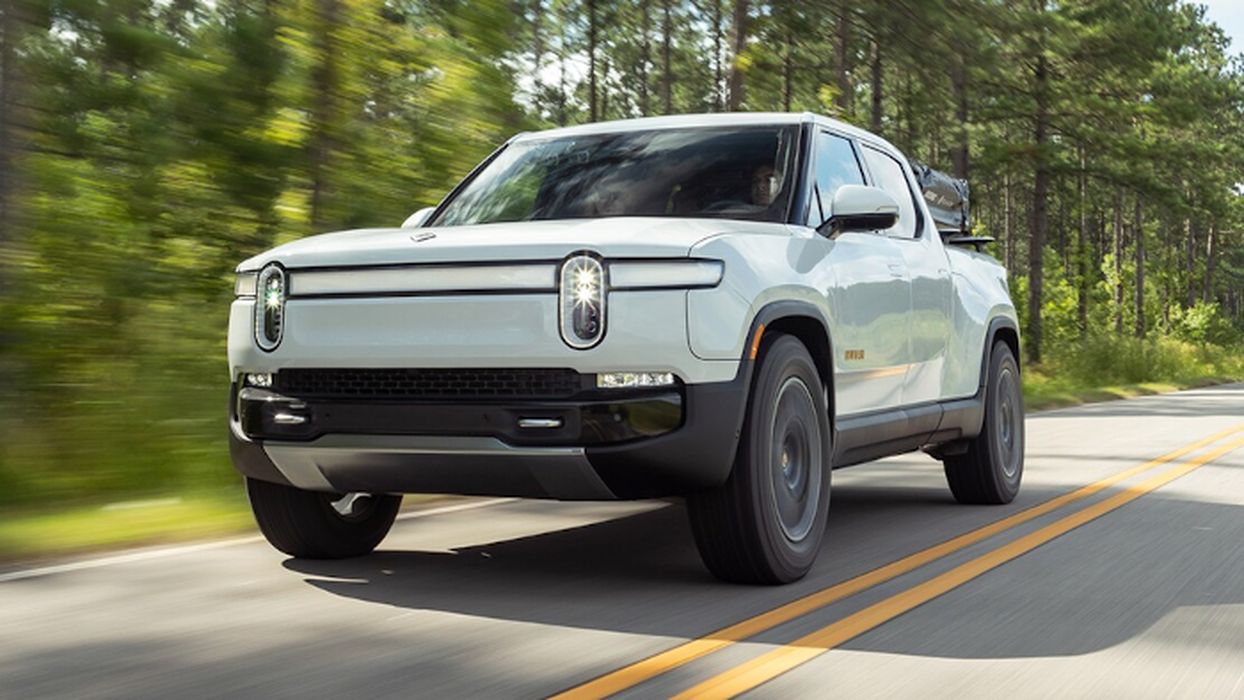
Similarly, Rivian has leveraged scalable 3D printing infrastructure to iterate rapidly across its R1T pickup and R1V delivery van platforms. When engineers in Normal identify a mechanical inefficiency or require a customized bracket during assembly line retooling, the digital file is transmitted instantly to local print farms. The part is produced overnight, stress-tested by dawn, and integrated into the vehicle workflow by the morning shift. This agility shields the company from external supply chain shocks and protects cash reserves during a critical phase of market liquidity scaling.
Financial Impact: Enterprise ROI and Margin Expansion
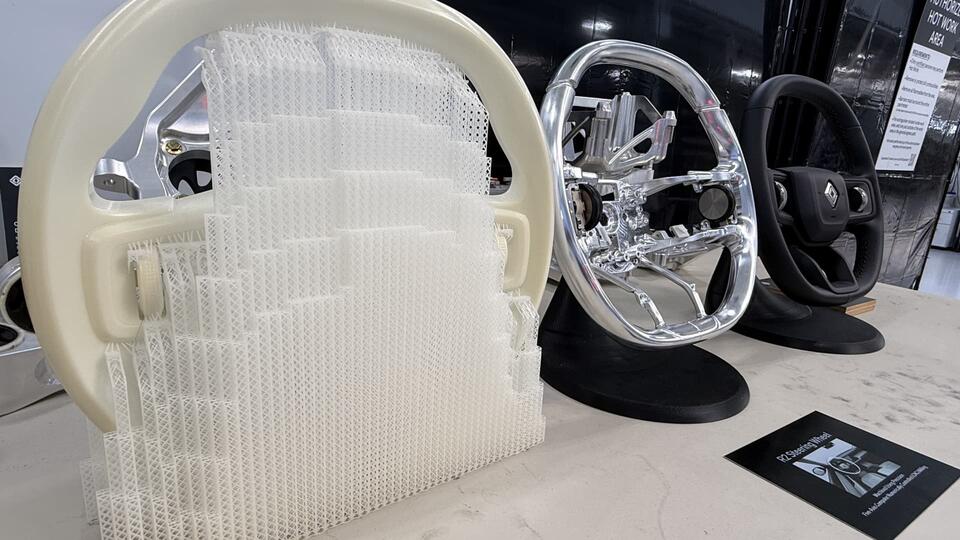
In the hyper-competitive electric vehicle landscape, valuation multiples are inextricably linked to a firm's path to profitability and operational efficiency. Rivian and Ford’s aggressive adoption of democratized 3D printing directly addresses the bottom line by optimizing working capital. Traditional tooling requires immense upfront investments that must be amortized over hundreds of thousands of units, creating severe financial risk if a vehicle variant underperforms in the showroom.
Additive manufacturing transforms fixed tooling costs into variable, on-demand operational expenditures. By printing complex geometries without the need for multi-part assemblies, engineers reduce part counts, minimize fastener requirements, and eliminate the warehouse overhead associated with storing slow-moving spare parts. Instead of maintaining physical inventory for discontinued or low-volume components, automakers maintain digital inventory—a secure cloud compute architecture of CAD files ready to be printed locally whenever demand dictates.
| Metric / Parameter | Traditional Manufacturing | Democratized 3D Printing | Enterprise Impact |
|---|---|---|---|
| Prototyping Lead Time | 4 to 12 Weeks | 12 to 36 Hours | 80%+ Time Compression |
| Tooling CapEx | High ($50k - $500k+ per mold) | Negligible (Digital Files) | Significant Cash Preservation |
| Supply Chain Resilience | Vulnerable to Tier-1 Bottlenecks | Localized / On-Demand Nodes | Risk Mitigation & Agility |
| Inventory Strategy | Physical Warehousing (High Holding Cost) | Cloud Digital Twin Storage | Optimized Working Capital |
Industry & Market Implications: Winners, Losers, and Economic Realities
The democratization of 3D printing is triggering a profound structural realignment across the entire automotive supply chain. Traditional tier-two and tier-three machining shops that rely exclusively on high-volume, low-complexity metal stamping and injection molding face an existential threat. To survive, these legacy subcontractors are being forced to pivot toward high-end additive manufacturing services or risk being disintermediated entirely by OEM in-housing.
Conversely, industrial software providers, advanced materials science firms, and enterprise 3D printer manufacturers are capturing outsized market share. Companies providing high-temperature engineering polymers, carbon-fiber composites, and aerospace-grade metal powders are seeing exponential revenue growth as automakers validate additive parts for structural and under-hood applications.
From a macroeconomic perspective, this trend reflects a broader retreat from hyper-globalized, brittle supply chains toward regionalized, resilient production ecosystems. By shortening the physical distance between design engineers and production lines, automakers reduce their carbon footprint, insulate themselves against geopolitical trade disruptions, and gain the flexibility to customize vehicles for regional markets without incurring prohibitive tooling penalties.
Frequently Asked Questions (People Also Ask)
How are companies like Rivian and Ford actually using 3D printing on the factory floor?
Automakers utilize 3D printing across multiple operational tiers: creating rapid prototypes during vehicle development, manufacturing custom ergonomic assembly tools and fixtures for line workers, and increasingly printing end-use production parts and specialized replacement components directly within manufacturing facilities.
What does "democratizing 3D printing" mean for automotive manufacturing costs?
It signifies the transition of 3D printing from an expensive, highly centralized R&D novelty into an accessible, cost-effective tool deployed widely across decentralized factory nodes. This reduces upfront capital expenditure on hard tooling, minimizes physical inventory holding costs, and accelerates enterprise ROI.
Are 3D-printed parts durable enough for commercial vehicle production?
Yes. Modern industrial printers use high-performance engineering thermoplastics, continuous carbon fiber reinforcement, and direct metal laser sintering (DMLS) to produce components that meet or exceed the mechanical strength, thermal resistance, and fatigue durability required for automotive compliance.
How does additive manufacturing improve supply chain resilience?
By replacing physical spare parts inventory with digital CAD files stored in secure cloud compute architectures, automakers can print critical replacement parts locally on demand, entirely bypassing traditional shipping delays, customs bottlenecks, and tier-one supplier shortages.
Future Outlook: What Comes Next and Key Milestones
As we look toward the remainder of the decade, the trajectory of automotive additive manufacturing points toward full-scale production integration rather than mere supplementary tooling. Industry analysts project that tier-one and OEM adoption of high-speed metal binder jetting will unlock true serial production volumes, allowing automakers to print complex powertrain and structural components at competitive cost-per-part parity with traditional casting.
Key milestones to watch include the integration of artificial intelligence and computer vision for real-time print defect detection, the establishment of standardized regulatory compliance frameworks for structural 3D-printed automotive components, and the expansion of decentralized micro-factories capable of localized vehicle assembly. For financial markets and institutional investors, monitoring how effectively legacy giants and EV pure-plays execute this technological transition will remain a critical indicator of long-term operational margin leadership.