By the Financial Investigations Desk | January 15, 2026
Executive Takeaways
- The Return of Fiscal Dominance: Surging global sovereign debt loads are increasingly tying the hands of central banks, shifting monetary policy from inflation fighting to debt service facilitation.
- December Policy Gridlock: A flurry of December 2025 global central bank decisions exposed deep fractures between official rate mandates and underlying macroeconomic reality.
- Enterprise & Investor Implications: Capital allocation, corporate valuation multiples, and long-term risk mitigation strategies must be fundamentally recalibrated as market liquidity becomes tethered to treasury issuance.
- Structural Volatility Ahead: As quantitative tightening collides with fiscal deficits, institutional investors face persistent yield-curve steepening and heightened foreign exchange volatility.
Comprehensive Narrative
The global monetary architecture is undergoing a quiet, structural transformation. For the better part of four decades, the prevailing economic paradigm assumed central bank independence: monetary authorities set interest rates to maintain price stability, while fiscal authorities independently managed taxation and public spending. Today, that dividing line is eroding. According to recent data and analytical frameworks released by MSCI, "Fiscal Dominance Lurks Behind Uncertain Central-Bank Policies," capturing a foundational tension defining global markets in early 2026.
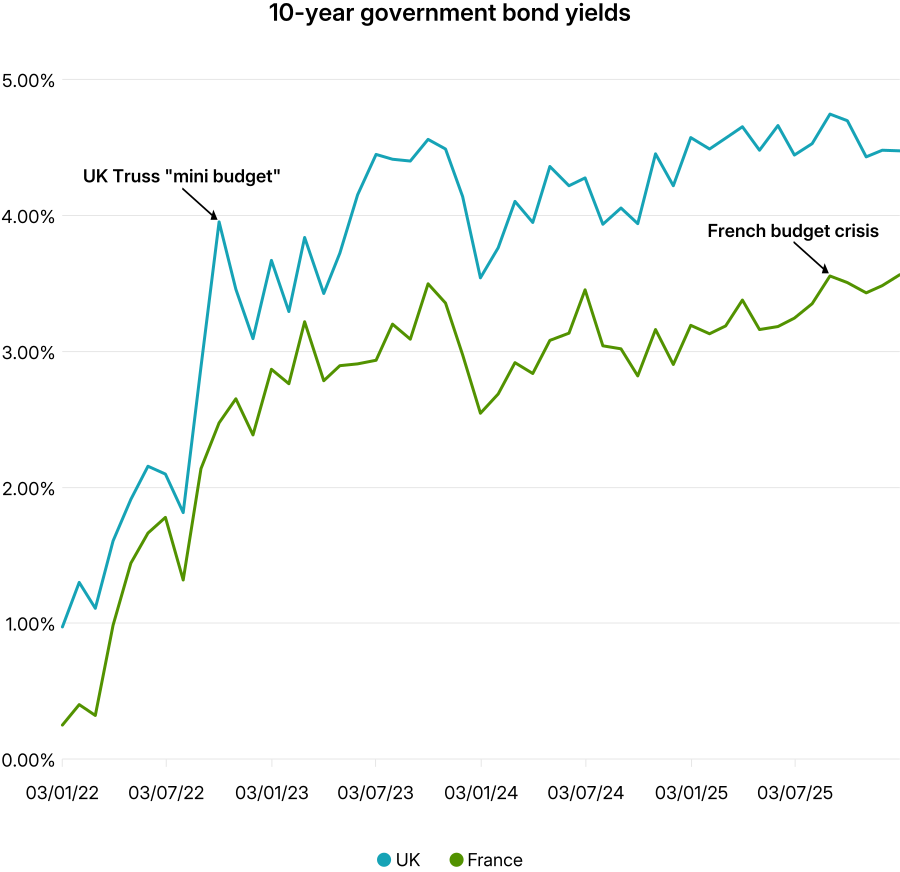
The roots of this vulnerability stretch back through the pandemic-era stimulus programs, subsequent geopolitical shocks, and an uninterrupted trajectory of deficit spending across G7 economies. As public debt-to-GDP ratios reach historic zeniths, sovereign debt issuance has expanded exponentially. When December 2025 brought a flurry of policy adjustments, rate announcements, and balance-sheet updates from the Federal Reserve, the European Central Bank (ECB), and the Bank of Japan, astute market observers noted a recurring theme: central banks are no longer operating in a vacuum. Instead, their rate trajectories are increasingly dictated by the refinancing needs of sovereign treasuries.
Fiscal dominance occurs when monetary policy is subjugated by fiscal requirements. If a central bank attempts to maintain high interest rates to combat sticky core inflation, it simultaneously triggers explosive debt-servicing costs for the state. Conversely, if it cuts rates prematurely to ease government borrowing costs, it risks unanchoring inflation expectations. This delicate policy tightrope was vividly illustrated during the frantic December 2025 central bank cycle, where global rates performance oscillated wildly in response to mixed macroeconomic prints and shifting fiscal projections.
For institutional portfolio managers and corporate treasurers, this environment demands a sophisticated approach to risk mitigation. Traditional models that treat sovereign debt as a risk-free asset class are undergoing rigorous stress-testing. Enterprise ROI metrics must now account for structural shifts in market liquidity, higher baseline cost-of-capital assumptions, and the potential for currency debasement. As central banks navigate this tightrope, corporate strategy must adapt to an era where fiscal deficits dictate monetary outcomes.
Global Rates & Policy Divergence: December 2025 Review
| Central Bank | December 2025 Action | Primary Driver | Market Liquidity Impact |
|---|---|---|---|
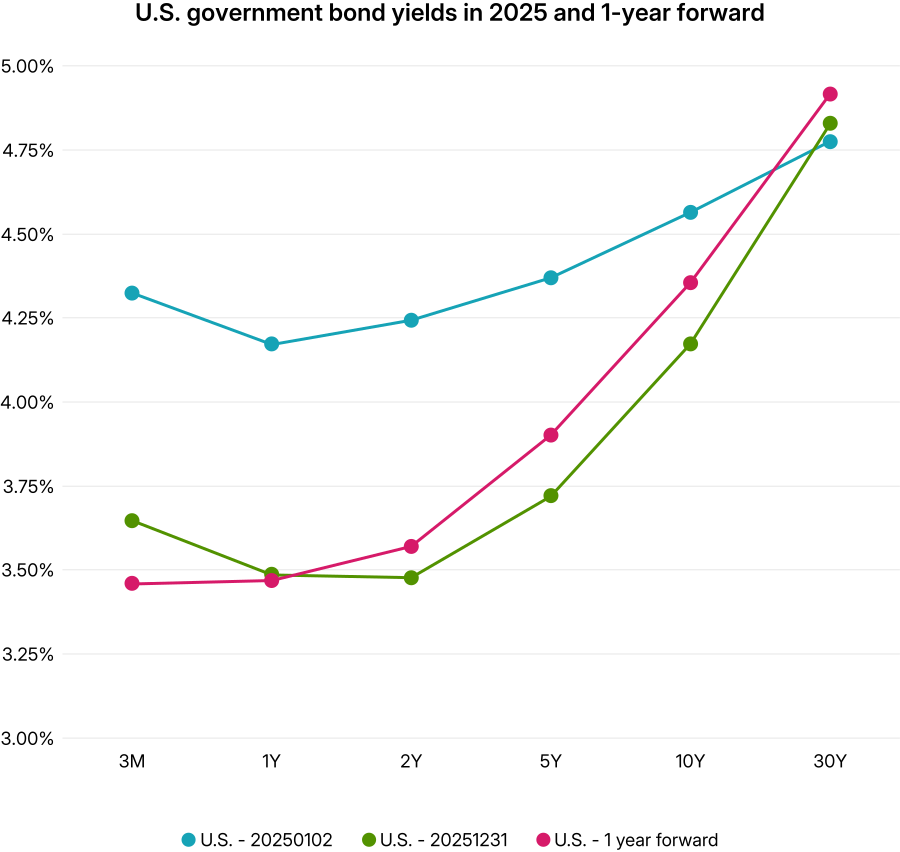
| Federal Reserve | Paued/Data-Dependent Hold | Sticky service inflation vs. rising Treasury issuance | Yield curve steepening; selective credit tightening |
| European Central Bank | Incremental Rate Cut | Sluggish regional growth; fragmented sovereign spreads | Pressure on European banks; targeted capital allocation shifts |
| Bank of Japan | Gradual Yield Curve Normalization | Persistent domestic wage growth; currency defense | Global carry trade unwinding; JGB volatility |
| MSCI Global Index View | Risk-Asset Re-pricing | Sovereign debt overhang and fiscal dominance risk | Compression of valuation multiples across growth sectors |
Industry & Market Implications
The creeping reality of fiscal dominance ripples across multiple sectors, fundamentally altering corporate strategy, capital allocation, and regulatory compliance:
- Who Wins — Hard Assets and Infrastructure: In an environment where central banks may ultimately be forced to tolerate higher inflation to monetize public debt, capital flows heavily toward real assets, commodities, and mission-critical infrastructure scalability. Corporations boasting robust pricing power and tangible asset backing are well-positioned to protect margins.
- Who Loses — Long-Duration Growth & Highly Leveraged Entities: Capital-intensive business models reliant on cheap, perpetual debt financing face severe headwinds. As valuation multiples compress under the weight of structurally higher risk-free rates, firms lacking operational efficiency will struggle to secure favorable refinancing terms.
- Cloud Compute & Tech Architecture: Technology giants face dual pressures. While cloud compute architecture and AI infrastructure scalability demand massive upfront capital expenditure, rising enterprise borrowing costs force Chief Financial Officers to scrutinize operational velocity and cloud migration ROI more rigorously than ever before.
- Regulatory Compliance and Banking: Commercial banks find themselves caught between holding massive portfolios of depreciated sovereign bonds and managing stricter capital adequacy requirements. Regulatory compliance frameworks are pivoting to account for the hidden duration and credit risks embedded within sovereign debt holdings.
Frequently Asked Questions (People Also Ask)
What is fiscal dominance, and why is it a threat to central bank independence?
Fiscal dominance occurs when a government's fiscal position—specifically its debt load and borrowing requirements—forces the central bank to subordinate its primary mandate of price stability. If high public debt makes sustained high interest rates financially unsustainable for the state, the central bank may be pressured to keep rates artificially low or monetize the debt, ultimately risking runaway inflation and loss of credibility.
How did the December 2025 global central bank meetings highlight this dynamic?
The December 2025 policy announcements demonstrated acute sensitivity to bond market functioning and sovereign issuance calendars. As global rates performance fluctuated, central banks had to carefully weigh their anti-inflationary stances against the immediate refinancing walls facing national treasuries, resulting in cautious, data-dependent pauses and divergent regional paths.
How should institutional investors adjust their capital allocation strategies?
Investors are advised to focus on risk mitigation by reducing exposure to long-duration sovereign fixed income, favoring companies with low leverage and strong pricing power, and diversifying into hard assets, commodities, and resilient equity sectors capable of weathering persistent macroeconomic volatility.
What role does MSCI data play in tracking these macroeconomic shifts?
MSCI provides critical analytics, risk models, and indices that help institutional investors quantify equity and multi-asset class exposures to sovereign debt risk, changing interest rate environments, and structural shifts in global liquidity.
Future Outlook & Key Milestones
As the global economy moves deeper into 2026, the tug-of-war between fiscal necessity and monetary discipline will remain the defining macroeconomic narrative. Stakeholders must monitor several critical milestones:
- Sovereign Refinancing Schedules: Watch upcoming Treasury and Ministry of Finance bond auctions for demand degradation, bid-to-cover ratios, and rising term premia.
- Central Bank Balance Sheet Dynamics: Track the pace of Quantitative Tightening (QT) versus stealth liquidity injections or repo facility utilization.
- Inflation Print Volatility: Evaluate whether sticky wage and service inflation forces central banks into a credibility-testing corner against issuing governments.
Ultimately, navigating the landscape of fiscal dominance requires disciplined risk management, agile capital allocation, and a clear-eyed recognition that traditional monetary playbooks have been permanently rewritten by sovereign debt realities.