The Autonomous Security Frontier: How Generative and Agentic AI Are Rewriting Enterprise Defense and Capital Allocation
Executive Takeaways
- The Paradigm Shift: Generative AI provides contextual synthesis, while agentic AI introduces autonomous execution, fundamentally altering how enterprise security operations centers (SOCs) manage threat lifecycles.
- Capital Allocation Realignment: Chief Information Security Officers (CISOs) are aggressively shifting budgets toward autonomous cloud compute architectures to counter machine-speed attacks.
- Infrastructure Scalability vs. Risk: While agentic models drastically reduce mean-time-to-respond (MTTR), they introduce complex governance, compliance, and hallucination vulnerabilities.
In the high-stakes theater of global cybersecurity, the velocity of threat actor innovation has outpaced human cognitive processing. Recent disclosures and telemetry analyses from leading cloud security giants like Zscaler underscore a profound structural transformation: the convergence of generative artificial intelligence (GenAI) and agentic AI. This is not merely an incremental software upgrade; it represents an epochal market shift. As legacy perimeter defenses crumble under the weight of polymorphic malware and hyper-scaled social engineering, enterprises are forced to re-evaluate their entire risk mitigation playbook, cloud compute architecture, and capital allocation strategies.
To understand the current disruption, financial markets and enterprise boards must first dissect the fundamental mechanics separating passive language models from active, goal-oriented digital agents. For years, cybersecurity tooling relied on deterministic rules and heuristics. Today, the battlefield is defined by probabilistic models that reason, adapt, and execute operations at machine speed.
Deconstructing the Threat Matrix: GenAI Versus Agentic AI
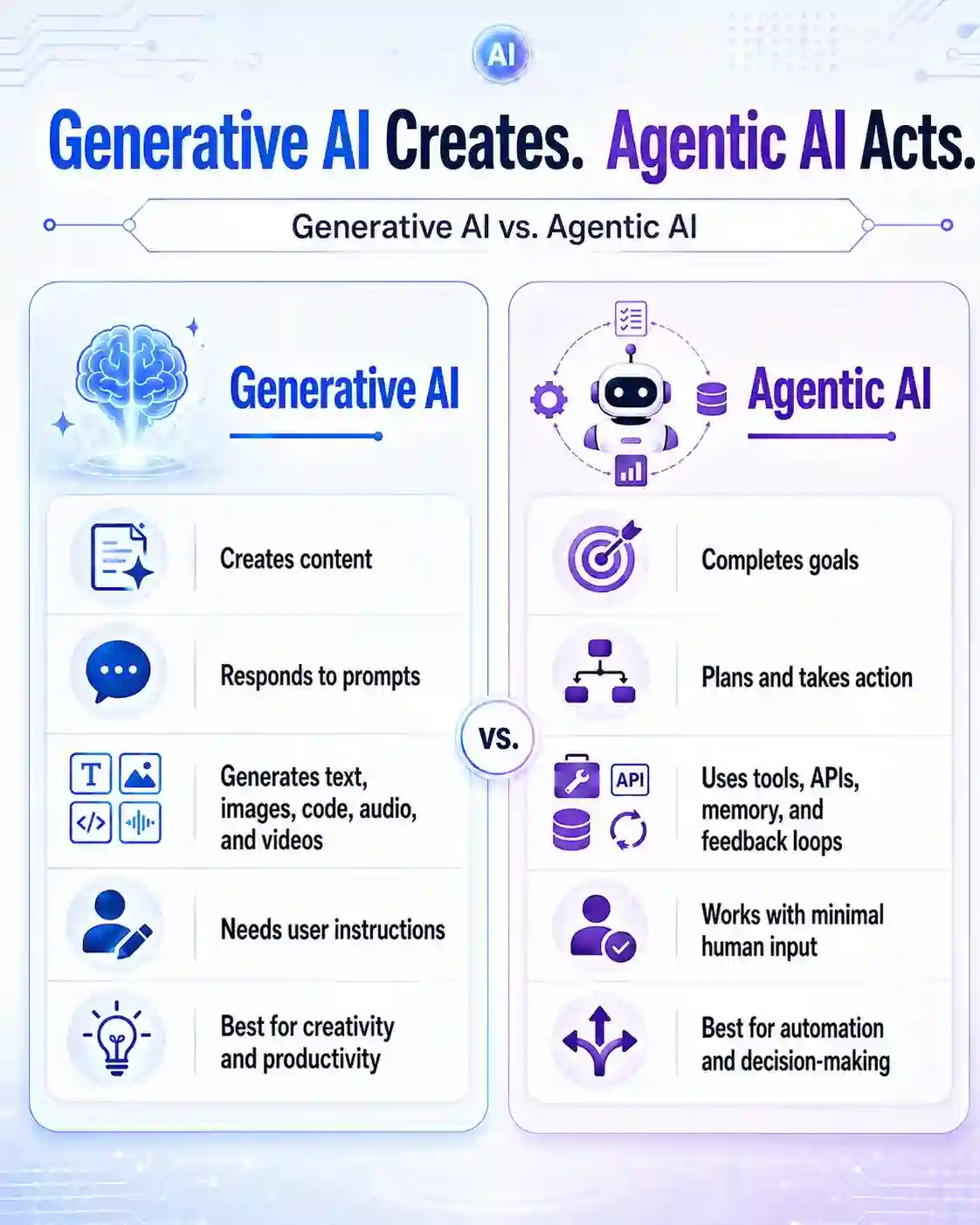
Generative AI revolutionized the technological landscape by synthesizing unstructured data, drafting code, and parsing multi-terabyte log files in seconds. Within the enterprise security stack, GenAI functions primarily as an advanced cognitive assistant. It digests complex threat intelligence feeds, summarizes incident reports, and provides human analysts with rapid contextual framing.
However, GenAI remains fundamentally reactive—it waits for a prompt, generates an output, and halts. Agentic AI shatters this limitation. Agentic systems are engineered with autonomy, memory, and tool-use capabilities. Given a high-level objective—such as "isolate compromised endpoints, extract forensic telemetry, and patch the vulnerable API gateway"—an agentic AI system formulates a multi-step execution plan, invokes necessary APIs, evaluates intermediate outcomes, and iterates until the objective is achieved without human intervention.
This capability introduces unprecedented operational leverage, driving down enterprise risk exposure while simultaneously creating complex governance vectors. When autonomous agents operate across distributed cloud environments, a misinterpretation or algorithmic hallucination can cascade into systemic operational outages.
Enterprise ROI, Valuation Multiples, and Infrastructure Scalability
For institutional investors and enterprise executives, the integration of agentic and generative AI into cybersecurity directly impacts valuation multiples and operational expenditure (OpEx) efficiency. Security operations centers are chronically plagued by talent shortages, alert fatigue, and ballooning labor costs. By deploying autonomous agents capable of handling Tier-1 and Tier-2 triage, organizations achieve a dramatic compression in mean-time-to-detect (MTTD) and mean-time-to-respond (MTTR).
Yet, this transition demands heavy capital investment in specialized cloud compute architecture. Running localized, high-parameter large language models (LLMs) alongside agentic orchestration frameworks requires robust GPU infrastructure, rigorous data pipelining, and continuous fine-tuning. CISOs are discovering that enterprise ROI is inextricably linked to the quality of their foundational data lakes; garbage telemetry in yields autonomous disaster out.
Comparative Technology Metrics
| Metric / Dimension | Legacy Security Tooling | Generative AI (GenAI) | Agentic AI Systems |
|---|---|---|---|
| Operational Autonomy | Zero (Deterministic rules) | Low (Prompt-dependent) | High (Goal-driven workflows) |
| Average Response Time | Hours to Days (Human triage) | Minutes (Context synthesis) | Milliseconds (Automated execution) |
| Infrastructure Demand | Standard Server Compute | Moderate Cloud Compute | Heavy Distributed AI Architecture |
| Regulatory Compliance Risk | Low (Auditable static logs) | Moderate (Hallucination tracking) | Complex (Autonomous decision trails) |
Regulatory Compliance, Governance, and Market Implications
As regulatory frameworks such as the European Union Artificial Intelligence Act and stringent SEC cybersecurity disclosure rules take full effect, the deployment of agentic AI introduces intense compliance scrutiny. Boardrooms can no longer treat software execution as a mere black box. When an autonomous agent revokes user access privileges, reconfigures firewall rules, or quarantines core database nodes, corporate governance demands an unassailable, immutable audit trail.
In the competitive arena, cybersecurity vendors who successfully bridge the gap between autonomous execution and regulatory explainability are capturing outsized market liquidity. Venture capital and private equity allocations are systematically bypassing legacy signature-based antivirus providers, instead funneling billions into platforms that master multi-modal agentic workflows.
Frequently Asked Questions (People Also Ask)
What is the primary difference between generative AI and agentic AI in cybersecurity?
Generative AI acts as a cognitive assistant that synthesizes data, writes code, and answers queries based on prompts. Agentic AI goes a step further by operating autonomously, possessing the ability to set sub-goals, utilize external software tools, and execute complex multi-step remediation workflows without continuous human prompting.
How does agentic AI impact enterprise risk mitigation and SOC workflows?
Agentic AI drastically reduces mean-time-to-respond (MTTR) by automating repetitive triage, threat hunting, and containment tasks. This allows human security analysts to focus on high-level strategic defense, architecture hardening, and complex forensic investigations rather than drowning in low-level alert fatigue.
What are the main regulatory and compliance challenges associated with autonomous security agents?
The primary compliance challenge is explainability. Because agentic systems make probabilistic, autonomous decisions across distributed cloud environments, organizations must maintain strict cryptographic logging and governance frameworks to satisfy auditors, regulatory bodies, and insurance underwriters regarding liability and system oversight.
What infrastructure investments are required to deploy agentic AI effectively?
Successful deployment requires scalable cloud compute architecture, robust API integrations across disparate security tools, high-quality centralized data lakes, and specialized GPU infrastructure to handle low-latency model inference and multi-agent coordination.
Future Outlook: Navigating the Autonomous Horizon
Looking toward the next fiscal horizon, the integration of generative and agentic AI will cease to be a competitive differentiator and become a baseline corporate survival requirement. Threat actors are already weaponizing autonomous loops to probe network perimeters, discover zero-day vulnerabilities, and launch adaptive phishing campaigns at unprecedented scales.
For institutional stakeholders, enterprise leaders, and CISOs, the mandate is clear: capital must be purposefully directed toward secure, transparent, and scalable agentic frameworks. The organizations that successfully harmonize human strategic oversight with autonomous machine execution will dominate the digital economy, while those anchored to legacy manual defenses will find themselves fatally outpaced in the machine-speed conflict zone.