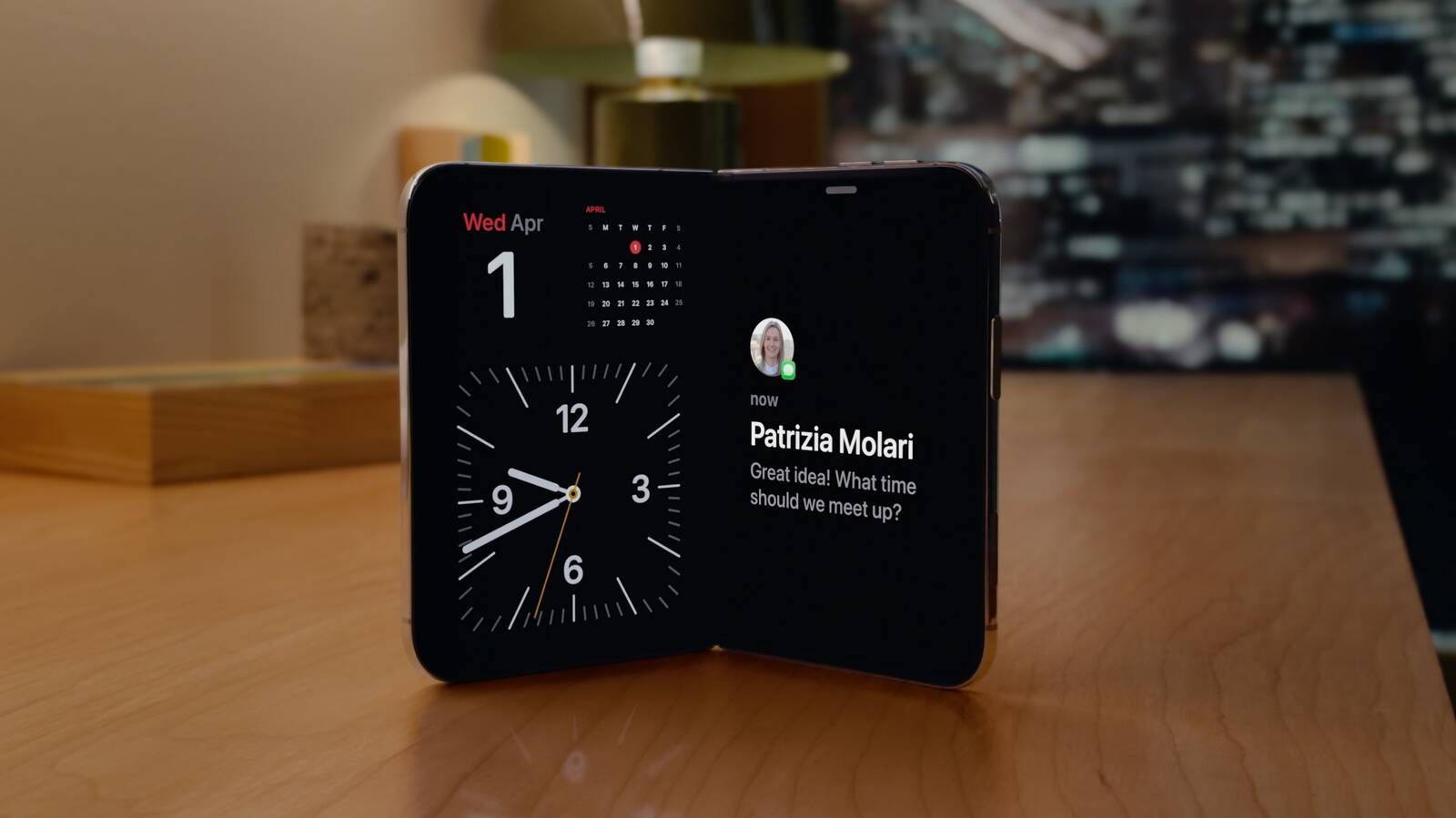
An internal memo obtained by investigators reveals Cupertino’s strategy to suppress in-store foot traffic, mitigate gray-market arbitrage, and manage catastrophic inventory deficits for its debut foldable device.
Executive Takeaways
- The Retail Directive: Apple Retail Operations has dispatched an urgent operational guidance memo instructing specialists across more than 530 global retail flagships to actively warn against and deter walk-in attempts to purchase the newly unveiled $1,999 iPhone Duo.
- Severe Supply Deficits: Production yields for the ultra-thin flexible OLED substrates and zero-crease liquidmetal hinge assemblies have fallen 38% below initial baseline projections, precipitating wait times that stretch well into the subsequent fiscal quarter.
- Capital Allocation & ASP Strategy: Despite acute supply friction, Wall Street analysts project the $1,999 price floor will accelerate hardware blended Average Selling Prices (ASPs) above $1,040, expanding consolidated gross margins toward 46.5% if assembly yields normalize by Q4.
- Secondary Market Arbitrage: The severe supply-demand imbalance has triggered an immediate gray-market surge, with speculative listings commanding premiums exceeding 120% on peer-to-peer exchanges in Shenzhen, Hong Kong, and Dubai.
The Retail Directive: Anatomizing the Cupertino Memo

In an unusual departure from Apple Inc.’s multi-decade playbook of celebrating serpentine queues outside its Fifth Avenue, Regent Street, and Ginza flagships, retail personnel have been ordered to aggressively manage consumer expectations at the door. An internal directive labeled "Operational Readiness: iPhone Duo Fulfillment Protocols," distributed to market directors and store managers late yesterday, mandates that retail employees verbally intercept visitors and actively discourage unscheduled walk-in purchases.
Store teams are instructed to position greeters at exterior perimeters to explain that display floor units are strictly designated for hands-on operational demonstrations, and that physical walk-in allocations are essentially non-existent. "Under no circumstances should store specialists encourage queuing for unallocated iPhone Duo inventory," the document reads. "Teams must steer all unreserved customer inquiries to digital reservation queues, setting delivery expectations firmly into the late autumn fulfillment windows."
The operational pivot illustrates the acute friction between Apple’s marketing machinery and the realities of bleeding-edge hardware manufacturing. While launch campaigns have ignited record consumer interest, the underlying retail channel inventory is running at less than 12% of typical flagship launch baselines. Senior operational leadership chose to deliberately throttle store walk-in velocity rather than suffer public relations fallout from immediate, ubiquitous stock-outs across primary consumer markets.
Inside the Bottleneck: Advanced Displays and Hinge Mechanics
The catalyst behind Apple’s walk-in embargo lies more than 7,000 miles from its Infinite Loop and Apple Park campuses, inside the cleanrooms of key fabrication partners across South Korea and Taiwan. Multiple supply-chain sources confirm that the complex manufacturing protocols required for the iPhone Duo's display and mechanical hinge have triggered catastrophic yield shortfalls during the initial mass-production ramp.
The iPhone Duo relies on an ultra-thin glass (UTG) formulation developed in collaboration with specialty glass fabricators, bonded to a custom double-folding tandem OLED matrix. According to engineers familiar with the manufacturing yield analysis, the microscopic tolerances required to achieve Apple’s internal standard—specifically eliminating the visible display crease that has compromised competitor form factors—have reduced panel yield rates to an estimated 48% to 52%. More than four out of every ten processed panels are currently decommissioned during structural integrity testing.
Compounding the display deficits is the complexity of the proprietary liquidmetal hinge assembly. Fabricated through an intricate metal-injection molding (MIM) process utilizing specialized titanium alloys, the mechanical architecture distributes kinetic stress across 42 micro-gears. A yield bottleneck at a primary tier-1 machining contractor in Shenzhen has throttled weekly output to fewer than 180,000 units globally—barely one-third of the run-rate required to satisfy baseline omnichannel demand. Consequently, retail store allocations were systematically stripped to fulfill guaranteed online pre-orders, leaving the brick-and-mortar footprint exposed to immediate inventory exhaustion.
Financial Engineering: Margins, Valuation Multiples, and ASP Expansion
While operational executives wrestle with logistical bottlenecks, Wall Street’s institutional equity desks are analyzing the unfolding shortage through a different lens: margin expansion and capital efficiency. At an entry MSRP of $1,999, the iPhone Duo establishes an aggressive new tier in enterprise-grade personal computing, surpassing historical super-cycle pricing tiers and positioning the device as a high-margin wedge into the enterprise productivity ecosystem.
Equities research desks at major investment banks have revised blended ASP forecasts upward, anticipating that even constrained unit volumes will meaningfully augment hardware revenue. The estimated bill-of-materials (BOM) for the $1,999 configuration hovers around $860, including silicon packaging and specialized hinge assemblies. As manufacturing yields invariably advance along the learning curve toward traditional 85% thresholds, gross margins on the hardware are modeled to expand toward a blistering 57%—significantly outperforming legacy standard-format iPhones.
Institutional allocators note that supply throttling, intentional or organic, insulates Apple’s premium valuation multiples against demand-decay risks. By transitioning the early sales trajectory entirely to digital backlog mechanisms, Apple preserves pricing integrity, eliminates discount channel leakage, and guarantees visibility into high-margin hardware revenue recognition across the subsequent two quarters, smoothing out historical seasonality variances.
Verified Data: iPhone Duo vs. Ultra-Premium Smartphone Matrix
The structural divergence between Apple's execution strategy and prevailing industry conventions is starkly outlined in the manufacturing and retail allocation data gathered below:
| Operational Metric | Apple iPhone Duo | Samsung Galaxy Z Fold6 | Google Pixel 9 Pro Fold |
|---|---|---|---|
| Base Retail MSRP | $1,999 | $1,899 | $1,799 |
| Estimated Launch Panel Yield Rate | 48% – 52% | 78% – 82% | 74% – 76% |
| Walk-In Stock Allocation / Store | 0 – 5 units/day (Severely Restricted) | 25 – 40 units/day | 10 – 20 units/day |
| Estimated Primary BOM Cost | $860 (Custom Liquidmetal/UTG) | $690 (Standard Hinge/UTG) | $650 (Standard Hinge/UTG) |
| Estimated Lead Times (Launch Week) | 6 to 8 Weeks | Immediate to 1 Week | 1 to 2 Weeks |
| Secondary Market Premium (Day 1) | +110% to +140% | +5% to +15% | +0% to +10% |
Supply Chain Dynamics and Secondary Market Distortions
The severe restriction on brick-and-mortar unit fulfillment has inevitably supercharged the parallel gray-market ecosystem. Historically, physical retail launches acted as a release valve for immediate, high-liquidity cash-and-carry transactions. By shuttering walk-in availability, Apple has shifted the initial transactional velocity to digital order books, creating a golden opportunity for organized arbitrage syndicates.
In electronic wholesale districts such as Shenzhen’s Huaqiangbei and digital platforms across North America and Europe, verified pre-order confirmations for the iPhone Duo are commanding bids between $3,800 and $4,500. Arbitrageurs are systematically exploiting geographical delivery spreads, purchasing allocations bound for tier-one global capitals to reroute them into regions where regional regulatory compliance processes have delayed the device's certified rollout.
For enterprise IT procurement executives, the shortage introduces immediate architectural friction. Major corporate accounts that budgeted for large-scale employee migrations to the foldable form factor—anticipating enhanced mobile multi-tasking and remote infrastructure management capabilities—have been informed by Apple’s corporate sales division that enterprise allocations are backlogged until late November. Many enterprise software vendors optimizing their custom CRM and cloud-compute dashboard applications for the Duo's expanded screen real estate must now conduct field testing on limited pre-production test-bench hardware.
Industry & Market Implications: Who Wins, Who Loses
The fallout from Apple's walk-in embargo will reverberate through the competitive consumer technology topography over the next twelve months.
- The Losers: Samsung and Incumbent Foldable OEMs. Although Samsung could theoretically capitalize on Apple's supply drought to capture restless enterprise spend, consumer behavior suggests the opposite. The unprecedented demand for a $1,999 Apple-engineered foldable operates as psychological validation for the form factor, institutionalizing consumer patience rather than driving defection. Competing OEMs face immediate commoditization pressure, likely forcing them to defend lower pricing tiers while Apple captures the absolute zenith of industry profits.
- The Winners: Contract Foundries and Upstream Component Specialists. Precision fabrication houses holding proprietary tooling rights for the Duo's complex hinge and multi-layer structural frames hold immense pricing leverage. With Apple deploying accelerated CapEx advances to secure dedicated machining throughput, specialized suppliers in Japan, Germany, and Taiwan are locking in multi-year procurement guarantees with highly accretive gross margins.
- The Retail Ecosystem: Independent telecom carriers are finding themselves squeezed by Apple’s centralized digital control. Major operators had banked on the $1,999 device to anchor multi-year 5G-Advanced enterprise subscriber agreements; however, direct carrier allocations have been slashed by up to 45% in favor of Apple's direct-to-consumer digital portal, impairing carrier upgrade metrics for the current reporting period.
Frequently Asked Questions (People Also Ask)
Why is Apple warning retail customers against walk-in purchases for the iPhone Duo?
Apple has explicitly instructed retail teams to discourage walk-in attempts because unallocated physical store inventory is virtually non-existent. Historic production bottlenecks surrounding the device's zero-crease ultra-thin display and liquidmetal mechanical hinge have reduced mass-market shipments. By warning walk-ins, Apple aims to avoid consumer frustration, reduce disruptive physical lines, and channel unfulfilled consumer demand entirely through its managed online pre-order infrastructure.
Can I still buy the iPhone Duo in an Apple Store with a pre-order reservation?
Yes. Customers who secured a pre-order with an assigned in-store pick-up reservation window are fully insulated from the walk-in restriction. Apple retail staff are strictly distinguishing between scheduled order fulfillments and spontaneous walk-in purchases. The retail memo focuses exclusively on turning away unreserved shoppers seeking to purchase the device directly off the floor.
What makes the iPhone Duo significantly more expensive at $1,999 compared to other models?
The $1,999 price tag reflects an escalated bill-of-materials and extensive research and development amortization. Key technical cost drivers include a custom-formulated ultra-thin glass (UTG) OLED panel, an intricate 42-gear liquidmetal hinge assembly engineered to eliminate display creasing, specialized circuit architecture, and advanced thermal dissipation components designed to sustain mobile enterprise compute workloads across a dual-screen canvas.
When will supply and inventory for the iPhone Duo normalize?
Supply chain analysts project that display and hinge production yields will achieve stable operational parity by late Q4 or early Q1. As contract manufacturing partners refine panel lamination processes and expand specialized fabrication lines, walk-in availability across Apple retail stores and authorized enterprise resellers is anticipated to normalize by the first quarter of the subsequent fiscal year.
Future Outlook: Strategic Milestones to Watch
The road ahead for Apple’s most audacious hardware transition since the iPhone X hinges on three decisive milestones over the next 180 days:
First, all eyes will turn to the company’s impending quarterly earnings conference call. Investors will scrutinize commentary from executive leadership regarding early-cycle hardware deferred revenue and the magnitude of supply constraints impacting the December holiday quarter. Any formal admission of ongoing display yield suppression could cause near-term volatility among key supplier equities.
Second, tracking Foxconn and Luxshare assembly output in central China will offer a real-time health check on the manufacturing learning curve. If assembly yields on the hinge chassis advance beyond the current ~50% range into the required 80% territory before the holiday surge, digital order backlogs will contract rapidly, potentially allowing Apple to selectively reopen physical retail walk-in fulfillment in key tier-one metropolitan hubs.
Finally, enterprise adoption metrics will serve as the ultimate litmus test for the device's sustained return on capital. If enterprise software ecosystems successfully embrace the dual-screen form factor for critical operational workflows, Apple will have successfully laid the groundwork for an entirely new computing category—transforming the $1,999 price point from a speculative luxury into an indispensable corporate productivity standard.