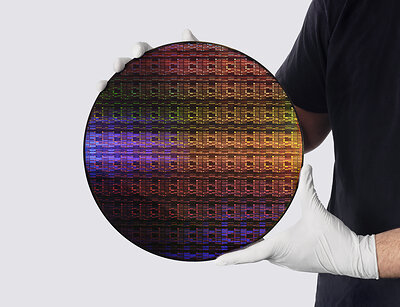
NEW YORK and BENGALURU — In what is rapidly becoming the most capital-intensive technology race in human history, the world’s leading artificial intelligence pioneers and cloud hyperscalers are channeling hundreds of billions of dollars into physical infrastructure. From state-of-the-art silicon fabrication to gigawatt-scale data centers powered by dedicated nuclear reactors, the transition from AI software experimentation to hard-asset deployment has reached a critical fever pitch.
According to wire reports from Reuters and industry tracking data, the momentum that built up through late 2025 has exploded into a massive construction and procurement wave in 2026. No longer just a battle of algorithmic supremacy, the AI revolution is now a high-stakes land grab for real estate, energy grids, and specialized semiconductor pipelines.
The Hard-Asset Arms Race: Moving Beyond Software
For the past three years, public attention focused heavily on large language models (LLMs) and user-facing applications like ChatGPT. However, behind the scenes, the physical limitations of the global computing grid began to show. To sustain the next generation of multi-modal AI agents and autonomous enterprise systems, the physical foundation of the internet is being systematically rebuilt.
Industry analysts estimate that collective capital expenditure (CapEx) for AI infrastructure among the top five tech giants—Microsoft, Alphabet, Amazon, Meta, and Oracle—is projected to surpass $200 billion annually. Leading the charge is Nvidia, which has transitioned from a chip designer to a comprehensive data center architecture provider, alongside OpenAI, which continues to lobby global sovereign wealth funds and energy consortia to secure the compute power required for its artificial general intelligence (AGI) ambitions.
Key Pillars of the 2026 AI Infrastructure Boom
- Sovereign AI Compute: Nations across Europe, the Middle East, and Asia are partnering with Nvidia and local telecom operators to build domestic, highly secure AI data centers to ensure data residency and national security.
- The Nuclear Pivot: Tech conglomerates are bypassing traditional municipal energy grids, signing direct power purchase agreements (PPAs) with nuclear operators and investing heavily in Small Modular Reactors (SMRs) to guarantee uninterrupted, zero-carbon baseload electricity.
- Next-Generation Silicon: While Nvidia's Blackwell and successor chip architectures remain the industry gold standard, custom silicon initiatives (such as Amazon’s Trainium and Google’s TPU) are receiving massive capital injections to diversify supply chains.
- Optical and Liquid Cooling Innovation: Traditional air-cooled data centers are obsolete for high-density AI clusters. Billions are flowing into specialized liquid cooling systems and high-bandwidth optical interconnects to prevent physical thermal throttling.
Mapping the Capital Inflow: Major Infrastructure Initiatives

To put the scale of these investments into perspective, the following table outlines the key focal areas and estimated financial commitments of the industry's primary infrastructure orchestrators as of mid-2026:
| Company / Consortium | Primary Infrastructure Focus | Estimated 2025-2026 Commited Outlay | Key Strategic Partnerships |
|---|---|---|---|
| Nvidia | Full-stack AI data centers, HGX systems, high-bandwidth networking | $45+ Billion (R&D + Supply Chain prep) | TSMC, SK Hynix, global server OEMs |
| Microsoft & OpenAI | Massive-scale supercomputing clusters (e.g., Stargate project) | $100+ Billion (multi-year phase) | Constellation Energy, Oracle Cloud |
| Amazon (AWS) | Global data center expansion, custom Trainium & Inferentia chips | $75 Billion | Talen Energy, local nuclear utilities |
| Alphabet (Google) | TPU deployment, global subsea fiber cables, clean energy grids | $50 Billion | Fision energy startups, European grid operators |
The Gridlock: Why Megawatts, Not Just Microchips, Define the Next Era
While graphics processing units (GPUs) remain the primary currency of the AI boom, the ultimate bottleneck has shifted from silicon to electricity. Training a frontier model now requires tens of thousands of chips running continuously for months, drawing massive amounts of power that threaten to strain municipal grids.
“We are seeing a profound shift in power dynamics,” says a senior infrastructure analyst at a top-tier Wall Street investment bank. “In 2023, tech firms fought over who got the most GPUs. In 2026, the fight is over who controls the gigawatts of power. If you don't have a dedicated, stable energy source, your multi-billion dollar chip cluster is nothing more than expensive paperweights.”
This power constraint explains the flurry of historic energy deals witnessed over the past few quarters. Tech giants are increasingly anchoring their long-term growth to nuclear power, securing long-term leases on decommissioned reactors and funding grid modernization projects across North America and Europe to keep up with the soaring demand of their processing hubs.
The Wall Street Verdict: Is the Massive CapEx Sustainable?
The sheer velocity of this capital deployment has divided opinion on Wall Street. Skeptics warn of a potential "infrastructure bubble," reminiscent of the fiber-optic overbuild of the late 1990s, questioning whether the near-term software revenues from AI tools can justify hundreds of billions in physical expenditures.
Conversely, major investment banks like Goldman Sachs and Morgan Stanley argue that the current cycle is fundamentally different. They contend that the structural demand for AI capabilities across healthcare, finance, logistics, and defense is real and growing exponentially. For these enterprise workloads, high latency and computing downtime are not options, making robust, highly localized infrastructure the ultimate competitive moat.
Frequently Asked Questions (FAQ)
1. Why are AI firms investing in physical infrastructure instead of just refining software?
Modern AI models require massive computational power to train and execute. As models grow larger and handle real-time multi-modal data, traditional cloud servers cannot cope. Physical infrastructure—specifically optimized data centers with advanced cooling, ultra-fast networking, and dedicated energy supplies—is essential to prevent hardware bottlenecks and support the next phase of enterprise-grade AI applications.
2. How is the AI boom affecting global energy markets?
The AI boom has significantly accelerated demand for clean, continuous energy. To avoid carbon-emission penalties and local grid friction, tech companies are bypassing traditional public utilities to partner directly with carbon-free energy providers, particularly nuclear power operators. This shift is driving a renaissance in nuclear energy investment, including increased funding for Small Modular Reactors (SMRs) and grid modernization.