Executive Takeaways
- A Historic Milestone: SpaceX officially closed out October by executing its 700th successful Falcon 9 launch, cementing the vehicle's status as the most prolific orbital-class rocket in human history.
- Infrastructure Scalability & Enterprise ROI: The unprecedented flight cadence has fundamentally altered launch industry unit economics, slashing capital expenditure hurdles and compressing infrastructure deployment timelines for global telecommunications and defense.
- Market Liquidation of Legacy Competitors: The Falcon 9’s rapid reuse cycle and unmatched reliability metrics have forced traditional aerospace incumbents to drastically revise their valuation multiples, pricing strategies, and risk mitigation frameworks.
- The Next Horizon: While Falcon 9 continues to generate vital cash flow and maintain mission assurance, capital allocation is shifting toward Starship testing to capture heavy-lift deep-space logistics and future enterprise contracts.
WASHINGTON & HAWTHORNE — In the high-stakes theater of commercial aerospace, few operational metrics command the immediate attention of Wall Street analysts, venture capitalists, and defense strategists quite like launch frequency and payload reliability. As October drew to a close, Elon Musk’s Space Exploration Technologies Corp. (SpaceX) quietly etched another monumental entry into global industrial history: the 700th successful liftoff of the Falcon 9 rocket family.
For an industry historically plagued by staggering cost overruns, glacial development cycles, and astronomical risk profiles, the 700-flight milestone is far more than a mere engineering curiosity. It represents a watershed moment in infrastructure scalability, supply chain mastery, and capital efficiency. As institutional investors increasingly scrutinize enterprise ROI across tech-heavy portfolios, SpaceX’s Falcon 9 has effectively transitioned from an experimental heavy-industry bet into the undisputed gold standard of orbital delivery—fundamentally redefining how governments and private enterprises access space.
The Catalytic Engine: How Falcon 9 Rewrote Aerospace Economics
Test Our Free AI & Tech Utilities Suite
Calculate LLM API token costs, analyze article dwell-time, or simulate tech DCA returns.
When the Falcon 9 made its maiden flight back in June 2010 from Cape Canaveral Air Force Station, legacy aerospace incumbents dismissed reusable rocketry as an economically unviable distraction. At the time, the prevailing paradigm dictated that orbital-class boosters were single-use assets, resulting in prohibitive manufacturing costs, massive regulatory compliance burdens, and multi-year production delays.
SpaceX’s persistent structural pivot toward vertical landing and rapid booster refurbishment shattered that paradigm. By systematically driving down the cost per kilogram to low-Earth orbit (LEO), the company unlocked entirely new market liquidity for commercial satellite operators, remote-sensing firms, and global broadband providers.
Today, the cadence of the Falcon 9 program operates with the clinical precision of a commercial airline. By standardizing manufacturing processes, optimizing cloud compute architecture for trajectory modeling, and refining real-time telemetry analytics, SpaceX has compressed turnaround times between booster reflights to unprecedented levels. Individual first-stage boosters have now flown upwards of 20 times, transforming what was once a high-cost consumable into a durable capital asset with exceptional depreciation characteristics.
| Metric / Milestone | Historical Industry Standard | SpaceX Falcon 9 Benchmark |
|---|---|---|
| Total Successful Launches | Varies (Low single-digit annual cadence for heavy lifters) | 700+ Missions (As of October close) |
| First-Stage Booster Reuse | 0% (Historically expended into oceans) | Up to 20+ Flights per individual booster |
| Cost to Orbit (per kg) | $15,000 to $40,000+ | Substantially Lower (Disruptive commercial pricing) |
| Launch Cadence | Months or years between dedicated pads | Multiple flights per week across Florida and California |
Industry & Market Implications: Winners, Losers, and Shifting Valuations
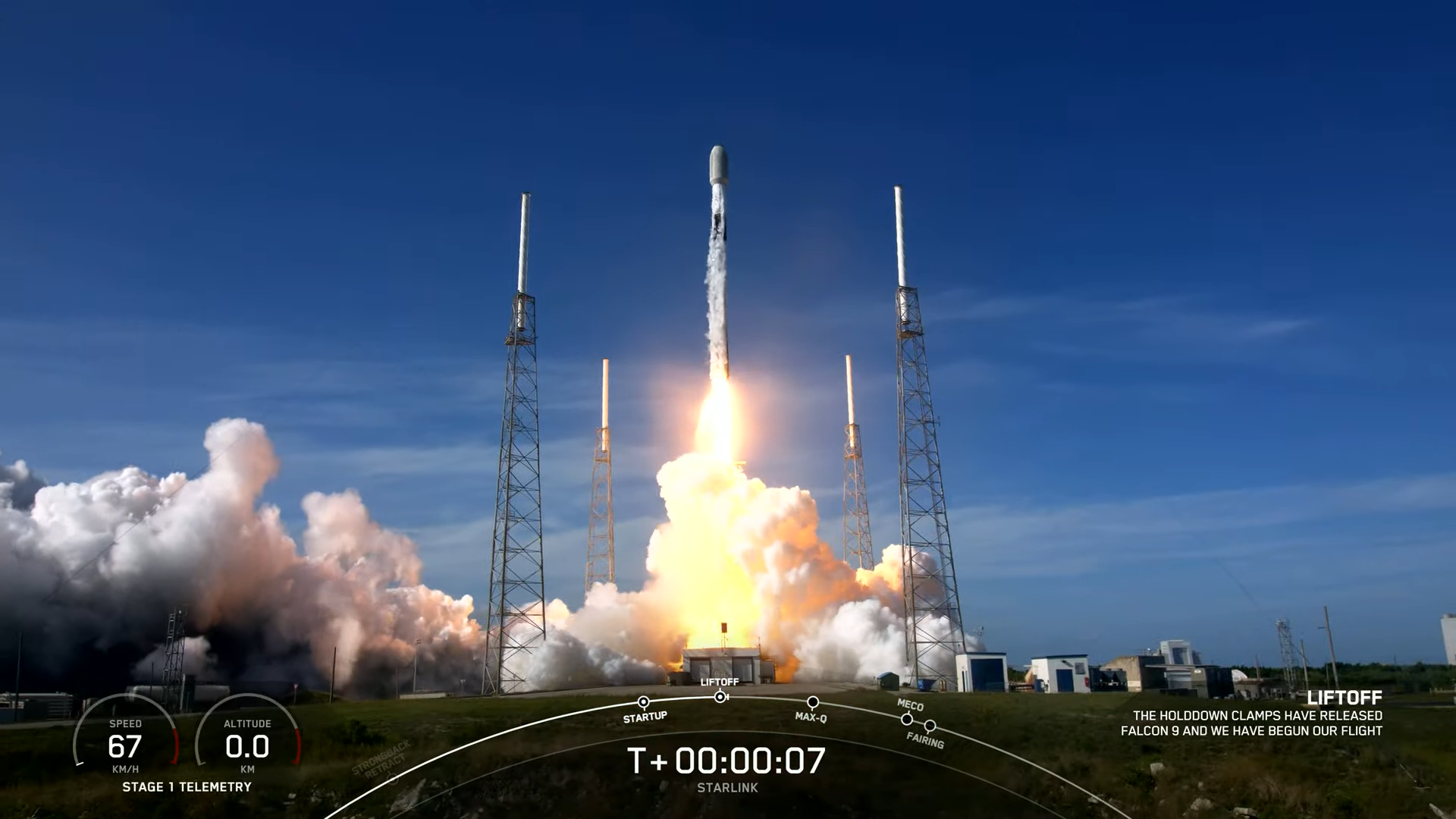
The achievement of the 700-flight milestone reverberates far beyond launch pads in Florida and California, sending strategic shockwaves through global capital markets and defense supply chains.
The Winners: Enterprise Scalers and Commercial Operators
The primary beneficiaries of Falcon 9’s reliability are enterprise operators building mega-constellations—most notably SpaceX’s own Starlink division. The ability to guarantee consistent, high-frequency payload delivery has allowed Starlink to scale global broadband subscribers at an exponential rate, positioning the venture for potential future spin-off considerations or independent valuation multiples that rival major telecom conglomerates.
Furthermore, commercial payload customers—ranging from earth-observation startups to national space agencies in Europe and Asia—enjoy compressed time-to-market metrics. Risk mitigation has improved dramatically because satellite operators no longer face multi-year launch delays that historically crippled project financing and insurance underwriting.
The Losers: Legacy Aerospace and Rigid Bureaucracies
Conversely, traditional aerospace primes in the United States, Europe, and Asia face an unforgiving reality check. Legacy manufacturers tied to cost-plus government contracting models have struggled to match the Falcon 9’s price-to-performance ratio. As institutional investors reassess risk, valuation multiples for traditional aerospace firms have experienced downward pressure, forcing boardrooms to execute painful internal restructurings, divest non-core manufacturing units, and hastily attempt to develop their own reusable architectures.
Frequently Asked Questions (People Also Ask)
How many times can a single Falcon 9 first-stage booster fly?
SpaceX has successfully flown individual Falcon 9 first-stage boosters up to 20 times or more. Through rigorous post-flight inspection, software updates, and component refurbishment, the company continues to push engineering boundaries to maximize booster longevity and reduce marginal launch costs.
What impact has the Falcon 9 had on global launch insurance markets?
As the Falcon 9 established an unmatched track record of reliability across hundreds of consecutive successful missions, underwriting risk profiles improved significantly. While early flights faced cautious insurance premiums, the rocket's modern statistical reliability has stabilized launch insurance rates for commercial payloads, making orbital access far more predictable for corporate balance sheets.
Does Falcon 9 deployment affect SpaceX's next-generation Starship program?
Yes, symbiotically. The Falcon 9 program serves as the primary cash-flow engine for SpaceX, generating the robust operating capital required to fund the heavy research, development, and testing phases of Starship. While Starship represents the future of deep-space logistics and massive payload delivery, Falcon 9 remains the operational workhorse anchoring current enterprise commitments.
Future Outlook: What Comes Next as SpaceX Looks Beyond 700
As industry observers dissect the implications of the 700th Falcon 9 flight, executive attention at SpaceX headquarters is already firmly fixed on the horizon. Achieving 700 launches is a historic testament to manufacturing velocity, but the technological horizon demands even greater efficiency.
Moving forward, the primary strategic challenge for SpaceX will involve managing the transition of heavy enterprise and institutional payloads from Falcon 9 to Starship as the latter achieves full regulatory certification and operational maturity. Simultaneously, the company must maintain its rigorous safety protocols and mission assurance standards across an increasingly congested launch manifest that includes national security payloads, NASA Artemis support missions, and commercial crew rotations.
For Wall Street and global competitors, the message is unequivocal: the economics of space have fundamentally and permanently changed. Companies that fail to adapt to high-frequency reuse and rapid infrastructure scalability risk permanent obsolescence in a market now dominated by the unprecedented momentum of SpaceX’s launch machine.