Milestone 100: Inside the Historic US Spacewalk That Reshapes the Commercial Space Economy and Orbital Infrastructure
Test Our Free AI & Tech Utilities Suite
Calculate LLM API token costs, analyze article dwell-time, or simulate tech DCA returns.
As NASA and its prime aerospace contractors cross a monumental operational threshold, the successful deployment of a cutting-edge solar array on the International Space Station unlocks vital power scalability for future commercial payloads, industrial research, and multi-billion-dollar orbital capital allocation.
Executive Takeaways
- Landmark Milestone: NASA astronauts officially completed the 100th U.S.-supported Extravehicular Activity (EVA) dedicated to the assembly, maintenance, and structural upgrades of the International Space Station.
- Infrastructure Scalability: The deployment of the iROSA (Roll-Out Solar Array) directly mitigates critical power degradation risks, securing a 30% electrical generation boost essential for high-throughput commercial and scientific compute loads.
- Capital Allocation & Valuation: With commercial low-Earth orbit (LEO) transitioning toward private-sector stewardship, this operational success de-risks multi-billion-dollar aerospace investments and validates long-term risk mitigation strategies for prime contractors.
- Supply Chain & Regulatory Compliance: The mission underscores the intricate interdependence between federal space agencies and tier-1 defense contractors navigating stringent structural engineering protocols and payload safety certifications.
The 100th U.S. Spacewalk: A Defining Convergence of Engineering and Capital
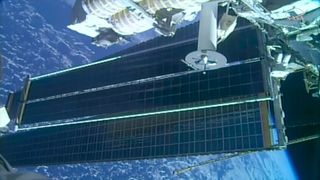
When astronauts exit the airlock of the International Space Station (ISS), the operation is far more than a routine maintenance call. It represents the sharp end of an extraordinarily complex, multi-decade capital allocation cycle involving sovereign balance sheets, aerospace prime contractors, and private enterprise. The recent achievement of the 100th U.S. spacewalk—highlighted by the flawless deployment of a high-efficiency Roll-Out Solar Array (iROSA)—marks a decisive turning point in how humanity powers its primary orbital laboratory.
To fully grasp the financial and industrial weight of this milestone, one must analyze the baseline economic realities of low-Earth orbit infrastructure. The ISS, a $150 billion engineering marvel originally designed for a 15-year operational lifespan, has far outlived its initial depreciation schedule. As private enterprises, venture-backed biotechnology startups, and telecommunications giants line up to lease orbital real estate for microgravity manufacturing and advanced cloud compute architecture, power availability has emerged as the ultimate bottleneck.
Enter the iROSA initiative. Developed through a public-private partnership framework, these advanced arrays roll out like heavy-duty carpets of photovoltaic muscle, designed to augment the aging primary channel power supply originally installed in the late 1990s and early 2000s. Without this critical infrastructure upgrade, the station faced severe power deficits that threatened to constrain enterprise ROI for commercial payloads hosted aboard the orbiting outpost.
Technical Architecture and the Economics of Orbital Power
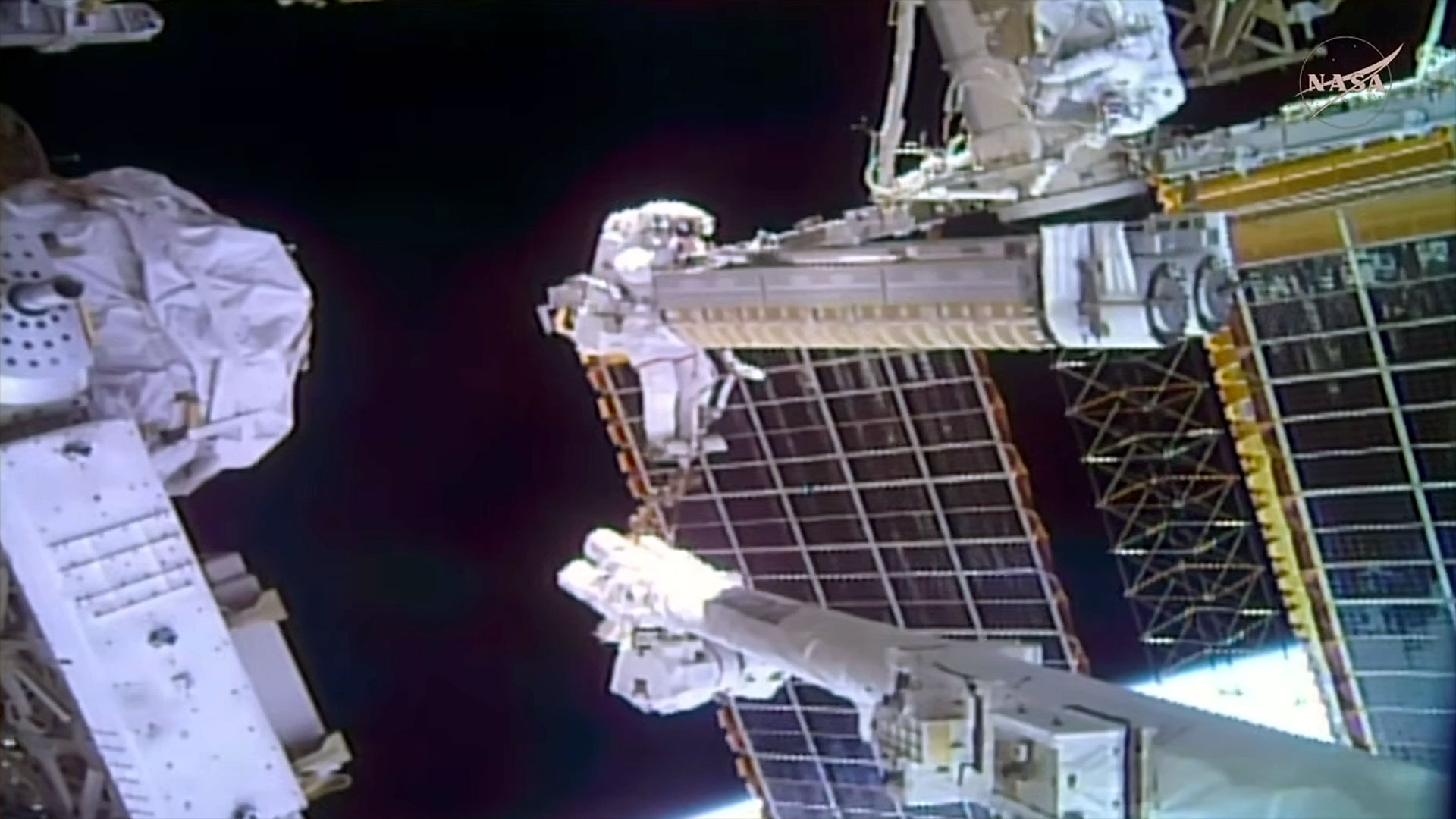
The engineering challenges of executing a landmark EVA while traveling at 17,500 miles per hour, 250 miles above the Earth’s surface, cannot be overstated. Astronauts must manage bulky spacesuit mobility constraints, extreme thermal swings ranging from -250°F to 250°F, and pinpoint precision tolerances. A single misaligned bolt or a jammed tensioning mechanism can jeopardize an asset worth hundreds of millions of dollars.
The iROSA units utilize advanced photovoltaic cells manufactured by specialized tier-1 defense suppliers. These cells capture solar energy with significantly higher conversion efficiency than the legacy silicon arrays. By augmenting the existing power channels, the new arrays restore the station’s total power generation capacity to approximately 215 kilowatts—sufficient to support both the demanding operational requirements of the station's life support systems and the surging power demands of commercial hardware racks.
From a financial perspective, this power restoration directly impacts valuation multiples across the burgeoning commercial space sector. Venture capital and private equity firms assessing investments in LEO infrastructure closely monitor ISS power stability. Every kilowatt added to the station translates directly into increased cloud compute architecture capacity, extended experiment run-times for pharmaceutical crystallization studies, and enhanced market liquidity for private companies preparing for the post-ISS commercial station era.
Verified Data & Metrics Breakdown Table
| Metric / Parameter | Legacy System (Original Arrays) | New iROSA Deployment | Economic & Operational Impact |
|---|---|---|---|
| Total U.S. EVAs Completed | 99 Spacewalks (1998–2023) | Landmark 100th EVA | Validates structural maintenance cadence and risk mitigation protocols. |
| Power Output Boost | Degraded to ~160 kW | Restored/Increased to ~215 kW | Unlocks 30% surge capacity for commercial payloads and research. |
| Array Lifespan Design | 15 Years (Exceeded) | 10+ Years Heavy Duty | Lowers long-term maintenance overhead and capital replacement costs. |
| Primary Stakeholders | NASA / International Partners | NASA, Boeing, Redwire, SpaceX | Strengthens public-private partnership models and supply chain resilience. |
Industry & Market Implications: Who Wins, Who Loses
The successful execution of this landmark EVA reverberates far beyond the confines of NASA’s Johnson Space Center. In the high-stakes theater of the commercial space economy, winners and losers are defined by their ability to execute complex engineering tasks within strict regulatory compliance and budget frameworks.
The Winners: Prime Contractors and Commercial LEO Innovators
Aerospace prime contractors and hardware manufacturers who engineered the iROSA technology stand as immediate victors. By proving that complex structural modifications can be safely and efficiently executed in orbit, these firms strengthen their competitive moats. Furthermore, commercial space station developers—entities racing to build private habitats before the ISS is intentionally deorbited at the end of the decade—gain invaluable technical blueprints. They can adapt these roll-out array designs for their own next-generation orbital platforms, ensuring uninterrupted power scaling for corporate tenants.
The Vulnerable: Legacy Systems Facing Accelerated Obsolescence
Conversely, entities relying on legacy, non-upgradeable orbital hardware face mounting pressure. As power-hungry applications such as artificial intelligence model training in microgravity, edge-computing data centers in space, and advanced pharmaceutical synthesis become commercial realities, platforms incapable of upgrading their power grids will quickly lose market share. Investors are increasingly penalizing firms that lack a clear roadmap for infrastructure scalability and robust risk mitigation.
Frequently Asked Questions (People Also Ask)
Why is the 100th U.S. spacewalk considered a landmark event for the space economy?
The 100th U.S. EVA is a watershed moment because it directly addresses the critical power bottlenecks facing the aging International Space Station. By successfully deploying advanced solar arrays, NASA and its commercial partners have ensured that the station remains viable to support lucrative commercial research, industrial manufacturing, and private payloads through the remainder of its operational lifecycle, protecting billions in private capital investment.
How do the new iROSA solar arrays differ from the original ISS power generation equipment?
The original solar wings, deployed across multiple assembly missions starting in 2000, have experienced normal degradation over time. The new Roll-Out Solar Arrays (iROSA) utilize ultra-efficient photovoltaic cells rolled compactly for launch and unfurled autonomously in orbit using composite slit-tube booms. They overlay existing power channels, boosting total station energy generation by approximately 30% without requiring the removal of legacy hardware.
What are the broader financial and market implications for aerospace firms and investors?
Successful complex maintenance missions validate risk mitigation strategies and bolster investor confidence across the commercial space sector. As private equity and institutional investors pump capital into low-Earth orbit enterprise, proven operational reliability by prime contractors translates directly into stronger valuation multiples, reduced insurance premiums, and more predictable capital allocation schedules.
What comes next for ISS maintenance and the transition to commercial space stations?
Following the completion of the iROSA installation series, NASA's focus will shift toward final structural health assessments, debris mitigation maneuvers, and the methodical handoff of LEO operations to commercial successors. Several private space stations are scheduled for initial module launches later this decade, utilizing the engineering lessons learned from the ISS era to establish self-sustaining commercial orbital economies.
Future Outlook: Strategic Milestones to Watch
As the international aerospace community digests the implications of this landmark 100th spacewalk, attention quickly turns to the horizon. The transition from government-monopsony space exploration to a vibrant, multi-trillion-dollar commercial space economy is accelerating.
Key financial and operational milestones to monitor over the next 24 to 36 months include:
- Commercial Module Docking Trials: The scheduled launch and autonomous docking of privately owned commercial habitability modules intended to dock with the ISS before operating independently.
- Regulatory Framework Evolution: Anticipated updates from the Federal Aviation Administration (FAA) and international regulatory bodies concerning commercial property rights, payload liability, and orbital debris mitigation standards.
- Microgravity Revenue Metrics: Quarterly earnings reports and venture funding rounds for publicly traded and private entities specializing in space-based pharmaceutical research, fiber-optic manufacturing, and orbital cloud infrastructure.
Ultimately, the successful execution of the 100th U.S. spacewalk serves as a powerful reminder: the commercialization of space is not merely a theoretical exercise in venture capital speculation. It is forged through meticulous engineering, relentless operational discipline, and the continuous reinforcement of the physical infrastructure upon which the future of orbital commerce depends.