WASHINGTON — In a breakthrough that rewrites the timeline of cosmic evolution, the $10 billion James Webb Space Telescope (JWST) has unlocked the inner workings of ancient "cosmic factories," revealing the precise mechanisms that filled the infant universe with stardust. Astronomers utilizing the unprecedented infrared capabilities of NASA’s flagship observatory have not only mapped the cradle-to-grave lifecycle of primordial matter but have also peered back to a staggering 280 million years after the Big Bang.
The findings, announced this week, bridge a critical knowledge gap in astrophysics. For decades, scientists puzzled over how heavy elements—the essential building blocks of rocky planets, carbon-based molecules, and ultimately life itself—could have proliferated so rapidly in a young universe that should have been largely barren. The answer, according to the latest JWST data, lies in a high-speed stellar assembly line operating at the dawn of time.
- Unprecedented Depth: JWST successfully detected a fully formed galaxy existing just 280 million years post-Big Bang.
- Stellar Nurseries Mapped: Researchers targeted 72 young, sun-like stars to observe how nascent planetary systems and dust are rapidly synthesized.
- The Cosmic Race: Data reveals that planet formation and heavy-element dispersion operate under a compressed, high-speed timeline in the early cosmos.
- Economic & Technological Return: The $10 billion investment continues to yield paradigm-shifting data, reinforcing the telescope's status as the crown jewel of modern aerospace engineering.
Inside the Celestial Assembly Line: A Race Against Time
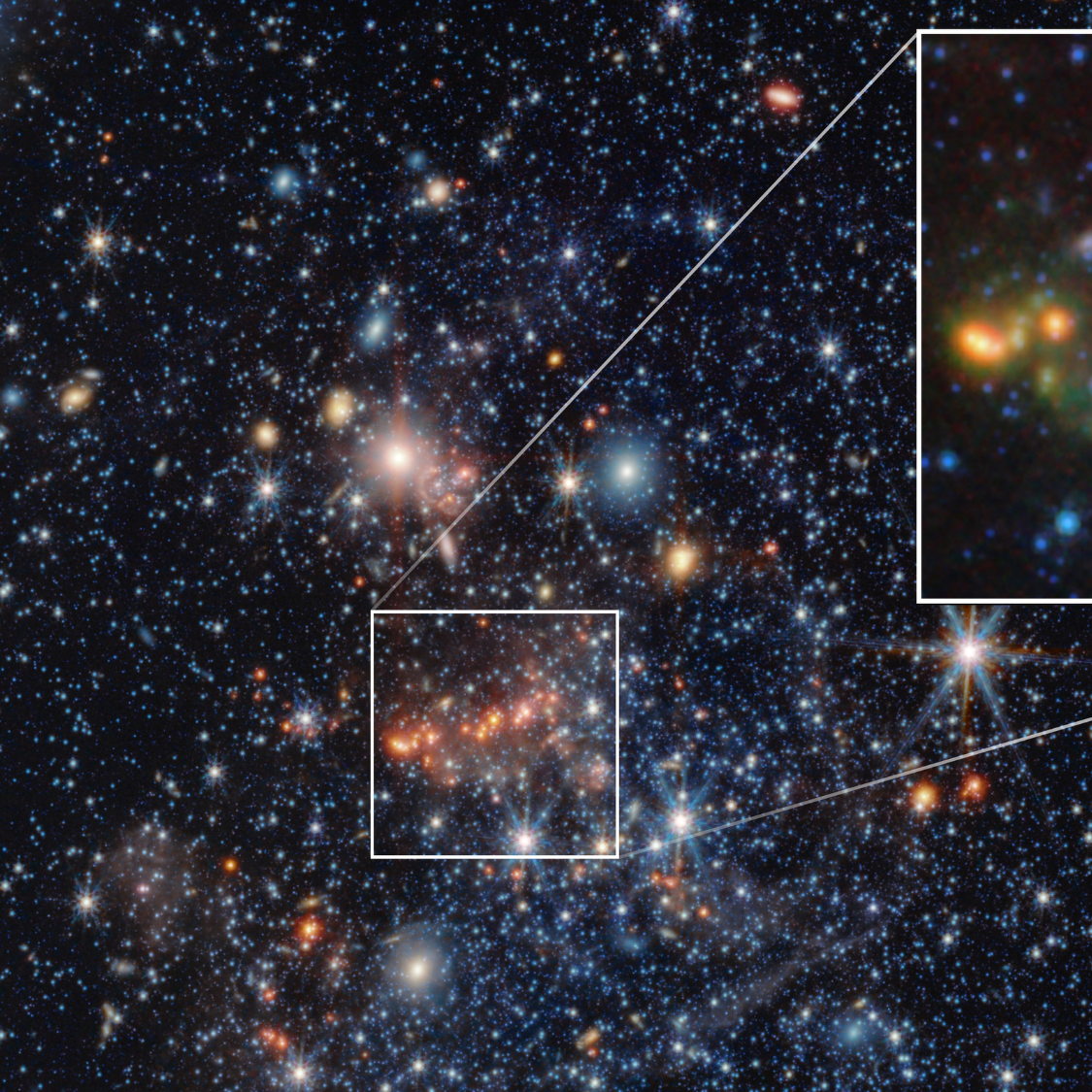
To decode how stardust was manufactured in the ancient universe, an international team of astronomers used the JWST to focus on 72 young, sun-like stars. These stellar objects serve as modern analogues for the chaotic environments that dominated the early cosmos. What researchers discovered is that the creation of planets—and the subsequent dispersion of carbon, silicon, and iron dust—is not a leisurely evolutionary phase, but a high-stakes race.
"We are looking at systems where the margins for error are razor-thin," said one lead astrophysicist involved in the observation campaign. "The dust factories of the early universe had to operate at maximum efficiency almost immediately after the first stars ignited. JWST has allowed us to watch this assembly line in real time, showing that planet formation begins much faster than traditional models ever predicted."
In the young universe, massive stars lived fast and died violently, exploding as supernovae that seeded the intergalactic medium with heavy elements. These enriched gas clouds then collapsed to form the next generation of stars and planetary disks. The JWST’s Near-Infrared Camera (NIRCam) and Mid-Infrared Instrument (MIRI) pierced through dense shrouds of cosmic dust, capturing the molecular signatures of silicates and carbon grains condensing in circumstellar disks with unprecedented clarity.
| Observational Target | Key Instrument Used | Scientific Discovery | Cosmic Timeline |
|---|---|---|---|
| 72 Young Sun-Like Stars | NIRCam / MIRI | Rapid planet formation and dust synthesis race | Current / Local Analogues |
| Primordial Galaxy Candidate | JWST Infrared Suite | Detection of mature stellar structures and dust | 280 Million Years Post-Big Bang |
Pushing the Cosmic Horizon Back to 280 Million Years
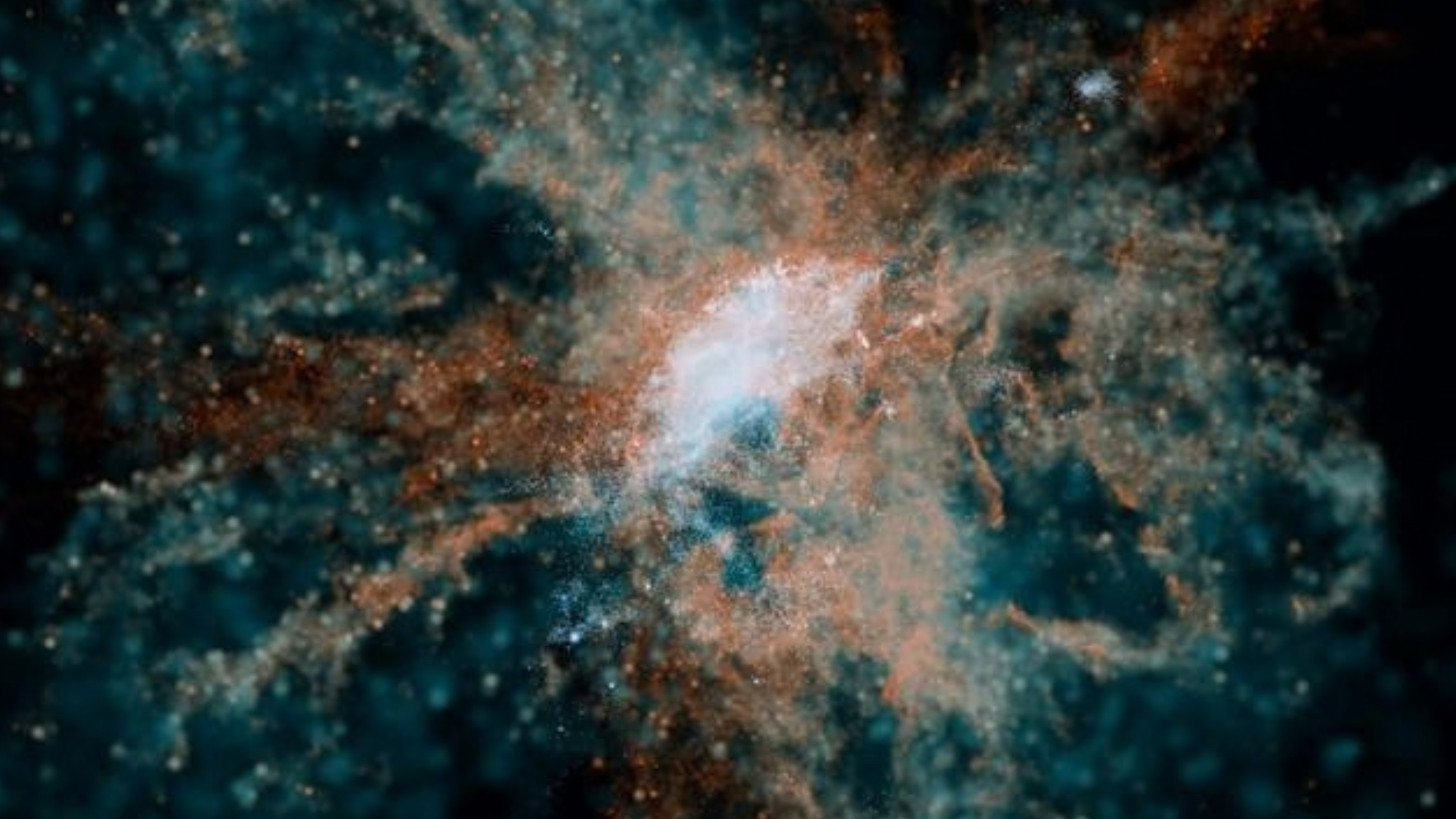
Complementing the study of stellar nurseries, the $10 billion NASA space telescope has once again shattered distance and time records. JWST detected a distant galaxy shining brightly in the infrared spectrum from an epoch when the universe was a mere 280 million years old. Finding complex, dust-bearing structures at this epoch stuns standard cosmological models, suggesting that star formation ramped up exponentially faster than previously theorized.
This discovery directly impacts our understanding of cosmic reionization—the era when the fog of neutral hydrogen gas in the universe was cleared by ultraviolet radiation from the first stars and galaxies. The presence of abundant stardust so early in the cosmic timeline proves that the universe's chemical enrichment engine was ignited almost immediately following the Big Bang.
Market and Scientific Implications
Beyond pure academic curiosity, these revelations have profound implications for the aerospace and tech sectors driving the new space economy. The continuous outperformance of the James Webb Space Telescope validates multi-billion-dollar long-term capital investments in complex orbital hardware. As private commercial space ventures look toward asteroid mining and deep-space resource utilization, understanding the fundamental distribution of heavy elements and stardust provides the baseline map for the cosmos.
Wall Street analysts note that data from missions like JWST continually fuel public enthusiasm for space technology, driving valuations across aerospace manufacturing, optical engineering, and data analytics sectors.
Frequently Asked Questions
What makes the James Webb Space Telescope uniquely suited for finding stardust and early galaxies?
JWST operates primarily in the infrared spectrum. Because the universe is expanding, light from the earliest galaxies and distant star-forming regions is "redshifted" from visible light into infrared wavelengths. JWST's massive golden mirrors and cryogenic cooling allow it to capture this faint heat signature without interference from ambient thermal radiation.
Why is the discovery of stardust 280 million years after the Big Bang important?
Stardust contains heavy elements like carbon, oxygen, and iron, which are forged inside stars and scattered when they die. Finding these elements in abundance just 280 million years after the universe began proves that the first generation of stars evolved, died, and recycled matter at an astonishingly rapid pace.