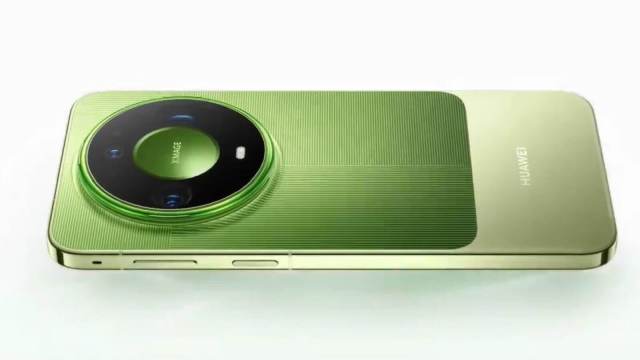
SHENZHEN — Huawei Technologies Co. pulled back the curtain on its highly anticipated Mate 90 series on Tuesday, mounting its most direct challenge yet to Western export curbs. By introducing an all-new homegrown system-on-a-chip (SoC) and severing the last operational threads tying its consumer hardware to American software architecture, the Chinese telecommunications giant is signaling that Washington’s multi-year campaign to choke its access to critical semiconductor technology has run into a formidable domestic wall.
The launch, broadcast from Huawei’s sprawling campus in Shenzhen, marks an aggressive escalation in the global tech war. Just over a year after the Mate 60 Pro caught the U.S. Department of Commerce off guard with a 7-nanometer processor, the Mate 90 demonstrates that China's domestic supply-chain coalition—anchored by state-backed foundry Semiconductor Manufacturing International Corp. (SMIC)—is advancing chip-fabrication efficiency and architectural sophistication despite strict embargoes on advanced extreme ultraviolet (EUV) lithography equipment.
Silicon Sovereignty: Inside the New Architecture
At the center of the Mate 90’s unveiling is the next-generation Kirin processor, engineered under extreme secrecy by Huawei’s internal chip-design arm, HiSilicon. While company executives stopped short of publicizing the exact nanometer node on stage, supply-chain teardown intelligence suggests the silicon leverages advanced self-aligned quadruple patterning (SAQP) techniques to achieve performance levels closely approaching international 5-nanometer equivalents.
The silicon architecture integrates a specialized Neural Processing Unit (NPU) engineered specifically to execute on-device generative artificial intelligence tasks, rivaling silicon deployed by Qualcomm and Apple. In a decisive move toward platform autonomy, the Mate 90 exclusively runs "Pure Blood" HarmonyOS NEXT, a proprietary operating system rebuilt from the ground up that discards the foundational Android Open Source Project (AOSP) Linux core, rendering the hardware completely immune to foreign code revocation.
"We have crossed the most treacherous rapids in our history," Richard Yu, Chairman of Huawei’s Consumer Business Group, told a packed auditorium of analysts, partners, and domestic media. "The Mate series represents resilience built from the ground up. Every core, every layer of microcode, and every communication protocol reflects our complete commitment to indigenous technological capability."
Executive Takeaways: Why the Mate 90 Launch Matters

- Geopolitical Defiance: Proves that Chinese chipmakers can sustain iterative manufacturing advancements without access to Western-origin ASML EUV lithography systems.
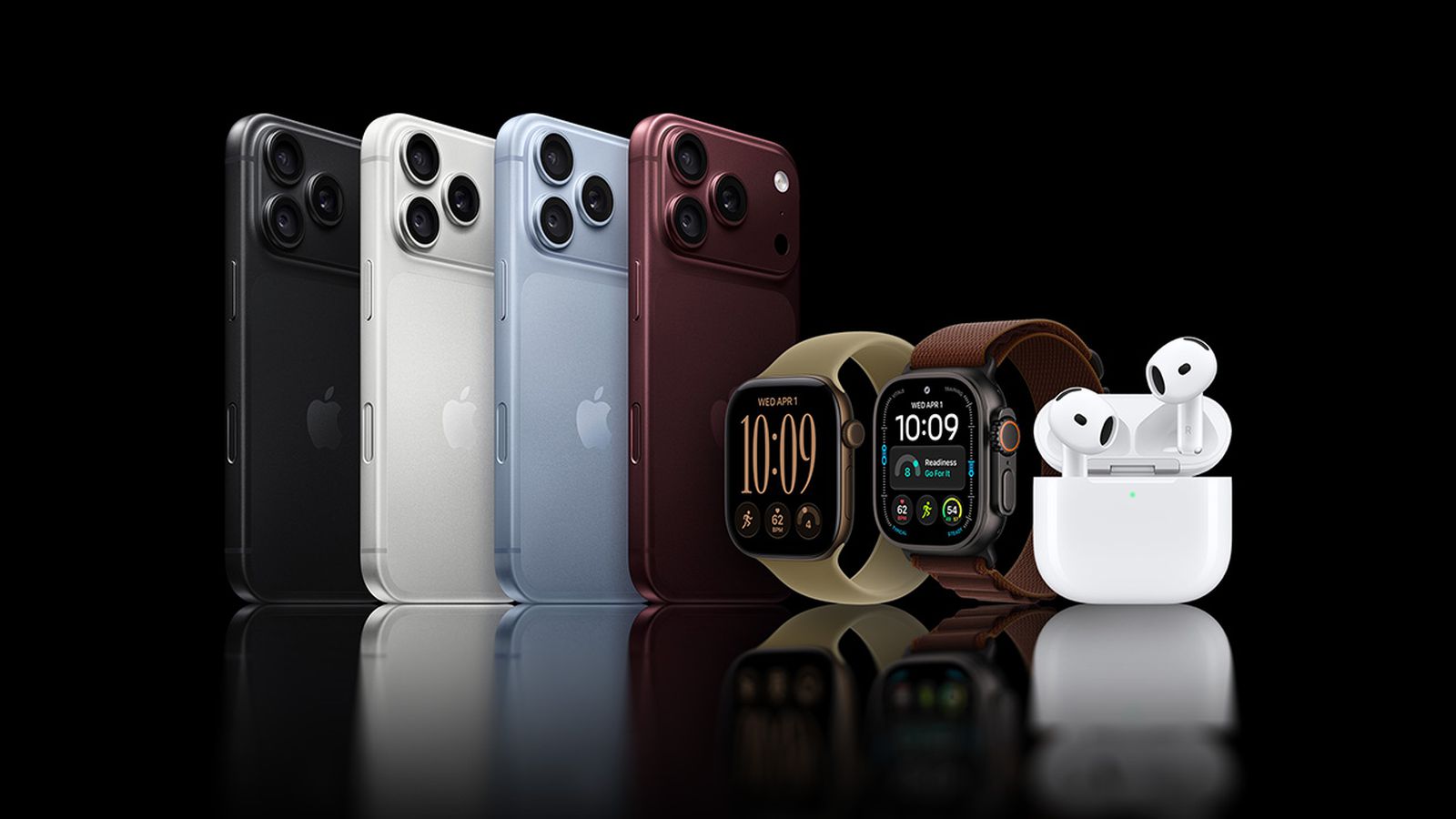
- Apple’s China Squeeze: Directly threatens Apple Inc.’s premium-tier market share in mainland China, where consumer sentiment has tilted decisively toward domestic flagship hardware.
- Full-Stack Decoupling: The debut of HarmonyOS NEXT formally establishes a third global mobile operating system pillar alongside Apple’s iOS and Google’s Android.
- Edge-AI Parity: Embeds proprietary edge-AI computation pipelines designed to offset hardware-level lithography limits through superior software-silicon optimization.
Competitive Matrix: Flagship Showdown
The Mate 90 family enters an intensely competitive premium segment, squaring off against international standard-bearers. Below is an overview of how the Mate 90 Pro matches up against its primary market alternatives:
| Feature / Specification | Huawei Mate 90 Pro | Apple iPhone 16 Pro | Market Strategic Impact |
|---|---|---|---|
| Processor / Node | HiSilicon Kirin (Advanced Multi-Patterning Node) | Apple A18 Pro (TSMC 3nm 'N3E') | Huawei minimizes performance gaps via system-level integration despite lagging node parity. |
| Operating System | HarmonyOS NEXT (Zero-Android Lineage) | iOS 18 | Breaks Google app dependency; establishes self-contained Chinese developer ecosystem. |
| Satellite Capability | Dual-System Low-Earth Orbit Voice & Messaging | Emergency SOS via Satellite (Text Only) | Huawei retains practical leadership in non-terrestrial telecommunications integration. |
| Domestic Retail Starting Price | ~6,499 RMB (~$895 USD) | 7,999 RMB (~$1,100 USD) | Price advantage cements Huawei's momentum in capturing enterprise and elite domestic buyers. |
Wall Street and Beijing: The Broader Economic Standoff
The economic stakes could hardly be higher. For Wall Street analysts tracking Apple’s balance sheet, Huawei’s resurgence has transformed the Greater China market from a reliable cash cow into a battleground. Counterpoint Research data indicates that Huawei’s premium market share experienced double-digit year-over-year growth following the Mate 60's arrival, pulling affluent enterprise buyers away from the iPhone. The Mate 90 is positioned to accelerate that momentum ahead of the Lunar New Year retail window.
Simultaneously, the device highlights the structural limits of U.S. sanctions. Since 2019, when the Trump administration placed Huawei on the Entity List, Washington has systematically broadened export curbs to encompass foundry access, design software (EDA tools), and high-bandwidth memory (HBM). Rather than collapsing, Huawei has emerged as the nucleus of a self-sufficient industrial base backed by billions of dollars in state municipal investment, tax relief, and domestic patent consortiums.
Yet serious hurdles remain. Manufacturing chips through optical multi-patterning on existing deep ultraviolet (DUV) machinery drastically reduces wafer yields and raises production costs compared to TSMC's streamlined EUV processes. Industry analysts warn that while Huawei can produce millions of Mate 90 units for domestic consumers, scaling those supply chains to support global distribution and hyperscale enterprise deployments will test China's manufacturing limits.
Future Outlook: The Fragmenting Global Tech Stack
As the Mate 90 heads to store shelves across Beijing, Shanghai, and Guangzhou, it serves as tangible evidence of a bifurcated tech world. Huawei is actively pitching its native AI platform and HarmonyOS developer toolkit across Southeast Asia, the Middle East, and Latin America, attempting to build an alternate standard immune to U.S. regulatory reach.
Washington is expected to respond. Bureau of Industry and Security (BIS) officials within the Commerce Department are already reviewing the architectural specifics of Huawei's latest silicon disclosures to determine whether secondary sanctions on allied suppliers are warranted. For now, Huawei has proven that it cannot merely survive outside the Western orbit—it can innovate.
Frequently Asked Questions
1. How is Huawei manufacturing advanced chips without Western EUV machines?
Huawei’s manufacturing partner, SMIC, uses sophisticated Deep Ultraviolet (DUV) lithography combined with multi-patterning techniques (such as self-aligned quadruple patterning, or SAQP). While this workaround introduces lower production yields and higher unit costs than true EUV manufacturing, it enables the creation of high-density silicon capable of flagship-level consumer performance.
2. Can the Mate 90 run Western applications like Google Maps or WhatsApp?
The Mate 90 runs HarmonyOS NEXT, which has completely purged the Android runtime library. Consequently, traditional Android APK files cannot be installed natively. While domestic Chinese applications (WeChat, Alipay, Douyin) have created fully native HarmonyOS versions, foreign consumers relying on Google Mobile Services (GMS) will find the device largely unusable without complex virtualization software or third-party cloud workarounds.