The AI Trust Deficit: Anthropic Policy Chief Warns the Industry Can No Longer Run on an 'Honor Code'
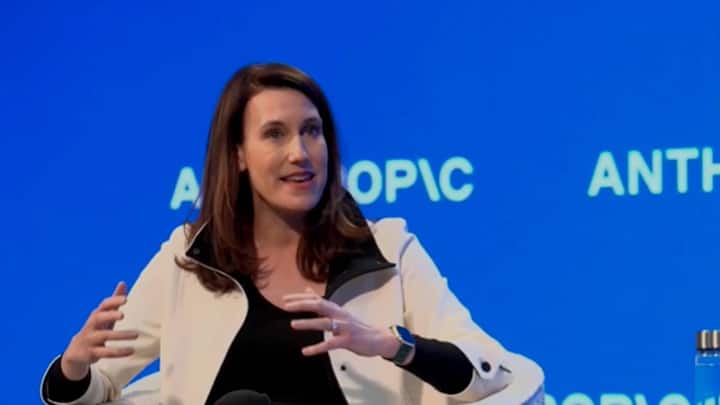
WASHINGTON — In a stark acknowledgment that is sending shockwaves through Silicon Valley and global policy circles, a top executive at artificial intelligence frontrunner Anthropic has declared that the booming generative AI sector has outgrown voluntary self-regulation. Speaking candidly on the governance of frontier models, the company’s policy leadership warned that relying on an informal "honor code" among competing tech giants is no longer a viable strategy for managing existential technological risks.
The remarks mark a significant turning point in the ongoing debate over artificial intelligence oversight. For years, major tech laboratories—including OpenAI, Google DeepMind, Microsoft, and Anthropic itself—have pledged adherence to voluntary safety commitments brokered by governments worldwide. However, as the race to achieve Artificial General Intelligence (AGI) accelerates amid massive capital inflows, industry insiders are increasingly breaking ranks to call for legally binding guardrails.
The Collapse of Voluntary Governance in Big Tech
The core argument presented by Anthropic’s policy leadership centers on market dynamics. In a hyper-competitive landscape where billions of dollars in enterprise value hinge on being first to market with superior reasoning capabilities, individual companies face immense economic pressure to trim safety budgets or accelerate deployment timelines.
According to the executive, expecting for-profit entities to independently police the outer boundaries of transformative technology creates an untenable conflict of interest. When commercial survival depends on out-innovating rivals, voluntary frameworks inevitably take a back seat to quarterly earnings and capability milestones.
- Economic Incentives vs. Safety: Free-market pressures incentivize risk-taking, making self-regulation vulnerable to competitive erosion.
- The AGI Race: As models approach human-level problem-solving, the margin for error narrows dramatically.
- Regulatory Vacuum: Fragmented global policies have left a patchwork of guidelines that sophisticated actors can easily circumvent or lobby against.
- The Shift to Hard Law: Industry leaders are realizing that predictable, enforceable regulations provide a stable business environment better than unpredictable public backlashes.
This reality check comes at a time when lawmakers in Washington, Brussels, and London are struggling to draft legislation that can keep pace with rapid algorithmic advancements. While the European Union has pushed ahead with its landmark AI Act, the United States has largely relied on executive orders and voluntary pacts—a method critics argue lacks teeth.
Inside the High-Stakes Debate Over AI Safety Standards

Anthropic, founded in 2021 by former OpenAI researchers, has consistently positioned itself as a safety-first organization, pioneering concepts like "Responsible Scaling Policies" (RSPs) that tie the deployment of more powerful models to verified safety measures. Yet, the company’s latest stance acknowledges that internal policies are ultimately insufficient without external enforcement.
Competitors have had mixed reactions to these developments. While some executives publicly support government oversight, others worry that heavy-handed regulations will entrench incumbent monopolies, stifling open-source developers and boutique startups who lack the legal and compliance infrastructure to navigate complex federal mandates.
| Governance Approach | Primary Mechanism | Key Advantage | Critical Vulnerability |
|---|---|---|---|
| Voluntary Honor Code | Self-policing & pledges | Rapid implementation | Prone to defection under competitive pressure |
| Binding Legislation | Statutes & independent audits | Level playing field & real accountability | Risk of regulatory capture & slowed innovation |
| Responsible Scaling Policies (RSPs) | Internal capability milestones | Proactive safety engineering | Enforced only at corporate discretion |
The policy chief’s comments underscore a growing consensus among technical safety researchers: market forces alone will not prevent a catastrophic security failure, whether through the accidental generation of dangerous biological pathogens, automated cyberattacks, or the uncontrollable proliferation of autonomous agents.
What Comes Next for Global AI Policy?
As governments digest the implications of Anthropic's warning, attention is turning toward actionable enforcement mechanisms. Observers suggest that future oversight will likely move beyond simple usage guidelines toward mandatory pre-deployment testing, third-party algorithmic audits, and strict provenance tracking for synthetic media and digital content.
For enterprise customers and investors, the shift from an honor code to regulated compliance means navigating a more complex, structured operational environment. While compliance costs will rise, institutional backers increasingly view formal regulation as a necessary precondition for long-term market stability and public trust.
Frequently Asked Questions
Why are AI companies speaking out against self-regulation?
Executives recognize that intense market competition creates a "race to the bottom" regarding safety protocols. Without legally binding rules, companies that prioritize safety risk losing market share to less cautious competitors.
What kind of regulations are industry leaders likely to support?
Major players generally favor standardized, federally backed testing frameworks, mandatory security audits for frontier models, and clear legal liability definitions that apply evenly across the entire technology sector.