Background and Genesis: The Denny’s Meeting That Forged a Giant
In April 1993, amidst the nascent commercialization of the internet and personal computing, three electrical engineers—Jensen Huang, Chris Malachowsky, and Curtis Priem—met over a grand slam breakfast at a Denny’s in San Jose, California. They shared a singular, audacious conviction: that the future of computing lay in accelerated, parallel processing capable of rendering immersive 3D graphics in real-time. Traditional central processing units (CPUs), designed to execute tasks sequentially, were fundamentally unsuited for the massive computational load required by interactive virtual worlds.
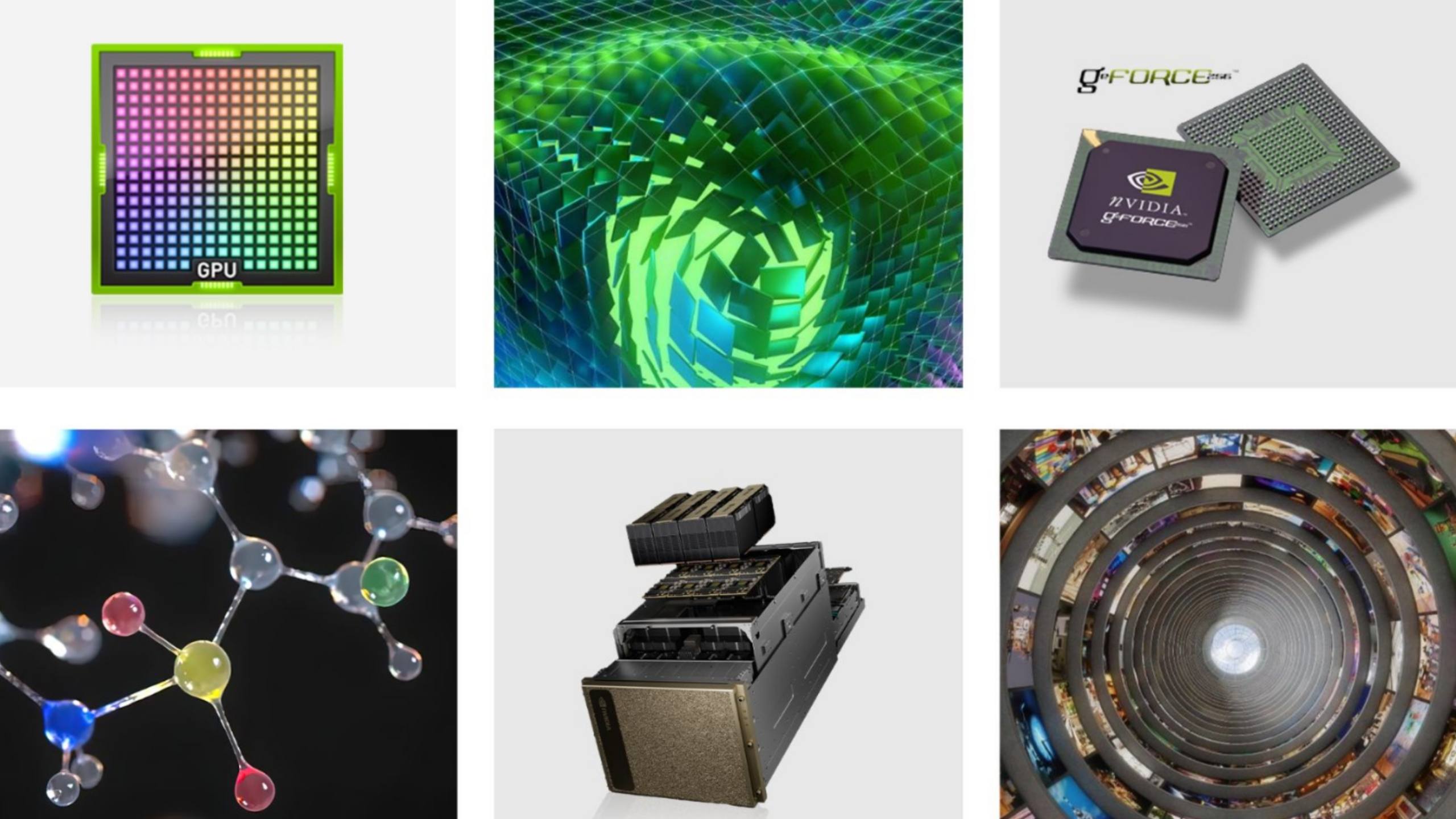
Incorporated formally as NVIDIA later that year, the fledgling enterprise faced immediate skepticism from venture capitalists and established technology conglomerates. Early graphics add-in boards, such as the NV1, struggled with commercial viability and non-standard architecture choices. However, Huang, who assumed the role of CEO and maintained an uncompromising engineering-first corporate culture, recognized that survival required radical iteration. The breakthrough arrived with the launch of the RIVA 128 in 1997, followed swiftly by the watershed introduction of the GeForce 256 in 1999—an innovation NVIDIA coined as the world's first "GPU" (Graphics Processing Unit).
This period of intense capital allocation and rapid research and development (R&D) established a template for NVIDIA’s corporate DNA: aggressive technological bets funded by gross margins from gaming enthusiasts, reinvested directly into next-generation architectures long before the broader market recognized their utility.
The Architectural Pivot: From Polygonal Pixels to Parallel Compute

While the consumer gaming market fueled NVIDIA’s initial revenue growth and market liquidity throughout the 2000s, the company’s most consequential strategic maneuver occurred in 2006. Under Huang’s direction, NVIDIA invested billions of dollars to develop CUDA (Compute Unified Device Architecture), a revolutionary parallel computing platform and programming model that allowed developers to utilize GPUs for general-purpose mathematical processing—a paradigm known as GPGPU.
At the time, Wall Street analysts frequently criticized the multi-year capital expenditures required for CUDA, arguing that it bloated operational expenses without guaranteeing near-term enterprise ROI. Yet, this long-term risk mitigation strategy proved prophetic. By opening the CUDA software development kit to universities, researchers, and scientific laboratories, NVIDIA effectively seeded an entire generation of computer scientists who built their neural networks and data models directly on top of NVIDIA's proprietary software stack.
When AlexNet won the ImageNet computer vision competition in 2012 using deep convolutional neural networks trained on NVIDIA GPUs, the modern artificial intelligence boom was unlocked. The underlying cloud compute architecture of nearly every major technology enterprise shifted overnight toward accelerated computing.
The Catalytic Explosion: Generative AI and the $4 Trillion Milestone
The convergence of big data, high-bandwidth memory, and transformer architecture models catalyzed an unprecedented infrastructural super-cycle starting in 2023. As hyper-scalers—including Microsoft, Google, Meta, and Amazon Web Services—raced to secure dominance in generative AI, NVIDIA’s high-performance data center GPUs (spanning the Ampere, Hopper, and subsequent Blackwell architectures) became the most sought-after commodities in global commerce.
By 2025, this absolute dominance translated into historic financial milestones, culminating in NVIDIA becoming the world’s first publicly traded enterprise to eclipse a $4 trillion market valuation. This valuation expansion was underpinned by staggering financial metrics: multi-billion-dollar quarterly net incomes, operating margins exceeding 50%, and an order backlog that stretched across multiple fiscal years. Enterprise clients were no longer just buying silicon chips; they were purchasing entire turnkey data center systems, networking fabrics (via NVIDIA's acquisition of Mellanox), and proprietary AI software libraries designed to maximize infrastructure scalability.
Verified Data & Metrics Breakdown
To contextualize NVIDIA’s operational scale and market trajectory, the following data table outlines key historical benchmarks, technical inflections, and financial milestones:
| Year / Milestone | Key Technical / Corporate Event | Strategic Impact & Market Context |
|---|---|---|
| 1999 | Introduction of GeForce 256 (First GPU) | Defined the GPU category; offloaded geometry processing from the CPU. |
| 2006 | Launch of CUDA Software Ecosystem | Enabled general-purpose computing on GPUs, creating an unassailable software moat. |
| 2012 | AlexNet Breakthrough at ImageNet | Demonstrated deep learning superiority on GPUs, sparking the modern AI revolution. |
| 2020 | Acquisition of Mellanox Technologies | Provided critical high-speed networking capabilities essential for clustered data centers. |
| 2025 | Surpasses $4 Trillion Market Capitalization | Cemented global status as the premier infrastructure provider for enterprise artificial intelligence. |
Industry & Market Implications: Winners, Losers, and Macroeconomics
NVIDIA’s ascent has sent profound shockwaves across the global economy, fundamentally altering capital allocation strategies from Wall Street to sovereign state treasuries. The immediate beneficiaries are hyper-scale cloud providers and enterprise software firms capable of embedding accelerated AI inference and training into their core product offerings. Furthermore, specialized semiconductor foundries—most notably Taiwan Semiconductor Manufacturing Company (TSMC)—have reaped massive financial rewards from manufacturing NVIDIA’s cutting-edge nodes.
Conversely, traditional semiconductor incumbents who failed to pivot early enough toward parallel software-hardware integration have experienced severe margin compression and lost secular market share. Beyond the technology sector, macroeconomic power dynamics have shifted. Nations and sovereign wealth funds are now actively investing billions in "sovereign AI" infrastructure, recognizing that computational sovereignty is inextricably linked to geopolitical influence and economic competitiveness.
Regulatory compliance and geopolitical friction represent notable headwinds. Export controls restricting advanced semiconductor shipments to key international markets have forced NVIDIA to navigate complex diplomatic and legal landscapes, while antitrust watchdogs globally scrutinize the firm’s tightening grip over the AI value chain.
Frequently Asked Questions (People Also Ask)
What was NVIDIA’s primary business before the artificial intelligence boom?
For the first two decades of its existence, NVIDIA was primarily known as a designer of high-performance graphics processing units (GPUs) tailored for personal computer gaming, professional visualization, and computer-aided design (CAD) workstations.
How did NVIDIA achieve its $4 trillion valuation?
NVIDIA reached the $4 trillion milestone in 2025 due to unprecedented demand for its data center chips and enterprise AI infrastructure. By combining powerful hardware architectures with its proprietary CUDA software ecosystem, NVIDIA became the default engine powering modern generative artificial intelligence models worldwide.
What is CUDA and why is it crucial to NVIDIA's dominance?
Introduced in 2006, CUDA (Compute Unified Device Architecture) is a proprietary software platform that allows developers to use NVIDIA GPUs for general-purpose parallel computing. It created a massive developer ecosystem and a formidable competitive moat, as switching to alternative hardware architectures often requires rewriting complex underlying codebases.
Who manufactures NVIDIA’s advanced microchips?
While NVIDIA designs its semiconductor architectures in-house, it relies heavily on external foundry partners for physical fabrication. The vast majority of its most advanced AI and gaming chips are manufactured by Taiwan Semiconductor Manufacturing Company (TSMC) using state-of-the-art lithography nodes.
Future Outlook: What Lies Ahead for the Computing Titan
As NVIDIA looks beyond its historic $4 trillion valuation milestone, the strategic roadmap centers on maintaining technological velocity in the face of mounting competition from custom application-specific integrated circuits (ASICs) developed by major cloud providers. The impending deployment of next-generation architectures, advancements in robotics, autonomous systems, and industrial digital twins will test whether NVIDIA can successfully expand its addressable market beyond large-scale language model training.
Investors and market analysts will closely monitor capital expenditure trends among hyper-scalers, regulatory scrutiny regarding supply chain concentration, and the ongoing evolution of enterprise software monetization. For now, NVIDIA remains the undisputed linchpin of the global digital economy—a testament to long-term engineering vision, aggressive risk mitigation, and the relentless pursuit of accelerated computing.