Executive Takeaways
- Contrarian Wall Street Stance: Seaport Research has reiterated a rare, high-conviction "Sell" rating on Nvidia Corp. (NASDAQ: NVDA), warning that accelerating competition from rival chipmakers and custom internal silicon will inevitably compress the company’s industry-leading gross margins.
- Market Resilience: Despite the downgrade narrative, Nvidia shares ticked higher in intraday trading, propelled by unrelenting institutional liquidity, robust hyperscaler capital expenditure allocations, and near-term supply chain lockups for its next-generation Blackwell architecture.
- The Custom Silicon Pivot: Hyperscale cloud providers—including Alphabet (Google), Amazon Web Services (AWS), Meta, and Microsoft—are aggressively ramping up in-house Application-Specific Integrated Circuit (ASIC) deployments to curb total cost of ownership (TCO) and mitigate single-source vendor risk.
- Inference vs. Training Dynamics: While Nvidia maintains an undisputed chokehold on frontier AI model training, the strategic pivot toward AI inference workloads is opening lucrative market share opportunities for AMD’s Instinct platform and custom ASIC design partners like Broadcom and Marvell.
The Resilience Paradox: Equity Markets Brush Off Rare 'Sell' Rating

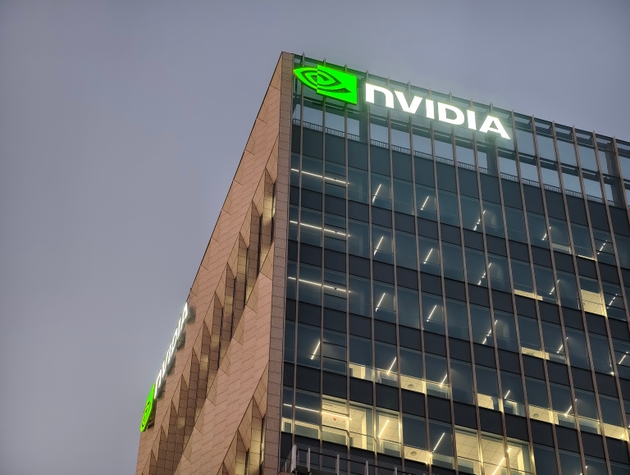
In a market environment where negative sell-side research frequently triggers sharp valuation contractions, Nvidia Corp. (NASDAQ: NVDA) demonstrated its remarkable structural resilience once again. Shares of the Santa Clara-based semiconductor titan ticked upward during morning trading sessions, directly defying a reiterated "Sell" rating from Seaport Research. Seaport’s bearish thesis centers on a core structural hazard: that the competitive moat protecting Nvidia’s enterprise compute hardware is facing unprecedented, multi-front erosion.
For institutional asset managers and private wealth desks, the divergence between sell-side warnings and spot price action highlights the current market regime. Short-term price discovery in Nvidia remains firmly tethered to immediate demand-supply imbalances, quarterly hyperscaler earnings commentary, and the relentless roll-out of enterprise generative AI infrastructure. However, Seaport’s cautionary note underscores a longer-horizon risk factor that macro allocators can no longer ignore—the transition of AI infrastructure from an unconstrained land grab into a disciplined capital allocation and return-on-investment (ROI) exercise.
While mainstream consensus across Wall Street remains overwhelmingly bullish—with buy ratings dominating over 90% of analyst coverage—Seaport's contrarian call cuts directly to the heart of Nvidia’s multi-trillion-dollar valuation multiple. The research firm contends that current consensus expectations fail to adequately model the velocity at which major cloud service providers (CSPs) are redirecting capital away from off-the-shelf general-purpose graphics processing units (GPUs) toward specialized, workload-optimized custom silicon.
Inside Seaport's Bear Thesis: The 'Mounting Competition' Landscape
Seaport’s thesis does not rest on the assertion that Nvidia's technology is inferior; rather, it targets the sustainability of Nvidia’s hyper-normal financial metrics. Over the past eight quarters, Nvidia has achieved blended gross margins exceeding 75%, driven by monopolistic pricing power over its flagship H100, H200, and initial Blackwell GB200 systems. Seaport asserts that such margin profiles are historically anomalous in hardware technology hardware cycles and inherently magnetize intense competition.
The competitive pressure outlined in the report spans three distinct operational fronts:
- Merchant Semiconductor Rivals: Advanced Micro Devices (AMD) has cemented its status as the primary commercial GPU alternative with its Instinct MI300X and newly unveiled MI325X accelerators. AMD’s open-source ROCm software stack has matured significantly, reducing the friction for enterprise software engineering teams migrating away from Nvidia’s proprietary CUDA framework.
- Custom ASIC Insourcing: Hyperscalers are no longer merely buyers of silicon; they are now sophisticated chip designers. Alphabet’s Tensor Processing Units (TPUs), AWS’s Trainium2 and Inferentia chips, Meta’s MTIA, and Microsoft’s Azure Maia accelerators represent structural threats to Nvidia's addressable market. These custom chips offer customized compute-to-memory bandwidth ratios specifically tuned for internal enterprise workloads at a fraction of the unit capital cost.
- ASIC Design Ecosystem Partners: Turnkey silicon enablement companies, spearheaded by Broadcom and Marvell Technology, are enabling non-semiconductor enterprise giants to design complex 3nm and 2nm custom chips. This co-design model allows hyperscalers to bypass Nvidia's high gross margin markups entirely.
Seaport emphasizes that as AI deployments shift from massive frontier model training (which requires raw, cluster-wide GPU horsepower and high-bandwidth NVLink interconnects) to large-scale inference (which prioritizes energy efficiency, memory capacity, and cost-per-token), the economic justification for paying premium pricing for Nvidia hardware diminishes rapidly.
The Custom Silicon Threat: Hyperscaler Capital Allocation Dynamics
To fully understand the structural gravity of Seaport’s warning, one must analyze the capital expenditure patterns of Nvidia’s primary customer base. A vast majority of Nvidia's Data Center revenue is concentrated within a tight network of hyperscale cloud operators and Tier-1 sovereign AI entities. For these organizations, enterprise risk mitigation mandates the diversification of compute supply chains.
Every dollar spent on an internal custom ASIC yields significant structural benefits for a cloud provider. First, it drives down the direct infrastructure scalability cost per user token. Second, it eliminates the vendor lock-in dictated by Nvidia’s CUDA software ecosystem. Third, it provides direct architectural optimization for specific deep learning frameworks, transformer models, and recommendation engines.
Consider the trajectory of Google's TPU infrastructure, which powered substantial portions of Apple's underlying AI foundation models and Anthropic's research clusters. Similarly, AWS has signaled aggressive expansion plans for its Trainium2 architecture, positioning it as an ultra-cost-effective engine for foundation model training. As these custom architectures achieve parity in key compute metrics, Nvidia’s ability to command premium pricing across its lower-tier and mainstream datacenter SKUs will experience persistent pricing pressure.
Comparative Infrastructure Architecture Matrix
The technical and economic trade-offs across current leading AI compute platforms illustrate why hyperscalers are aggressively pursuing multi-chip architectural strategies:
| Platform / Architectural Solution | Primary Target Workload | Ecosystem & Software Moat | Estimated Gross Margin Profile | TCO & Capital Allocation Vector |
|---|---|---|---|---|
| Nvidia Blackwell GB200 NVL72 | Frontier LLM Training & Real-Time Massive Scale Inference | Dominant (CUDA, TensorRT, NeMo Framework) | 72% – 76% (Peak Enterprise Markups) | Highest Capex outlay; unmatched raw performance & cluster scalability. |
| AMD Instinct MI325X / MI350 | Enterprise Fine-Tuning & High-Memory Inference | Expanding (ROCm Open Ecosystem, PyTorch Native) | 45% – 52% (Aggressive Price Competition) | Lower unit cost; superior memory capacity density per node. |
| Hyperscaler Custom ASICs (Google TPU, AWS Trainium) | In-House Platform Inference & Domain-Specific Training | Internal Proprietary (XLA, OpenXLA, Neuron SDK) | 30% – 40% (Internal Cost Center Economics) | Maximum TCO efficiency; eliminates third-party chip designer margins. |
| Broadcom/Marvell Co-Designed Chips | Custom Hyperscaler Workload Acceleration | Custom Client Software Stacks | 50% – 60% (ASIC Enablement Model) | Tailored silicon architecture; highly optimized power and board space. |
Industry & Market Implications: Who Wins and Who Loses?
The unfolding clash between Nvidia’s market supremacy and rising competitive pressures creates clear strategic divides across the broader technology, financial, and semiconductor landscapes.
Market Winners
- Hyperscale Cloud Service Providers: AWS, Google Cloud, and Microsoft Azure gain immense negotiating leverage over third-party component suppliers as their internal chip programs mature, driving improved long-term operating margins.
- Custom Silicon Designers & Foundries: Broadcom (AVGO) and Marvell (MRVL) stand to capture expanding high-margin revenues as custom ASIC design services surge. Taiwan Semiconductor Manufacturing Co. (TSMC) remains the ultimate neutral beneficiary, manufacturing advanced silicon for Nvidia, AMD, Apple, and hyperscalers alike.
- Enterprise Software Integrators: Organizations leveraging open-source AI frameworks stand to benefit from plummeting compute costs, accelerating enterprise ROI across corporate software suites.
Market Losers & Risks
- Nvidia Valuation Multiples: If gross margins compress from the mid-70s down toward historical semiconductor averages (mid-50s), NVDA stock could face severe valuation multiple contraction, even if total volume sales remain relatively stable.
- Tier-2 GPU Cloud Resellers: Specialized, single-asset cloud providers reliant exclusively on purchasing Nvidia GPUs and renting them out at high spot rates face existential margin compression as hyperscalers flood the market with cheaper custom compute capacity.
Frequently Asked Questions (People Also Ask)
Why did Nvidia stock rise despite Seaport reiterating a 'Sell' rating?
Nvidia stock rose due to strong near-term demand dynamics and immediate institutional liquidity. Investors remain focused on the commercial execution and massive backlog for Nvidia's next-generation Blackwell GB200 chips. Near-term hyperscaler capital expenditure announcements continue to signal strong GPU purchases for the upcoming quarters, blunting the impact of long-term bearish calls.
What is the core argument behind Seaport’s bearish thesis on Nvidia?
Seaport’s thesis centers on mounting competition from both commercial rivals like AMD and internal custom silicon programs from major hyperscalers (such as Google, Amazon, and Meta). Seaport argues that as these custom chips take over larger shares of AI workloads—particularly in inference—Nvidia will experience market share erosion and structural gross margin compression from its peak levels above 75%.
How do custom ASICs threaten Nvidia’s long-term business model?
Custom Application-Specific Integrated Circuits (ASICs) are designed for specialized workloads at lower power and hardware costs. By building their own silicon, hyperscale cloud providers bypass Nvidia’s high markup margins, lower their total cost of ownership (TCO), and reduce reliance on Nvidia’s proprietary CUDA software ecosystem. This poses a threat to Nvidia's expansion in the fast-growing AI inference market.
Is Nvidia’s CUDA software platform still a viable competitive moat?
Yes, CUDA remains a key competitive moat for AI model training, where software development routines are heavily optimized for Nvidia hardware. However, the software gap is narrowing in AI inference workloads, where open-source frameworks like PyTorch, Triton, and Google’s XLA allow developers to run models across non-Nvidia hardware with minimal code refactoring.
Future Outlook: Strategic Milestones to Watch
As the market weighs Seaport’s cautionary stance against Nvidia's continuous operational execution, institutional investors must monitor several critical catalysts over the next 12 to 18 months:
First, the ramp-up velocity and yield curves of the Blackwell architecture will provide a clear test of Nvidia's execution capability. Any engineering delays, thermal management issues in liquid-cooled server racks, or packaging bottlenecks at TSMC (such as CoWoS capacity constraint) could create immediate openings for AMD and ASIC alternatives to capture tier-1 cloud capacity allocations.
Second, Wall Street will closely track gross margin trajectory metrics during upcoming earnings quarters. A sustained drop below the 70% threshold would confirm Seaport's thesis that pricing power is waning under competitive stress. Conversely, if Nvidia maintains gross margins above 75% while scaling Blackwell shipments, it will prove that its system-level integration (combining CPUs, GPUs, networking hardware, and CUDA software) continues to command an irreplaceable premium.
Finally, the structural shift from model training to production inference will define the ultimate enterprise compute landscape. If inference operational spending scales to represent 80% or more of total datacenter infrastructure spend, the market will naturally segment. Nvidia will continue to dominate high-end, frontier-model innovation, while a fleet of custom ASICs and alternative silicon vendors capture baseline workloads—reshaping the balance of power across the global technology ecosystem.