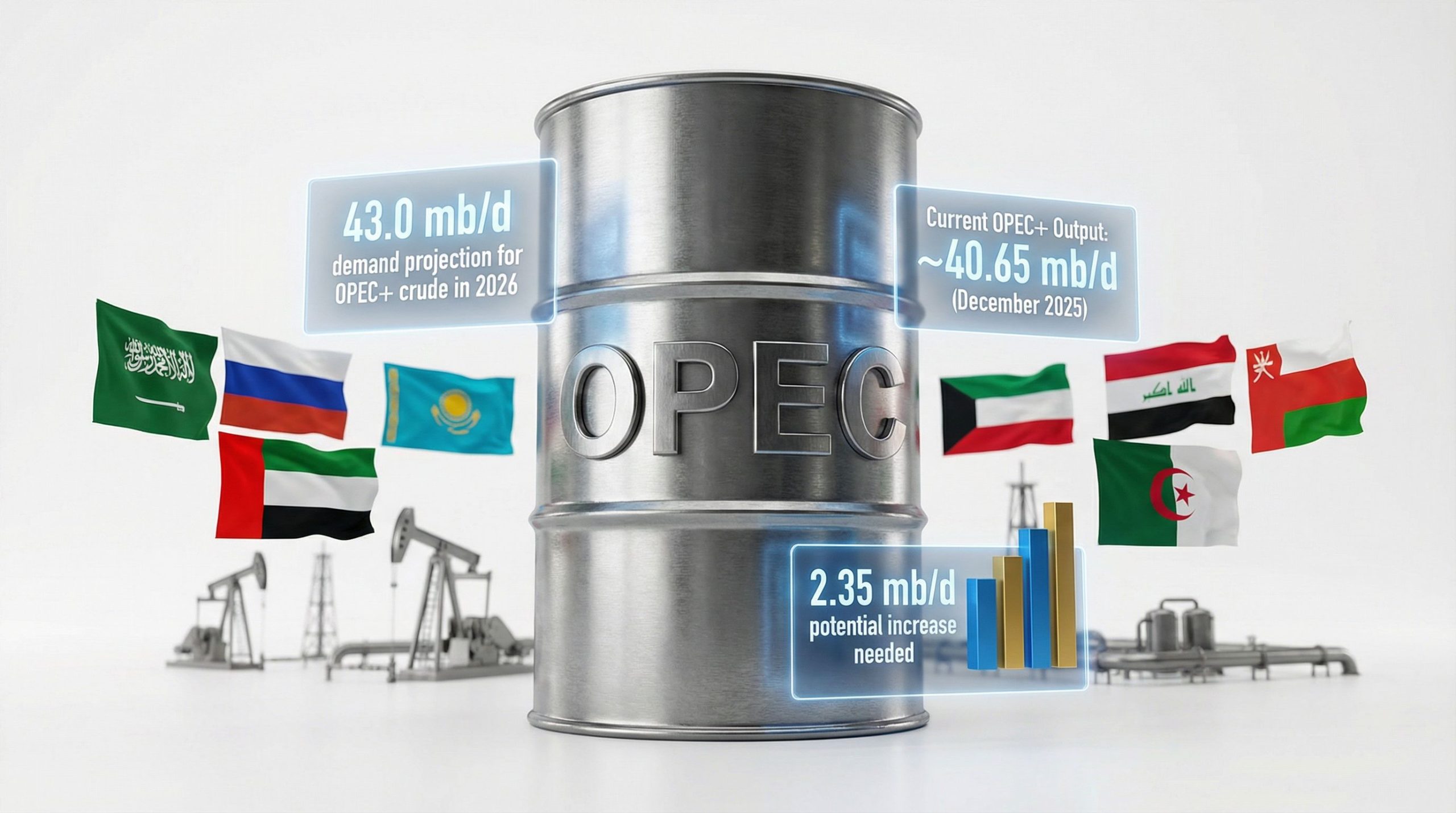
GLOBAL ENERGY DESK — In a decisive move underscoring both caution and strategic resolve, the Organization of the Petroleum Exporting Countries and its allies (OPEC+) have formally agreed to maintain their current oil output targets through December. Following a high-stakes ministerial gathering, the alliance led by Saudi Arabia and Russia opted to bypass any immediate production increases, signaling a collective preference for price defense over market-share accumulation amid softening macroeconomic indicators, volatile geopolitical risk premiums, and persistent questions surrounding global liquidity and capital allocation in traditional energy infrastructure.
For institutional investors, hedge fund managers, and multinational energy conglomerates, the decision offers a temporary anchor of predictability. However, it also exposes the deepening fault lines within international energy markets as supply-demand fundamentals face unprecedented crosswinds. This investigative report breaks down the catalytic events behind the December freeze, analyzes the quantitative metrics governing the cartel's internal calculus, and evaluates the broader financial implications for global valuation multiples, risk mitigation strategies, and capital expenditure (CapEx) cycles.
Executive Takeaways
Test Our Free AI & Tech Utilities Suite
Calculate LLM API token costs, analyze article dwell-time, or simulate tech DCA returns.
- Output Status Quo: OPEC+ confirmed it will keep its collective production quotas steady for December, resisting pressure from certain consuming nations to flood the market with additional barrels.
- Demand-Side Anxiety: The decision reflects deep-seated concerns regarding sluggish industrial activity in major importing economies, notably China and parts of the Eurozone, which continue to weigh on long-term crude price appreciation.
- Fiscal Break-Even Pressures: Key member states, particularly Saudi Arabia, require elevated crude prices to fund ambitious domestic economic transformation programs and maintain national budget equilibrium.
- Strategic Risk Mitigation: By holding production steady, the cartel preserves optionality, retaining the capacity to intervene swiftly should geopolitical escalations in the Middle East or Eastern Europe threaten physical supply chains.
The Catalytic Anatomy of the December Freeze

The path to maintaining December output targets was forged through weeks of intense behind-the-scenes negotiations, balancing conflicting national priorities against a backdrop of macroeconomic uncertainty. Over the past two quarters, international benchmark Brent crude and West Texas Intermediate (WTI) have experienced downward pricing pressure, driven largely by persistent concerns over enterprise-level demand destruction, shifting monetary policy trajectories, and fluctuating commercial inventory data across the OECD.
During preliminary deliberations, delegates pointed to a fragile equilibrium between non-OPEC+ supply growth—led aggressively by shale producers in the United States, alongside expanding output in Guyana, Brazil, and Canada—and an anemically recovering global manufacturing sector. For an alliance that has increasingly positioned itself as the central bank of global crude, allowing structural surpluses to erode price floors was deemed an unacceptable risk to fiscal stability.
Furthermore, internal compliance mechanisms remain a focal point of scrutiny. Several member nations that previously exceeded their assigned quotas have faced rigorous oversight from the Joint Ministerial Monitoring Committee (JMMC). The decision to hold December targets steady allows these overproducing nations additional runway to implement corrective compensation cuts, thereby restoring internal cohesion and credibility to the group's quota-management architecture.
Quantitative Metrics & Market Parameters
To contextualize the scale of the OPEC+ decision, the following data matrix outlines key production metrics, benchmark pricing thresholds, and structural supply dynamics currently governing the global petroleum apparatus.
| Metric / Parameter | Current Status / Value | Strategic Implication |
|---|---|---|
| December Output Target | Unchanged (Maintaining existing cuts) | Prevents physical oversupply and supports near-term price floors. |
| OPEC+ Voluntary Reductions | ~2.2 million barrels per day (bpd) | Core lever for price defense; slated for gradual unwind pending market conditions. |
| Global Demand Growth Forecast | ~1.3M to 1.5M bpd (Year-over-Year) | Reflects moderating velocity compared to post-pandemic rebound years. |
| Saudi Fiscal Break-Even Price | Estimated ~$80 - $85 / barrel (IMF) | Drives Riyadh's conservative stance on defending current valuation bands. |
| Non-OPEC+ Supply Growth | ~1.2M bpd led by Americas | Dilutes cartel market share, forcing disciplined quota enforcement. |
Industry & Market Implications: Winners, Losers, and Capital Allocation
The decision to maintain December quotas triggers immediate ripple effects across global financial markets, impacting asset valuations, enterprise risk models, and sectoral profitability.
The Winners
- Upstream Exploration & Production (E&P) Firms: Independent operators and international oil companies (IOCs) benefit from a mitigated risk of sudden price collapses, securing predictable cash flows that directly support shareholder return policies, including dividends and share buybacks.
- High-Cost Basin Producers: Producers operating in offshore deepwater and complex shale plays find reassurance that the cartel will act as a stabilizing backstop, safeguarding project internal rates of return (IRR).
- Fiscal Authorities in Producer Nations: Ministries of finance within member states avoid immediate revenue shortfalls, maintaining sovereign debt servicing capabilities and national budget integrity.
The Losers
- Energy-Intensive Manufacturing & Logistics: Global shipping enterprises, airlines, and heavy industrial corporations face sustained input costs, limiting margin expansion opportunities and reinforcing persistent inflationary pressures.
- Consuming Nation Central Banks: Policymakers navigating the final stages of disinflation must factor in sticky energy prices, which complicate interest rate trajectory models and bond yield curves.
- Non-Compliant Cartel Members: Quota-constrained nations harboring pent-up production capacity must delay monetization plans, keeping potential revenue locked in-ground.
From a capital allocation perspective, institutional portfolios are witnessing a distinct bifurcation. While ESG-focused funds continue to underweight fossil fuel exposure, value-oriented asset managers are reassessing traditional energy equities as robust hedges against geopolitical friction and currency devaluation. Enterprise ROI metrics within the sector remain heavily scrutinized, with corporate boards prioritizing balance sheet deleveraging over aggressive upstream expansion.
Frequently Asked Questions (People Also Ask)
Why did OPEC+ decide to keep December oil output targets steady?
The alliance opted to maintain output targets to stabilize prices against a backdrop of fragile global demand growth, particularly in key Asian markets, and to counteract rising non-OPEC+ supply. By holding production steady, the cartel aims to prevent inventory gluts and support price floors necessary for member-state fiscal stability.
How does this decision impact retail gasoline and energy prices?
By preventing additional crude barrels from entering the global marketplace, OPEC+ reduces the likelihood of steep price drops at the pump. While it does not necessarily trigger aggressive price spikes on its own, it establishes a firm baseline, keeping retail fuel costs relatively stable for consumers and commercial fleets.
What role do voluntary cuts play in current OPEC+ strategy?
Voluntary cuts totaling approximately 2.2 million barrels per day represent the vanguard of the cartel's price defense mechanism. These cuts are layered on top of official quotas and are periodically reviewed for gradual relaxation or extension depending on real-time market liquidity and macroeconomic indicators.
What are the key risks facing the OPEC+ policy moving forward?
Primary risks include potential non-compliance by overproducing member states, weaker-than-anticipated macroeconomic performance in major economies, and faster-than-expected output growth from non-cartel producers such as the United States, Guyana, and Brazil, which could collectively erode the market share and pricing power of OPEC+.
Future Outlook & Strategic Milestones
Looking ahead into the first quarter of the new year, market participants will be closely tracking several critical inflection points. The primary focus will center on whether the alliance decides to extend its voluntary production cuts beyond the current timeline or initiate a cautious, phased unwinding of barrels. Much of this determination will hinge on winter heating demand realizations in the Northern Hemisphere and high-frequency economic data releases from Beijing and Washington.
Furthermore, analysts will monitor compliance reports issued by the JMMC for any signs of internal friction. As geopolitical flashpoints continue to introduce unpredictable risk premiums into international supply chains, the agility of OPEC+ decision-making will remain a defining variable for global financial stability, corporate risk mitigation frameworks, and valuation multiples across the global energy complex.