Executive Takeaways
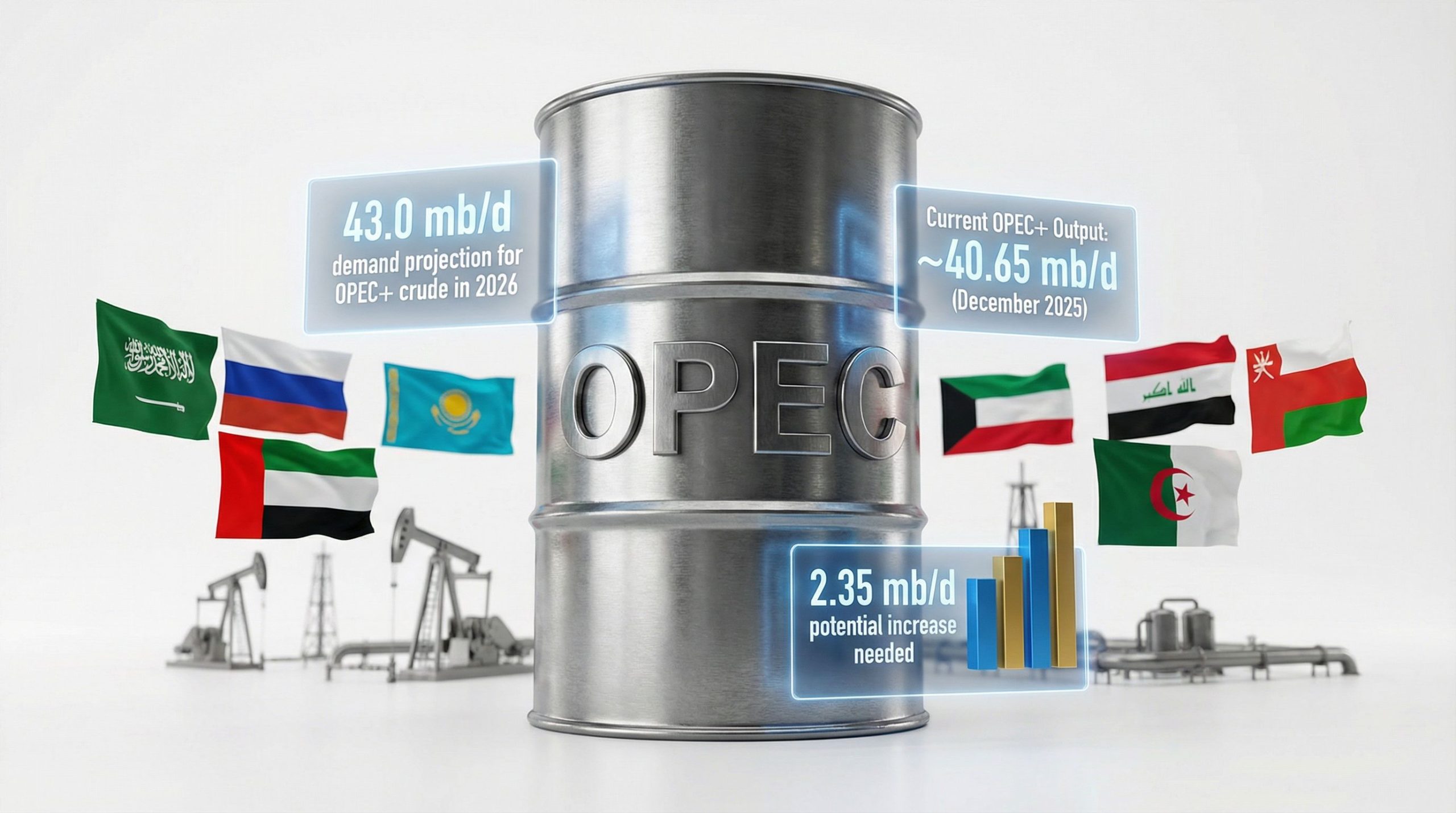
- Near-Term Stability: OPEC+ delegates confirmed the preservation of existing production quotas through December, prioritizing price defense over market share expansion amid macroeconomic fragility.
- The 2027 Horizon: The cartel’s structural debate has officially shifted toward the post-2026 framework, where expiring baselines and non-OPEC supply surges threaten long-term valuation multiples and capital allocation strategies.
- Enterprise & Market Liquidity: Energy sector equities, sovereign debt yields, and corporate risk mitigation frameworks face immediate stabilization, though institutional investors remain hyper-focused on medium-term capital expenditure returns.
- Compliance Realities: Chronic overproducers face intensifying scrutiny as structural quota adjustments require precise regulatory compliance and rigorous auditing of secondary sources.
LONDON, NEW YORK, & DUBAI — In a decisive maneuver designed to insulate petroleum markets from macroeconomic volatility, the Organization of the Petroleum Exporting Countries and its allies (OPEC+) have formally agreed to keep December oil output targets steady. Behind closed doors at the cartel’s Vienna secretariat and via virtual ministerial sessions, leadership weighed mounting non-OPEC supply pressures against fragile global demand metrics before opting for continuity. Yet, financial markets are already looking past the immediate horizon, recognizing that this tactical pause merely defers a much thornier strategic reckoning: navigating the complex production landscape of 2027.
For chief investment officers, portfolio managers, and energy sector strategists, the decision underscores a delicate balancing act. While near-term market liquidity and enterprise cash flow visibility remain anchored by the cartel's production ceiling, the longer-term structural overhang presents significant valuation risks. As sovereign wealth funds and multinational oil conglomerates recalibrate their capital allocation strategies, the impending 2027 framework represents a critical inflection point for global energy infrastructure scalability and risk mitigation.
The Catalytic Events: Balancing Near-Term Defenses and Structural Realities
Test Our Free AI & Tech Utilities Suite
Calculate LLM API token costs, analyze article dwell-time, or simulate tech DCA returns.
The path to the December output freeze was fraught with competing economic signals. Over the preceding quarter, crude benchmarks experienced pronounced downward pressure driven by sluggish industrial output in core Asian economies, shifting monetary policy trajectories from major central banks, and persistent gains in North American tight oil production. Within this environment, maintaining the current output quotas serves as a vital price-defense mechanism, preventing a disorderly sell-off that could severely impair upstream capital expenditure budgets.
However, compliance mechanisms remain a persistent point of friction within the coalition. Several member states, historically prone to exceeding their assigned quotas to maximize immediate fiscal revenues, have faced rigorous oversight from independent auditors. The enforcement of rigorous compliance protocols is essential for preserving the credibility of the cartel’s supply management strategy. Without strict regulatory compliance and transparent reporting, market confidence deteriorates, undercutting the very price stability OPEC+ seeks to engineer.
Simultaneously, executives across the energy value chain are grappling with the structural implications of shifting energy transition milestones. While near-term fossil fuel demand continues to demonstrate resilience, long-term forecasting models indicate potential supply gluts if non-OPEC producers—particularly in the Americas—continue to expand operational capacity unchecked. This dynamic forces OPEC+ to weigh the short-term benefits of defending price floors against the long-term risk of ceding permanent market share to aggressive external competitors.
Verified Data & Metrics Breakdown

To contextualize the current policy stance and the magnitude of the upcoming 2027 policy transition, the following matrix outlines key operational baselines, compliance metrics, and market variables:
| Metric Category | Current Status (December Targets) | 2027 Strategic Outlook | Financial & Operational Impact |
|---|---|---|---|
| Total Collective Output Cuts | ~5.86 million barrels per day (mbpd) total cuts | Subject to baseline recalibration and phase-out schedules | Directly dictates global market equilibrium and inventory draws. |
| Non-OPEC+ Supply Growth | Steady expansion led by US, Guyana, and Brazil | Expected to accelerate, testing cartel market share limits | Compresses valuation multiples for legacy upstream operators. |
| Compliance & Compensation | Strict compensation plans enforced for overproducers | Institutionalization of automated audit frameworks | Enhances market transparency and enterprise ROI predictability. |
| Macro Demand Growth | Moderate (~1.0 to 1.2 mbpd year-over-year) | Plateau risks amid efficiency gains and electrification | Forces sovereign budget adjustments and capital discipline. |
Industry & Market Implications: Winners, Losers, and Economic Ripple Effects
The decision to maintain steady output targets through December creates distinct winners and losers across the global financial and industrial ecosystems. Understanding these bifurcated outcomes is critical for institutional investors managing heavy-industry asset allocations.
The Winners
- Upstream Exploration & Production (E&P) Firms with Low Break-Evens: Operators with high-margin, low-cost assets benefit directly from defended price floors, enabling robust free cash flow generation, dividend distributions, and share buybacks.
- State-Owned Energy Enterprises: Major Middle Eastern national oil companies maintain stable sovereign revenue streams, facilitating continuous investment in domestic diversification projects and advanced extraction technology.
- Risk-Mitigated Energy Portfolios: Institutional funds utilizing disciplined hedging strategies can capitalize on reduced near-term spot price volatility, shielding balance sheets from sudden downward shocks.
The Losers
- High-Cost Shale and Frontier Producers: While benefiting from stable prices, non-OPEC producers face long-term volume constraints if the cartel successfully defends market share through extended supply management.
- Energy-Intensive Manufacturing Enterprises: Industrial consumers of petrochemical feedstocks and diesel continue to face elevated input costs, constraining profit margins and complicating operational budgeting.
- Speculative Traders and Momentum Funds: The absence of abrupt supply shocks limits high-alpha trading opportunities for short-term market participants relying on extreme price volatility.
Frequently Asked Questions (People Also Ask)
Why did OPEC+ decide to keep December output targets steady?
OPEC+ opted to maintain its current production quotas to counteract lingering macroeconomic uncertainties, sluggish industrial demand growth in key importing nations, and the threat of uncoordinated inventory builds. By prioritizing price defense, the cartel aims to support fiscal breakeven levels for member nations and prevent disorderly market liquidations.
What makes the upcoming 2027 policy framework uniquely challenging for OPEC+?
The 2027 horizon presents a complex strategic hurdle because several voluntary production cuts and country-specific baseline adjustments are scheduled for comprehensive review or expiration. Simultaneously, surging non-OPEC supply from the Americas is intensifying pressure on market share, forcing the cartel to weigh the long-term trade-offs between volume preservation and price maintenance.
How does compliance monitoring affect the credibility of OPEC+ production cuts?
Rigorous compliance and mandatory compensation mechanisms for past overproduction are vital for sustaining market trust. When member states adhere strictly to assigned quotas, it eliminates speculative skepticism and reinforces the cartel's capacity to manage global oil inventory levels effectively.
What are the implications of this decision for global energy equity valuations?
For equity markets, the steady output target provides near-term earnings visibility and predictable cash flow projections for major energy corporations. However, long-term valuation multiples remain tied to how successfully the cartel manages the impending 2027 supply-demand rebalancing without triggering destructive price wars.
Future Outlook: Strategic Milestones and What to Watch Next
As the global energy market transitions past the December milestone, attention shifts inexorably toward the structural negotiations governing 2027 and beyond. Financial analysts and corporate strategists must monitor several leading indicators to gauge the trajectory of petroleum markets:
- Non-OPEC Capital Expenditure Trends: Continuous tracking of rig counts and drilling productivity in the US Permian Basin, offshore Guyana, and Brazil will reveal the true velocity of competing supply growth.
- Sovereign Fiscal Breakeven Adjustments: IMF and internal OPEC fiscal data will highlight which member states face acute budgetary pressures, potentially signaling upcoming shifts in individual quota stances.
- Compliance Auditing Reports: Upcoming ministerial monitoring committee meetings will provide critical data regarding whether historical overproducers are successfully executing their mandated compensation cuts.
- Global Macroeconomic Indicators: Purchasing Managers' Indexes (PMIs) from major economies will dictate the underlying health of petroleum demand, serving as the ultimate arbiter for future cartel policy interventions.
Ultimately, while the December output freeze successfully buys time for market participants, the underlying structural challenges remain unaddressed. The upcoming negotiations for 2027 will test the internal cohesion of the OPEC+ alliance unlike any period in recent history, demanding sophisticated risk mitigation, disciplined capital allocation, and vigilant regulatory compliance from all industry stakeholders.