Executive Takeaways
- Final Array Integration: Spacewalkers have deployed the sixth and final Roll-Out Solar Array (iROSA) on the International Space Station (ISS), completing a multi-year, multi-hundred-million-dollar power grid upgrade.
- 30%+ Power Surge: The upgraded electrical architecture restores baseline capability and boosts total continuous power output from a degraded 120 kilowatts to over 215 kilowatts, offsetting two decades of photo-thermal degradation.
- Commercial LEO Catalyst: Extended electrical headroom directly enables high-power commercial modules, sovereign science payloads, and edge-cloud computing nodes scheduled to attach before the station's slated 2030 retirement.
- Prime Vendor Validation: The successfully flight-tested deployable technology validates Redwire Corporation’s structural IP and Boeing’s primary integration capability, laying the groundwork for commercial stations and the Lunar Gateway.
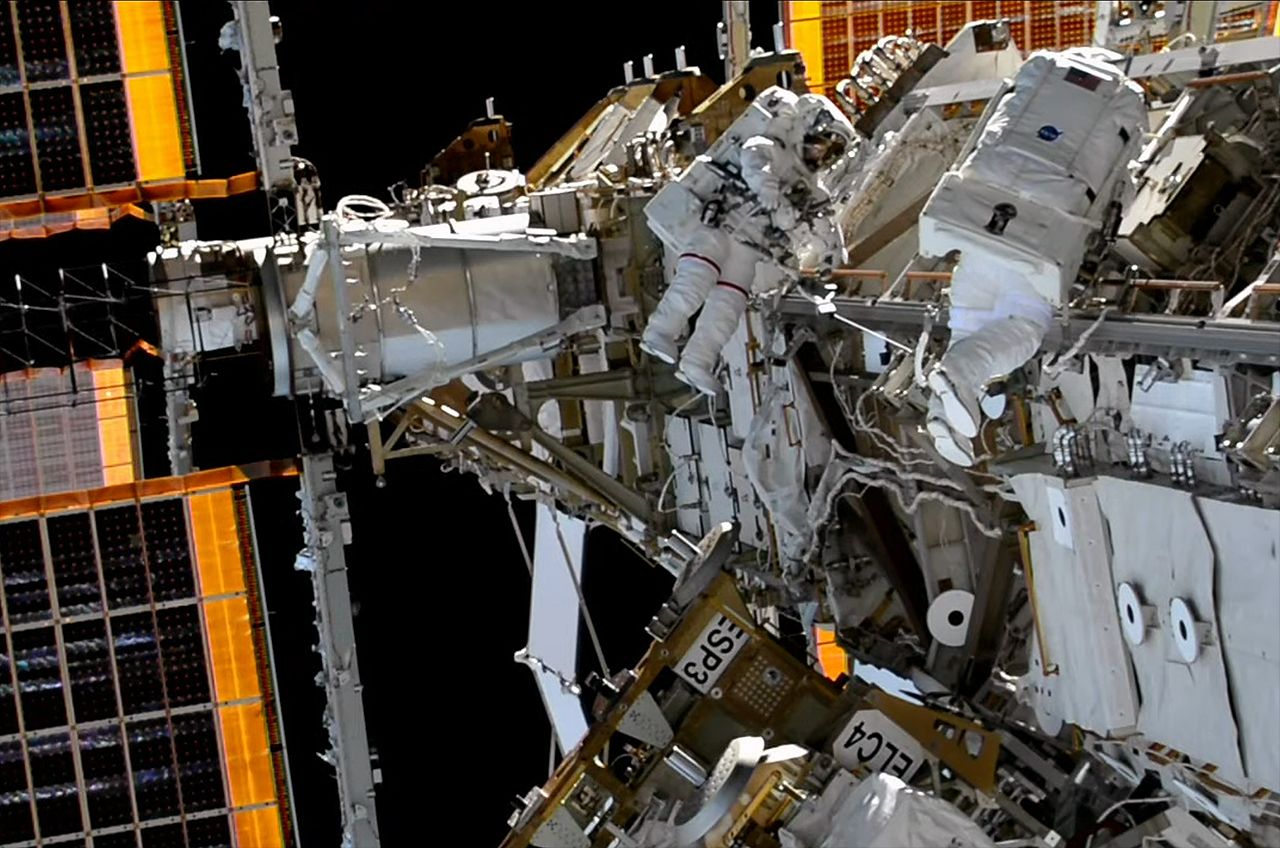
In a critical operational milestone for space infrastructure, spacewalking astronauts completed the deployment of the sixth and final iROSA (ISS Roll-Out Solar Array) on the station's exterior truss network. This achievement concludes a complex engineering project designed to revitalize the power generation capabilities of the low-Earth orbit (LEO) laboratory. By overlaying flexible, high-efficiency roll-out solar blankets directly over the station’s legacy rigid panels, NASA and prime contractor Boeing have secured the station's electrical architecture for its remaining operational lifespan through 2030.
The power overhaul comes at a critical juncture for orbital commerce. Over the past decade, the legacy arrays—installed between 2000 and 2009—experienced natural degradation caused by continuous thermal cycling (swinging from +120°C to -100°C every 90 minutes) and atomic oxygen exposure. As electrical output dropped by nearly 30%, power availability emerged as a key operational constraint. The completed iROSA installation eliminates this bottleneck, providing the high-wattage throughput required for private space stations, advanced microgravity manufacturing, and continuous data processing at the orbital edge.
The Engineering Breakdown: Strain-Energy Deployment and Advanced Photovoltaics
Test Our Free AI & Tech Utilities Suite
Calculate LLM API token costs, analyze article dwell-time, or simulate tech DCA returns.
The legacy ISS power grid relied on eight legacy solar array wings spanning 240 feet tip-to-tip, utilizing early 2000s-era silicon solar cell technology. While cutting-edge at launch, these rigid structures were heavy, bulky, and subject to progressive efficiency loss over time. The newly completed iROSA architecture represents a paradigm shift in space power systems, leveraging high-efficiency triple-junction Gallium Arsenide (GaAs) photovoltaic cells backed by composite strain-energy structural booms.
Engineered by Redwire Corporation under contract to Boeing, each iROSA wing rolls out like a tape measure using stored kinetic energy in its composite carbon-fiber booms, eliminating the weight and potential points of failure associated with heavy mechanical deployment motors. Each array measures approximately 60 feet by 20 feet, delivering nearly the same electrical energy as the original 115-foot legacy wings while occupying a fraction of the structural volume.
The final installation targeted the 1B and 1A power channels on the starboard and port trusses. Working during six-hour extravehicular activities (EVAs), astronauts positioned structural mounting brackets (mod kits), secured heavy utility cables to the main power bus, and unlocked the roll-out constraint pins. Once unrolled, the arrays began feeding power directly into the station’s legacy 160-volt DC direct current main bus, working alongside the upgraded lithium-ion energy storage batteries installed in late 2021.
Financial & Operational Performance Specs
The multi-year iROSA upgrade program required coordinated capital allocation across public agencies and private sector defense contractors. The table below outlines the performance metrics and structural changes resulting from the power grid overhaul:
| Performance / Asset Metric | Legacy Infrastructure (2000–2020) | Upgraded iROSA Grid (2024–2030) | Operational & Economic Variance |
|---|---|---|---|
| Peak Power Capacity | ~160 kW (Degraded to ~120 kW) | 215 kW to 250 kW (Total Grid Output) | +45% Power Increase from degraded baseline |
| Photovoltaic Cell Tech | Single-crystal Silicon (Si) | Triple-Junction Gallium Arsenide (GaAs) | Higher conversion efficiency & radiation tolerance |
| Deployment Mechanism | Motorized rigid folding panels | Passive elastic strain-energy booms | 70% reduction in structural deployable mass |
| Primary System Integrator | Boeing Defense, Space & Security | Boeing (Integration) / Redwire (iROSA IP) | Public-Private Partnership (P3) contract execution |
| Target Station Lifespan | Certified through 2024 | Certified through 2030 Decommissioning | Extends operational window by 6+ years |
| Commercial Module Support | Constrained (Strict Power Allocation) | Unlocks up to 60 kW for Private Payloads | Enables revenue-generating commercial real estate |
Market & Strategic Implications: Capital Allocation in Low Earth Orbit
The completion of the space station's power architecture carries significant economic ramifications for the broader space domain. As NASA shifts its focus toward deep-space exploration under the Artemis program, the agency is actively transitioning LEO commercialization to private enterprise. The upgraded power grid directly supports this transition in several ways:
1. De-risking Private Sector LEO Destinations (CLDs)
The flight verification of Redwire’s iROSA technology serves as a proof-of-concept for commercial space station developers. Companies such as Axiom Space, Starlab (a joint venture between Voyager Space and Airbus), and Orbital Reef (led by Blue Origin and Sierra Space) are integrating similar deployable solar technologies into their platform architectures. By establishing a track record of operational reliability on the ISS, enterprise valuation multiples for deployable space infrastructure providers are seeing increased institutional backing and private equity liquidity.
2. Expanding High-Wattage Commercial Research
Modern microgravity applications—such as semiconductor crystal growth, bioprinting, and high-performance optic fiber manufacturing—require continuous power inputs. Previously, high-draw payloads faced scheduling constraints to avoid overloading the station's energy budget during orbital night battery discharge cycles. The additional 90+ kilowatts provided by the six iROSA arrays allows commercial payloads to run continuously, driving higher enterprise ROI for corporate partners conducting space-based R&D.
3. Supporting Orbital Cloud Compute and AI Edge Nodes
As remote sensing satellites proliferate, processing large data arrays in orbit before downlink has become a critical operational priority. Cloud hyperscalers and aerospace contractors are deploying micro-datacenter payloads to the ISS to test edge compute architectures. The upgraded electrical baseline ensures sufficient continuous thermal management and power infrastructure to run edge processing units, opening up new high-margin revenue streams for orbital data centers.
Frequently Asked Questions (People Also Ask)
How much power does the International Space Station generate after the solar array upgrade?
With all six iROSA arrays installed alongside the remaining unshaded portions of the original solar arrays, total power generation capacity on the ISS has increased to between 215 and 250 kilowatts. This represents a more than 30% increase over the station's baseline capabilities prior to the upgrade project, and a 45% increase compared to the degraded levels experienced prior to the deployment phase.
Why did NASA install iROSA arrays over the existing solar panels instead of replacing them?
Replacing the original solar arrays completely would have required removing massive, legacy structural trusses, a process that would be cost-prohibitive and operationally complex. The iROSA units were designed to mount directly over the existing arrays using custom modification brackets. The new arrays utilize the original tracking systems, rotary joints, and power distribution channels, maximizing return on existing hardware investment while minimizing spacewalk risks.
Which companies manufactured and deployed the iROSA technology?
The iROSA panels were developed and built by Redwire Corporation (via its acquired subsidiary Deployable Space Systems), while Boeing acted as the prime contractor for NASA’s space station operations and hardware integration. The physical installation was conducted by NASA and partner agency astronauts across a series of spacewalks (EVAs) spanning from 2021 through completion.
What will happen to the iROSA solar arrays when the ISS is decommissioned in 2030?
When the International Space Station undergoes planned deorbiting in 2030, the solar arrays will burn up during atmospheric re-entry along with the station's structural modules. However, the intellectual property, structural design, and operational data gathered from the iROSA project are already being repurposed for next-generation platforms, including commercial LEO space stations, military orbital assets, and NASA’s Lunar Gateway station.
Future Outlook: Bridge to the Post-ISS Economy
The successful integration of the final solar array completes one of the most complex mechanical infrastructure retrofits ever performed in orbit. For NASA, Boeing, and international partners, the focus now shifts to maximizing microgravity scientific yields and accelerating commercial usage of the station over its remaining operational window.
Between now and 2030, the station will operate at its highest continuous electrical output in history. This surplus energy will directly feed the first commercial module, built by Axiom Space, which is scheduled to attach to the station's forward port. When the ISS eventually reaches its end-of-life cycle, the Axiom segment will detach to form an independent commercial station—powered by the next iteration of the deployable roll-out solar arrays proven during this mission.
For institutional investors and defense primes monitoring capital efficiency in the aerospace domain, the execution of the iROSA program demonstrates that retrofitting operational low-Earth orbit assets is both technically viable and economically sound. As commercial space transition strategies accelerate, roll-out solar technology stands out as a core baseline infrastructure standard for the expanding orbital economy.