Orionid Meteor Shower Peaks Tonight: How Celestial Geometry, Halley’s Comet Remnants, and Atmospheric Physics Deliver the Ultimate Stargazing Yield
As the autumn equinox settles across the Northern and Southern Hemispheres, global financial markets and amateur astronomers alike turn their gaze upward. Tonight marks the annual peak of the Orionid meteor shower, one of the most reliable and visually arresting celestial events of the astronomical calendar. Generated by the debris trail of the legendary Halley’s Comet, the Orionids offer a masterclass in cosmic mechanics, high-speed atmospheric friction, and natural light physics.
For institutional research desks, aerospace engineers, and commercial astrotourism operators, celestial events of this magnitude represent more than just a fleeting nocturnal spectacle; they drive significant consumer capital allocation toward precision optics, high-altitude expedition gear, and rural hospitality infrastructure. With NASA forecasting up to 20 meteors per hour under optimal viewing conditions—and historical outbursts reaching up to 70 meteors per hour—tonight’s event provides a timely intersection of public engagement, scientific curiosity, and multi-billion-dollar niche market activity.
Executive Takeaways
- Celestial Origin: The Orionids are forged from the ancient debris trail left behind by 1P/Halley (Halley’s Comet), which last passed through the inner solar system in 1986 and is not scheduled to return until 2061.
- Peak Velocity & Performance: Traveling at a blistering 66 kilometers per second (approximately 148,000 miles per hour), Orionid meteors strike Earth's upper atmosphere with immense kinetic energy, frequently producing persistent ionization trails.
- Observation Yield: Dark-sky sites situated far from urban light pollution can anticipate a baseline yield of 10 to 20 shooting stars per hour, concentrated primarily in the post-midnight window leading up to dawn.
- Economic & Market Impact: The event serves as a seasonal catalyst for consumer discretionary spending, lifting revenues for high-end optical equipment manufacturers, astrophotography tech suppliers, and dark-sky reserve tourism networks.
The Orbital Mechanics of Halley’s Comet and the Orionid Stream
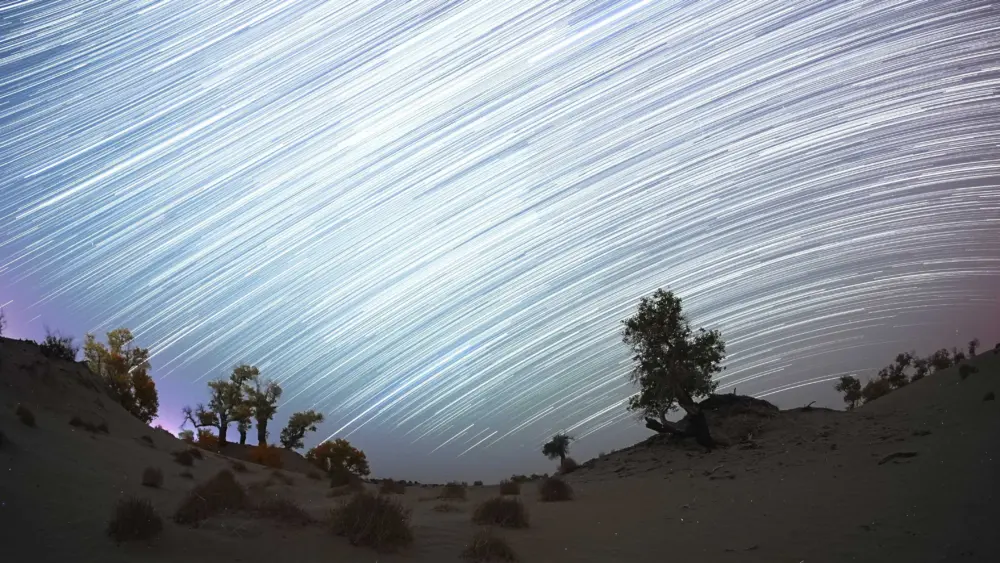
To understand the magnitude of tonight's celestial display, one must examine the macro-scale infrastructure of our solar system. The Orionid meteor shower is not an isolated phenomenon; it is the direct result of Earth intersecting a dense debris field deposited centuries—and in some cases millennia—ago by 1P/Halley. Every time Halley’s Comet orbits the sun, solar radiation sublimates its volatile ices, releasing millions of tons of microscopic rock, dust, and carbonaceous material into its orbital wake.
Earth crosses this ancient debris stream twice a year: once in May, which yields the Eta Aquariids, and again in October, producing the Orionids. The sheer velocity of the particles creates a unique structural profile. While many meteor showers drift lazily into the atmosphere at 15 to 25 kilometers per second, the Orionids hit the upper mesosphere at an astonishing 66 km/s. This hyper-velocity compression of air molecules in front of the incoming meteoroid generates extreme heat, vaporizing the particle and ionizing the surrounding gas to create the brilliant streaks of light observed from the surface.
From a risk-mitigation and structural integrity standpoint for orbital assets, the debris field poses minimal threat to active low-Earth orbit (LEO) infrastructure, as the particles are largely micro-meteoroids. However, for terrestrial observers, the high entry velocity translates directly into high-intensity visual yields, often characterized by bright "fireballs" that outshine surrounding stars and leave lingering plasma glows lasting several seconds.
Observational Protocol: Maximizing Your Visual Return on Investment
Securing an optimal viewing yield tonight requires strict adherence to astronomical best practices. Unlike planetary alignments or lunar eclipses, which can be easily witnessed from illuminated urban balconies, meteor showers demand strategic site selection and disciplined optical adaptation.
1. Timing and Radiant Alignment
While shooting stars will streak across all quadrants of the sky, their apparent trajectories trace back to a specific "radiant" point located in the constellation Orion—specifically near the club of the hunter, just north of the brilliant red star Betelgeuse. However, starlight analysts advise against staring exclusively at the radiant. Meteors appearing close to the radiant feature short, foreshortened trails, while those viewed 45 to 90 degrees away from Orion present long, dramatic arcs.
The optimal viewing window opens precisely after midnight, when the Earth's rotation rotates the observer directly into the path of the oncoming meteor stream, and extends until the onset of nautical twilight just before dawn.
2. Environmental Risk Mitigation (Light Pollution)
Urban illumination acts as a severe negative drag coefficient on meteor visibility, washing out fainter particle trails. Astrophotographers and field researchers recommend traveling to designated International Dark Sky Parks or rural outposts well beyond metropolitan light domes. Furthermore, human night-vision adaptation requires a strict 30-minute blackout period free from smartphone screens, vehicle headlights, and white-light flashers. Transitioning to filtered red-light spectrum devices preserves rhodopsin levels in the human retina, ensuring maximum sensitivity to faint meteors.
Verified Data and Metrics Breakdown
| Metric / Parameter | Orionid Specifications | Comparative Context (Average Meteor Shower) |
|---|---|---|
| Parent Body | 1P/Halley (Halley’s Comet) | Varies (Encke, Swift-Tuttle, Asteroid fragments) |
| Entry Velocity | 66 km/s (148,000 mph) | Typically 15 to 40 km/s |
| Peak Zenith Hourly Rate (ZHR) | 10 to 20 meteors/hour (historical bursts to 70+) | 10 to 100 meteors/hour |
| Active Date Range | October 2 – November 7 | Typically 1 to 3 weeks duration |
| Radiant Constellation | Orion | Varies by shower (Perseus, Leo, Gemini, etc.) |
Industry and Market Implications: The Economics of Dark-Sky Tourism
While the casual observer enjoys the Orionids as a free nocturnal display, the broader commercial ecosystem surrounding astronomy and outdoor recreation experiences measurable financial catalysts during peak meteor season. Equipment manufacturers specializing in wide-angle camera lenses, high-ISO digital sensors, equatorial tracking mounts, and portable field power stations report seasonal volume surges.
Furthermore, the hospitality sector has capitalized on the growing demand for experiential, science-driven travel. Rural boutique hotels, glamping resorts, and eco-lodges situated within certified dark-sky sanctuaries report high occupancy rates during major celestial windows like the Orionids and Perseids. This niche sector of the tourism economy demonstrates strong pricing power, proving that public fascination with cosmic events translates directly into robust capital allocation toward experiential travel and premium optical hardware.
Frequently Asked Questions (People Also Ask)
What is the absolute best time of night to watch the Orionid meteor shower?
The optimal observation window begins after local midnight and peaks in the hours immediately preceding dawn. During this pre-dawn window, your location on Earth is turned directly into the oncoming stream of Halley’s Comet debris, maximizing the number of visible meteors.
Do I need specialized equipment like a telescope or binoculars to see the Orionids?
No. Telescopes and binoculars are counterproductive for meteor showers because they significantly narrow your field of view. The naked eye is the superior optical tool for meteor watching, allowing you to scan broad swaths of the night sky simultaneously.
Where in the sky should I look to spot an Orionid?
While the meteors originate from the radiant point in the constellation Orion, you should not stare directly at the constellation. Meteors near the radiant have very short trails. Instead, look roughly 45 to 90 degrees away from Orion in any direction to capture longer, more dramatic streaks across the sky.
Why are Orionid meteors known for being particularly fast and bright?
The Orionids travel at an exceptionally high velocity of 66 kilometers per second relative to Earth. This extreme speed means the dust particles possess massive kinetic energy, creating intense thermal friction and ionization upon entering the upper atmosphere, which frequently results in bright fireballs and enduring persistent trains.
Future Outlook and Upcoming Celestial Milestones
As tonight’s peak concludes, the global astronomical community is already looking toward upcoming celestial milestones in the late-autumn and winter observing calendar. The Southern Taurids and Northern Taurids are scheduled to peak in early November, offering slower, occasionally dramatic fireball activity, followed by the powerhouse Geminid meteor shower in mid-December.
For aerospace researchers, ground-based optical tracking networks, and the commercial astrotourism sector, each major shower provides vital data regarding orbital debris density and public engagement metrics. As public interest in space exploration continues to scale, events like the Orionid peak serve as an essential reminder of our dynamic, interconnected solar system—bridging ancient cosmic history with modern scientific inquiry and economic vitality.