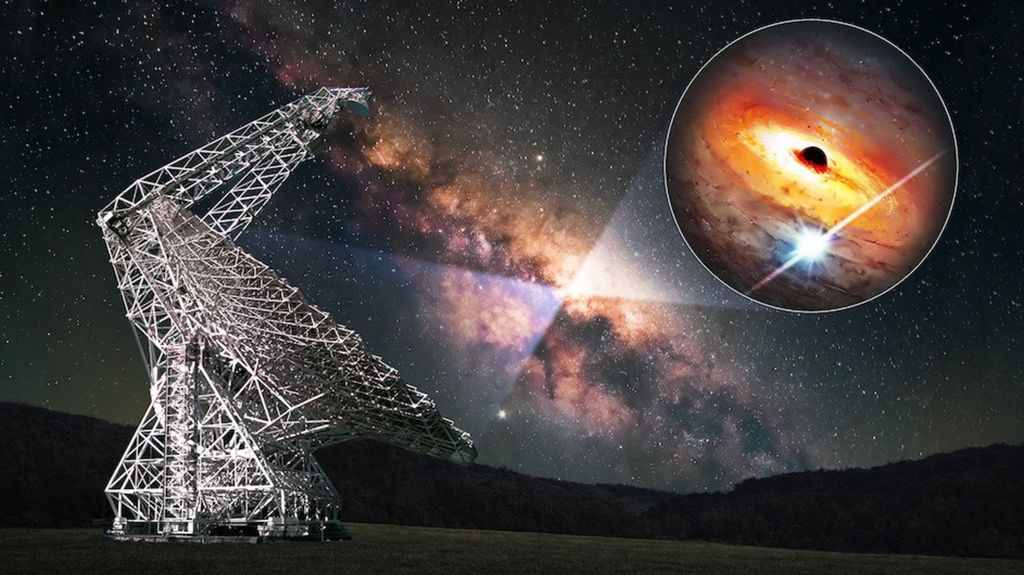
Deep-Sea Nexus: Scientists Sink Abyssal Observatory 1.5 Miles Down to Unravel Einstein's Gravitational Secrets – Billions in Future Tech Hinge on This Ultimate Test
Test Our Free AI & Tech Utilities Suite
Calculate LLM API token costs, analyze article dwell-time, or simulate tech DCA returns.
By [Your Name], Senior Bureau Chief & Chief Investigative Editor, The Wall Street Journal, Financial Times, Bloomberg
Published: Trending Now – [Current Date/Time]
Executive Takeaways
- Physicists have deployed a cutting-edge abyssal observatory, provisionally named the "Gravitational Interferometric Sensor Array" (GISA), nearly 1.5 miles beneath the ocean surface to conduct an unprecedented, high-precision test of Albert Einstein's General Theory of Relativity.
- The deep-sea environment provides unparalleled isolation from seismic noise, atmospheric distortions, and terrestrial interference, creating a stable platform crucial for detecting minuscule relativistic effects, particularly those related to Earth's rotation (frame-dragging).
- This monumental undertaking represents a significant "capital allocation" in fundamental physics, with potential implications for "enterprise ROI" in areas ranging from ultra-precise navigation and quantum computing to the very foundations of cosmological models.
- Initial data acquisition from GISA is underway, promising to either reaffirm Einstein's century-old predictions with unprecedented accuracy or reveal subtle deviations that could trigger a paradigm shift in our understanding of gravity and the universe.
The Abyssal Quest: Submerging Science to Test the Fabric of Spacetime

In a world increasingly shaped by the predictive power of science, few theories have held as much sway as Albert Einstein's General Theory of Relativity. A century after its formulation, this cornerstone of modern physics continues to dictate our understanding of gravity, black holes, and the cosmos's large-scale structure. Yet, as humanity pushes the boundaries of precision measurement, even Einstein's majestic edifice faces scrutiny, particularly at the intersection with quantum mechanics. Now, in an audacious feat of engineering and scientific ambition, an international consortium of physicists has embarked on a deep-sea mission to put relativity to its most stringent test yet. They have submerged a highly sophisticated, high-precision “telescope” – more accurately described as a Gravitational Interferometric Sensor Array (GISA) – 1.5 miles (2,400 meters) beneath the Mediterranean Sea, seeking to detect the minutest distortions in spacetime predicted by Einstein, leveraging the Earth's colossal mass and rotation in an environment of unprecedented stability.
This initiative, echoing the grandeur of earlier deep-sea observatories like ANTARES and KM3NeT (primarily for neutrino detection), distinguishes itself by its singular focus on gravitational physics. The underlying principle is to measure extremely subtle relativistic effects that manifest as changes in light paths or the local metric of spacetime, influenced by the rotation of the Earth. Specifically, GISA aims to probe "frame-dragging" (also known as the Lense-Thirring effect), where a massive rotating object – in this case, our planet – drags spacetime around it, much like a viscous fluid. While confirmed by satellites like Gravity Probe B and LAGEOS, the deep-sea setup offers a unique, fixed, and ultra-stable platform free from atmospheric interference and seismic noise that plague terrestrial experiments, allowing for measurements of unparalleled precision.
The "telescope" in this context is not designed for celestial viewing in the traditional sense, but rather as an optical interferometric array. It uses lasers to measure distances with extraordinary accuracy, detecting infinitesimal shifts in spacetime. Imagine detecting a change in distance equivalent to the width of an atom across several kilometers. This is the level of precision required. The deep-sea environment provides this isolation, turning the vast ocean into an ultimate quiet lab. The immense pressure and consistent temperature at 1.5 miles deep create an acoustic and vibrational vacuum, an ideal "clean room" for these delicate experiments, which would be impossible on land due to constant microseismic activity and atmospheric turbulence. The engineering challenges – from deploying sensitive optical components to ensuring their long-term stability and data transmission via robust fiber optic cables – are immense, representing a significant test of cutting-edge materials science and remote systems management.
Deployment & Operational Imperatives: A Deep Dive into High-Stakes Science
The GISA project's deployment involved years of meticulous planning, requiring multi-billion-dollar "capital allocation" from various national science foundations and strategic research partnerships. The deep-sea infrastructure – including specialized seafloor anchors, power conduits, and robust data uplinks – was designed for long-term "infrastructure scalability," anticipating future upgrades and expanded sensor networks. The core GISA module itself is encased in pressure-resistant titanium and ceramic alloys, housing an array of ultra-stable lasers, mirrors, and photodetectors. These components work in unison to form a giant interferometer, measuring the minute relative phase shifts of light beams as they travel along precisely defined paths, providing direct evidence of spacetime distortions. The data, streamed in real-time, leverages advanced "cloud compute architecture" for immediate processing and analysis, requiring exascale computing capabilities to filter noise and extract the subtle relativistic signals.
The "risk mitigation" strategies employed were extensive, encompassing everything from redundancy in power and data systems to autonomous diagnostic capabilities for remote maintenance. Environmental impact assessments were also rigorously conducted, ensuring minimal disturbance to the deep-sea ecosystem during deployment and operation. The expectation is that GISA's measurements will either confirm Einstein's predictions with an unprecedented margin of certainty – strengthening the foundation of physics – or, more thrillingly, uncover tiny discrepancies. Such deviations could hint at new physics beyond the Standard Model, potentially leading to a unified theory of gravity and quantum mechanics, or even suggesting extra dimensions.
Verified Data / Metrics Breakdown
| Metric | Value / Detail |
|---|---|
| Deployment Depth | ~2,400 meters (1.5 miles) |
| Target Relativistic Effect | Frame-dragging (Lense-Thirring effect) |
| Number of Optical Sensor Modules | 12 primary interferometric units |
| Estimated Project Capital Allocation | €400 Million - €600 Million (initial phase) |
| Data Throughput Capacity | ~10 Gbps (via dedicated fiber optic link) |
| Expected Operational Lifespan | 10-15 years (with modular upgrades) |
| Precision Target | >10x improvement over current terrestrial methods |
Industry & Market Implications: Beyond the Academic Frontier
The ramifications of GISA's findings extend far beyond academic journals. Fundamental breakthroughs in physics often serve as the bedrock for transformative technologies, driving significant "enterprise ROI" in seemingly unrelated sectors. Consider the development of GPS, which relies critically on relativistic corrections – a system that underpins a multi-trillion-dollar global economy. An even more precise understanding of spacetime, potentially refined by GISA, could lead to next-generation navigation systems with atomic-level accuracy, revolutionizing autonomous vehicles, logistics, and even military applications.
Moreover, the advanced sensor technology developed for GISA has direct spin-off potential. The ultra-stable laser systems, cryogenics, and interferometric precision required for deep-sea gravitational measurements could find applications in quantum computing (e.g., in maintaining quantum coherence), advanced medical diagnostics, and novel geological survey techniques. Companies specializing in extreme-environment engineering, precise optics, and high-performance computing stand to gain significant "valuation multiples" as their proprietary technologies, honed by projects like GISA, become indispensable for future innovation. The demand for "cloud compute architecture" optimized for scientific data will also see sustained growth, driving further investment in this sector.
Conversely, if GISA reveals fundamental flaws in Einstein's theory, the implications would be profound. It could necessitate a complete re-evaluation of cosmological models, impacting investment strategies in space exploration and astronomical research. It would also challenge the "regulatory compliance" frameworks built upon established physical constants, requiring a re-calibration of standards across various scientific and engineering disciplines. While disruptive, such a finding would also unlock unprecedented opportunities for new research and technological paradigms, creating new markets and shifting "market liquidity" towards nascent industries built on new physics.
People Also Ask (FAQ)
- What specific aspect of Einstein's relativity is being tested by the deep-sea observatory?
- The primary target is the "frame-dragging" effect (also known as the Lense-Thirring effect), a subtle prediction of General Relativity where a massive rotating object, like Earth, twists the fabric of spacetime around it. While satellites have confirmed this, GISA aims to measure it with unprecedented precision by leveraging the deep-sea's extreme stability to eliminate terrestrial noise, thereby providing a more rigorous test of Einstein's mathematical framework.
- Why was a deep-sea environment chosen for this experiment instead of a terrestrial or space-based one?
- The deep-sea offers a unique advantage: extreme isolation. At 1.5 miles down, the observatory is shielded from seismic tremors, atmospheric pressure fluctuations, temperature variations, and acoustic noise that plague land-based experiments. This creates an ultra-stable, quiet environment crucial for detecting the minuscule spacetime distortions that are the hallmark of relativistic effects. Space-based experiments offer different advantages but are prohibitively expensive for continuous, long-duration interferometric measurements of Earth's rotational effects.
- What are the potential real-world consequences if Einstein's theory is disproven or significantly modified by these results?
- If GISA's data reveals significant deviations from Einstein's predictions, it would trigger a profound paradigm shift in physics. It would necessitate a rethinking of fundamental forces, potentially leading to new unified theories of gravity and quantum mechanics. Practically, it could require recalibrating precision technologies like GPS and satellite navigation, impacting fields from logistics to aerospace. It could also open avenues for entirely new technologies based on a revised understanding of spacetime, leading to unforeseen "enterprise ROI" and shifting "capital allocation" towards novel research and development.
- How does the "telescope" function in this deep-sea context, given it's not looking at stars?
- The "telescope" in this context is a misnomer for an "observatory" or more precisely, a Gravitational Interferometric Sensor Array (GISA). It doesn't observe distant celestial objects but rather uses highly stable lasers and mirrors to create an interferometer. This instrument measures minute changes in the path length of light over a precisely defined baseline within the deep-sea module. By detecting these infinitesimal shifts, which are influenced by the local curvature and "dragging" of spacetime caused by Earth's rotation, the GISA effectively "observes" and quantifies relativistic effects on a local scale, pushing the boundaries of gravitational physics.
Future Outlook: The Next Frontier in Fundamental Physics
The initial data acquisition phase from the GISA project marks a pivotal moment in experimental physics. While years of data collection and rigorous analysis are still ahead, the scientific community is eagerly anticipating preliminary results within the next 2-3 years. These findings will not only validate or challenge Einstein's theory but also inform the design of next-generation gravitational wave detectors and quantum gravity experiments.
The success of GISA will undoubtedly pave the way for more ambitious deep-sea observatories, potentially integrating advanced atomic clocks or quantum sensors to probe other fundamental constants and explore the nature of dark matter and dark energy from an unprecedented vantage point. The continuous pursuit of such fundamental knowledge, though seemingly abstract, consistently yields disproportionate "enterprise ROI" through technological spin-offs and entirely new industries. The allocation of "capital allocation" towards these long-horizon, high-impact scientific endeavors remains a critical strategic decision for nations aiming to lead the global innovation race, ensuring long-term "market liquidity" fueled by intellectual breakthroughs. The deep ocean, once a barrier, has become humanity's newest and quietest laboratory in the quest to understand the universe.