WASHINGTON & LONDON — For the better part of a decade, institutional discourse surrounding digital assets has fixated on a singular, yield-bearing instrument: the stablecoin. Yet, beneath the surface of retail crypto trading volumes and cross-border remittances, a far more monumental financial engineering project has quietly reached maturity. According to a landmark dossier published by McKinsey & Company on May 21, 2026, titled “Beyond stablecoins: The emerging architecture of on-chain money,” the global financial system is currently navigating a sweeping $4 trillion structural transformation. This shift transcends simple fiat-pegged tokens, forging an entirely new operational paradigm for institutional capital allocation, enterprise liquidity management, and cross-border settlement.
As central banks finalize retail digital currency (CBDC) pilots and commercial banking consortia deploy production-grade distributed ledger infrastructure, the traditional plumbing of Wall Street, the City of London, and Asia-Pacific financial hubs is undergoing an irrevocable rewrite. This investigative report breaks down the mechanics of this architecture, evaluates the enterprise ROI of tokenized liquidity, and examines how regulatory compliance and infrastructure scalability are colliding to reshape global macroeconomics.
Executive Takeaways
- The $4 Trillion Horizon: McKinsey’s May 2026 findings reveal that on-chain monetary architecture has outgrown retail stablecoin use cases, expanding into a $4 trillion institutional ecosystem encompassing tokenized commercial bank money, repo markets, and wholesale settlement rails.
- Asia's Regulatory Vanguard: Jurisdictions across Asia—led by Singapore, Hong Kong, and Japan—are capturing a disproportionate share of enterprise adoption by integrating public-permissioned hybrid blockchains directly into their national payment backbones.
- Compression of Friction: Enterprise ROI metrics show that migrating institutional assets onto programmable, on-chain ledgers reduces settlement times from T+1/T+2 cycles to atomic, instantaneous execution, slashing operational risk and counterparty exposure.
- The Compliance Mandate: Legacy financial institutions are no longer evaluating blockchain as a sandbox experiment; infrastructure scalability and stringent regulatory compliance (including automated AML/KYC smart contracts) are now non-negotiable prerequisites for deployment.
The Anatomy of the $4 Trillion Transformation
Test Our Free AI & Tech Utilities Suite
Calculate LLM API token costs, analyze article dwell-time, or simulate tech DCA returns.
To understand the magnitude of the McKinsey report, one must first dismantle the prevailing market misconception that digital money begins and ends with stablecoins. While USD-pegged instruments successfully captured billions in circulating supply by serving as the collateral grease for decentralized exchanges and emerging-market dollarization, they represent merely the surface layer of programmable money.
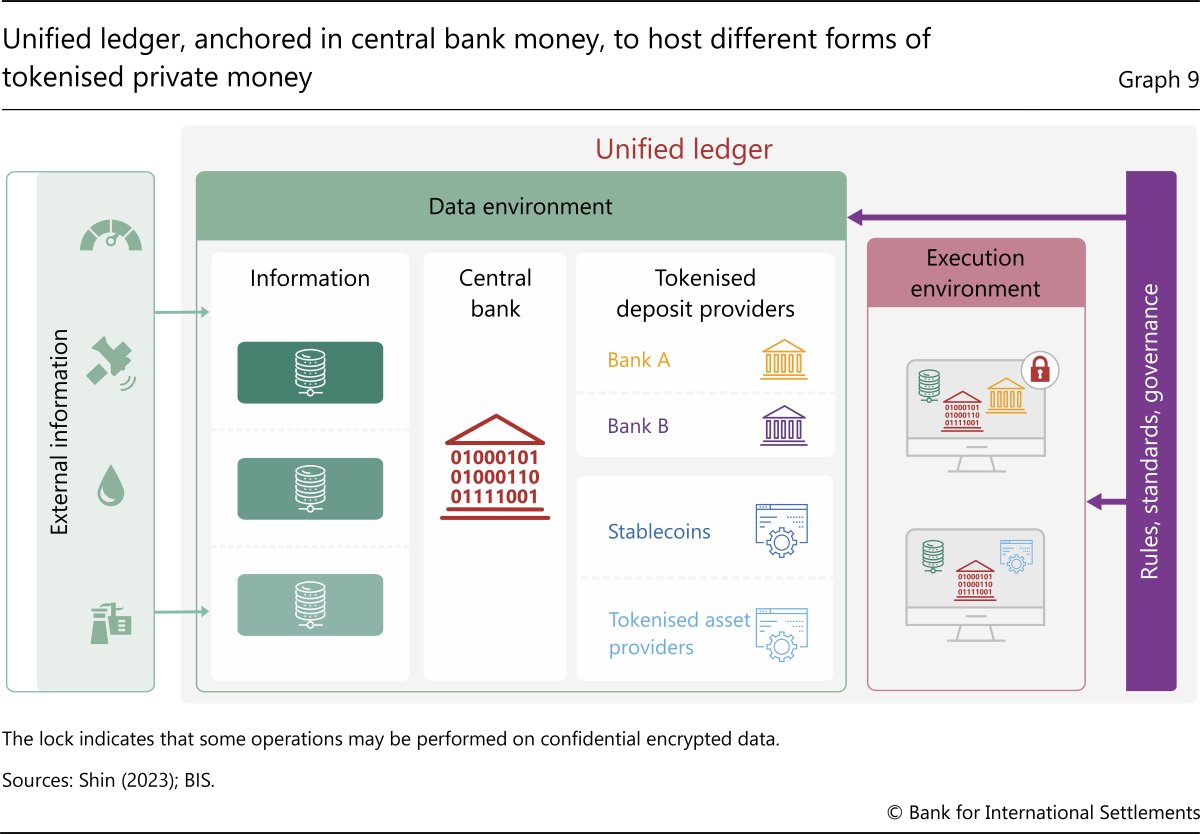
The emerging architecture described in “Beyond stablecoins: The emerging architecture of on-chain money” is fundamentally multi-tiered. It integrates tokenized commercial bank deposits, central bank reserves represented on shared ledgers, and programmable debt instruments. This ecosystem leverages advanced cloud compute architecture and cryptographic proofs to ensure that high-value transactions settle with absolute finality, bypassing legacy correspondent banking networks that have remained structurally unchanged for decades.
From a valuation multiples perspective, traditional financial institutions burdened by legacy IT maintenance costs are finding that migrating to on-chain infrastructure drastically reduces operating expenditures. Furthermore, market liquidity is no longer trapped in siloed regional clearinghouses; instead, it moves frictionlessly across global liquidity pools, optimizing balance sheet efficiency for multinational corporations and tier-1 banking institutions alike.
Spotlight on Asia: The Epicenter of Infrastructure Scalability
While Western financial centers have engaged in protracted regulatory debates, Asia has aggressively operationalized the findings outlined in the latest McKinsey research. Singapore's Project Guardian, alongside Hong Kong’s ongoing tokenized currency experiments and Japan’s revised stablecoin and digital asset frameworks, has established a blueprint for public-private collaboration.
In these markets, central banks are actively partnering with commercial lenders to test tokenized deposits and wholesale CBDCs on interoperable networks. This proactive regulatory stance has transformed Asia into a magnet for foreign direct investment in fintech infrastructure. Enterprises operating in the region are already reaping the benefits of reduced cross-border friction, achieving unprecedented capital velocity while maintaining strict adherence to local regulatory compliance standards.
The success of Asian adoption hinges on a pragmatic approach to risk mitigation. Rather than dismantling existing financial structures, regulators have encouraged a hybrid model where permissioned distributed ledgers interface seamlessly with legacy Real-Time Gross Settlement (RTGS) systems. This dual-track methodology ensures uninterrupted market liquidity while capturing the efficiency gains of distributed consensus.
Verified Data & Metrics Breakdown
To contextualize the scale of this paradigm shift, the following comparative matrix breaks down the core structural differences between legacy financial rails and the emerging on-chain architecture detailed in the McKinsey & Company report.
| Metric / Dimension | Legacy Financial Architecture | Emerging On-Chain Architecture (2026) |
|---|---|---|
| Estimated Total Market Impact | Trillions in fragmented, siloed institutional ledgers | $4 Trillion systemic transformation (McKinsey data) |
| Settlement Velocity | T+1 to T+2 business days (subject to cut-off times) | Atomic, 24/7/365 instantaneous execution |
| Primary Geographical Catalyst | North America and Western Europe (Legacy hubs) | Asia-Pacific (Singapore, Hong Kong, Japan vanguard) |
| Core Technological Enabler | Centralized databases & SWIFT messaging protocols | Permissioned distributed ledgers & smart contracts |
| Risk Mitigation Profile | High counterparty credit exposure & reconciliation costs | Automated collateral management & cryptographic proofs |
Industry & Market Implications: Winners and Losers
The transition toward an on-chain monetary architecture will inevitably redraw the competitive landscape of global finance. As capital allocation strategies adapt to programmable liquidity, distinct winners and losers are emerging across the enterprise spectrum.
The Winners: Agile Banks and Infrastructure Providers
Commercial banks that have invested heavily in cloud-native, blockchain-compatible core banking systems stand to capture substantial market share. By offering tokenized deposit products and automated escrow services, these institutions can unlock new revenue streams while driving down transaction processing costs. Similarly, enterprise software providers specializing in cryptographic security, compliance automation, and cross-chain interoperability are experiencing explosive valuation multiples.
The Losers: Legacy Intermediaries and High-Fee Custodians
Conversely, financial institutions reliant on fee extraction through manual reconciliation, slow cross-border messaging, and fragmented custody services face an existential threat. As atomic settlement becomes the baseline expectation for corporate treasurers, traditional intermediaries charging high basis-point fees for currency conversion and settlement buffering will find their margins compressed toward zero.
Frequently Asked Questions (People Also Ask)
Frequently Asked Questions
What is the primary difference between stablecoins and the emerging on-chain money architecture?
While stablecoins are typically retail-focused, privately issued digital tokens pegged to fiat currencies, the emerging on-chain architecture encompasses a comprehensive institutional ecosystem. This includes tokenized commercial bank money, wholesale central bank digital currencies (CBDCs), programmable debt instruments, and automated repo markets designed for enterprise-grade balance sheet management.
How does McKinsey’s $4 trillion figure impact traditional banking valuation multiples?
The $4 trillion figure highlights the immense volume of financial assets and liquidity transitioning to programmable ledgers. Banks that successfully integrate this architecture can reduce operating expenses, improve capital efficiency, and command higher valuation multiples due to enhanced return on equity (ROE) and lower compliance overhead.
Why is Asia leading the adoption of on-chain monetary systems?
Asian financial hubs such as Singapore, Hong Kong, and Japan have benefited from proactive, collaborative regulatory frameworks. Initiatives like Project Guardian have allowed central banks and commercial institutions to co-develop production-grade, compliant blockchain infrastructure without stalling innovation.
What role do regulatory compliance and risk mitigation play in this new architecture?
Regulatory compliance is hardcoded directly into the infrastructure via smart contracts that enforce automated AML (Anti-Money Laundering) and KYC (Know Your Customer) protocols. This ensures institutional risk mitigation far exceeds the manual compliance checks standard in legacy financial systems.
Future Outlook: Milestones to Watch
As the global financial ecosystem absorbs the implications of McKinsey’s May 2026 insights, industry observers must monitor several critical milestones over the next 24 to 36 months. First, watch for the harmonization of cross-border regulatory frameworks, particularly between the G7 economies and Asian financial authorities, which will dictate how smoothly tokenized funds can move internationally.
Second, enterprise adoption will hinge on the successful deployment of enterprise-grade interoperability protocols that allow disparate permissioned ledgers to communicate securely without compromising data privacy. Finally, the evolution of central bank wholesale digital currencies will serve as the ultimate acid test for whether on-chain money successfully transitions from a high-efficiency alternative to the undisputed foundation of global commerce.
For executive leadership, the message is unequivocal: on-chain architecture is no longer a peripheral experiment in financial technology. It is the core operational reality defining the next era of global capital markets.