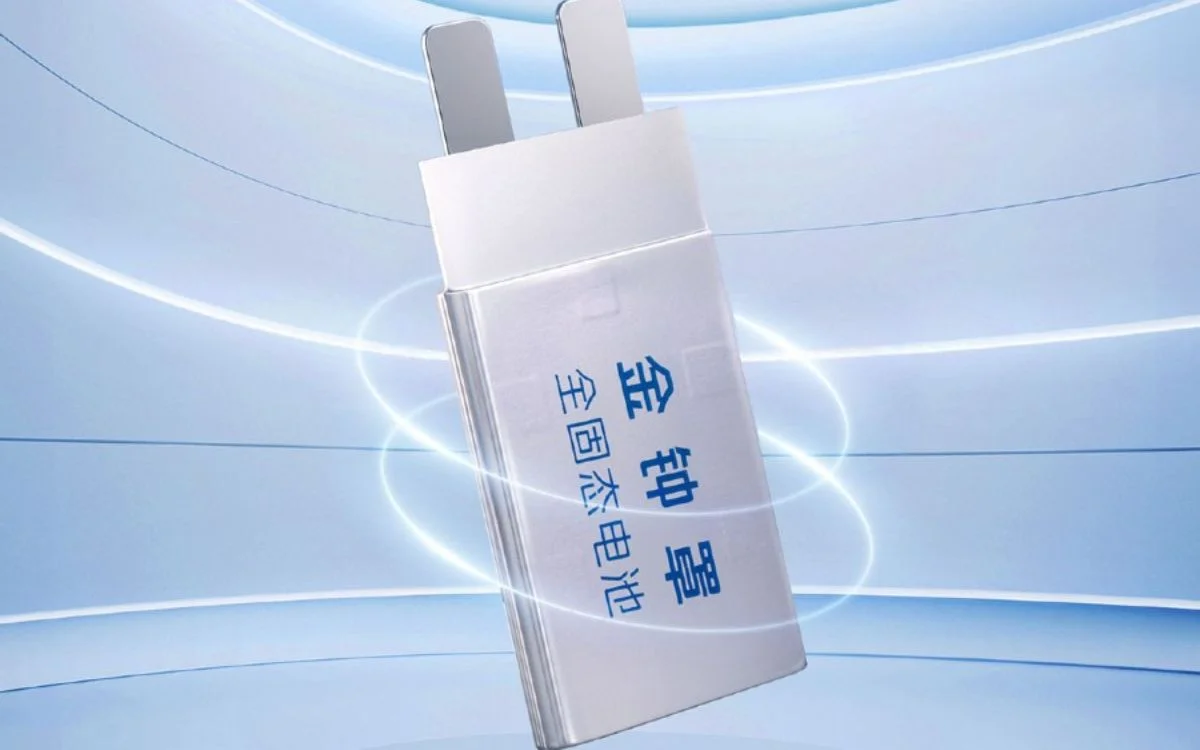
BEIJING & DETROIT — The holy grail of the electric vehicle era has officially cleared the laboratory and hit the assembly lines. According to primary reports from Electrek, commercial solid-state electric vehicle batteries are now rolling out in China, shattering long-standing range anxiety by promising nearly 1,000 miles (approx. 1,600 kilometers) on a single charge.
This seismic technological leap marks a watershed moment for the global automotive industry. For years, Western automakers, battery manufacturers, and energy analysts viewed solid-state technology as a distant horizon—a "five-to-ten-years-away" promise hindered by extreme manufacturing costs, structural degradation, and scalability issues. China’s aggressive commercialization has abruptly rewritten that timeline, putting mounting pressure on traditional giants in Detroit, Wolfsburg, and Tokyo.
At a Glance: The Solid-State Shift
- The Breakthrough: Commercial deployment of solid-state EV batteries begins in China, bypassing traditional liquid electrolytes.
- The Performance: Vehicles equipped with these next-generation cells are slated to deliver nearly 1,000 miles of driving range per charge.
- The Geopolitical Impact: Deepens China’s dominance in the global EV supply chain, challenging legacy Western automakers to accelerate their R&D pipelines.
- The Market Reaction: Global automotive stocks are facing renewed scrutiny as investors weigh the obsolescence risk of current liquid-electrolyte lithium-ion architectures.
Unpacking the Technology: Why Solid-State Changes Everything
To understand why this rollout is sending shockwaves through Wall Street and global boardrooms, one must understand the fundamental physics of modern batteries. Conventional lithium-ion batteries rely on liquid or gel electrolytes to move lithium ions between the anode and cathode. While effective, these liquid components are volatile, prone to thermal runaway (fires), heavy, and limited in energy density.
Solid-state batteries swap out the liquid for a solid electrolyte—typically ceramic, glass, or solid polymers. This structural change yields three monumental advantages:
- Dramatically Higher Energy Density: Solid-state cells can pack significantly more energy into a much smaller, lighter footprint. This is the engineering secret enabling the near-1,000-mile range capability now emerging from Chinese factories.
- Superior Safety Profiles: Without flammable liquid electrolytes, the risk of battery fires plummets, reducing the need for heavy, complex cooling and containment systems.
- Lightning-Fast Charging: Solid-state architectures can handle higher current loads without degrading the internal structure, pointing toward ultra-fast replenishment times that rival the speed of pumping gasoline.
Industry insiders note that while initial production runs will likely command a premium price tag reserved for luxury or flagship commercial platforms, the manufacturing efficiencies gained by Chinese firms will inevitably drive down costs across the board.
Comparative Metrics: Liquid-Ion vs. New Chinese Solid-State
| Feature | Traditional Liquid Lithium-Ion | Next-Gen Solid-State (China Rollout) |
|---|---|---|
| Average Range | 250 – 350 miles | Up to 1,000 miles |
| Electrolyte State | Liquid / Gel (Volatile) | Solid (Stable Ceramic/Polymer) |
| Thermal Risk | Moderate to High (Thermal Runaway Risk) | Significantly Reduced |
| Commercial Status | Mass Market Standard | Early Commercial Rollout / Scaling |
Geopolitical and Economic Fallout for Western Automakers
The speed at which Chinese battery developers have moved from research papers to commercial-scale factories has taken international competitors by surprise. For the past several years, legacy automakers in the United States and Europe have poured billions into transition strategies built around incremental improvements to standard liquid lithium-ion chemistry.
Now, the baseline has shifted overnight. A consumer who can purchase an EV capable of crossing an entire country on a single charge—eliminating the need for public charging infrastructure on most road trips—will fundamentally rethink purchasing decisions.
Financial analysts point out that Western automakers face a painful dilemma. They must either license solid-state technology directly from Chinese suppliers, risking long-term technological dependency, or race to scale their own proprietary manufacturing lines under immense time pressure. Capital markets have already begun reacting, with institutional investors penalizing firms perceived as lagging in next-generation battery readiness.
What Happens Next?
As these vehicles filter onto Chinese roads and undergo real-world consumer testing, all eyes will turn to durability metrics, cold-weather performance, and actual charging speeds under everyday conditions. If the promised specifications hold up outside of controlled testing environments, the global EV market will officially enter its second generation.
For global policymakers, energy executives, and auto investors, the message from Beijing is unambiguous: the future of mobility has arrived ahead of schedule, and the race to capture market share is no longer about who can build a better electric car, but who can master the solid-state revolution.
Frequently Asked Questions
1. When will solid-state EVs be available outside of China?
While the initial commercial rollout is concentrated in China, international automakers and global joint ventures are racing to adapt their supply chains. Analysts expect pilot programs and luxury export models to reach Western markets toward the late 2020s, depending on manufacturing scale and regulatory approvals.
2. Will existing electric cars become obsolete?
Not immediately. Traditional liquid-ion EVs will remain the affordable, mass-market standard for several years while solid-state manufacturing ramps up and costs decline. However, second-hand residual values for current-generation EVs could face downward pressure once high-range solid-state vehicles achieve mass-market volume.