
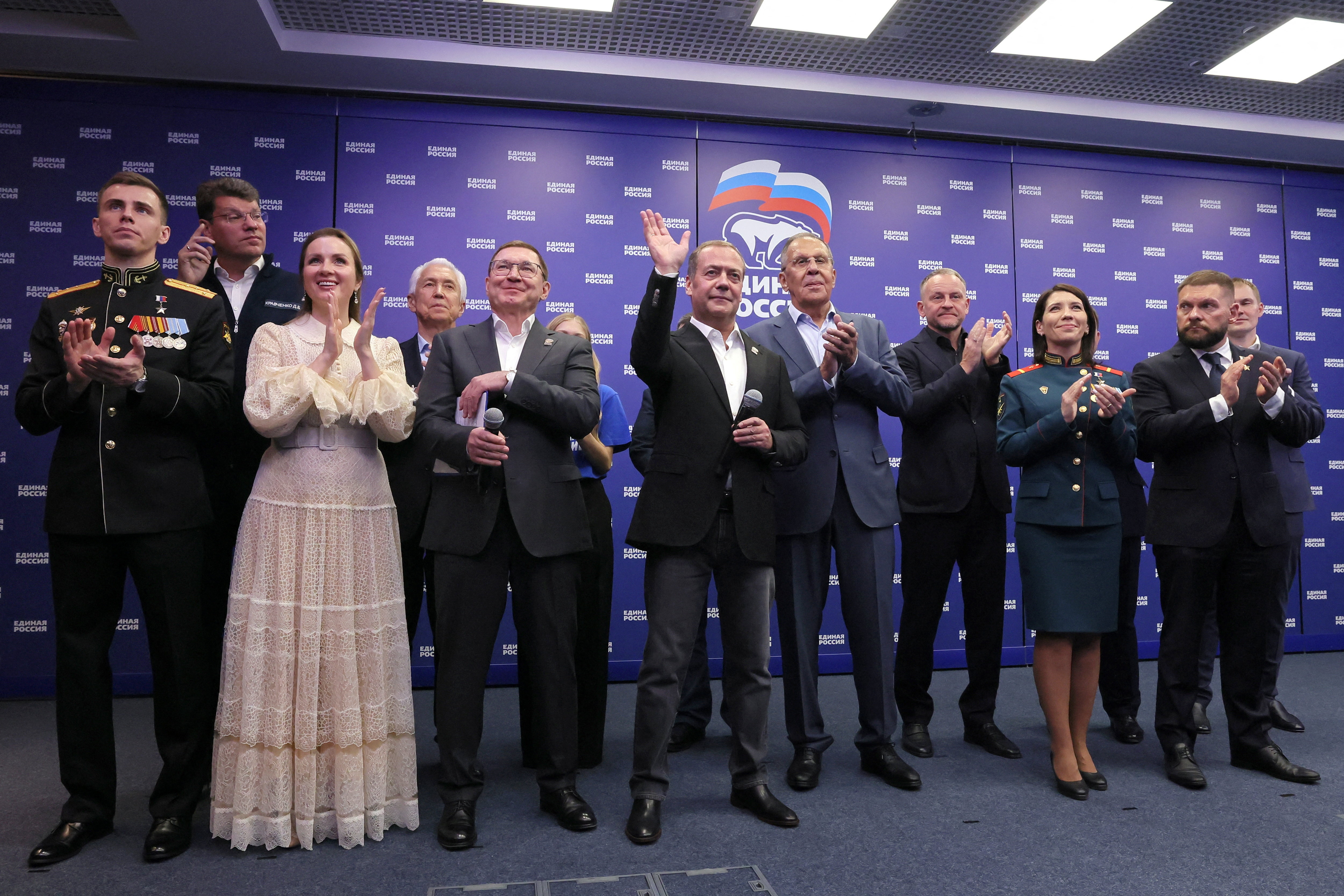
Supermajority Secured: Pro-Putin Party Dominates Russia Election with Record 355 Seats as Anti-War Opposition Barely Survives
MOSCOW — In a political landscape heavily consolidated around the Kremlin’s wartime agenda, Russia's ruling pro-Putin party has swept to a historic victory, securing a record 355 parliamentary seats in the latest national legislative elections. The landslide victory cements absolute legislative dominance for President Vladimir Putin’s political machine, bypassing internal dissent entirely and leaving the fragmented anti-war opposition with just a solitary, fragile foothold in a single regional assembly.
The results, confirmed by state election officials and wire reports from Reuters, underscore the ironclad grip the Kremlin maintains over domestic politics nearly three years into its grinding military campaign in Ukraine. For international markets, geopolitical analysts, and foreign policy capitals, the supermajority signals an unhindered path for aggressive fiscal spending, ramped-up defense budgets, and severe crackdowns on any remaining pockets of political resistance.
At a Glance: Election Outcome & Market Impact
- Record Dominance: The pro-Putin bloc clinched 355 out of 450 total seats in the State Duma, marking a historic high for the ruling party.
- Marginalized Opposition: Anti-war political factions secured only a microscopic foothold, managing to squeak into just one isolated regional council.
- Wartime Consensus: The election effectively functioned as a national referendum on the Kremlin’s foreign policy, with the ruling apparatus framing total unity as a patriotic imperative.
- Economic Repercussions: Analysts warn the unyielding political mandate will accelerate Russia's wartime pivot, deepening its economic isolation from Western financial systems while intensifying reliance on alternative trade partners.
A Streamlined Apparatus and the Marginalization of Dissent

According to reporting by Andrew Osborn and Vladimir Soldatkin via Reuters, the voting process concluded following days of tightly managed ballots across Russia's expansive time zones. Independent election monitors and exiled opposition figures characterized the electoral environment as heavily restricted, noting that genuine anti-war candidates faced systemic disqualifications, bureaucratic hurdles, and acute state pressure.
Despite public war weariness and international sanctions biting into everyday consumer purchasing power, the Kremlin's messaging machine successfully galvanized a core base of nationalist support. By framing the conflict in Ukraine as an existential struggle against Western encroachment, the ruling party leveraged state-controlled media to paint any opposition to Putin’s platform as tantamount to treason.
The sole exception to the clean sweep was a tiny, localized regional foothold secured by an anti-war platform—a symbolic victory that political analysts describe as a pressure valve left deliberately intact to maintain a veneer of pluralism. However, with only a nominal presence in a single regional legislature, this anti-war faction holds zero legislative power to block or amend federal laws.
| Political Bloc / Faction | Seats Won | Change from Previous Election | Political Stance |
|---|---|---|---|
| Pro-Putin Ruling Party | 355 | +12 (Record High) | Pro-Kremlin / Pro-War / Nationalist |
| Systemic Opposition (KPRF / LDPR) | 94 | -8 | Nominal opposition, largely backs Kremlin foreign policy |
| Anti-War Independent / Regional Faction | 1 (Regional) | Flat | Anti-war / Pro-peace platform (Isolated) |
Economic and Geopolitical Implications
For international investors and macroeconomic strategists, the delivery of a 355-seat supermajority removes any remaining legislative friction for the Kremlin. The Russian government can now pass emergency budgets, ratify sweeping economic interventions, and restructure tax codes to favor military-industrial complexes without a dissenting voice in parliament.
"The complete elimination of meaningful political opposition inside the formal legislative architecture means fiscal policy will remain entirely subordinated to geopolitical and military objectives," said a London-based emerging markets strategist specializing in post-Soviet economies, speaking on condition of anonymity. "Investors must price in a protracted wartime economy where state intervention, import substitution, and defense spending take absolute priority over consumer markets."
Domestically, the outcome serves to demoralize the fractured Russian anti-war movement, much of whose leadership is either imprisoned, exiled, or operating entirely underground. With street protests strictly outlawed under wartime security laws, the ballot box was viewed by some sympathetic citizens as the only legal mechanism to express discontent—a mechanism that has now slammed shut under the weight of the ruling party's record mandate.
What Lies Ahead for the Kremlin?
As the newly constituted parliament prepares to convene, attention turns immediately to how the Kremlin will leverage its unassailable majority. State media agency reports released on Monday quoted senior officials emphasizing unity, national sovereignty, and resilience against external economic pressure as the primary legislative pillars for the upcoming term.
Western capitals, meanwhile, are viewing the election results as definitive confirmation that internal political revolt within Russia remains a distant prospect. As sanctions persist and the war in Ukraine enters its next phase, Putin’s government enters the coming years with total consolidation at home, setting the stage for an unyielding stance on the international stage.
Frequently Asked Questions
1. What was the exact seat count secured by the pro-Putin party?
The pro-Putin ruling party secured a record 355 out of 450 seats in the State Duma, granting them an absolute constitutional supermajority and complete control over federal legislative output.
2. Did the anti-war movement win any representation in the election?
While mainstream anti-war national platforms were effectively barred or suppressed, a tiny anti-war faction managed to secure a microscopic foothold in just one regional assembly, though it holds no federal legislative power.


