BEIJING & WASHINGTON — In a calculated geopolitical maneuver that has immediately reshaped the strategic calculus of international space agencies and defense contractors alike, Beijing has unveiled the comprehensive operational architecture for its crewed lunar landing program. The disclosure, detailed by top engineers at the China Manned Space Agency (CMSA), provides unprecedented granular transparency into a timeline targeting a Chinese astronaut on the Moon before the end of the decade. For global capital markets, defense strategists, and enterprise technology leaders, this announcement is not merely a milestone in space exploration; it is the opening salvo in a multi-trillion-dollar race to secure extraterrestrial resource rights, establish supply-chain dominance, and rewrite the regulatory framework of orbital infrastructure.
As sovereign balance sheets and private equity portfolios adjust to this accelerated timeline, the economic implications extend far beyond astrophysics. The convergence of heavy-lift rocket manufacturing, advanced robotics, autonomous cloud compute architecture, and advanced materials science is triggering a massive reallocation of capital. With high-value commercial interests intersecting with national security prerogatives, institutional investors are reassessing valuation multiples across the aerospace, defense, and deep-tech sectors.
Executive Takeaways
Test Our Free AI & Tech Utilities Suite
Calculate LLM API token costs, analyze article dwell-time, or simulate tech DCA returns.
- Definitive Timeline: China has formalized a concrete operational roadmap to land taikonauts on the lunar surface before 2030, leveraging the heavy-lift Long March 10 launch vehicle.
- Dual-Launch Architecture: Unlike historical Apollo-era profiles, the mission relies on a sophisticated dual-launch methodology to deliver both a crewed spacecraft and a specialized lunar landing module into lunar orbit.
- Commercial & Capital Impacts: The announcement accelerates defense and aerospace capital allocation worldwide, threatening legacy supply chains while creating urgent enterprise ROI opportunities for agile contractors.
- Strategic Resource Control: The program serves as the vanguard for the International Lunar Research Station (ILRS), aiming to secure prime real estate and volatile reserves at the lunar south pole.
The Strategic Architecture: Dismantling the Blueprint

For decades, the global aerospace community operated under the consensus that returning humans to the Moon would be an incremental, fiscally constrained endeavor dominated by Western coalitions. China’s newly detailed roadmap shatters that assumption. The strategy centers on the Long March 10 (CZ-10), a three-stage heavy-lift rocket designed specifically to generate the roughly 27-ton translunar injection capacity required for crewed missions. This engineering feat demands immense capital allocation and precision manufacturing, driving significant investments into domestic metallurgy, cryogenic propulsion, and avionics.
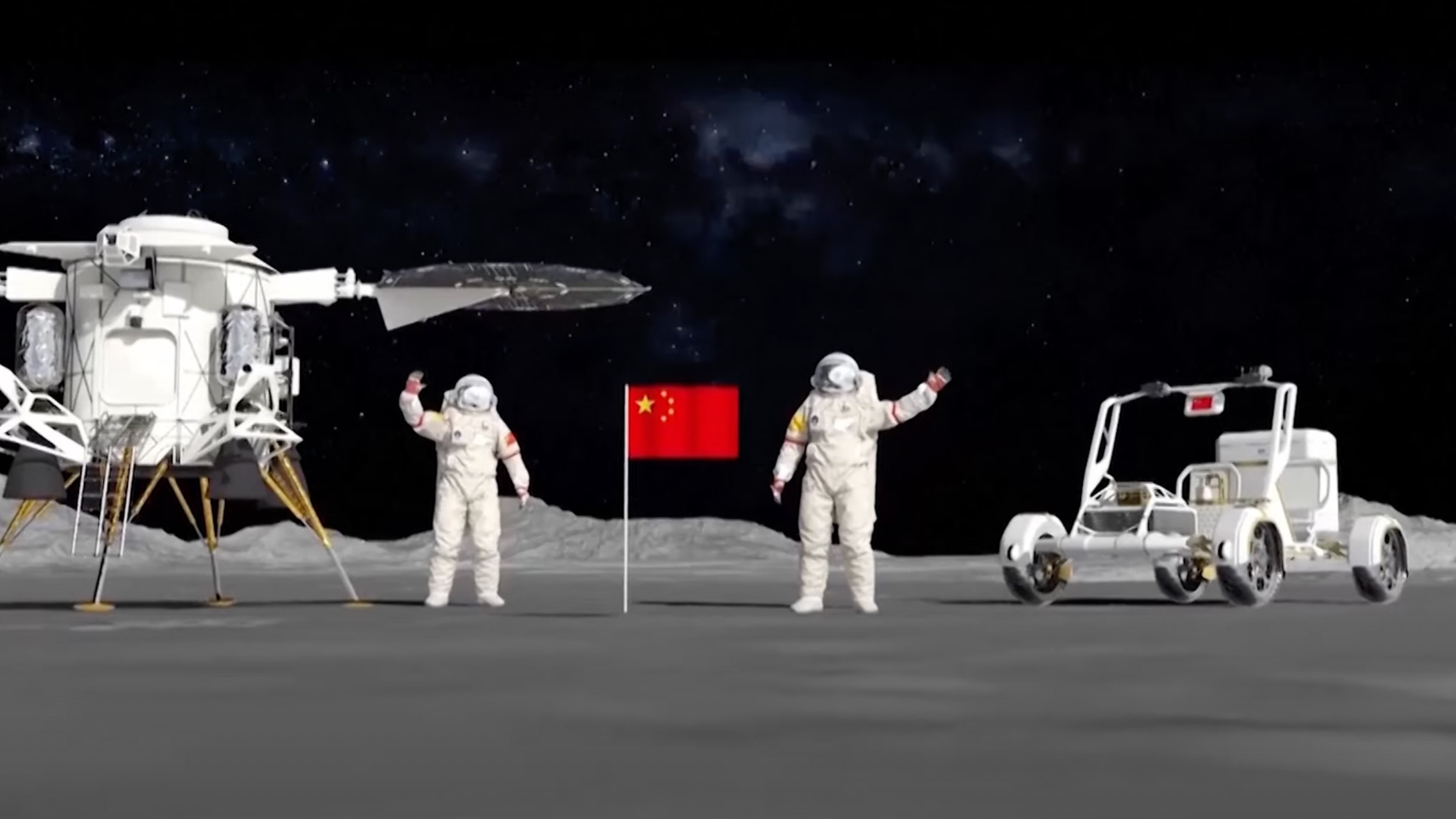
The mission architecture itself breaks away from single-rocket profiles. CMSA engineers confirmed that the mission will utilize two separate launches. The first rocket will deploy the lunar landing module—dubbed "Lanyue" (Embracing the Moon)—into lunar orbit. Shortly thereafter, a second Long March 10 will launch the next-generation crewed spacecraft, carrying a team of three taikonauts. Once in lunar orbit, the two vessels will execute an autonomous rendezvous and docking procedure, a critical milestone that requires ultra-low-latency guidance systems and robust, fault-tolerant cloud compute architecture.
Once docked, two taikonauts will transfer to the lander, descend to the lunar surface, and spend approximately six hours conducting geological surveys, deploying scientific instrumentation, and testing in-situ resource utilization (ISRU) prototypes. This methodical approach minimizes systemic risk mitigation failures while maximizing data acquisition—a hallmark of China’s deliberate, long-range technological planning.
Verified Data & Metrics Breakdown
| Program / Vehicle Component | Primary Specification | Operational Target Date | Strategic Objective |
|---|---|---|---|
| Long March 10 (CZ-10) | 27-ton translunar injection capacity; 3-stage heavy-lift configuration | 2027 (Uncrewed Test) / 2029 (Crewed Ready) | Core heavy-lift infrastructure for deep-space exploration and lunar transit. |
| Lanyue Lunar Lander | Approx. 26-ton wet mass; dual-module descent/ascent architecture | 2029–2030 | Surface mobility, payload delivery, and short-duration habitat support. |
| Next-Gen Crew Spacecraft | Multi-person re-usable return capsule with advanced heat shielding | 2029 | Safe transport of taikonauts from Low Earth Orbit to lunar transit and back. |
| International Lunar Research Station (ILRS) | Permanent robotic and crewed base at the lunar South Pole | Mid-2030s Baseline | Long-term scientific research, energy generation, and resource extraction. |
Industry & Market Implications: Winners, Losers, and Capital Allocation
The formalization of China’s lunar landing timeline acts as an immediate macroeconomic catalyst. In the defense and aerospace sectors, the announcement has triggered urgent calls within Western legislative bodies to protect domestic R&D budgets and accelerate procurement cycles. Consequently, venture capital and institutional funds are rapidly re-evaluating valuation multiples for firms specializing in orbital logistics, automated docking software, and advanced radiation-hardened semiconductors.
Who Wins: Supply-chain resilience providers, advanced materials manufacturers, and enterprise software firms specializing in autonomous systems stand to capture substantial market share. Companies capable of delivering high-reliability components with rigorous regulatory compliance and audit trails will see surging demand as space agencies race to meet tight operational windows.
Who Loses: Legacy prime contractors shackled by bureaucratic inertia and outdated cost-plus contracting models face severe margin compression. Firms that fail to adapt their software-defined manufacturing and cloud compute architecture to modern aerospace standards risk losing lucrative government contracts to nimble, tech-forward competitors.
Furthermore, the economic stakes involve more than prestige; they center on legal and commercial access to space resources. The lunar south pole, rich in water ice capable of being converted into rocket propellant (hydrogen and oxygen), represents the ultimate strategic chokepoint. Securing physical presence in this region establishes de facto property rights that will dictate future market liquidity for cislunar commerce.
Frequently Asked Questions (People Also Ask)
How does China’s lunar landing plan differ from NASA’s Artemis program?
While NASA’s Artemis program relies on the Space Launch System (SLS) and a commercial Human Landing System (such as SpaceX’s Starship) with multi-stop staging, China’s architecture utilizes a dedicated dual-launch methodology built around the Long March 10 rocket. Both programs target the lunar south pole for its water ice reserves, creating a direct technological and geopolitical race.
What are the primary technical hurdles for the Long March 10 rocket?
The primary engineering challenges involve scaling up cryogenic engine thrust, optimizing stage separation dynamics, and ensuring extreme structural integrity under high-g loads. Additionally, developing autonomous, fault-tolerant rendezvous and docking software capable of operating reliably in deep-space radiation environments remains a critical software-engineering milestone.
What is the economic significance of the International Lunar Research Station (ILRS)?
The ILRS functions as an anchor tenant for future cislunar economic activity. By establishing a permanent base, participating nations aim to secure exclusive extraction rights for volatile resources, test in-situ manufacturing techniques, and build foundational infrastructure that will support future deep-space missions to Mars and beyond.
How will this announcement impact global aerospace supply chains and tech valuations?
The transparency of China's timeline forces an immediate reallocation of Western defense and tech capital. Investors are prioritizing firms demonstrating high enterprise ROI in autonomous navigation, advanced telemetry, and rapid prototyping. This shift penalizes legacy contractors while driving aggressive venture capital deployment into the deep-tech and orbital-infrastructure sectors.
Future Outlook: Milestones to Watch
As the countdown to 2030 accelerates, institutional observers and market analysts must monitor several critical technical and geopolitical milestones:
- Uncrewed Static Fire Tests: Ground testing of the Long March 10 engine clusters to verify thrust-to-weight ratios and thermal dissipation limits.
- Sub-Orbital and Orbital Flight Tests: Initial uncrewed test launches of the next-generation crew capsule to validate atmospheric re-entry thermal protection systems.
- Autonomous Docking Trials: Automated orbital testing of the rendezvous algorithms designed to link the command module with the Lanyue lander in Low Earth Orbit.
- International Regulatory Posture: Legislative responses from Western coalitions regarding planetary protection protocols, spectrum allocation, and safety zones around lunar south pole landing sites.
Ultimately, China’s detailed lunar blueprint transforms the Moon from a distant scientific curiosity into an active frontier of industrial competition. For executive leadership across global finance, technology, and aerospace, navigating this new paradigm requires rigorous risk mitigation, strategic capital allocation, and an acute awareness that the economic architecture of the twenty-first century is expanding upward.