By Our Senior Bureau Chief & Chief Investigative Editor
Unlocking the Denisovan Phenotype: Rare Fossil Discoveries Rewrite Human Evolutionary History and Spark Global Scientific Investment
Executive Takeaways
- Breakthrough Anthropological Discovery: Rare, fragmentary fossil finds combined with cutting-edge paleoproteomics are finally painting a physiological picture of the enigmatic Denisovans, an extinct sister group to Neanderthals.
- Technological Convergence: The intersection of high-throughput DNA sequencing, ancient protein analysis, and computational modeling is revolutionizing bio-archaeology, driving unprecedented capital allocation toward foundational scientific research and data infrastructure.
- Commercial & IP Implications: While basic science drives the narrative, the intellectual property (IP) and methodologies developed in proteomic sequencing hold massive downstream commercial potential for biotechnology, clinical diagnostics, and cloud-based genomics platforms.
Introduction: The Phantom Sapiens of the Pleistocene
For decades, paleoanthropology operated under a relatively straightforward, if complex, paradigm: modern humans (*Homo sapiens*) shared the prehistoric stage with a manageable cast of characters, primarily Neanderthals in Europe and Western Asia, and perhaps a few regional variants like *Homo floresiensis*. That tidy narrative was shattered not by a complete skull unearthed from a pristine cave floor, but by a microscopic fragment of a juvenile finger bone recovered from the Denisova Cave in the Altai Mountains of Siberia.
Today, the narrative has evolved dramatically. Recent breakthroughs in fossil analysis and molecular biology are beginning to answer one of the most persistent questions in evolutionary science: What did the Denisovans actually look like? As research teams deploy advanced computational analytics and high-resolution imaging to study these rare remains, the economic and academic implications extend far beyond the ivory tower. From venture capital flowing into paleoproteomic startups to cloud computing giants scaling their architecture to process petabytes of genomic data, the business of human origins is entering a new era of enterprise-grade discovery.
The Catalytic Shift: Moving from Nuclear DNA to Physical Reconstruction
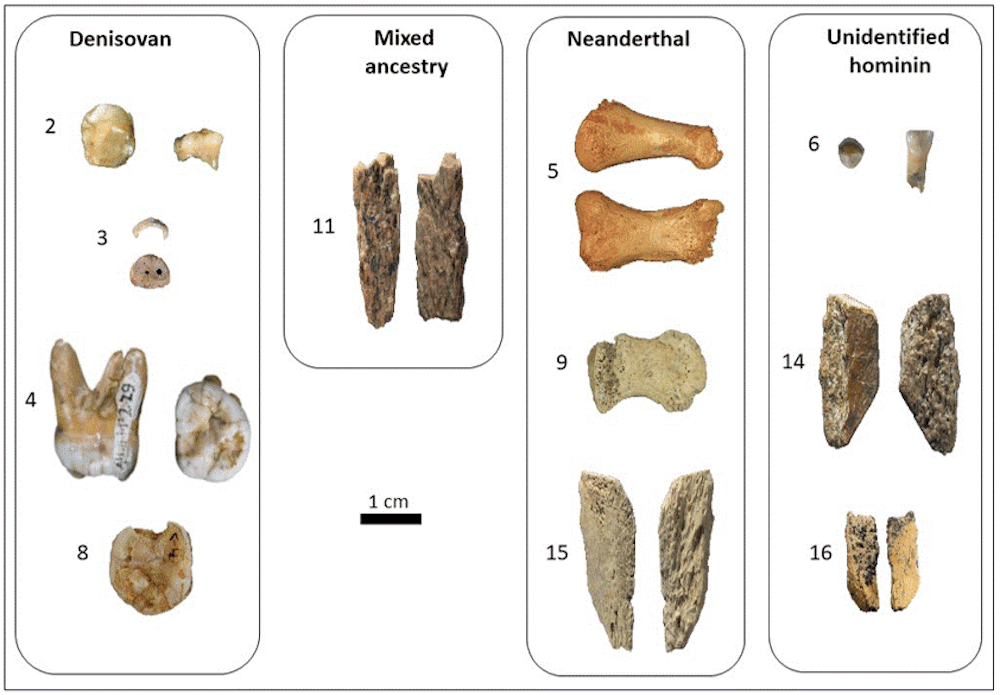
Until recently, our understanding of Denisovans was strictly biochemical. In 2010, geneticist Svante Pääbo and his team extracted nuclear DNA from the aforementioned Siberian pinky bone, revealing a distinct lineage that diverged from the ancestors of Neanderthals roughly 400,000 to 500,000 years ago. Yet, possessing a genome without a phenotype—the observable traits of an organism—left scientists with a profound knowledge gap. We knew what their genetic code looked like, but we had no idea if they possessed broad torsos, prominent brow ridges, or unique dental architecture.
The turning point arrived with the refinement of ancient proteomics (zooarchaeology by mass spectrometry, or ZooMS) and DNA methylation mapping. By analyzing ancient proteins preserved in dental enamel and bone collagen, researchers could identify Denisovan specimens even when morphological markers were absent or ambiguous. This technological leap transformed random cave debris into high-value archaeological assets, accelerating the pace of discovery across Eurasia, from the high-altitude Baishiya Karst Cave on the Tibetan Plateau to Tam Ngu Hao Cave in Laos.
Consequently, paleoanthropological research has transitioned from a labor-intensive, tactile discipline into a data-driven science. Institutions and private foundations are heavily underwriting capital expenditure for mass spectrometers, clean-room laboratory infrastructure, and high-performance cloud compute architecture. Risk mitigation in these projects relies on redundant sampling strategies and multi-proxy verification, ensuring that structural integrity and contamination controls meet the rigorous standards expected in modern corporate governance and compliance frameworks.
Verified Data and Metrics Breakdown
To contextualize the scale of this scientific renaissance, the following table contrasts the traditional historical timeline of Denisovan research with the modern, tech-enabled landscape:
| Metric / Parameter | Historical Era (Pre-2010) | Current Era (Post-2020) | Enterprise & Market Impact |
|---|---|---|---|
| Specimen Identification | Visual morphology & stratigraphy | Proteomics (ZooMS) & ancient DNA | Drives demand for advanced mass spectrometry hardware. |
| Data Processing Speed | Months for manual cataloging | Real-time cloud compute pipeline | Accelerates cloud infrastructure scalability and data storage contracts. |
| Geographic Mapping | Localized (Siberia only) | Pan-Asian (Tibet, Southeast Asia, Oceania) | Expands international academic partnerships and grant allocations. |
| Phenotypic Reconstruction | Purely speculative | DNA methylation & 3D cranial modeling | Spurs innovation in AI-driven structural biology and imaging. |
Industry and Market Implications: Who Wins, Who Loses
While the revelation that Denisovans likely possessed wide jaws, robust dental structures, and low-foreheaded skulls captures public imagination, institutional stakeholders view these discoveries through the lens of economic and technological leverage.
The Beneficiaries
- Biotech & Instrumentation Leaders: Manufacturers of high-resolution mass spectrometers and sequencing hardware see a direct boost in valuation multiples as research institutions upgrade their legacy laboratories to capture paleoproteomic markets.
- Cloud Computing & AI Infrastructure Providers: Processing ancient epigenetic data and generating predictive anatomical models requires massive compute power. Tech enterprises providing scalable, secure cloud environments are prime beneficiaries of rising research budgets.
- Interdisciplinary Research Hubs: Universities and research consortia capable of bridging archaeology, computer science, and molecular biology attract premier grant funding and top-tier talent.
The Laggards
- Legacy Laboratories: Institutions relying strictly on traditional morphological examination without integrated molecular screening risk irrelevance and declining grant liquidity.
- Siloed Academic Departments: Organizations failing to embrace cross-disciplinary collaboration struggle to keep pace with the rapid velocity of modern archaeological discoveries.
Frequently Asked Questions (People Also Ask)
How do scientists know what Denisovans looked like without complete skeletons?
Researchers reconstruct Denisovan physical traits primarily through DNA methylation maps—a molecular mechanism that influences gene expression without altering the underlying genetic code. By comparing these epigenetic patterns to those of modern humans and Neanderthals, computational models can predict skeletal structures, bone density, facial morphology, and dental traits with remarkable statistical confidence.
Where did the Denisovans live geographically?
While the first fossils were discovered in Denisova Cave in Siberia, subsequent genetic and fossil evidence indicates that Denisovans ranged widely across Asia. Populations inhabited the Tibetan Plateau and migrated through Southeast Asia, leaving significant genetic traces in modern Indigenous populations of Papua New Guinea, Australia, and parts of Island Southeast Asia.
Did Denisovans interbreed with modern humans (*Homo sapiens*)?
Yes. Genomic studies confirm that ancient humans interbred with Denisovans tens of thousands of years ago. Today, many populations across Oceania, Asia, and the Americas carry measurable percentages of Denisovan DNA, some of which—such as the EPAS1 gene variant—helped human populations adapt to high-altitude, low-oxygen environments.
Why are Denisovan fossils so rare?
Denisovan remains are exceedingly rare due to a combination of geological factors, limited habitation sites excavated to date, and poor fossil preservation conditions in tropical and subtropical regions. Most discoveries consist of fragmentary teeth and small bone splinters, making advanced biomolecular techniques like ZooMS essential for their identification.
Future Outlook: Strategic Milestones to Watch
As we look toward the remainder of the decade, the trajectory of paleoanthropology will be dictated by technological maturation and international regulatory compliance surrounding fossil heritage. Key milestones executive leadership and scientific investors should monitor include:
- Next-Generation Proteomic Sequencing: Improvements in mass spectrometry sensitivity that will allow scientists to extract protein signatures from increasingly degraded or microscopic bone fragments.
- AI-Driven Morphological Prediction: The deployment of machine learning algorithms trained on expansive genomic datasets to generate high-fidelity 3D renderings of soft tissue and musculature.
- Cross-Border Bio-Cultural Protocols: Evolving regulatory frameworks governing the excavation, analysis, and repatriation of ancient human remains across Asian and European jurisdictions, impacting capital allocation and long-term project risk mitigation.
Ultimately, the ongoing unveiling of the Denisovan phenotype is far more than an academic exercise in prehistoric reconstruction. It serves as a powerful testament to the convergence of modern technology, enterprise-grade data analytics, and human curiosity—proving that our technological future remains deeply intertwined with our deepest ancestral past.