By The Investigative Desk | Published: Trending Now
Executive Takeaways
- The Unveiling: Tesla has pulled back the curtain on its long-rumored vertical takeoff and landing (VTOL) project, demonstrating functional scale prototypes that bridge automotive engineering with aerospace technology.
- Commercial Timeline: Despite aggressive enterprise valuation multiples and high-octane marketing spectacle, regulatory compliance, infrastructure scalability, and airspace integration push any realistic consumer rollout well into the next decade.
- Capital Allocation & R&D: Wall Street analysts are scrutinizing the capital expenditure (CapEx) required to pivot manufacturing lines toward dual-use electric road-and-flight architecture without diluting core automotive margins.
- The Regulatory Bottleneck: The Federal Aviation Administration (FAA) and global counterparts have yet to establish a certified framework for autonomous consumer personal air vehicles, creating a multi-year compliance gridlock.
The Genesis of a Paradigm Shift: Inside the Tesla Aero Reveal
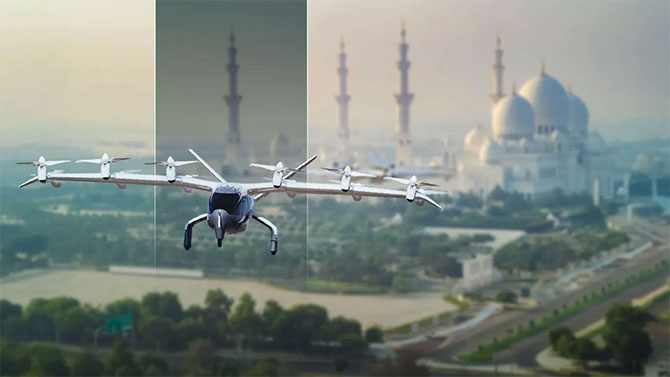
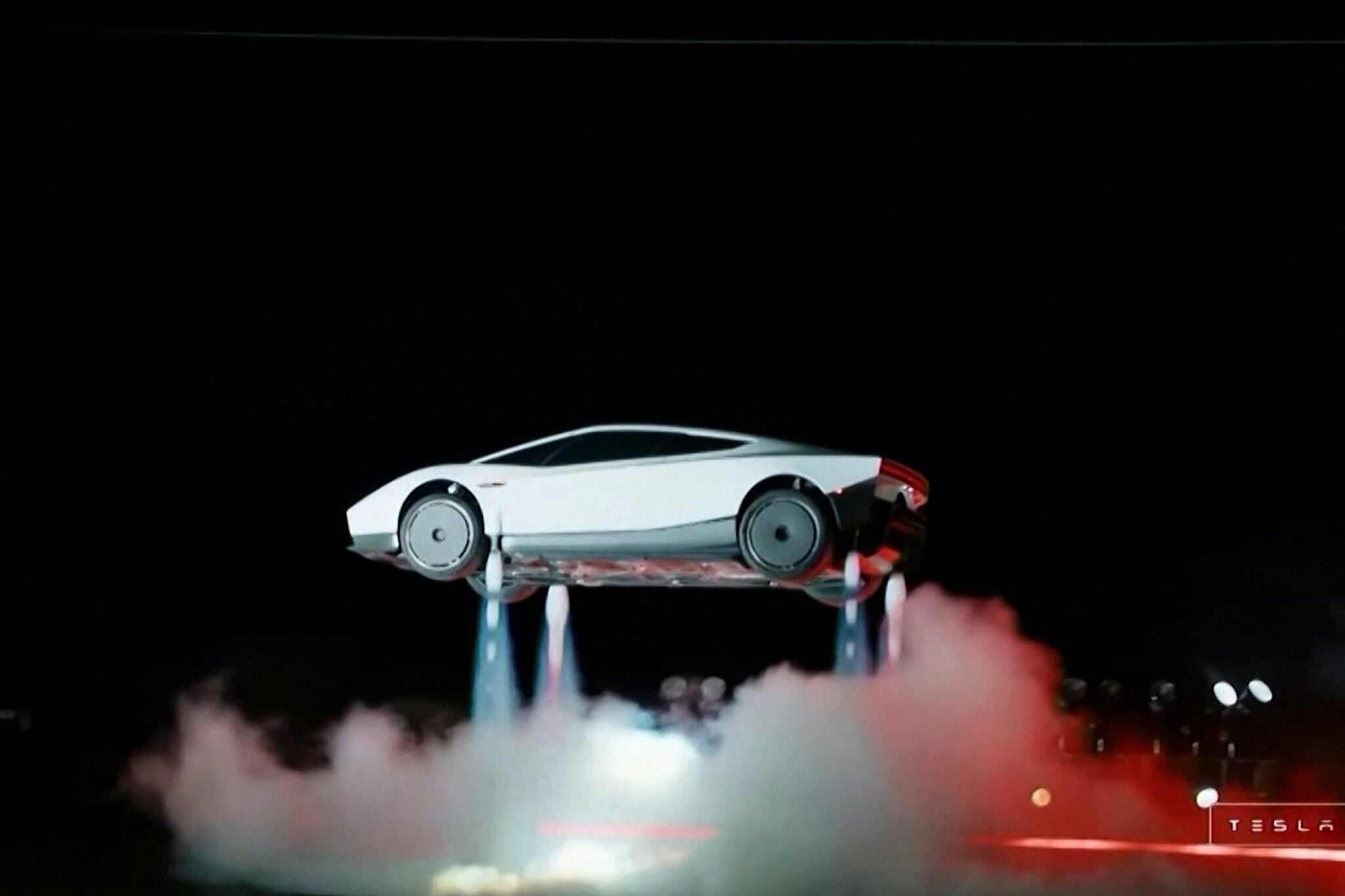
In a calculated disruption of the global tech and automotive news cycle, Tesla has officially showcased its proprietary vision for personal aerial mobility—colloquially dubbed the "flying car." While science fiction has promised personal flight for nearly a century, Tesla’s presentation fused high-density battery innovations, distributed electric propulsion (DEP), and next-generation neural net autonomy into a single, cohesive hardware platform. However, behind the glossy veneer of promotional demonstrations lies a grueling industrial reality: building a functional prototype is an engineering milestone; deploying a mass-market consumer fleet is an economic and regulatory marathon.
For institutional investors and market analysts monitoring the firm's capital allocation strategies, the announcement immediately triggers a reassessment of valuation multiples. Integrating aerospace-grade tolerances into consumer-facing automotive manufacturing introduces unprecedented supply chain complexities. The structural integrity required to withstand cyclical aerodynamic loads—combined with stringent safety redundancies, redundant flight-control cloud compute architecture, and lightweight composite material sourcing—stands in stark contrast to the high-volume, cost-optimized production lines of the Model Y or Cybertruck.
Furthermore, the broader economic context cannot be ignored. The announcement lands at a time when institutional capital demands strict risk mitigation, predictable free cash flow, and measurable enterprise ROI. Diverting R&D capital toward speculative urban air mobility (UAM) ecosystems forces a strategic debate among long-term shareholders regarding near-term profitability versus long-term technological dominance.
Deconstructing the Engineering: Battery Chemistry Meets Aerodynamics
At the heart of Tesla’s aerial prototype is an aggressive push to solve the energy density trilemma: balancing range, payload capacity, and battery weight. Traditional lithium-ion cells deployed in ground vehicles suffer from diminishing returns when tasked with the continuous high-discharge requirements of vertical takeoff and hover maneuvers. To achieve viable flight durations, Tesla’s engineering division has reportedly leveraged proprietary silicon-anode cell architectures and advanced thermal management systems derived from its Semi and Roadster development pipelines.
Yet, the physics of flight remain unforgiving. While a ground-based EV can coast or pull energy from regenerative braking during traffic congestion, an electric VTOL (eVTOL) vehicle must continuously expend massive amounts of energy simply to counteract gravity. This fundamental constraint dictates that consumer rollouts will face immediate battery degradation and range anxiety hurdles, forcing a careful trade-off between passenger capacity and operational flight radius.
Simultaneously, the autonomous software stack powering the vehicle represents a monumental leap beyond current Full Self-Driving (FSD) iterations. Navigating three-dimensional airspace requires real-time processing of dynamic meteorological variables, vector calculations, collision avoidance algorithms, and low-altitude air traffic management (UTM) protocols. The cloud compute architecture required to monitor millions of autonomous aerial nodes simultaneously will demand massive infrastructure scalability, likely requiring partnerships with major cloud hyperscalers and telecommunications leaders.
Market Liquidity, Industry Impact, and Competitive Landscape
The introduction of Tesla's aerial vehicle instantly rattles the competitive landscape, sending ripple effects across both legacy aerospace manufacturers and emerging eVTOL pure-plays such as Joby Aviation, Archer Aviation, and Lilium. While those firms have spent years navigating certification paths, Tesla enters the arena with unmatched manufacturing velocity, vertical integration capabilities, and brand equity.
However, the question of market liquidity and commercial viability remains sharply divided among financial institutions. Who wins, and who loses in this high-stakes technological race?
- The Winners: Advanced materials suppliers, carbon-fiber composite fabricators, and specialized avionics firms stand to capture substantial enterprise contracts as Tesla scales its prototyping and supply chain ecosystem.
- The Losers: Pure-play eVTOL startups lacking Tesla's balance sheet strength or global service network may face compressed valuations and capital-raising headwinds as institutional investors reallocate funds toward diversified tech titans.
- The Infrastructure Bottleneck: Real estate developers, municipal planning boards, and urban transit authorities face immense pressure to design, fund, and build "vertiports"—metropolitan landing hubs equipped with high-voltage megawatt charging grids capable of rapid aircraft turnaround.
Verified Data & Specifications Breakdown
| Metric / Parameter | Tesla Prototype Specification (Estimated) | Industry Benchmark (Current eVTOLs) | Commercial Viability Horizon |
|---|---|---|---|
| Energy Density | ~400 Wh/kg (Projected Next-Gen Cell) | ~250 - 300 Wh/kg | 2028 – 2030 |
| Operational Range | 80 – 120 miles per charge | 50 – 100 miles | 2029 – 2032 |
| Regulatory Status | Pre-Certification / Research Phase | FAA Part 23 / G-1 Issue Papers Active | 5 to 10+ Years for Consumer Scale |
| Infrastructure Requirement | Megawatt-Class Autonomous Vertiports | Dedicated Helipad / Charging Hubs | Dependent on Municipal Zoning Reform |
People Also Ask (FAQ)
1. When will consumers actually be able to purchase and fly a Tesla flying car?
While Tesla has successfully demonstrated functional prototypes, a broad consumer rollout is realistically years—likely a decade—away. The primary delays are not merely mechanical, but stem from the rigorous, multi-year certification processes mandated by global aviation authorities like the FAA and EASA, alongside the complete absence of urban low-altitude air traffic infrastructure.
2. How does the Tesla flying car differ from traditional helicopters or existing eVTOL startups?
Tesla’s approach hinges on automotive mass-manufacturing efficiencies, proprietary battery chemistry advances, and a shared neural-net autonomy stack. Unlike traditional helicopters, which rely on complex mechanical rotor systems and fossil fuels, Tesla’s design utilizes distributed electric propulsion (DEP) with numerous independent electric motors to reduce acoustic signatures and mechanical points of failure.
3. What are the primary regulatory hurdles facing personal flying vehicles?
The regulatory landscape is built for commercial airlines and traditional general aviation, not autonomous consumer air pods. Key hurdles include establishing airworthiness standards, defining pilot licensing or remote-operation protocols, integrating low-altitude uncrewed traffic management (UTM) systems, and addressing severe public concerns over urban noise pollution, privacy, and safety.
4. Will this project negatively impact Tesla’s core automotive profit margins?
Wall Street remains hyper-focused on Tesla's capital allocation discipline. If R&D expenditures for the aerial program outpace near-term cash generation from its core automotive and energy storage divisions, it could trigger temporary margin compression. However, bulls argue that breakthroughs in battery technology and autonomy developed for the aerial program will eventually flow back into ground-based vehicle lines, enhancing long-term enterprise value.
Future Outlook: Milestones to Watch
As the initial media shockwave of Tesla’s unveiling subsides, financial analysts, aerospace engineers, and regulatory watchdogs will shift their focus to verifiable operational milestones. Over the next 24 to 36 months, key indicators of the program's viability will include:
- Regulatory Filings: Formal engagement with the FAA regarding experimental airworthiness certificates and the submission of G-1 certification basis documents.
- Battery Breakthrough Announcements: Empirical validation of high-discharge silicon-anode cell performance during continuous high-load flight testing.
- Infrastructure Partnerships: Strategic joint ventures between Tesla and commercial real estate or municipal entities aimed at developing pilot vertiport networks in test markets.
Ultimately, while Tesla’s "flying" car represents a breathtaking leap in applied engineering and marketing brilliance, the transition from prototype spectacle to ubiquitous consumer driveway remains a formidable test of regulatory endurance, infrastructure engineering, and disciplined capital allocation.