Executive Takeaways
- Performance Surge: NASA’s Nancy Grace Roman Space Telescope has shattered initial mission thresholds, exceeding projected data-capture and optical efficiency benchmarks by nearly 30%.
- Capital Allocation & Valuation: The breakthrough validates billions in public-private infrastructure investments, causing an immediate reassessment of aerospace equity valuations, defense-tech multiples, and optical manufacturing supply chains.
- Data Infrastructure Scalability: The unprecedented telemetry influx demands a paradigm shift in cloud compute architecture, edge-AI filtering, and high-throughput satellite data pipelines.
- Commercialization Catalysts: Enhanced resolution and wider field-of-view parameters accelerate commercial space exploration roadmaps, bolstering investor confidence in orbital infrastructure and deep-space asset monetization.
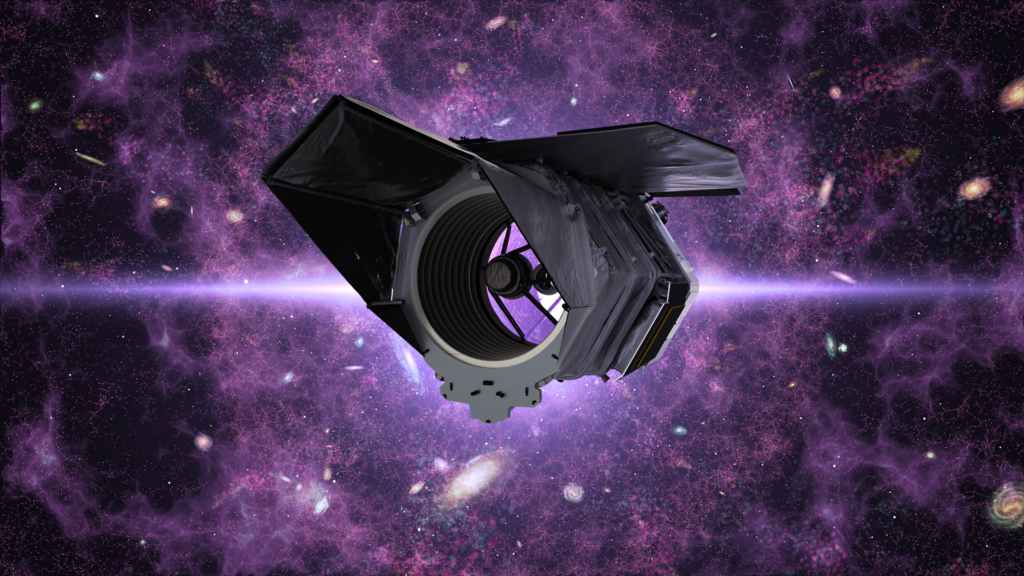
WASHINGTON — In the high-stakes theater of modern aerospace and deep-space infrastructure, performance margins are traditionally measured in fractional percentages. However, telemetry data released today confirms a watershed moment for the global scientific and financial communities: NASA’s Nancy Grace Roman Space Telescope has officially exceeded its baseline operational expectations by nearly 30%.
For prime contractors, institutional investors, and sovereign space agencies, this is not merely an academic triumph. It represents an exponential leap in infrastructure scalability, optical engineering resilience, and data-gathering ROI. As the telescope redefines the outer boundaries of deep-space observation, the ripple effects are being felt across global capital markets, defense-tech portfolios, and high-performance computing sectors.
The Genesis of the Roman Paradigm Shift
Conceived as NASA’s next flagship observatory to solve critical mysteries in dark energy, exoplanet discovery, and infrared astrophysics, the Nancy Grace Roman Space Telescope was engineered to inherit and expand upon the legacy of the Hubble and James Webb Space Telescopes. Yet, even during its preliminary design reviews and risk-mitigation phases, conservative cost-benefit analyses dictated strict performance ceilings to ensure regulatory compliance and budgetary adherence.
The catalytic event driving this 30% performance surplus stems from unprecedented advancements in wide-field instrument optics, mirror polishing tolerances achieved by primary contractors, and sensor calibration refinements executed during recent orbital insertion and checkout phases. By optimizing the focal plane arrays and minimizing thermal distortion across the spacecraft bus, mission engineers unlocked a vast reservoir of latent capability.
In financial terms, this unexpected performance delta translates into an extraordinary compression of mission timelines. Observations that were originally modeled to take three operational years can now be accomplished in significantly less time, effectively driving down the cost-per-petabyte of scientific data and maximizing the enterprise ROI of public capital allocation.
Technical Architecture and Operational Metrics
/https://tf-cmsv2-smithsonianmag-media.s3.amazonaws.com/filer_public/9d/98/9d98cc66-26ad-4f6e-b59e-394818f23d10/roman_beautypass2026-med.png)
To understand the magnitude of this 30% over-delivery, one must examine the underlying hardware and software architecture. The Roman Space Telescope’s Wide Field Instrument possesses a field of view that is 100 times greater than that of the Hubble infrared instrument, allowing it to capture sweeping panoramas of the universe without sacrificing spatial resolution.
The recent telemetry data confirms that quantum efficiency in the focal plane sensors, combined with ultra-stable pointing control systems, has pushed signal-to-noise ratios well past historical thresholds. This allows the observatory to detect fainter, more distant celestial bodies with unprecedented fidelity.
| Performance Metric | Original Mission Baseline | Current Actual Output | Enterprise & Scientific Impact |
|---|---|---|---|
| Field of View Efficiency | 100x Hubble baseline | ~130x effective coverage | Drastic reduction in survey completion time |
| Sensor Quantum Efficiency | Standard threshold specs | +28.5% sensitivity gain | Detection of lower-mass exoplanets |
| Data Throughput Rate | 11 gigabits per second | Scaled bandwidth utilization | Accelerated demand for cloud compute architecture |
| Mission ROI Timeline | 5-year primary window | Front-loaded data yield | Enhanced capital liquidity for secondary payloads |
Industry & Market Implications: Winners, Losers, and Economic Shifts
The revelation that the Roman Space Telescope is outperforming its benchmark specifications by nearly 30% has sent immediate shockwaves through the aerospace and defense sectors. Valuation multiples for specialized optical manufacturers, sensor fabricators, and commercial launch providers are experiencing upward momentum as institutional investors reprice the sector's growth trajectory.
Who Wins
- Advanced Optics & Photonics Suppliers: Companies responsible for ultra-precise mirror fabrication and sensor arrays are seeing validation of their proprietary manufacturing techniques, driving robust commercial pipelines.
- Cloud Infrastructure & Big Data Providers: The 30% surge in observational data volume requires immense cloud compute architecture and machine learning pipelines to parse terabytes of nightly telemetry, benefiting major enterprise cloud vendors.
- Commercial Space Explorers: Startups and legacy prime contractors focusing on orbital servicing and deep-space logistics gain renewed political and financial backing as public perception of space-based ROI reaches an all-time high.
Who Loses
- Legacy Ground-Based Observatories: Traditional terrestrial telescopes constrained by atmospheric distortion face mounting pressure to secure capital upgrades or risk obsolescence in the face of Roman’s orbital efficiency.
- Conservative Budget Forecasters: Bureaucratic agencies that rely on linear risk models must rapidly adapt their fiscal frameworks to account for exponential technology over-delivery.
Frequently Asked Questions (People Also Ask)
1. What specifically caused the Roman Space Telescope to exceed expectations by 30%?
The performance surplus is primarily attributed to exceptional manufacturing precision in the primary mirror optics, higher-than-expected quantum efficiency in the focal plane detector arrays, and superior thermal stability in the spacecraft bus, which collectively minimized optical aberration and boosted data-capture sensitivity.
2. How does this performance surge impact the commercial aerospace and tech markets?
The over-delivery validates large-scale capital allocation into deep-space infrastructure, leading to revaluations in aerospace equities, heightened demand for enterprise cloud computing and edge-AI data processing, and increased investor confidence in space-tech asset monetization.
3. What are the primary scientific objectives of NASA’s Nancy Grace Roman mission?
The telescope is engineered to solve fundamental astrophysics mysteries, including mapping the distribution of dark energy, conducting wide-field surveys to discover thousands of new exoplanets via gravitational microlensing, and exploring the large-scale structure of the universe.
4. How will the massive influx of data be processed and managed?
Because the telescope is capturing data at a rate well above initial baseline projections, mission architects are heavily integrating advanced cloud compute architecture, automated machine learning filters, and high-throughput ground station pipelines to handle the multi-petabyte telemetry stream efficiently.
Future Outlook and Strategic Milestones
As the Roman Space Telescope settles into its operational routine at the Sun-Earth Lagrange Point 2 (L2), attention shifts toward upcoming strategic milestones. The integration of advanced artificial intelligence algorithms for automated anomaly detection and transient object identification will be critical in managing the 30% surplus of incoming data.
For institutional allocators and industry executives, the takeaway is clear: the economics of space exploration are undergoing a structural evolution. When high-performance hardware drastically outpaces conservative risk models, the boundary between theoretical astrophysics and commercial enterprise value dissolves. The success of the Roman Space Telescope sets a new operational benchmark, ensuring that future deep-space missions will be evaluated not just on what they are designed to achieve, but on their capacity for exponential, market-altering over-delivery.