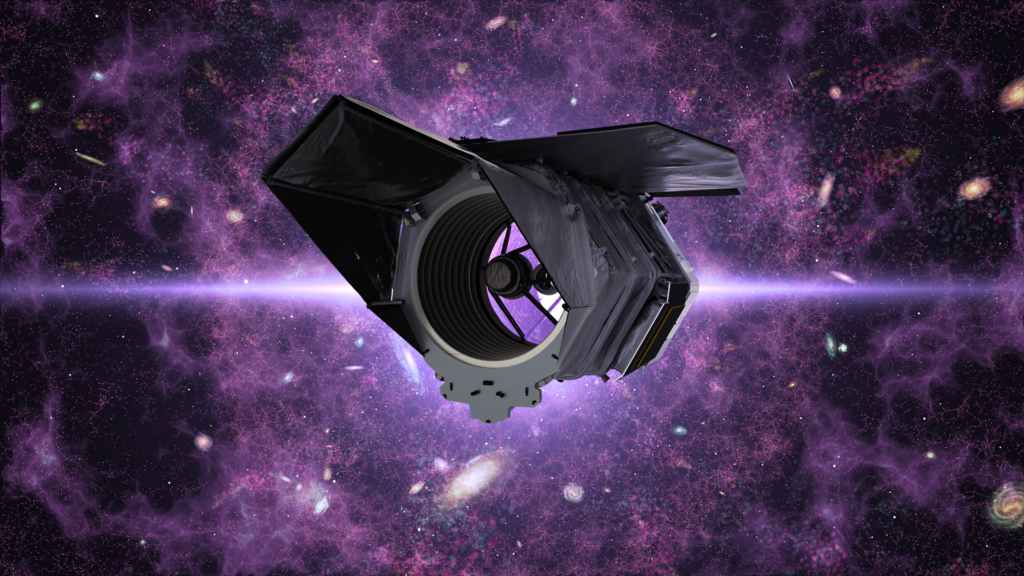
WASHINGTON — Humanity is on the precipice of a profound astronomical awakening. NASA is finalizing preparations for the launch of a revolutionary next-generation space telescope—a technological marvel designed to peer deeper into the cosmos than ever before. Billed by astrophysicists as a spiritual successor to both Hubble and James Webb, this upcoming mission aims to resolve some of the most persistent mysteries of modern physics, from the true rate of universe expansion to the atmospheric signatures of distant, potentially habitable exoplanets.
The impending launch, heavily discussed across scientific communities and recently spotlighted on prominent science broadcasts like NPR’s Shortwave podcast, arrives at a critical inflection point for space exploration. As private aerospace innovation accelerates, NASA’s public-sector endeavors continue to push the boundaries of pure science, promising to alter our fundamental understanding of reality itself.
The Dawn of a New Observational Era
For decades, humanity has relied on orbital observatories to strip away the distorting veil of Earth's atmosphere. While the Hubble Space Telescope provided stunning visual clarity in optical light, and the James Webb Space Telescope (JWST) unlocked the infrared universe, this upcoming telescope introduces an unprecedented synthesis of wide-field survey capabilities and ultra-high-resolution spectroscopy.
According to mission planners, the primary objective is not merely capturing pretty pictures, but gathering massive tranches of deep-space data. By scanning vast swathes of the sky simultaneously, the telescope will hunt for elusive cosmic phenomena, including primordial galaxies formed mere hundreds of millions of years after the Big Bang.
- Unprecedented Field of View: Capturing sky regions hundreds of times larger than previous instruments can manage in a single exposure.
- Dark Energy Tracking: Mapping billions of galaxies to measure the acceleration rate of the expanding universe with pinpoint accuracy.
- Exoplanet Atmospheres: Scanning nearby star systems for biosignatures—chemical indicators that could point to alien life.
- Technological Resilience: Utilizing advanced onboard shielding and cryogenic cooling to maintain peak sensor sensitivity over a multi-year primary mission.
Why This Mission Matters to Global Markets and Science

While astronomy is fundamentally driven by curiosity, missions of this scale carry immense strategic and economic weight. The aerospace sector, advanced optics manufacturing, and data science industries are all stakeholders in NASA’s grand scientific roadmap. High-precision space hardware pushes the limits of material science, leading to terrestrial spin-off technologies that eventually benefit healthcare, telecommunications, and computing.
Furthermore, answering fundamental questions about the cosmos captivates the global public imagination, driving STEM education enrollment and inspiring the next generation of engineers. As international competition in space exploration intensifies—with rival space agencies eyeing similar deep-space survey milestones—NASA’s success with this telescope will reinforce American leadership in fundamental space science.
| Metric / Feature | Specification | Primary Scientific Goal |
|---|---|---|
| Launch Window | Imminent (Upcoming Months) | Initiate deep-space survey operations |
| Primary Focus | Wide-field infrared & optical survey | Map dark energy and dark matter distribution |
| Target Orbit | Stable Lagrange Point (L2) | Thermal stability and uninterrupted viewing |
| Data Generation | Petabytes of public archive data | Empower global astrophysicists with open-source insights |
Overcoming Engineering Hurdles
The path to the launchpad has been fraught with complex engineering challenges. Building an instrument capable of withstanding the violent vibrations of a rocket launch while maintaining optical alignment measured in nanometers requires state-of-the-art manufacturing. Engineers have subjected the telescope to rigorous thermal-vacuum testing, simulating the extreme temperature fluctuations of deep space.
Agency officials have emphasized that rigorous testing protocols are essential to avoid the early hurdles faced by previous missions. By incorporating lessons learned from decades of orbital maintenance and remote troubleshooting, mission controllers are confident in the observatory's long-term viability once it reaches its designated station.
Looking Ahead: The Future of Deep Space Discovery
As the final countdown approaches, the global scientific community is holding its collective breath. Once operational, the telescope's data stream will be made available to researchers worldwide, fostering unprecedented international collaboration. Whether it redefines our understanding of gravity, uncovers the true nature of dark energy, or brings us closer to answering the age-old question—are we alone?—this upcoming launch marks a monumental chapter in human history.
Frequently Asked Questions
When is the official launch scheduled to take place?
NASA has slated the launch window for the coming months, following the completion of final payload integrations and pre-flight safety checks.
How does this telescope differ from the James Webb Space Telescope (JWST)?
While JWST specializes in deep, highly detailed observations of specific targets using infrared light, this new telescope is designed primarily as a wide-field survey instrument. It will map large areas of the sky rapidly to study dark energy, dark matter, and cosmic evolution on a grand scale.