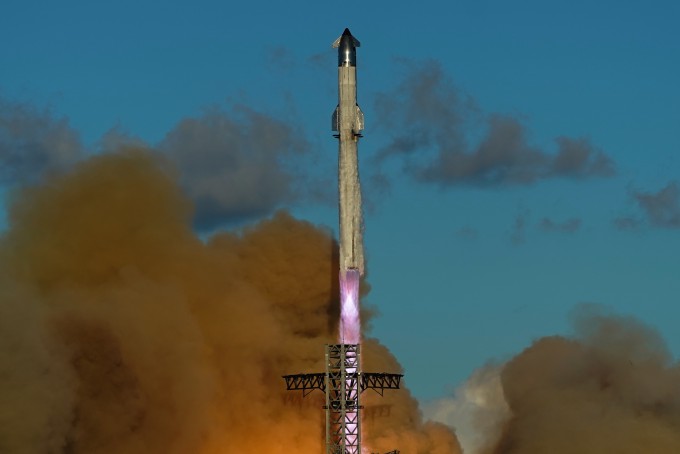
CAPE CANAVERAL, Fla. — In a historic leap for modern astrophysics, NASA has successfully launched its next-generation crown jewel, the Nancy Grace Roman Space Telescope, embarking on a high-stakes mission to map the invisible cosmos. Propelled into orbit by SpaceX’s triple-booster Falcon Heavy rocket, the $4.3 billion observatory is hurtling toward Lagrange Point 2 (L2), a gravitational sweet spot one million miles from Earth. From this deep-space vantage, Roman is poised to solve the twin enigmas of dark energy and dark matter, while hunting for thousands of uncharted alien worlds.
The successful launch marks a monumental triumph for NASA, its commercial partners, and the global scientific community. For years, astrophysics has grappled with the realization that roughly 95% of the universe is composed of dark matter and dark energy—forces that are completely invisible to current instruments. The Nancy Grace Roman Space Telescope, named after NASA’s first chief of astronomy, is engineered specifically to lift this cosmic veil.
Executive Briefing: Key Takeaways of the Roman Mission
- The Core Mission: To investigate dark energy, dark matter, and cosmic acceleration, while conducting an unprecedented census of exoplanets in our galactic neighborhood.
- Unmatched Field of View: Roman possesses a panoramic view 100 times larger than that of the iconic Hubble Space Telescope, allowing it to capture giant swathes of the sky in infrared light with equivalent sharpness.
- Commercial Synergy: The launch underscores NASA’s deepening reliance on SpaceX’s heavy-lift capabilities, utilizing the Falcon Heavy to achieve the precise trajectory needed for L2 orbit insertion.
- Technological First: Features a state-of-the-art Coronagraph Instrument, designed to block out starlight and directly image giant exoplanets, paving the way for future searches for habitable worlds.
The Wide-Angle Revolution: Why Roman is a Game-Changer

While the James Webb Space Telescope (JWST) acts as a highly focused "magnifying glass" probing deep into specific, narrow patches of the early universe, the Roman Telescope functions as a "wide-angle lens." This complementary capability is crucial for statistical cosmic surveys.
"If you want to search a vast forest for rare species, you don't look through a microscope," explained Dr. Mark Clampin, Director of NASA’s Astrophysics Division. "You need a system that can scan the entire landscape in high definition. That is what Roman brings to the table. In just a few months of operation, Roman will map more of the sky in infrared light than Hubble did in over thirty years."
By capturing massive, multi-gigapixel images of the cosmos, Roman will allow astronomers to observe the distribution of hundreds of millions of galaxies. By analyzing how this cosmic web is structured, researchers can measure the pull of gravity against the expansion of the universe, offering the most precise measurements yet of the mysterious force known as dark energy.
Technical Profile: Inside the $4.3 Billion Observatory
The scale, engineering, and financial investment behind the Roman Space Telescope highlight its status as a flagship national endeavor. The table below outlines the core parameters of the spacecraft and its operational footprint:
| Parameter / Feature | Mission Specification & Detail |
|---|---|
| Total Project Cost | Approximately $4.3 Billion USD |
| Primary Launch Vehicle | SpaceX Falcon Heavy (Fully Expendable Configuration) |
| Destination Orbit | Sun-Earth Lagrange Point 2 (L2), ~1 million miles from Earth |
| Primary Mirror Diameter | 2.4 Meters (Equivalent to the Hubble Space Telescope) |
| Key Scientific Instruments | Wide Field Instrument (WFI) & Coronagraph Instrument (CGI) |
| Planned Mission Lifespan | 5 Years (with fuel reserves extending potential operations to 10+ years) |
Hunting for Exoplanets via Gravitational Microlensing
Beyond mapping the large-scale structure of the universe, Roman is set to revolutionize exoplanetary science. It will utilize a phenomenon predicted by Albert Einstein’s General Theory of Relativity: gravitational microlensing. When a foreground star passes directly in front of a background star, its gravity acts as a natural lens, magnifying the background light. If the foreground star has orbiting planets, their gravity creates a secondary, measurable "blip" in the light curve.
This technique allows Roman to detect planets that are far from their host stars—regions where other methods, like transit detection used by the Kepler and TESS missions, are largely blind. Astronomers estimate that Roman will discover upwards of 2,600 new exoplanets, including rocky, Earth-mass worlds residing in the habitable zones of distant solar systems.
Furthermore, the onboard Coronagraph Instrument will serve as a critical technology demonstration. By canceling out the blinding glare of host stars, it will allow astronomers to directly image and analyze the atmospheric chemistry of giant planets orbiting other suns, a vital step toward finding biosignatures in the future.
Geopolitical and Commercial Stakes
The successful launch represents a major victory for the commercial aerospace sector, particularly SpaceX. Launching a delicate, multibillion-dollar scientific instrument requires extreme precision and minimal vibrational stress. The Falcon Heavy’s flawless performance solidifies its position as the premier heavy-lift vehicle for high-priority national security and scientific payloads.
Financially, the Roman program has navigated intense congressional scrutiny and pandemic-related supply chain disruptions. Staying within its revised budgetary envelope of $4.3 billion is a major milestone for NASA’s management of large-scale flagship missions, especially in the wake of the extensive delays and cost overruns that historically plagued the James Webb Space Telescope.
As the Roman Space Telescope begins its journey to L2, calibration of its ultra-sensitive instruments will commence over the next six months. Science operations are expected to yield their first public images and data sets by the end of the year, marking the dawn of a new era of astronomical discovery.
Frequently Asked Questions (FAQ)
How does the Roman Space Telescope differ from the James Webb Space Telescope (JWST)?
While both telescopes observe the universe in infrared light, their missions are highly complementary. JWST is designed for deep, narrow-field imaging, focusing on specific targets like the earliest galaxies or the atmospheres of individual planets. Roman is a survey telescope with a field of view 100 times larger than Hubble or JWST. It is designed to map vast regions of the sky rapidly, collecting massive statistical datasets to study dark energy and conduct large-scale exoplanet censuses.
What is dark energy, and how will Roman help us understand it?
Dark energy is the mysterious, invisible force causing the expansion of the universe to accelerate rather than slow down. Roman will study dark energy by conducting massive cosmic surveys, mapping the shapes and distances of millions of galaxies, and tracking distant supernovae. By observing how gravity and dark energy have battled for control of the universe's structure over billions of years, scientists hope to determine whether dark energy is a constant property of space or a dynamic force that could change over time.