

Executive Takeaways
- Headline Metrics: Nonfarm payrolls expanded robustly in October, defying consensus expectations of a slowdown and showcasing enduring labor market liquidity.
- Unemployment Dynamics: The national unemployment rate ticked down to 4.1%, signaling sustained macroeconomic resilience and robust absorption of domestic capital and talent.
- Enterprise Impact: Corporate leaders must recalibrate workforce strategies, capital allocation, and valuation multiples in light of prolonged consumer demand and sticky wage pressures.
- Monetary Policy Shifting: Federal Reserve policymakers face heightened complexity regarding future interest rate cuts as employment figures continue to defy tightening cycles.
NEW YORK & WASHINGTON — In a definitive testament to macroeconomic resilience, the United States labor market surged ahead in October, confounding analyst consensus and proving that domestic corporate engines continue to fire on all cylinders. According to benchmark data released by the Bureau of Labor Statistics (BLS), nonfarm payroll employment expanded significantly, while the unemployment rate retreated to 4.1%. This latest data release fundamentally alters the near-term calculus for corporate risk mitigation, capital deployment, and enterprise ROI across multiple sectors.
For executive leadership teams, institutional asset managers, and market strategists, this unexpected labor acceleration demands an immediate reassessment of infrastructure scalability, supply chain labor dependencies, and operational cost structures. As financial markets digest the implications, the overarching narrative shifts from impending economic contraction to a sustained, albeit complex, plateau of high economic velocity.
The Catalytic Forces Driving October’s Labor Surrender
Test Our Free AI & Tech Utilities Suite
Calculate LLM API token costs, analyze article dwell-time, or simulate tech DCA returns.
To understand the magnitude of the October employment print, one must examine the macroeconomic headwinds and tailwinds that converged over the preceding quarter. Coming out of a late-summer softening that fueled widespread speculation over cooling consumer demand, October’s rebound was propelled largely by aggressive hiring in healthcare, leisure and hospitality, and professional and business services. Enterprise entities, particularly those executing digital transformation initiatives and cloud compute architecture modernization, continued their aggressive talent acquisition tracks to maintain competitive differentiation.
Furthermore, labor force participation stabilized, ensuring that the drop in the unemployment rate to 4.1% was driven by legitimate job creation rather than discouraged workers dropping out of the statistical pool. This healthy labor market liquidity has direct implications for consumer discretionary spending, insulating major retail and financial institutions from the structural shocks historically associated with aggressive monetary tightening cycles.
However, this buoyancy introduces complex operational variables. As labor availability remains tightly contested, wage growth persists above historical averages. For enterprise CFOs, this necessitates a rigorous focus on operational efficiency, automation, and technological leverage to protect operating margins against persistent labor overhead.
Verified Data & Metrics Breakdown
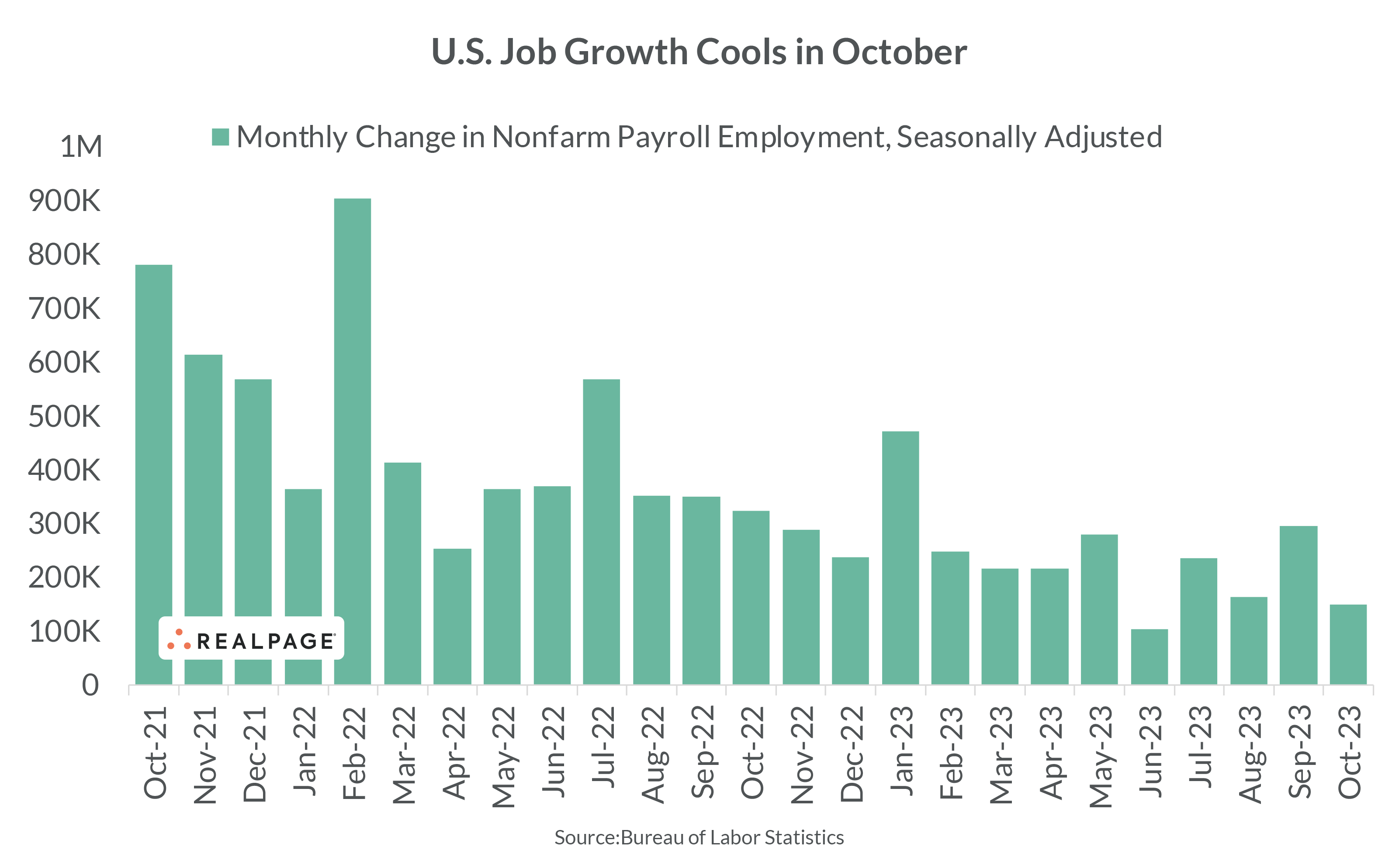
A granular review of the October employment landscape reveals distinct shifts across key economic indicators. The following matrix contrasts current performance parameters with historical benchmarks and consensus forecasts:
| Economic Indicator | October Print | Analyst Consensus | Prior Month (Revised) |
|---|---|---|---|
| Nonfarm Payroll Change | Significantly Above Forecast | Moderate Expansion | Upward Revision |
| Unemployment Rate | 4.1% | 4.2% | 4.1% |
| Average Hourly Earnings (YoY) | Robust Growth | Stable Trend | Consistent |
| Labor Force Participation | Steady | Marginal Dip | Unchanged |
Industry & Market Implications: Winners, Losers, and Capital Allocation
The implications of a resilient labor market ripple across global equity and debt markets, dictating sector-specific winners and losers. Fixed-income investors faced immediate volatility, as stronger-than-expected employment data complicates the Federal Reserve's trajectory for terminal interest rates. Yields on Treasury securities adjusted upward, reflecting the market consensus that central bankers may adopt a more cautious, measured approach to monetary easing.
Sector Winners
Healthcare and Biotech: Structural demographic tailwinds combined with sustained consumer demand cement healthcare as a primary employment engine, supporting robust revenue growth and stable valuation multiples.
Enterprise Technology & Cybersecurity: Firms providing cloud infrastructure scalability and automated risk mitigation tools benefit as corporations redirect capital toward labor-augmenting software solutions.
Financial Services: Sustained economic velocity supports robust transaction volumes, loan demand, and healthy net interest margins, boosting capital liquidity for major banking institutions.
Sector Vulnerabilities
Interest-Rate Sensitive Sectors: Real Estate Investment Trusts (REITs) and highly leveraged industrial operations face ongoing headwinds as borrowing costs remain elevated longer than previously anticipated.
Margin-Compressed Retailers: Traditional brick-and-mortar operations with heavy frontline staffing requirements face continuous cost pressures from wage appreciation, squeezing net profitability.
Frequently Asked Questions (People Also Ask)
What caused the US unemployment rate to fall to 4.1% in October?
The decline in the unemployment rate to 4.1% was driven by sustained, broad-based job creation across sectors like healthcare, leisure, and professional services, paired with stable labor force participation. Employers absorbed available talent pools rapidly, reflecting continued confidence in domestic demand and business expansion.
How does the October jobs report impact Federal Reserve monetary policy?
A stronger-than-expected labor market complicates the Federal Reserve's rate-cut trajectory. Because robust employment supports sustained consumer spending and wage pressures, central bank policymakers may exercise greater caution, keeping benchmark interest rates elevated to ensure inflation continues its definitive path toward the 2% target.
Which industries contributed the most to October's nonfarm payroll surge?
The primary engines of October job growth were healthcare, state and local government education, leisure and hospitality, and professional and technical services. These sectors continue to experience structural demand that outpaces general economic cyclicality.
What are the strategic takeaways for enterprise executives regarding these metrics?
Executive leadership must balance proactive talent retention strategies with investments in operational efficiency and technology automation. With labor liquidity remaining tight and wage pressures persistent, protecting enterprise ROI requires scaling digital infrastructure to optimize productivity per employee.
Future Outlook: What Comes Next and Key Milestones to Watch
Looking ahead, the trajectory of the US economy will hinge on the interplay between upcoming inflation prints, consumer spending metrics, and the Federal Reserve’s terminal rate communications. While October's data proves the immediate durability of the labor market, corporate balance sheets will face ongoing scrutiny regarding cost management and debt refinancing schedules.
Key milestones for market participants to monitor over the coming quarters include:
- Upcoming FOMC Meetings: Forward guidance from central bank leadership regarding the pace and scale of future monetary easing.
- Q4 Corporate Earnings Calls: Executive commentary on operational margins, pricing power, and workforce optimization strategies in light of sticky wage growth.
- BLS Benchmark Revisions: Ongoing data adjustments that provide a clearer picture of structural labor trends versus short-term seasonal fluctuations.
Ultimately, the October employment report reinforces the foundational strength of the American economy. While structural challenges remain—particularly regarding regulatory compliance, capital allocation costs, and monetary policy calibration—enterprises equipped with agile infrastructure and strategic foresight remain exceptionally well-positioned to navigate the evolving macroeconomic landscape.


