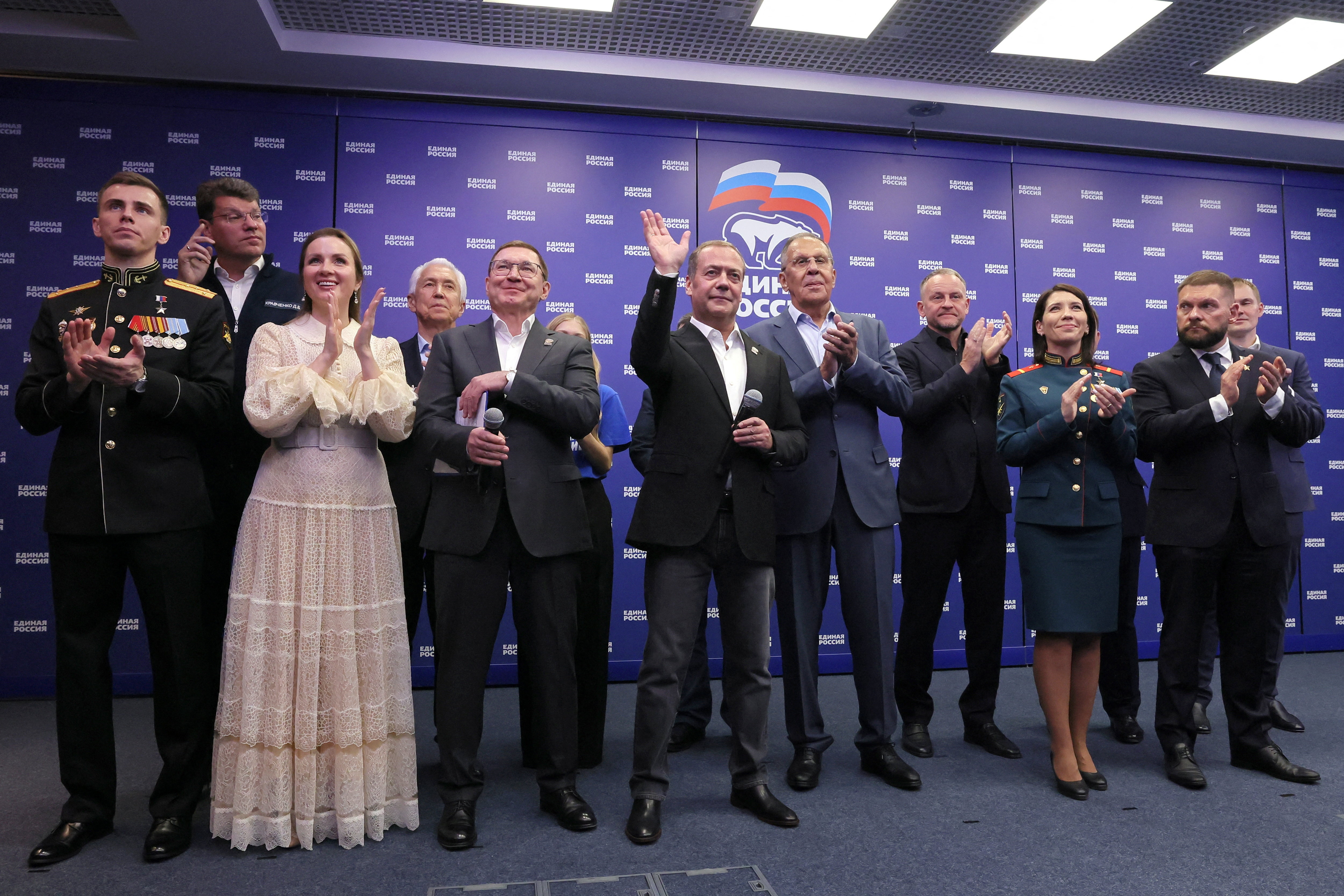
Kremlin Consolidates Grip: Putin’s Party Sweeps Russian Elections in Decisive Wartime Referendum
MOSCOW — Vladimir Putin’s ruling United Russia party has secured an overwhelming victory across dozens of regional and municipal races, according to official preliminary tallies released by the Central Election Commission. The sweep, which spanned gubernatorial contests, regional legislatures, and city councils, delivers the Kremlin an ironclad political mandate to accelerate its wartime industrial mobilization and sustain record defense spending despite grinding Western sanctions.
The three-day vote served as the first broad domestic electoral test since the presidential election earlier this year and Ukraine’s high-stakes cross-border offensive into the Kursk region. While independent watchdogs and international observers characterized the contest as heavily stage-managed, the Kremlin has seized upon the results as empirical proof of societal cohesion behind Putin’s economic and military trajectory.
Executive Briefing: What We Know Right Now
- Landslide Dominance: United Russia secured sweeping margins in all direct gubernatorial elections, with Kremlin-appointed incumbents polling between 65% and 83% of the vote.
- Total Legislative Control: The ruling party captured commanding majorities across regional parliaments, comfortably sidelining the compliant "systemic opposition"—the Communist Party (CPRF) and the Liberal Democratic Party (LDPR).
- The Kursk Bellwether: Despite active military combat and ongoing evacuations along the border, voting took place in the Kursk region under strict security, yielding a decisive victory for the acting governor backed by Moscow.
- Digital Voting Deployment: State-run Remote Electronic Voting (DEG) expanded to more than 25 regions, drawing criticism from independent observers over lack of transparency and source-code verification.
- Annexed Territories Integrated: Local ballots were once again administered in occupied regions of Ukraine—Donetsk, Luhansk, Zaporizhzhia, and Kherson—moves condemned by Kyiv, Washington, and Brussels as illegal nullities.
The Numbers: Breakdown of the Vote

Official data published by the Central Election Commission (CEC), led by Ella Pamfilova, painted a portrait of historically high engagement for an off-cycle regional election. Turnout nationwide averaged roughly 47%, buoyed by multi-day voting protocols and state employee participation drives.
| Metric / Battleground | United Russia / Kremlin Pick | Nearest Competitor | Reported Turnout |
|---|---|---|---|
| Gubernatorial Races (Average) | 73.4% | 11.2% (CPRF) | 46.8% |
| Kursk Border Region | 79.2% (Alexei Smirnov) | 8.9% (CPRF) | 61.5% |
| St. Petersburg Gubernatorial | 73.8% (Alexander Beglov) | 11.7% (LDPR) | 37.2% |
| Moscow City Duma | 38 of 45 Seats Won | 3 Seats (CPRF/Independent) | 34.1% |
Engineered Stability: Mechanics of the Win
The outcome of the election was never in strategic doubt. Over the past twenty-four months, Russian authorities have systematically hollowed out the remaining bastions of unsanctioned opposition. Independent monitoring organization Golos—designated a "foreign agent" and heavily restricted—reported widespread irregularities, noting that genuine anti-war candidates were categorically barred from the ballot through administrative technicalities, signature invalidations, and direct judicial pressure.
"What we observed was not an open political competition, but a state administrative ritual designed to demonstrate absolute control," said an independent political analyst based in Riga. "The systemic opposition parties understand their strict limits: they can debate local infrastructure or heating tariffs, but they cannot criticize the military campaign, macroeconomic strategy, or the President."
Central to United Russia's numerical dominance was the aggressive expansion of the Remote Electronic Voting system. CEC chief Ella Pamfilova defended the digital platform as a safe, highly audited innovation, claiming that "millions of Russians exercised their constitutional duty with unprecedented convenience." However, election analysts note that electronic voting creates an uncheckable black box, making independent tally verification nearly impossible and heightening pressure on state-dependent workers to fall in line.
Economic Fallout: The Mandate for a Wartime Budget
From an economic perspective, the election sweep gives technocrats at the Kremlin and the Russian Central Bank clear runway to push forward structurally difficult policies. Russia’s Ministry of Finance is finalizing its 2025–2027 draft budget, which will allocate more than 6% of national GDP to military expenditures and industrial defense subsidies.
With United Russia firmly controlling regional parliaments, Moscow can enforce new progressive income and corporate tax hikes aimed at plugging deficit gaps caused by volatile energy receipts. Western capital controls and financial sanctions have squeezed liquidity, yet regional elites have reaffirmed their loyalty to the Kremlin’s redistribution model, which delivers lucrative military contracts to local industrial hubs.
Global Reactions: Condemnation vs. Strategic Indifference
The response from Western capitals was swift and predictable. The European Union issued a statement rejecting the legitimacy of ballots organized in the sovereign territory of Ukraine, reiterating that European states will not recognize the results or officials appointed therein. U.S. State Department officials characterized the exercise as an orchestrated display of autocratic consolidation.
In contrast, the Kremlin treated the election as an unequivocal public endorsement. "The level of support demonstrated for the President's platform and United Russia's candidates is exceptionally high," Kremlin spokesman Dmitry Peskov told reporters during his morning briefing. "The Russian people have clearly stated that they favor stability, security, and national sovereignty above all else."
Frequently Asked Questions
How did remote electronic voting impact the credibility of the results?
The Remote Electronic Voting (DEG) system drastically curtailed physical oversight. Independent watchdogs noted that the digital platform lacked third-party cryptographic auditing and open-source public logs, making physical recounts impossible. The system has historically inverted voting patterns in dense urban centers like Moscow, turning early physical ballot deficits into decisive United Russia victories.
What do these election results signal for Russia’s broader wartime strategy?
The sweep ensures total legislative and regional backing for Moscow's medium-term military and economic objectives. It eliminates potential political friction between regional governors and federal authorities, allowing the Kremlin to maintain aggressive recruitment initiatives, allocate municipal budgets toward defense infrastructure, and suppress domestic anti-war sentiment without institutional pushback.