NEW YORK & LONDON — In June 2025, McKinsey & Company released a landmark strategic report titled "Seizing the agentic AI advantage," authored by Senior Partner Alexander Sukharevsky and a team of global technology practice leaders. The report confirmed a sobering reality that Wall Street analysts had been whispering in boardrooms for months: despite hundreds of billions of dollars poured into corporate generative AI initiatives over the prior three years, the vast majority of enterprise balance sheets had failed to register meaningful bottom-line margin expansion.
This phenomenon—termed the "Generative AI Paradox"—exposed a structural disconnect between technology adoption and actual earnings impact. While over 85 percent of Fortune 500 companies had deployed "first-wave" Gen AI solutions such as personal productivity co-pilots, summary widgets, and internal chatbots, the average return on invested capital (ROIC) remained stubbornly flat. Marginal time savings at the individual employee level failed to aggregate into enterprise-level OpEx reductions or EBITDA acceleration. Instead, organizations faced soaring token-licensing costs, cloud infrastructure bloat, and operational fragmentation.
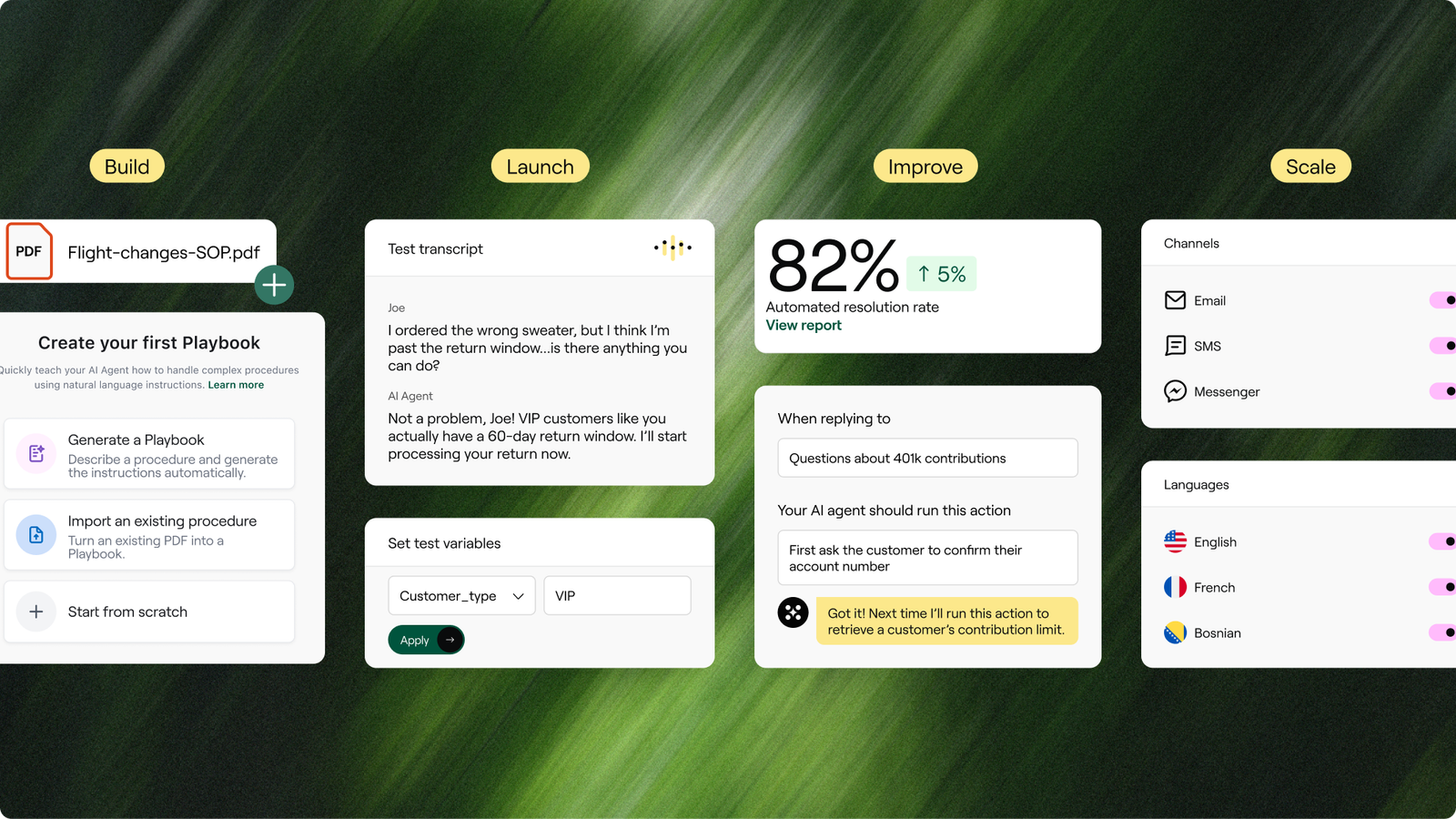
However, the McKinsey report highlighted a critical inflection point: a pioneering subset of market leaders—accounting for less than 10 percent of enterprise deployments—had broken through the productivity ceiling. They did so by abandoning static, prompt-response AI models in favor of Agentic AI architectures. These autonomous, multi-agent systems do not merely draft text or generate code snippets; they plan, execute complex multi-step workflows, call external APIs, evaluate intermediate outputs, and self-correct across core operational systems without requiring continuous human intervention.
Executive Takeaways
Test Our Free AI & Tech Utilities Suite
Calculate LLM API token costs, analyze article dwell-time, or simulate tech DCA returns.
- The Gen AI Paradox Exposed: First-generation generative AI investments delivered widespread adoption but negligible enterprise-level P&L impact, constrained by reliance on manual, prompt-by-prompt human orchestration.
- Architectural Shift to Autonomy: Agentic AI transitions corporate IT from passive copilots to goal-driven autonomous systems capable of executing end-to-end business workflows across legacy ERPs, CRMs, and financial clearing networks.
- Capital Allocation Transformation: Forward-thinking CFOs are reallocating CapEx from generic LLM seats to domain-specific knowledge graphs, multi-agent orchestration frameworks, and robust semantic memory layers.
- Macroeconomic Labor Dynamics: As agentic deployments scale, high-cost white-collar execution is shifting toward supervisory governance, unlocking projected corporate EBITDA expansion of 12 to 22 percent by 2028.
The Anatomy of the Paradox: Why First-Wave Gen AI Stalled

Between 2023 and early 2025, corporate chief information officers (CIOs) rushed to sign enterprise-wide agreements with leading foundational model providers. The initial thesis was simple: equipping knowledge workers with natural-language interfaces would immediately translate into double-digit labor efficiency gains. Yet, by mid-2025, empirical earnings data revealed that these gains were largely illusory.
First-wave Generative AI suffered from three systemic friction points:
First, micro-productivity fragmentation. A financial analyst using a foundational model might draft an email 20 minutes faster, but if the underlying workflow—reconciling intercompany accounts, obtaining compliance sign-offs, and updating ledger entries—still required five manual handoffs across disconnected systems, the net latency of the enterprise process remained unchanged. Micro-time savings were absorbed by personal downtime rather than reinvested into corporate throughput.
Second, contextual volatility and low reliability. Standard Large Language Models (LLMs) operate as probabilistic engine engines. In high-stakes enterprise environments—such as trade settlement, supply chain routing, or regulatory filing—a 90 percent accuracy rate is indistinguishable from zero operational utility. The human overhead required to verify, edit, and audit LLM outputs repeatedly offset the initial cost savings of automated generation.
Third, unsustainable token economics. As enterprise users initiated millions of ad-hoc queries, centralized cloud compute budgets expanded exponentially. Organizations found themselves paying premium per-token pricing for low-value internal search tasks, generating a negative ROI curve that forced executive committees to freeze non-essential AI pilots.
Engineering the Pivot: The Agentic Architecture Standard
The transition from Generative AI to Agentic AI represents a fundamental paradigm shift in enterprise software architecture. Rather than treating AI as a conversational user interface (UI), enterprise architects now treat AI models as reasoning engines embedded within autonomous feedback loops.
According to McKinsey's blueprint, an enterprise-grade agentic architecture relies on four interconnected technical tiers:
1. The Orchestration & Planning Layer
Unlike single-prompt LLM wrappers, an agentic system breaks high-level operational directives (e.g., "Reconcile international vendor disputes for Q2 and process valid credits") into dynamic, multi-step execution graphs. Utilizing framework models like Monte Carlo Tree Search (MCTS) and ReAct (Reasoning + Acting) loops, the agent autonomously decomposes complex tasks, assigns sub-tasks to specialized sub-agents, and evaluates progress against defined business rules.
2. Dynamic Tool Integration & API Meshes
Enterprise agents are endowed with operational agency through permissioned access to underlying software infrastructure. Via standardized API interfaces, agents autonomously execute SQL queries against cloud data warehouses, trigger enterprise resource planning (ERP) workflows in SAP or Oracle, interact with customer management stacks, and initiate ledger operations—all within strictly governed risk parameters.
3. Epistemic & Semantic Memory Systems
To overcome the context window limitations and state-blindness of standard LLMs, agentic systems incorporate long-term vector-based semantic memory and structured enterprise knowledge graphs. This enables agents to maintain persistent organizational context, recall historical transaction decisions, apply company-specific policy nuances, and improve execution accuracy over time through reinforcement learning from feedback loops.
4. Human-in-the-Loop (HITL) Exception Governance
Crucially, agentic architecture redefines human oversight. Instead of prompting the system at step zero, human operators act as supervisory control nodes. Agents execute routine processes continuously and autonomously, escalating to human managers only when edge-case parameters, anomaly thresholds, or monetary risk bounds are exceeded. This shift reduces human intervention requirements by over 90 percent compared to first-wave co-pilot models.
Quantifying the Shift: Gen AI vs. Agentic AI Metrics
To evaluate the financial and operational impact of this structural transition, empirical metrics gathered across global early adopters illustrate a stark divergence in operational performance and return profiles:
| Performance & Financial Metric | First-Wave Gen AI (2023–2024 Pilots) | Agentic AI Infrastructure (2025–2027 Standards) |
|---|---|---|
| Primary Operating Paradigm | Passive Co-pilot (Prompt Driven) | Autonomous Workflow Orchestrator (Goal Driven) |
| Average EBITDA Margin Expansion | 0.8% – 2.3% | 12.0% – 22.5% (Projected) |
| Human Intervention Frequency | 85% – 95% of output steps required manual audit | < 7% exception-based human escalation |
| System Reliability / Task Success Rate | 60% – 75% zero-shot accuracy | 98.2% – 99.6% through iterative multi-agent verification |
| CapEx Allocation Strategy | 70% Enterprise SaaS licenses / LLM Seat Pricing | 65% Internal Knowledge Graphs & Agent Infrastructure |
| Total Cost of Ownership (TCO) Profile | Linear cost scaling with employee headcount | Fixed compute footprint scaling with transaction volume |
Industry & Market Implications: Structural Capital Realignment
The migration toward agentic frameworks is triggering a radical re-pricing of technology sector valuations, capital expenditure strategies, and labor economics across the corporate ecosystem.
1. The Death of Per-Seat SaaS Pricing
For two decades, Enterprise Software-as-a-Service (SaaS) business models derived valuation multiples from per-seat subscription licensing. Agentic AI upends this pricing model. As autonomous agents replace human software users, the number of enterprise "seats" required for software applications declines precipitously. SaaS vendors are being forced to pivot toward outcome-based or usage-based transaction pricing models. Software firms that fail to integrate agent orchestration layers risk severe multiple compression as customers consolidate software budgets into unified multi-agent environments.
2. Cloud Infrastructure & Semiconductor Demand Evolution
While first-wave Gen AI driven extreme demand for massive training clusters, agentic deployments are rebalancing compute spending toward high-efficiency inference architecture. Multi-agent systems require continuous execution loops, real-time context retrieval, and low-latency local inference. Consequently, hyperscalers and chipmaker design strategies are shifting toward specialized enterprise edge units, high-bandwidth memory (HBM) integration, and custom inferencing silicon optimized for long-running autonomous process loops.
3. Macroeconomic Labor Dynamics and Organizational Structure
Data emerging from late-2025 and 2026 labor market analyses indicates that agentic AI is accelerating a structural re-skilling of the white-collar workforce. Middle-management roles historically dedicated to operational coordination, basic compliance review, and data aggregation are rapidly converting into "Agent Systems Manager" positions. Organizational charts are flattening, with small, high-leverage teams overseeing fleets of domain-specific synthetic agents. Rather than mass permanent unemployment, capital is reallocating toward higher-order strategic planning, client-facing business development, and proprietary algorithmic risk management.
Frequently Asked Questions (People Also Ask)
What is the key technical difference between Generative AI and Agentic AI?
Generative AI relies on direct, real-time human prompting to generate content (text, code, or images) in a single passive operation. Agentic AI operates autonomously based on high-level goal directives. It features multi-step reasoning, dynamic tool usage (APIs, databases), long-term memory retrieval, and self-correction capabilities to complete end-to-end operational workflows with minimal human intervention.
How does Agentic AI solve the "Gen AI Paradox" for enterprise CFOs?
The Gen AI Paradox refers to high technology spending yielding negligible bottom-line P&L impact. Agentic AI resolves this by removing human bottlenecks from multi-step business processes. By executing complete workflows autonomously and interfacing directly with enterprise ERP and CRM systems, agentic architectures convert fractional, uncaptured productivity gains into structural operational expenditure (OpEx) reductions and direct EBITDA expansion.
What infrastructure must an enterprise build to deploy agentic workflows safely?
To safely scale agentic systems, enterprises require four key infrastructure components: a robust semantic knowledge graph for corporate context, continuous memory vector stores, specialized fine-tuned domain models, and a centralized governance layer with defined API security scopes, policy guardrails, and automated exception alerts for human oversight.
How does the transition to agentic AI impact enterprise software valuations?
The shift disincentivizes traditional per-seat enterprise SaaS platforms, as autonomous agents decrease the required human user count. Software vendors transitioning to value-based, transaction-based, or agentic-workflow pricing models are capturing premium valuation multiples, while legacy point solutions face margin pressure and customer attrition.
Future Outlook: The 2026–2030 Agentic Enterprise Roadmap
As corporate leaders plan their technology balance sheets through the end of the decade, the trajectory is clear: the enterprise of 2030 will run on an interconnected substrate of autonomous software agents monitored by human executives.
Over the next 18 to 36 months, early enterprise adopters will focus on establishing Inter-Agent Protocols (IAPs)—standardized communication meshes that allow autonomous agents from different corporate entities to negotiate, execute contracts, manage supply chains, and settle liquidity transactions directly with one another. Regulators in the US, EU, and Asia-Pacific are already preparing compliance frameworks specifically targeting autonomous agentic auditability, demanding deterministic record-keeping for AI-driven financial and operational decisions.
For C-suite executives and institutional investors, the strategic imperative is definitive. The era of speculative AI pilot projects and cosmetic chatbot integrations has closed. Winning market share and defending profit margins in the post-2025 global economy requires aggressive capital re-engineering to capture the full economic potential of the agentic AI advantage.