Executive Takeaways
- Systemic Vulnerability Exposed: A coordinated, transnational cyber offensive targeted proprietary IoT management interfaces used by commercial refrigeration units across Western and Central Europe.
- mrow>Catastrophic Inventory Loss: Major retail conglomerates report millions of euros in perishable inventory spoilage, forcing urgent capital allocation shifts toward operational risk mitigation and endpoint security.
- Supply Chain Contagion: The breach leverages legacy industrial control system (ICS) protocols, bypassing modern enterprise firewalls and triggering immediate regulatory compliance probes under EU NIS2 directives.
- Valuation Multiples at Risk: Publicly traded supermarket operators face severe margin compression and sentiment hits as institutional investors re-evaluate infrastructure scalability and cybersecurity posture.
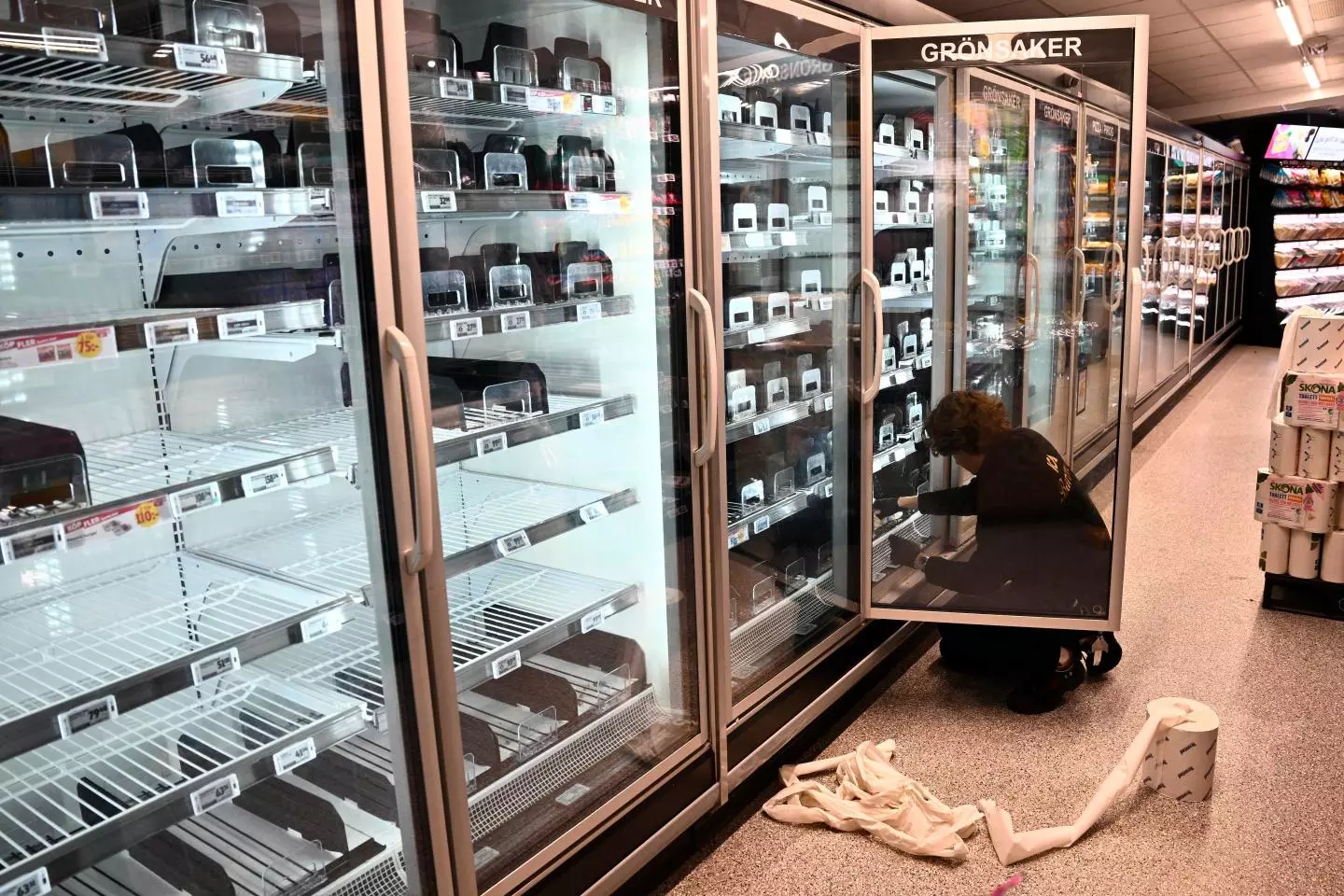
LONDON, FRANKFURT, PARIS — In what security researchers are calling the most insidious operational technology (OT) breach of the decade, a coordinated wave of sophisticated cyberattacks has crippled commercial refrigeration networks across Europe. Over the past 72 hours, hundreds of hypermarkets and distribution hubs in Germany, France, the United Kingdom, and the Netherlands have watched helplessly as automated chillers, display cases, and cold-storage vaults experienced remote temperature manipulation. By deliberately disabling automated cooling cycles and spoofing telemetry data, the unknown threat actors turned indispensable retail assets into ticking thermal bombs.
The campaign, which first manifested as isolated telemetry anomalies before cascading into a full-scale continental emergency, underscores a terrifying vulnerability in modern retail infrastructure. Supermarket operators, driven by relentless pressure to optimize enterprise ROI and reduce energy consumption, have increasingly integrated their HVAC and refrigeration systems into cloud-connected management platforms. This hyper-connectivity, while yielding short-term operational efficiencies, has inadvertently created a sprawling attack surface ripe for exploitation by state-sponsored actors and cyber-extortion syndicates.
Anatomy of the Breach: Weaponizing the Cold Chain
Test Our Free AI & Tech Utilities Suite
Calculate LLM API token costs, analyze article dwell-time, or simulate tech DCA returns.
According to preliminary forensic reports compiled by leading incident response firms, the attack vector relied upon compromised vendor credentials and zero-day vulnerabilities embedded within Building Management Systems (BMS) supplied by third-party contractors. These legacy sub-systems—often neglected during enterprise-wide security audits—acted as a Trojan horse, granting intruders lateral movement directly into the programmable logic controllers (PLCs) governing commercial refrigeration loops.
Unlike traditional ransomware deployments that encrypt files and demand immediate financial restitution via cryptographic tokens, this campaign targeted physical infrastructure. By remotely overriding temperature setpoints and locking local override panels, the attackers forced compressors into continuous overdrive, causing system overloads, or conversely, allowing temperatures in fresh meat, dairy, and pharmaceutical vaults to rise above safe health thresholds.
Retail executives woke up to catastrophic alerts as central monitoring dashboards displayed falsified "normal operating" statuses while physical sensors recorded internal cabinet temperatures spiking well past 15 degrees Celsius. The psychological and financial impact was immediate. Tons of perishable inventory spoiled within hours, forcing frantic emergency disposals, health department investigations, and temporary store closures that paralyzed high-density urban shopping centers.
The Macroeconomic Ripple Effect: Margin Compression and Market Liquidity
The financial fallout from the refrigeration cyber offensive is already reverberating through European equity markets. Grocery retail, traditionally characterized by razor-thin operating margins of 1% to 3% and heavy reliance on precise inventory turnover, is uniquely unequipped to absorb multi-million-euro write-downs on spoiled goods. Institutional investors are rapidly reassessing the valuation multiples of major food retailers caught flat-footed by the crisis.
As capital allocation strategies pivot overnight from expansionary cloud compute architecture investments to emergency cybersecurity overhauls, enterprise leaders face harsh scrutiny. Share prices of several prominent European supermarket chains dipped markedly as analysts downgraded earnings forecasts for the upcoming fiscal quarters. The incident lays bare the hidden liabilities of outsourced supply chain ecosystems, proving that a single unpatched controller in a remote distribution warehouse can threaten the solvency of a multi-billion-euro enterprise.
| Metric / Dimension | Pre-Crisis Baseline | Current Status (Post-Attack) | Financial & Strategic Impact |
|---|---|---|---|
| Affected Retail Footprint | Isolated IT/OT silos | Over 1,200 stores across 5 EU nations | Supply chain paralysis and regional food distribution bottlenecks. |
| Inventory Loss Estimation | < 0.1% normal spoilage | Estimated €45M - €70M in perishables | Direct margin compression and severe working capital strain. |
| Regulatory Exposure | Standard GDPR compliance | Active NIS2 & Food Safety probes | Potential statutory fines up to 2% of global annual turnover. |
| IT/OT Security Expenditure | Routine maintenance budgets | Urgent 300% budgetary reallocation | Capital diverted from growth initiatives to mandatory risk mitigation. |
Regulatory Scrutiny and the NIS2 Directive Crucible
Governments across the continent are wasting no time in responding to what many senior intelligence officials view as a glaring wake-up call regarding critical infrastructure protection. The European Union’s recently enacted NIS2 Directive (Network and Information Security Directive) places strict accountability mandates on supply chain operators designated as essential or important entities.
Under these heightened regulatory frameworks, supermarket boards and chief executive officers can now face personal liability and corporate fines scaling into millions of euros if negligence is proven in securing interconnected industrial control systems. European data protection authorities and national cybersecurity agencies are actively subpoenaing logs from refrigeration hardware vendors, demanding transparency on how unauthorized commands bypassed multi-factor authentication (MFA) checkpoints.
Furthermore, consumer protection agencies have launched parallel inquiries into food safety protocols. The risk of widespread foodborne illness stemming from compromised cold-chain storage has elevated this cybersecurity incident into a major public health emergency, triggering mandatory safety recalls and rigorous inspections across thousands of retail outlets.
Frequently Asked Questions (People Also Ask)
How did the cyberattack impact supermarket refrigeration systems?
The threat actors utilized compromised third-party vendor credentials to infiltrate Building Management Systems (BMS). From there, they launched remote commands that disabled automated cooling cycles, spoofed telemetry dashboards to show false normal temperatures, and forced physical compressors to overheat or shut down, resulting in massive food spoilage.
Which European countries and retail chains are affected?
While investigations remain ongoing and non-disclosure agreements protect specific corporate identities, verified incidents have concentrated heavily across Germany, France, the Netherlands, and the UK. Major multinational grocery conglomerates operating extensive hypermarket networks have reported localized store shutdowns and severe distribution delays.
Are consumers at risk of consuming spoiled food from affected stores?
Retailers and food safety authorities maintain that robust secondary auditing and emergency disposal protocols have mitigated the vast majority of contaminated stock from reaching store shelves. However, public health agencies continue to monitor operations closely, advising consumers to report any anomalies in refrigerated goods.
What steps are companies taking to prevent future OT cyberattacks?
Enterprise risk committees are immediately isolating operational technology (OT) networks from corporate IT environments, implementing strict zero-trust architectures, mandating hardware-level multi-factor authentication, and conducting comprehensive vendor security audits to ensure compliance with stringent EU NIS2 cybersecurity mandates.
Future Outlook: Strategic Imperatives for Enterprise Resilience
As forensic investigators sift through terabytes of network logs, the European supermarket cyberattack serves as a watershed moment for industrial IoT security. The era of treating physical facility management systems as isolated, low-risk utilities is definitively over. Chief Information Security Officers (CISOs) and Chief Operating Officers (COOs) must fundamentally re-architect their technology stacks to bridge the historic chasm between enterprise IT security and operational technology (OT) engineering.
Key milestones to watch over the coming months include:
- Mandatory Vendor Accreditation: Implementation of rigorous, government-backed cybersecurity certification for all third-party HVAC and refrigeration contractors bidding on critical retail infrastructure.
- Insurance Market Correction: Anticipated tightening of cyber insurance underwriting standards, with carriers demanding demonstrable air-gapping and continuous OT monitoring before issuing policies.
- Regulatory Enforcement Actions: The potential issuance of landmark fines under the NIS2 framework, setting legal precedents for corporate accountability in physical-digital convergence attacks.
Ultimately, the supermarket refrigeration crisis demonstrates that in the modern hyper-connected economy, digital vulnerabilities carry immediate physical consequences. Retailers that fail to embed robust, resilient risk mitigation strategies into their foundational infrastructure will find themselves uniquely vulnerable—not just to financial loss, but to catastrophic operational collapse.