Executive Takeaways
- Strategic Re-alignment: Anthropic and Microsoft are actively negotiating a multi-billion-dollar custom AI chip and infrastructure partnership, following Microsoft’s watershed $5 billion capital injection into the frontier model maker.
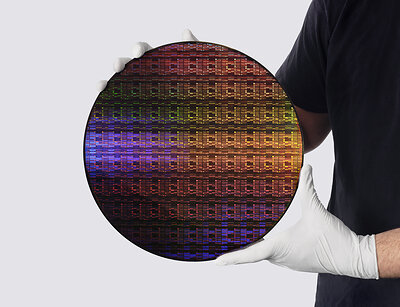
- Proprietary Hardware Deployment: The talks center on Anthropic utilizing Microsoft’s proprietary Maia 200 custom silicon—an enterprise-grade accelerator previously kept exclusively within Redmond’s internal ecosystem.
- Ecosystem Diversification: For Anthropic, the deal represents a critical move to diversify away from exclusive reliance on Amazon Web Services (AWS) and Google Cloud, mitigating infrastructure bottlenecks.
- Antitrust & Regulatory Scrutiny: The deepening entanglement between foundational model developers and hyper-scalers threatens to draw intensified scrutiny from global antitrust regulators monitoring cloud and silicon monopolies.
NEW YORK / LONDON / SEATTLE — In a structural realignment that is rapidly reshaping the global artificial intelligence supply chain, frontier lab Anthropic and tech behemoth Microsoft are locked in advanced negotiations to deploy Microsoft’s custom AI silicon for large-scale model training and inference. The high-stakes talks, first reported by The Information and confirmed by multiple industry sources close to the discussions, arrive on the heels of a monumental $5 billion strategic investment from Microsoft into the safety-focused AI pioneer.
For months, the macroeconomic narrative governing the generative AI boom has been defined by binary dependencies—chiefly, startup alliances with single cloud providers. However, as enterprise demand for advanced reasoning models surges, compute architecture has become the ultimate bottleneck. By opening discussions to integrate Anthropic’s state-of-the-art Claude models onto Microsoft’s proprietary hardware infrastructure, both organizations are signaling a pragmatic pivot toward silicon agnosticism and hyper-scale risk mitigation.
The negotiations underscore an aggressive push by chief executive Dario Amodei and his executive team to secure guaranteed cloud compute architecture capable of supporting the next generation of algorithmic scaling laws. Simultaneously, Microsoft is positioning its custom silicon division not merely as an internal cost-saving mechanism against Nvidia’s dominant GPUs, but as a formidable external revenue engine designed to capture high-margin enterprise workloads.
The Genesis of the Partnership: Capital, Compute, and Custom Silicon
The groundwork for the current hardware negotiations was laid by Microsoft’s landmark $5 billion capital allocation into Anthropic. While early reports characterized the capital infusion as a traditional venture-style equity and convertible note package, financial analysts quickly recognized it as a calculated maneuver in the ongoing battle for enterprise AI dominance.
Historically, Anthropic’s primary cloud infrastructure partnerships have been anchored by Amazon Web Services (AWS) and Google Cloud. AWS, which committed up to $4 billion to Anthropic, designated its Trainium and Inferentia chips as core components of the lab’s training pipeline. Yet, the sheer velocity of parameter growth in frontier models demands an insatiable appetite for raw floating-point operations per second (FLOPS). Diversifying supply chains across multiple proprietary architectures has transitioned from a luxury to an existential necessity.
At the center of the current hardware talks is Microsoft’s Maia 200 accelerator. Unlike its predecessor, the Maia 100—which was deployed primarily for internal workloads like running smaller versions of OpenAI’s models and Bing features—the Maia 200 represents a generational leap in memory bandwidth, thermal efficiency, and interconnect scalability. Crucially, Microsoft has historically restricted Maia hardware access, refusing to make the chips available to external commercial cloud customers. Granting Anthropic access to the Maia 200 represents an unprecedented strategic departure for Redmond, highlighting the urgency to stress-test its custom silicon against the most demanding frontier models in existence.
Deconstructing the Technical Architecture: Maia 200 Meets Claude

To understand the economic and technical magnitude of the prospective deal, one must examine the computational demands of Anthropic’s Claude model family. Training models with hundreds of billions—and eventually trillions—of parameters requires clusters featuring tens of thousands of specialized accelerators operating with minimal latency and maximal interconnect throughput.
Microsoft’s Maia 200 silicon has been architected specifically to alleviate the memory wall that plagues traditional GPU clusters. By optimizing high-bandwidth memory (HBM) integration and custom networking protocols, the Maia 200 aims to compete directly with Nvidia’s flagship Blackwell architecture and Google’s latest TPU generations. However, designing hardware in a vacuum is vastly different from optimizing it for dynamic, multi-modal reasoning engines.
- Inference Optimization: While model training grabs headlines, enterprise deployment hinges on cost-effective inference. Deploying Maia 200 chips for Anthropic's API workloads could drastically lower token-generation costs for enterprise clients.
- Interoperability Challenges: Transitioning Anthropic’s codebase from CUDA-optimized environments to Microsoft’s proprietary software stack requires substantial engineering synchronization, testing the agility of both engineering teams.
- Power and Thermal Management: Next-generation data centers require immense liquid-cooling capabilities. Microsoft’s extensive capital expenditure in sustainable, high-density data center infrastructure provides the physical foundation necessary to house these dense silicon clusters.
Industry insiders note that if Anthropic successfully validates the Maia 200 at scale, it will serve as a massive proof-of-concept for Microsoft’s custom hardware division, validating billions of dollars in R&D and convincing skeptical enterprise buyers that Redmond can deliver an end-to-end AI stack independent of third-party silicon suppliers.
| Metric / Parameter | Anthropic (Claude Infrastructure) | Microsoft (Maia 200 Ecosystem) | Strategic Impact |
|---|---|---|---|
| Primary Capital Backing | AWS ($4B+), Google, Microsoft ($5B) | Self-funded / Enterprise Cash Flow | Reduces single-provider dependency risk. |
| Primary Silicon Focus | Nvidia GPUs, AWS Trainium, Google TPUs | Proprietary Maia 200 Accelerators | Diversifies hardware away from Nvidia monopoly. |
| Deployment Status | Active commercial multi-cloud deployment | Internal use / Expanding external pilot talks | Validates custom silicon for frontier models. |
| Regulatory Exposure | Moderate (UK CMA, FTC inquiries) | High (Cloud and AI market dominance probes) | Draws heightened antitrust scrutiny globally. |
Industry & Market Implications: Re-writing the Cloud Economics Playbook
The economic ripples of an finalized Anthropic-Microsoft chip agreement will be felt across global technology markets. For years, the valuation multiples of cloud service providers and semiconductor designers have been tethered to capital expenditure cycles driven by artificial intelligence. By forging ties with multiple hyper-scalers, Anthropic is insulating itself from the cyclical volatility of any single partner’s strategic shifts.
Conversely, the move introduces complex competitive dynamics within Microsoft’s own portfolio. Microsoft maintains a multi-billion-dollar, multi-year partnership with OpenAI—Anthropic’s chief rival in the foundational model space. By simultaneously banking and powering OpenAI while courting Anthropic with cutting-edge proprietary hardware, Microsoft is executing a classic hedging strategy: positioning itself as the indispensable utility layer for the entire generative AI economy, regardless of which specific lab ultimately captures consumer or enterprise mindshare.
Financial markets have reacted with calculated optimism, viewing the infrastructure diversification as a prudent step toward long-term enterprise ROI. However, institutional investors are also closely monitoring the potential for regulatory friction. Antitrust regulators in the United States, the European Union, and the United Kingdom have cast a wary eye on the dense web of investments, exclusive partnerships, and cloud provisioning agreements binding Big Tech to independent AI startups. A formal hardware supply contract between Microsoft and Anthropic could invite aggressive regulatory inquiries regarding market access and unfair competitive advantages in cloud compute architecture.
Frequently Asked Questions (People Also Ask)
What is the nature of the recent deal between Anthropic and Microsoft?
Microsoft has invested $5 billion into Anthropic as part of a strategic alignment. Following this capital injection, the two companies entered advanced talks for Anthropic to utilize Microsoft’s proprietary custom AI chips—specifically the Maia 200 accelerator—for model training and inference workloads.
What are Microsoft Maia 200 chips?
The Maia 200 is Microsoft’s second-generation custom AI accelerator designed to handle heavy machine learning workloads, rivaling traditional GPUs from Nvidia. Until these negotiations, Microsoft restricted Maia chips strictly to internal use, making the talks with Anthropic a major pivot toward external commercialization.
How does this impact Anthropic’s partnerships with AWS and Google?
Anthropic maintains major cloud partnerships with Amazon Web Services (which has committed up to $4亿元 / $4 billion) and Google Cloud. The talks with Microsoft represent an infrastructure diversification strategy, ensuring Anthropic is not overly reliant on a single cloud provider or hardware ecosystem as its compute requirements scale.
Why are antitrust regulators watching these AI partnerships closely?
Global regulators, including the FTC and European Commission, are scrutinizing how a small number of hyper-scale cloud providers (Microsoft, Amazon, Google) are investing billions in independent AI labs while simultaneously supplying them with critical cloud infrastructure and proprietary silicon, raising concerns over market consolidation and fair competition.
Future Outlook: Milestones and Strategic Horizons
As negotiations between Anthropic and Microsoft progress, industry observers will monitor several key operational milestones. First, any formal announcement of a pilot deployment utilizing Maia 200 chips will serve as a bellwether for whether custom enterprise silicon can successfully challenge Nvidia’s near-monopoly in frontier model training. Second, the response from regulatory bodies in Brussels and Washington will dictate the structural boundaries within which hyper-scalers can partner with independent artificial intelligence labs.
Ultimately, the convergence of Anthropic’s algorithmic expertise with Microsoft’s massive infrastructure scale and proprietary silicon development highlights a fundamental truth of the current technological epoch: artificial intelligence is no longer merely a software phenomenon. It is an industrial-scale physical enterprise, where the victors will be determined as much by silicon fabrication, electrical grid capacity, and capital allocation as by neural network architecture.