The $44 Billion Launchpad: How India’s Space Tech Revolution is Quietly Disrupting Global Industries
NEW DELHI — For decades, space exploration was viewed as a high-stakes, capital-intensive playground reserved exclusively for superpower governments. Today, a profound paradigm shift is underway. India, historically known for its frugal and highly efficient outer-space triumphs, is rapidly transitioning its space program from a scientific endeavor into a multi-billion-dollar commercial engine. Armed with a newly liberalized regulatory framework, an explosion of deep-tech startups, and state-of-the-art satellite networks, the nation is actively restructuring how global industries leverage outer space.
From revolutionizing precision agriculture in Haryana to securing volatile borders in Ladakh, space technology is no longer just about reaching the stars—it is about optimizing life and business on Earth. According to recent industry estimates and policy briefs from premier think tanks, India’s space economy is projected to balloon from its current valuation of approximately $8 billion to a staggering $44 billion by 2033, driven largely by downstream applications and private enterprise.
The Shift from Exploration to Applied Commercialization
Space technology refers to the practical application of engineering, physics, and computing to design, launch, and operate assets beyond Earth's atmosphere. While rockets and deep-space probes capture headlines, the real economic value lies in "downstream applications"—the processing, analysis, and utilization of data beamed back to Earth.
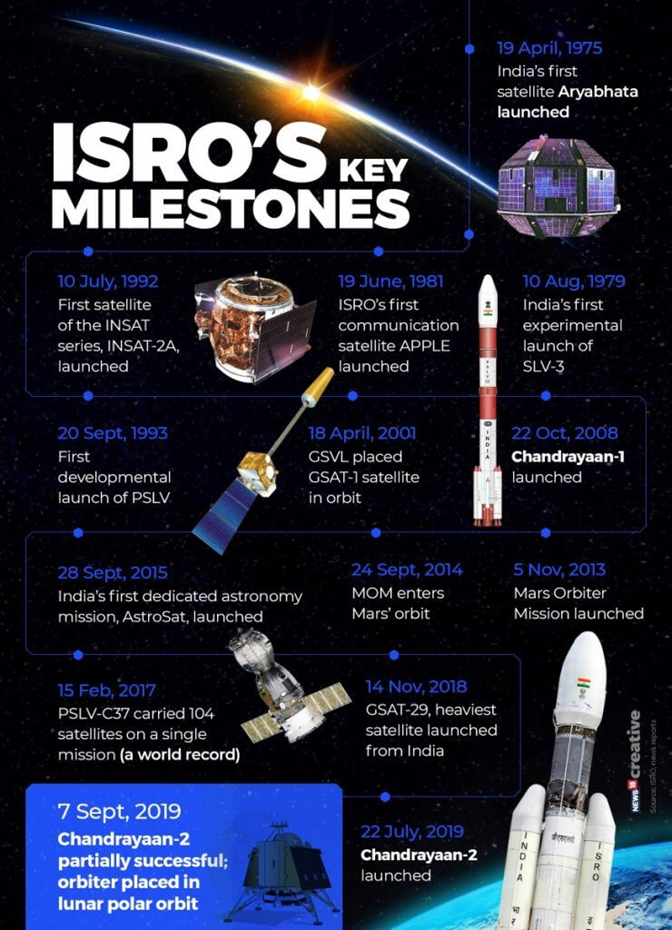
Under the guidance of the Indian Space Research Organisation (ISRO), India has mastered the art of launching complex missions on shoe-string budgets. However, the establishment of the Indian National Space Promotion and Authorization Centre (IN-SPACe) and NewSpace India Limited (NSIL) has fundamentally rewritten the rules of the game. By opening the sector to 100% Foreign Direct Investment (FDI) under liberalized routes, New Delhi has cleared the runway for private players to monetize orbital assets.
"We are witnessing the democratization of space," says a senior policy advisor at the Ministry of Science and Technology. "The government is transitioning from a sole executor to a facilitator. ISRO will focus on cutting-edge research and deep-space exploration, while the private sector will drive commercial launches, satellite manufacturing, and data-driven applications."
Critical Applications Driving India's Economic Sectors
The applications of India’s space technology are deeply integrated into the nation’s socio-economic fabric, offering high-value solutions across critical sectors:
1. Precision Agriculture and Food Security
Agriculture remains the backbone of the Indian economy, employing nearly half the workforce. Through Earth Observation (EO) satellites like the RISAT and Resourcesat series, space tech provides real-time data on soil moisture, crop health, and regional water stress. Financial institutions and insurance companies are now utilizing this data to assess crop damage instantly, streamlining payouts and mitigating agricultural credit risks.
2. Disaster Management and Climate Resilience
India’s vulnerability to extreme weather events—from super-cyclones in the Bay of Bengal to urban flooding in Mumbai—demands highly accurate predictive modeling. Satellite meteorology, powered by the INSAT series, has transformed disaster management from a reactive rescue operation into a proactive evacuation strategy. Early warning systems have successfully reduced casualty rates during major coastal storms by over 90% over the last decade.
3. Strategic Sovereignty and National Security
In an increasingly tense geopolitical neighborhood, space is the ultimate high ground. India’s indigenous navigation system, NavIC (Navigation with Indian Constellation), provides independent, highly secure positioning services across the subcontinent. This eliminates reliance on foreign GPS networks during critical military operations. Furthermore, dedicated defense satellites provide round-the-clock, high-resolution surveillance along sensitive borders.
4. Telecommunications and the Digital Divide
While urban India enjoys high-speed 5G networks, vast swathes of rural and mountainous terrain remain digitally isolated. High-throughput communication satellites are bridging this digital divide, enabling tele-education, telemedicine, and digital banking in the most remote corners of the country. This infrastructure acts as the invisible scaffolding for India’s massive digital public infrastructure (DPI).
At a Glance: The Economics of India's Space Sector
To understand the rapid acceleration of this sector, one must look at the key metrics guiding its growth trajectory. The table below outlines the current state and projected expansion of the Indian space ecosystem:
| Metric / Parameter | Current Estimate (2024) | Projected Target (2033) | Primary Driving Factor |
|---|---|---|---|
| Global Market Share | ~2% to 3% | 8% to 10% | Private launch services & satellite manufacturing |
| Active Space Startups | Over 190 companies | Estimated 500+ | FDI liberalization & IN-SPACe incubation support |
| Launch Cost Advantage | 30% - 40% cheaper than global peers | Maintained via reusable launch vehicles | Indigenous supply chains & localized engineering |
| Primary Revenue Driver | Upstream (Launch & Hardware) | Downstream (Data Analytics & SaaS) | AI-driven satellite imagery & IoT applications |
The Rise of Space-Tech Startups: From Seed to Orbit
The influx of private venture capital has catalyzed a new breed of entrepreneurs. Companies like Skyroot Aerospace—which successfully launched India’s first privately developed rocket, Vikram-S—and Pixxel, which is building a constellation of hyperspectral imaging satellites, are no longer just domestic novelties. They are competing on the global stage.
Hyperspectral imaging allows satellites to capture data across dozens of wavelengths, revealing environmental features invisible to the naked eye. This technology is highly sought after by global mining conglomerates, agricultural MNCs, and oil and gas giants looking to monitor pipeline leaks and environmental degradation in real time.
"Our focus is on building a health monitor for the planet," says an executive from a leading Bengaluru-based space startup. "By combining space data with artificial intelligence, we can predict pest infestations, identify illegal mining operations, and track carbon sequestration with unprecedented accuracy. The commercial applications are virtually limitless."
Looking Ahead: The Geopolitical and Economic Frontier
As India prepares for its ambitious Gaganyaan mission—aiming to put Indian astronauts into low-Earth orbit—and plans for its own space station (Bharatiya Antariksha Station) by 2035, the geopolitical implications are profound. Space has become a key pillar of India’s soft-power diplomacy.
Through initiatives like the South Asia Satellite, India is providing free space-derived services to its neighbors, strengthening regional alliances. Concurrently, collaborations with NASA, such as the NISAR (NASA-ISRO Synthetic Aperture Radar) mission, demonstrate that global superpowers now view India not as a junior partner, but as an equal technological peer.
For investors, policymakers, and global industries, the message is clear: India's space technology is no longer just a national pride project. It is a highly competitive, rapidly scaling economic engine that is redefining how the world utilizes orbital assets for terrestrial prosperity.
Frequently Asked Questions
How does India's space technology directly benefit the average citizen?
Space technology directly impacts daily life by improving weather forecasting, which protects lives and property during natural disasters. It also enables high-speed rural internet, enhances GPS navigation, and assists farmers in optimizing crop yields through satellite-driven soil and moisture mapping, ultimately lowering food production costs.
What makes India’s commercial launch services so globally competitive?
India’s competitive advantage lies in its unmatched cost-efficiency and high reliability. Through ISRO’s Polar Satellite Launch Vehicle (PSLV) and the newly commercialized Small Satellite Launch Vehicle (SSLV), India offers launch services at a fraction of the cost of Western competitors, supported by highly skilled, localized engineering and robust domestic manufacturing supply chains.