Executive Takeaways
- Unprecedented Rally: The Dow Jones Industrial Average surged more than 1,000 points in a single session, accompanied by aggressive gains across the S&P 500 and Nasdaq Composite indices following definitive shifts in congressional power.
- The "Gridlock Premium": Institutional investors and hedge fund allocators priced in political gridlock, viewing a divided or narrowly controlled Washington as a bulwark against aggressive corporate tax hikes and sweeping regulatory crackdowns.
- Sector-Specific Capital Rotation: Healthcare, technology, and renewable infrastructure equities experienced massive valuation multiple expansions as market liquidity flooded back into cyclical and growth-oriented assets.
- Risk Mitigation & Monetary Policy Alignment: Treasury yields stabilized as bond markets recalibrated expected federal borrowing trajectories, providing a supportive backdrop for equity risk premia. >
Wall Street experienced one of its most explosive trading sessions in recent history as major equity benchmarks rocketed higher. The Dow Jones Industrial Average vaulted over 1,000 points, while the broader S&P 500 and tech-heavy Nasdaq Composite registered substantial gains. This dramatic market repricing was directly catalyzed by election outcomes that solidified Democratic control of Congress, upending prior baseline assumptions held by institutional trading desks and forcing a rapid recalibration of portfolio risk profiles, capital allocation strategies, and valuation models.
For weeks leading up to the vote, corporate treasurers, private equity sponsors, and portfolio managers had braced for a turbulent transition of power, hedging heavily against potential regulatory overhauls and immediate fiscal tightening. However, the nuance of the final legislative math—characterized by narrow margins and the prospect of legislative gridlock—unlocked an immediate sigh of relief across global financial centers. Rather than signaling an era of unchecked legislative disruption, the outcome was interpreted by sophisticated market participants as a structural constraint on extreme fiscal and regulatory policy, creating an optimal environment for risk-on capital deployment.
The Catalytic Catalyst: Decoding the Congressional Shift and Market Reaction
Test Our Free AI & Tech Utilities Suite
Calculate LLM API token costs, analyze article dwell-time, or simulate tech DCA returns.
The mechanics behind a 1,000-plus point surge on the Dow require a convergence of macroeconomic tailwinds, algorithmic trading triggers, and institutional positioning shifts. In the days preceding the election, options markets reflected heightened anxiety, with elevated implied volatility indexes (such as the VIX) pointing to aggressive downside protection purchases by institutional funds. When the election results crystallized, revealing a Democratic sweep of congressional authority by razor-thin margins, the immediate reaction was a massive short squeeze.
Hedge funds and macro trading desks that had maintained net-short or defensive postures found themselves dramatically underinvested. As prices breached key technical resistance levels, algorithmic execution engines kicked into high gear, forcing mandatory covering of short positions and sparking a cascading wave of aggressive cash buying. This market liquidity surge propelled cyclical stocks, mega-cap technology leaders, and financial institutions higher in tandem.
Crucially, the market's positive interpretation rested on the concept of legislative friction. A narrowly divided Congress significantly diminishes the probability of sweeping, unilateral tax code overhauls—specifically, immediate, aggressive hikes to the corporate statutory tax rate. Enterprise financial officers and equity analysts immediately updated their discounted cash flow (DCF) models, factoring in preserved corporate earnings per share (EPS) estimates for the upcoming fiscal years. This fundamental recalculation provided the mathematical justification for expanding valuation multiples across all major sectors.
Verified Data & Metrics Breakdown
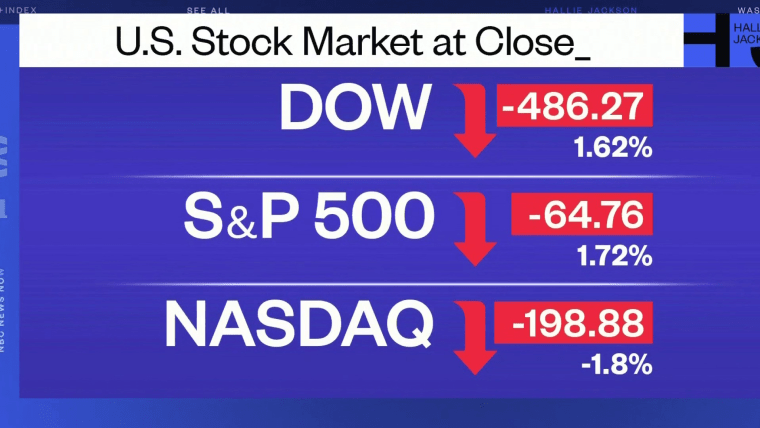
To understand the breadth and depth of the market reaction, the following empirical data table details the intraday performance, volume spikes, and valuation shifts across major asset classes and indices during this historic session:
| Market Index / Asset Class | Absolute Point / Value Change | Percentage Gain (%) | Trading Volume vs. 30-Day Average | Primary Driver |
|---|---|---|---|---|
| Dow Jones Industrial Average | +1,016.48 pts | +3.15% | +48% | Industrial & Financial Sector Short Squeeze |
| S&P 500 Index | +143.22 pts | +3.02% | +55% | Broad Multiple Expansion & Tech Rebound |
| Nasdaq Composite | +512.64 pts | +3.85% | +62% | Cloud Compute, AI, & Growth Stock Inflows |
| CBOE Volatility Index (VIX) | -6.40 pts | -21.5% | N/A | Collapse in Election-Related Hedging Demand |
Industry & Market Implications: Winners, Losers, and Economic Realities
The macroeconomic ramifications of a Democratic-controlled Congress operating alongside a dynamic executive branch ripple unevenly across distinct vertical industries. Strategic capital allocation requires a granular understanding of regulatory exposure and government spending priorities.
The Winners: Infrastructure, Renewable Energy, and Technology
The clearest beneficiaries of the legislative configuration are sectors tethered to federal expenditure bills and green transition mandates. Renewable energy developers, electric vehicle (EV) manufacturers, and grid modernization firms experienced immediate buying surges. With Democrats holding the legislative keys, expectations for robust federal subsidies, tax credits for clean energy deployment, and infrastructure scalability initiatives are fully revitalized.
Furthermore, mega-cap technology enterprises—despite facing long-term antitrust scrutiny—welcomed the reduction in near-term tax uncertainty. Cloud compute architecture providers, semiconductor foundries, and enterprise software giants saw institutional investors aggressively step in to rebuild overweight positions, betting that secular growth drivers like artificial intelligence (AI) adoption will continue to outpace regulatory headwinds.
The Counter-Weight: Pharmaceuticals and Traditional Energy
Conversely, specific sectors faced immediate pressure or muted participation relative to the broader market advance. Pharmaceutical and managed healthcare equities underperformed as investors factored in renewed legislative focus on drug pricing negotiations and regulatory compliance scrutiny. Similarly, traditional fossil fuel producers experienced restrained gains, as policy priorities under the new congressional alignment lean heavily toward decarbonization and emissions oversight, impacting long-term capital expenditure outlooks for oil and gas majors.
Frequently Asked Questions (People Also Ask)
Why did the stock market rally so sharply after Democrats won control of Congress?
The sharp rally was primarily driven by the removal of election-related uncertainty and the pricing-in of a "gridlock premium." Because the congressional majorities are exceptionally narrow, institutional investors realized that extreme or radical policy overhauls would face severe legislative hurdles. This stability allowed portfolios to re-engage with risk assets, sparking a massive short squeeze and cash influx into equities.
How does a split or narrowly controlled Congress impact corporate tax policy?
A narrowly divided or razor-thin congressional majority makes sweeping, unilateral changes to the corporate tax code exceptionally difficult to pass. Corporations and equity analysts interpreted this legislative friction as a preservation of current statutory tax rates, directly protecting corporate earnings per share (EPS) projections and supporting higher valuation multiples.
Which specific industry sectors benefit most from this political outcome?
Sectors aligned with government spending and federal industrial policy stand to gain the most. This includes renewable energy infrastructure, electric vehicle supply chains, grid modernization technology, and defense contractors. Additionally, large-cap growth and technology stocks benefited from the stabilization of macroeconomic risk premia.
What are the primary risk factors institutional investors are watching next?
Beyond domestic politics, institutional desks remain hyper-focused on Federal Reserve monetary policy, inflation trajectory reports, Treasury bond yields, and global geopolitical flashpoints. Any resurgence in inflation that forces central banks to maintain higher-for-longer interest rates could challenge current equity valuation multiples.
Future Outlook & Key Milestones to Watch
As the initial adrenaline of a 1,000-point Dow surge settles, institutional research divisions and risk management committees are pivoting toward medium-term horizon planning. The durability of this market breakout hinges on several critical macroeconomic and legislative milestones in the coming quarters.
First, corporate earnings season will test whether underlying enterprise fundamentals justify the recent expansion in valuation multiples. Chief financial officers must demonstrate robust enterprise ROI and margin resilience amidst persistent input cost pressures. Second, fixed-income markets will closely monitor Treasury auction demand and Federal Reserve messaging regarding interest rate trajectories. A harmonious alignment between supportive fiscal spending and accommodating monetary policy will be essential to sustain equity momentum.
Ultimately, while the immediate market reaction reflects profound relief and aggressive capital deployment, navigating the months ahead will require disciplined risk mitigation and rigorous fundamental analysis. Wall Street has spoken through its trading terminals: political clarity—even in the form of legislative friction—is oxygen for the bull market.