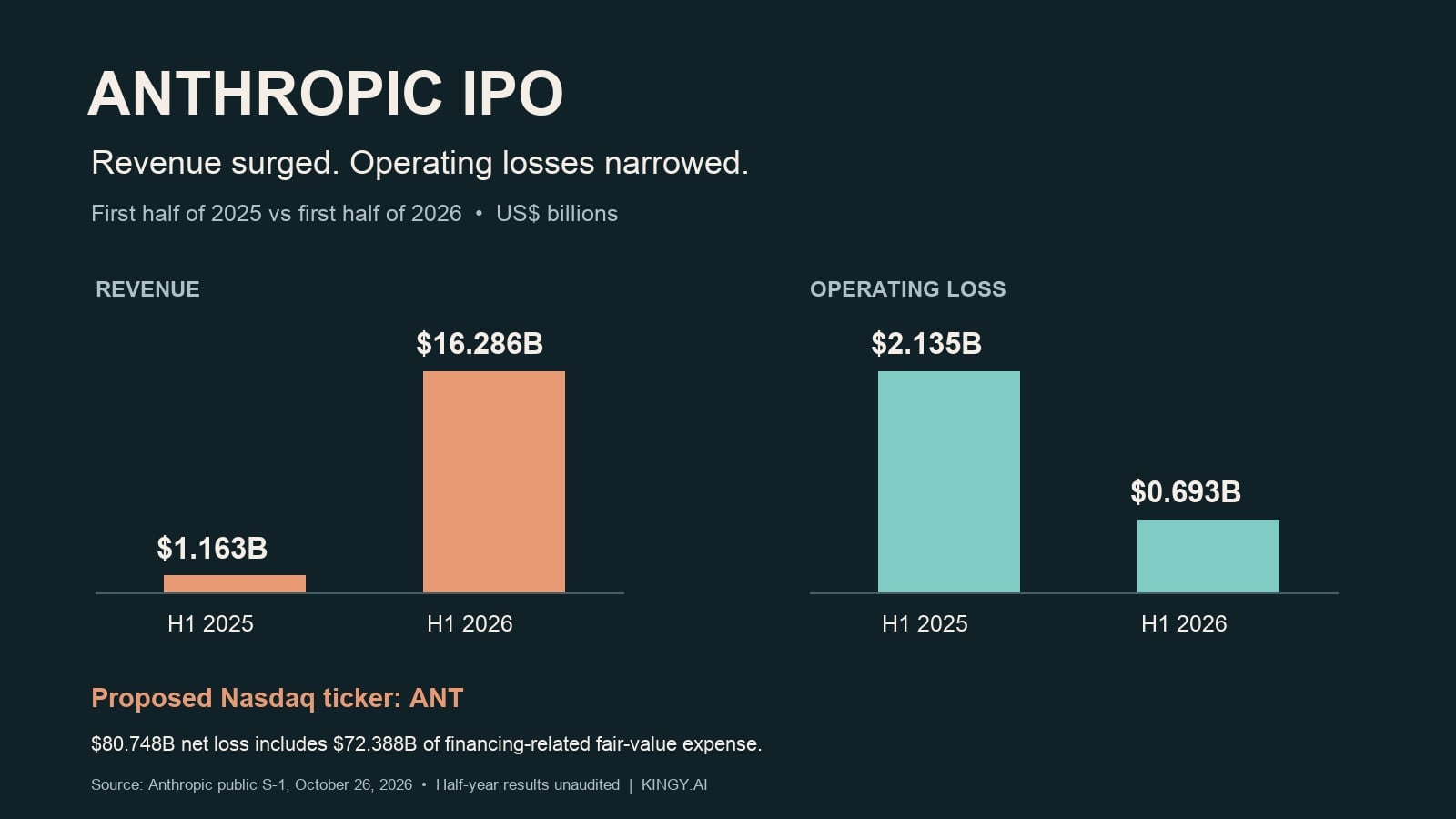
The financial world is still reverberating from a blockbuster announcement: Anthropic, the generative AI powerhouse, has confidentially filed for an Initial Public Offering (IPO) under the NASDAQ ticker ANT. This disclosure, emanating from the typically guarded Intellectia AI wire service two days prior, carries a staggering detail: a reported $16.3 billion in H1 revenue. If verified, this figure not only redraws the competitive landscape for artificial intelligence but also catalyzes an unprecedented rally across the entire AI chip ecosystem, setting the stage for a transformative 2026.
Our comprehensive investigation delves into the multifaceted implications of this filing, examining the immediate market surges, the long-term strategic shifts for industry giants, and the critical factors that will define Anthropic's trajectory in a market increasingly hungry for verifiable AI-driven "enterprise ROI."
Executive Takeaways
Test Our Free AI & Tech Utilities Suite
Calculate LLM API token costs, analyze article dwell-time, or simulate tech DCA returns.
- Unprecedented Revenue Scale: Anthropic's reported $16.3 billion H1 revenue signals hyper-growth and potential dominance in enterprise-grade AI, reshaping competitive valuations across the sector.
- Catalytic Market Impact: The ANT IPO filing has immediately ignited a significant rally in AI chip manufacturers, including Nvidia and AMD, anticipating a surge in "cloud compute architecture" demand driven by Anthropic's rapid expansion.
- Strategic Tech Realignment: The filing intensifies pressure on rivals like OpenAI and major cloud providers (AWS, Google Cloud, Azure) to accelerate their own AI investments and "infrastructure scalability" strategies.
- Heightened Investor Scrutiny: While the revenue figure is breathtaking, it will invite rigorous examination into its composition, sustainability, and the underlying "capital allocation" decisions required to fuel such growth.
Anthropic's Ascendance: From AI Frontier to IPO Powerhouse
Founded by former OpenAI safety leaders, Anthropic burst onto the scene with a foundational commitment to responsible AI development. Its flagship large language model, Claude, quickly distinguished itself with robust performance, an emphasis on safety, and a nuanced approach to complex reasoning tasks. Backed by strategic investments from tech titans like Google and Amazon, Anthropic has cultivated a reputation as a credible, ethical alternative to OpenAI, particularly appealing to enterprises prioritizing "risk mitigation" and "regulatory compliance" in their AI deployments.
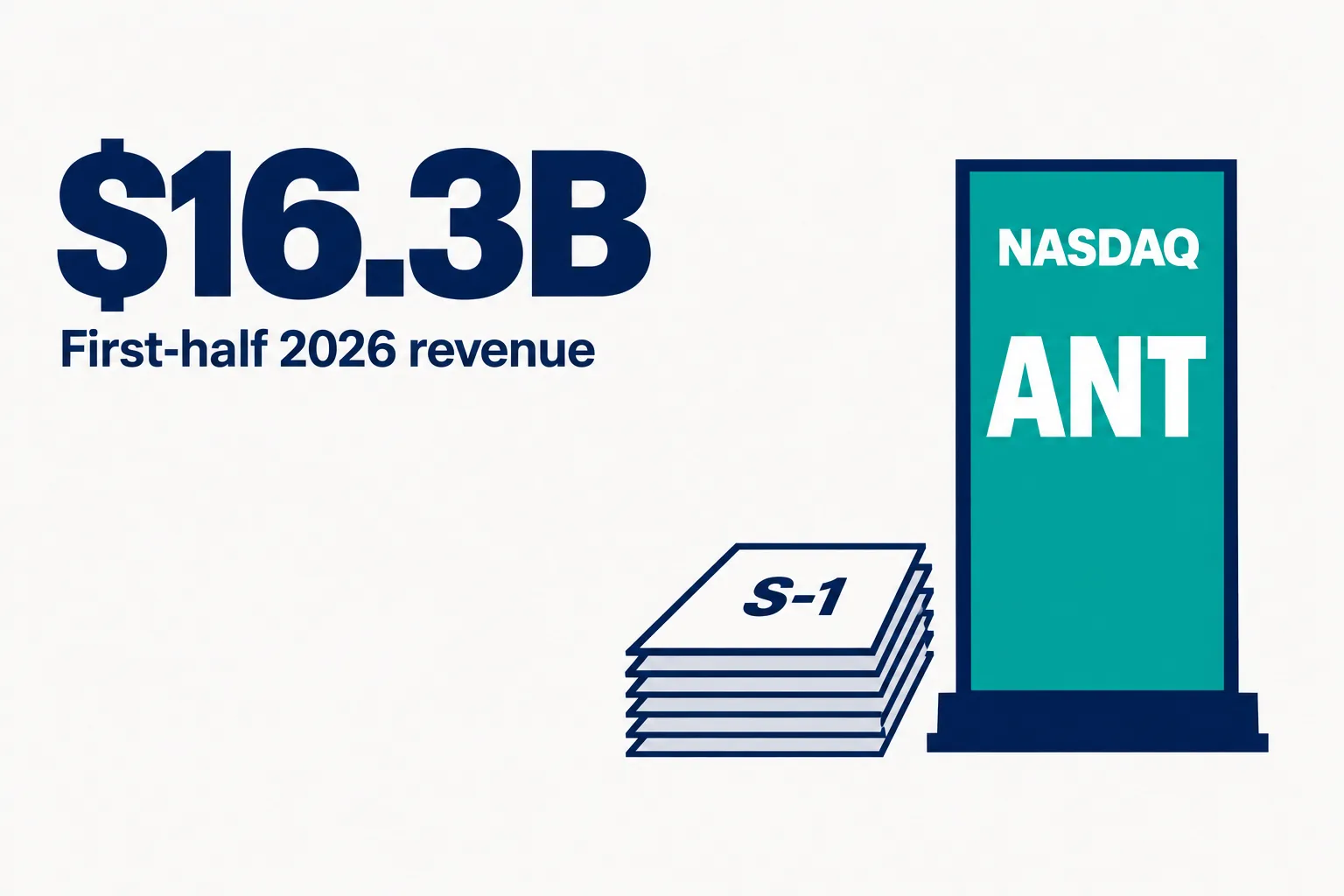
The confidential IPO filing, first reported by Intellectia AI, marks a pivotal moment. While the specifics of the S-1 prospectus remain under wraps, the reported $16.3 billion in H1 revenue for 202X is nothing short of revolutionary. This figure, if confirmed, far surpasses initial industry projections for any AI startup and places Anthropic in a league traditionally reserved for mature, established tech behemoths. It suggests an extraordinary rate of commercial adoption and monetization, likely driven by extensive enterprise contracts and substantial "infrastructure scalability" commitments.
The sheer scale of this reported revenue implies that Anthropic has not merely captured market share but has potentially redefined the monetization models for generative AI. This could involve multi-year service agreements, significant licensing deals for custom model deployments, or a highly efficient compute utilization model generating exceptional returns. The disclosure immediately places immense pressure on competitors to articulate their own revenue pathways and sustainable growth models, simultaneously validating the massive market potential of sophisticated AI applications.
The ANT ticker symbol itself is becoming a focal point of speculation, anticipating its debut on NASDAQ. Investors are now keenly analyzing potential "valuation multiples" that could be applied to a company demonstrating such explosive growth, challenging conventional benchmarks for pre-profit tech companies and high-growth SaaS firms alike. The IPO is poised to unlock substantial "market liquidity" for early investors and employees, while simultaneously providing Anthropic with a war chest for further R&D, talent acquisition, and global expansion, solidifying its position as a long-term AI contender.
Verified Data / Metrics Breakdown
The following table encapsulates the key reported figures and their immediate implications based on the Intellectia AI wire report:
| Aspect | Detail | Implication |
|---|---|---|
| IPO Ticker | ANT | Designated symbol for NASDAQ debut, indicating imminent public trading. |
| Reported H1 Revenue | $16.3 Billion | Unprecedented for an AI startup, signifying massive commercial traction and enterprise adoption. |
| Primary AI Product | Claude (various models) | Core revenue driver, competing directly with OpenAI's ChatGPT and Google's Gemini. |
| Primary Wire Source | Intellectia AI | Original source of the confidential IPO filing and revenue figures. |
| Market Impact | AI Chip Rally | Direct surge in valuation for chip manufacturers (Nvidia, AMD) anticipating substantial hardware demand. |
| Anticipated Growth Horizon | Towards 2026 and beyond | Long-term outlook for sustained AI development and market expansion, demanding continuous "capital allocation." |
Industry & Market Implications: A New AI Arms Race
The ripple effects of Anthropic's reported H1 revenue and impending IPO are profound, touching every facet of the technology and financial sectors. This is not merely an IPO; it's a declaration of a new phase in the AI arms race.
Who Wins: The AI Infrastructure Titans
The immediate beneficiaries are the architects of the "cloud compute architecture" that underpins large language models: the AI chip manufacturers. Nvidia, already a dominant force, saw its stock surge on the news. Anthropic's colossal revenue implies an equally colossal demand for Graphics Processing Units (GPUs) to train and run its sophisticated Claude models. Nvidia's H100 and forthcoming B200 chips will be in even higher demand, validating its strategy of delivering specialized hardware for AI workloads. AMD, with its MI300X series, is also positioned to capitalize on this surge, as enterprises and cloud providers scramble to expand their "infrastructure scalability" to support next-generation AI applications.
Cloud service providers—Amazon Web Services (AWS), Google Cloud, and Microsoft Azure—also stand to gain significantly. Anthropic, irrespective of its own hardware deployments, relies heavily on cloud infrastructure. This IPO signals a massive uptick in demand for high-performance computing resources, storage, and networking, translating directly into increased revenue for these platforms. Their investments in AI-optimized data centers and specialized services are being unequivocally validated, driving competition to offer superior "enterprise ROI" to their AI clients.
Who Loses: The Undifferentiated and Unprepared
Companies that have failed to integrate AI effectively into their core strategies risk being left behind. Generic software providers, traditional IT consultancies, and firms with nascent or underdeveloped AI capabilities will face intense pressure. The "market liquidity" flowing into AI will likely starve other, less innovative sectors of capital. For established tech giants, the challenge is to accelerate their own AI roadmaps to keep pace with Anthropic's perceived velocity, preventing client attrition to more advanced platforms. OpenAI, in particular, will face intensified scrutiny over its own monetization strategies and ability to scale rapidly enough to match Anthropic's reported commercial success.
Broader Economic Impact: Accelerating Digital Transformation
Beyond individual companies, Anthropic's IPO reinforces the idea that AI is not just a technological trend but a fundamental economic shift. The capital infused by this IPO will fuel further innovation, potentially accelerating productivity gains across diverse industries from finance to healthcare. However, it also highlights the growing concentration of power and wealth within a select few AI leaders, raising questions about "regulatory compliance" for antitrust bodies and necessitating a deeper look into the ethical implications of such powerful technologies.
People Also Ask (FAQ)
Q1: What does Anthropic's reported $16.3 billion H1 revenue signify for the broader AI market?
A1: Anthropic's reported $16.3 billion H1 revenue is a groundbreaking figure that profoundly impacts the AI market. It indicates that enterprise adoption and monetization of sophisticated generative AI models are occurring at an unprecedented scale and speed. This validates the immense commercial potential of AI beyond just research, suggesting a clear path to substantial revenue for companies that can deliver reliable, performant, and safe AI solutions. It sets a new, exceptionally high benchmark for growth and "valuation multiples" for AI startups, intensifying competition and accelerating investments across the entire ecosystem, from foundation models to specialized applications.
Q2: How will Anthropic's IPO filing impact AI chip manufacturers like Nvidia and AMD?
A2: Anthropic's IPO filing, particularly with its reported H1 revenue, is a direct boon for AI chip manufacturers such as Nvidia and AMD. Generating $16.3 billion in revenue implies an enormous operational scale, requiring vast amounts of "cloud compute architecture" for model training, inference, and continuous development. This translates into sustained, high demand for high-performance GPUs like Nvidia's H100/B200 series and AMD's MI300X accelerators. The market anticipates that Anthropic will significantly expand its compute infrastructure, leading to increased orders and sustained revenue growth for these chipmakers, cementing their pivotal role in the AI supply chain towards 2026 and beyond. This surge will drive further "capital allocation" into chip R&D and manufacturing capacity.
Q3: What makes Anthropic's Claude competitive against established models like OpenAI's ChatGPT and Google's Gemini?
A3: Anthropic's Claude distinguishes itself through several key factors. Primarily, its foundational commitment to "responsible AI" and safety, guided by a principle known as 'Constitutional AI,' resonates strongly with enterprises concerned about ethical deployment and "risk mitigation." Claude often demonstrates strong performance in complex reasoning, coding, and long-context understanding, making it highly valuable for business-critical applications. Its focus on enterprise solutions, robust API access, and reputation for trustworthiness have helped it secure significant commercial contracts. This focus on controlled, ethical, and performant AI provides a compelling alternative to competitors, particularly for organizations navigating strict "regulatory compliance" frameworks.
Q4: What are the primary risks associated with investing in ANT stock post-IPO?
A4: While Anthropic's reported revenue is impressive, potential investors in ANT stock face several risks. Key among these are competitive intensity, the sustainability of its growth, and "valuation multiples." The generative AI market is highly dynamic and competitive, with well-resourced players like OpenAI, Google, and Meta constantly innovating. Sustaining $16.3 billion H1 revenue, and growing from there, demands continuous R&D, substantial "capital allocation" for compute, and successful market differentiation. Additionally, the rapid pace of technological change could render current models obsolete, requiring significant ongoing investment. Regulatory scrutiny over AI, data privacy, and intellectual property also poses a risk, potentially impacting operations or requiring costly "regulatory compliance" adjustments. Finally, the ability to transition from a high-growth private entity to a publicly traded company with consistent financial reporting and governance standards will be a significant challenge.
Future Outlook: The Road to 2026 and Beyond
The Anthropic IPO filing marks a seminal moment, not just for the company itself, but for the entire technological and financial ecosystem. The reported $16.3 billion H1 revenue sets an unprecedented benchmark, challenging established notions of growth rates in nascent, yet transformative, industries. As ANT prepares for its NASDAQ debut, the immediate focus will be on the verification of these figures in its public S-1 filing and the market's reaction to its initial valuation.
Looking towards 2026 and beyond, Anthropic's trajectory will be defined by its ability to maintain its technological edge, scale its operations globally, and continue demonstrating tangible "enterprise ROI" for its clients. Key milestones will include successive generations of its Claude models, expansion into new vertical markets, and strategic partnerships that bolster its "infrastructure scalability." The AI chip rally fueled by this news is likely to intensify, with Nvidia and AMD locked in a high-stakes race to provide the foundational compute power for an ever-expanding AI economy. This era will be characterized by aggressive "capital allocation" towards AI research, deployment, and infrastructure, redefining global economic productivity and investment flows for decades to come.