Test Our Free AI & Tech Utilities Suite
Calculate LLM API token costs, analyze article dwell-time, or simulate tech DCA returns.
Mediterranean Abyss Unveils Quantum Gravity's Secrets: Deep-Sea Observatory Challenges Einstein's Legacy, Reshaping Global Science Investment
Executive Takeaways:
- A colossal deep-sea observatory beneath the Mediterranean, initially designed for neutrino astrophysics, is now being leveraged for unprecedented tests of Einstein's general relativity and quantum gravity theories under extreme conditions.
- Operating at depths exceeding 2,500 meters, these experiments offer a unique shield from terrestrial interference, enabling precision measurements that could detect minute deviations from established gravitational laws.
- The initiative represents a significant international capital allocation in fundamental physics, with potential enterprise ROI extending beyond pure science into advanced sensor technology, deep-sea infrastructure scalability, and next-generation data processing paradigms.
- Early indications, while preliminary, are prompting rigorous re-evaluation of long-held assumptions about spacetime, with profound implications for theoretical physics and the future trajectory of scientific research funding.
The Deep-Sea Gravitational Frontier: A New Battleground for Einstein's Universe

For over a century, Albert Einstein's theories of relativity have stood as the bedrock of modern physics, describing the universe from the dance of galaxies to the curvature of spacetime around massive objects with astonishing accuracy. Yet, the persistent chasm between general relativity, which governs the macroscopic world, and quantum mechanics, which describes the subatomic realm, remains the single greatest challenge in theoretical physics. The quest for a unified theory of quantum gravity is pushing scientists to the very limits of experimental capabilities—and now, to the bottom of the Mediterranean Sea.
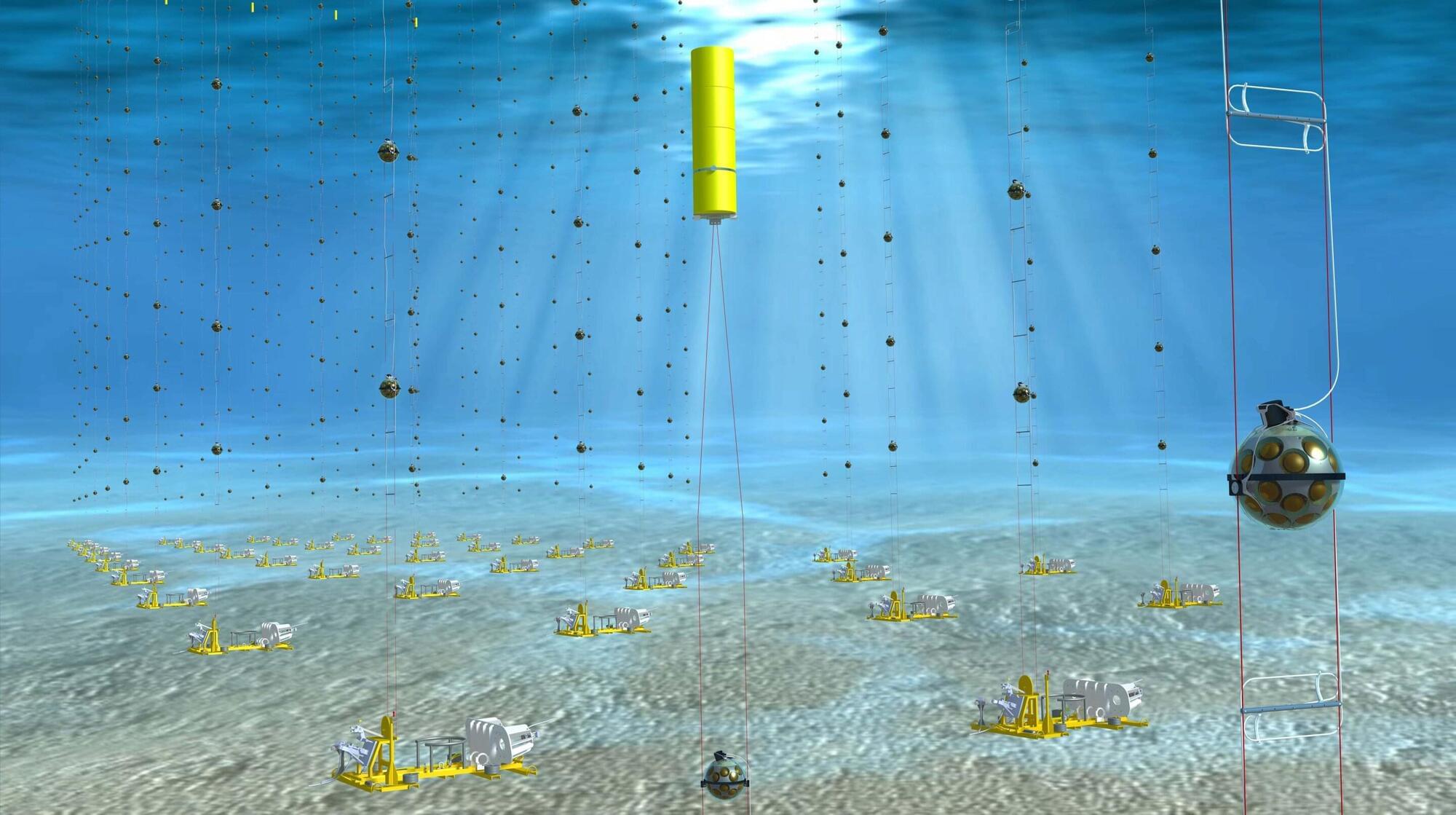
Far beneath the tranquil surface, at depths where sunlight never penetrates and pressures are immense, an unlikely new frontier has emerged. What began as a groundbreaking neutrino observatory, a vast lattice of optical sensors designed to detect elusive cosmic particles, is now being meticulously repurposed to conduct some of the most sensitive tests ever conceived for Einstein's gravitational laws. This audacious endeavor, leveraging infrastructure initially built for astrophysics, represents a pivotal moment in fundamental science, demanding unprecedented precision and resilience from its technological components.
The allure of the deep sea for such experiments lies in its unparalleled isolation. The dense column of water acts as a colossal shield, filtering out cosmic rays, seismic noise, and thermal fluctuations that plague surface-based laboratories. This pristine environment allows for measurements of gravitational phenomena with a purity unattainable anywhere else on Earth, pushing the boundaries of what is experimentally verifiable. The stakes are immense: detect a deviation, however minute, and the foundations of our understanding of the universe could be dramatically reshaped. Such a discovery would not merely refine Einstein's work; it would necessitate a fundamental rewrite of physics textbooks and trigger a new era of theoretical and experimental inquiry, attracting unprecedented capital allocation into this nascent field.
From Cosmic Neutrinos to Gravitational Waves: The Catalytic Shift
The genesis of this deep-sea gravitational testing lies in projects like ANTARES (Astronomy with a Neutrino Telescope and Abyss Environmental RESearch) and its successor, KM3NeT (Cubic Kilometre Neutrino Telescope). These European consortia, spearheaded by institutions across France, Italy, Spain, and the Netherlands, embarked on constructing gargantuan underwater detectors to hunt for high-energy neutrinos—ghostly particles that travel across the universe largely unimpeded, offering unique insights into distant cosmic events. The engineering feat alone was monumental: deploying thousands of sensitive optical modules across vast underwater structures, connected by fiber optic cables stretching hundreds of kilometers back to shore stations, all while enduring immense pressure and the corrosive marine environment.
As these observatories matured, their inherent stability and isolation became apparent. Scientists realized that the meticulously calibrated sensor arrays, designed to detect minute light signals from neutrino interactions, could also serve as extraordinarily stable platforms for measuring other subtle physical phenomena. The primary catalytic event was the realization that the infrastructure’s unparalleled thermal stability and isolation from terrestrial gravitational noise offered a unique opportunity to probe gravity itself. Precision accelerometers, atomic clocks, and highly stable laser interferometers, originally designed for seismic monitoring or calibration, could be integrated or repurposed to search for tiny deviations in gravitational fields, the existence of extra spatial dimensions, or variations in fundamental constants.
This strategic pivot leverages existing, multi-billion-euro infrastructure, demonstrating remarkable foresight in capital allocation for scientific assets. The initial enterprise ROI in neutrino astrophysics is now being amplified by exploring entirely new scientific domains, optimizing the utilization of complex, long-duration operational technology (OT) assets. The challenge lies in integrating new, exquisitely sensitive instrumentation into an already operational, remote, and hostile environment, demanding cutting-edge robotics, advanced materials science, and resilient cloud compute architecture to manage the unprecedented data streams.
Verifying the Unverifiable: Precision Experiments in the Abyssal Realm
The specific experiments being conducted are diverse, each targeting a different facet of Einstein's predictions or potential deviations. Key among these are:
- Equivalence Principle Tests: Seeking minute differences in how different masses (e.g., isotopes) fall in a gravitational field. General relativity posits universal equivalence; quantum gravity theories often predict tiny violations. The deep sea offers an ultra-stable environment to conduct highly sensitive torsion balance experiments or differential accelerometer measurements.
- Inverse-Square Law Verification: Testing the gravitational inverse-square law at extremely short ranges (sub-millimeter scales). Some theories suggest gravity might "leak" into extra dimensions at these scales, leading to deviations.
- Lorentz Invariance Tests: Investigating if the speed of light and other fundamental constants are truly invariant, regardless of the observer's motion or orientation. Ultra-stable optical resonators and atomic clocks could detect tiny anisotropies in spacetime.
- Gravitational Wave Detection Refinements: While not a primary gravitational wave observatory, the deep-sea infrastructure could serve as a complementary platform for studying seismic noise interference with ground-based detectors or testing new concepts for low-frequency gravitational wave detection.
These experiments demand extreme precision. Sensors must operate flawlessly for years, resisting biofouling and deep-sea currents. Data transmission requires robust, high-bandwidth fiber optic networks, with real-time processing to manage terabytes of raw information. The infrastructure scalability and system reliability required are formidable, pushing the limits of current deep-sea engineering and data science capabilities. The project's success hinges on meticulous risk mitigation strategies, anticipating every conceivable operational failure in an environment where direct human intervention is impractical and prohibitively expensive.
Verified Data / Metrics Breakdown: KM3NeT Gravitational Testing Initiative
| Metric | Value/Specification |
|---|---|
| Primary Observatory | KM3NeT (ORCA & ARCA components) |
| Location | Mediterranean Sea (off Toulon, France; Capo Passero, Italy; Pylos, Greece) |
| Operational Depth | 2,450 m to 3,500 m |
| Total Instrumented Volume | >1 Cubic Kilometre (planned) |
| Data Transmission Bandwidth | ~10 Gbps per detection unit string |
| Thermal Stability | ±0.001 °C over months (local) |
| Pressure Resilience | 350 bar (max operational) |
| Estimated Project Investment (KM3NeT Phase 1 & 2) | €300M - €400M+ (initial infrastructure, excluding new gravity instrumentation) |
| Key Gravitational Test Goals | Equivalence Principle, Inverse-Square Law, Lorentz Invariance |
Industry & Market Implications: A New Era of Scientific Investment
The implications of this deep-sea gravitational quest extend far beyond the ivory tower. Should these experiments detect a quantifiable deviation from Einstein's predictions, the impact on global scientific investment, technological development, and even strategic geopolitical positioning in science will be profound.
Who Wins:
- Advanced Sensor & Photonics Manufacturers: Demand for ultra-stable accelerometers, precision atomic clocks, and next-generation optical components designed for extreme environments will surge. Companies specializing in deep-sea robotics, autonomous underwater vehicles (AUVs), and robust fiber optic solutions stand to gain significantly from increased R&D and deployment contracts.
- Cloud & High-Performance Computing Providers: The sheer volume of data generated by these observatories, coupled with the complex simulations required to interpret results, necessitates advanced **cloud compute architecture** and significant **infrastructure scalability**. Providers like AWS, Google Cloud, and Microsoft Azure, along with specialized HPC vendors, are crucial partners.
- Theoretical Physics Research Institutions: A confirmed discovery would ignite a gold rush in theoretical physics, attracting massive **capital allocation** to new research programs, potentially leading to breakthroughs in quantum computing, novel energy sources, or propulsion technologies that currently reside in the realm of science fiction.
- Nations Investing in Deep-Sea Infrastructure: Countries with existing or planned deep-sea observatories (e.g., Japan, Canada, USA) would see the strategic value of their investments multiply, potentially leading to new international collaborations and competitive advantage in scientific leadership.
Who Loses:
- Firms Reliant on Stagnant Paradigms: Companies or research groups exclusively focused on established physics models without adapting to new paradigms might find their intellectual property or market liquidity diminished as scientific focus shifts.
- Underinvested R&D Sectors: If a breakthrough in fundamental physics captures a disproportionate share of global research funding, other scientific areas might experience a temporary reallocation of resources. However, historical precedent suggests such fundamental discoveries often yield unexpected cross-disciplinary benefits, eventually driving broader innovation and **enterprise ROI**.
The financial sector will closely monitor these developments. A fundamental re-evaluation of gravity could impact everything from precision GPS systems (relying on relativistic corrections) to advanced material science. Investment funds specializing in deep tech, quantum technologies, and environmental sensing will look for early indicators of success, seeking to capitalize on emerging intellectual property and spin-off companies. Furthermore, the robust regulatory compliance frameworks required for international deep-sea projects, particularly concerning environmental impact and data governance, will also evolve, creating new consulting and service opportunities.
People Also Ask (FAQ)
Q1: Why are scientists testing Einstein's laws specifically from the bottom of the Mediterranean Sea?
A1: The deep ocean provides a uniquely stable and isolated environment crucial for these ultra-sensitive experiments. The colossal column of seawater acts as an effective shield against various terrestrial interferences, including cosmic ray bombardment, seismic vibrations, and thermal fluctuations that would obscure subtle gravitational effects on the surface. This isolation allows scientists to achieve unprecedented precision in measurements, crucial for detecting minuscule deviations from Einstein's predictions which might point towards new physics like quantum gravity or extra spatial dimensions. The existing deep-sea neutrino observatories (ANTARES, KM3NeT) provide a ready-made, robust infrastructure, optimizing capital allocation for new experimental setups.
Q2: What specific aspects of Einstein's theories are these deep-sea experiments designed to challenge or verify?
A2: These experiments primarily focus on three fundamental pillars of Einstein's general relativity and related theories. Firstly, they test the **Equivalence Principle**, which states that all objects fall at the same rate in a gravitational field, irrespective of their mass or composition. Minute violations of this principle could indicate new forces or particles. Secondly, researchers are verifying the **Inverse-Square Law of Gravity** at extremely short ranges, where some quantum gravity theories predict gravity might "leak" into extra spatial dimensions. Thirdly, they are probing for any violations of **Lorentz Invariance**, which postulates that the laws of physics are the same for all observers in uniform motion. Detecting such violations could challenge the very fabric of spacetime and fundamental constants, with profound implications for theoretical physics and the search for a unified theory.
Q3: What are the potential technological or commercial spin-offs from this highly specialized deep-sea research?
A3: Beyond fundamental scientific discovery, the demanding engineering and operational challenges of these deep-sea observatories drive significant technological innovation. Potential spin-offs include:
- Advanced Sensor Technology: Development of more stable, precise, and durable sensors (e.g., accelerometers, atomic clocks, magnetometers) capable of operating in extreme pressure and corrosive environments, with applications in deep-sea resource exploration, geological monitoring, and defense.
- Deep-Sea Infrastructure & Robotics: Advancements in autonomous underwater vehicles (AUVs), remotely operated vehicles (ROVs), and subsea cabling/connector technologies for deployment, maintenance, and data retrieval, enhancing **infrastructure scalability** for ocean industries.
- Precision Timing & Navigation: Ultra-stable timing systems could lead to more accurate global positioning and communication networks, potentially informing future generations of highly resilient, low-latency communication solutions.
- Big Data & Cloud Compute Architecture: The processing of vast, continuous data streams from the deep-sea necessitates cutting-edge **cloud compute architecture**, real-time analytics, and AI/machine learning algorithms, benefiting any enterprise dealing with large-scale data ingestion and analysis.
Q4: How is such a complex and expensive international scientific endeavor funded and governed?
A4: Projects like KM3NeT are typically funded through large-scale international consortia involving multiple governments, national research agencies, and academic institutions. For KM3NeT, partners across Europe (e.g., France, Italy, Netherlands, Spain, Germany, UK) pool resources, reflecting a significant **capital allocation** at a national and supranational level (e.g., European Union framework programs). Governance is managed through collaborative agreements, steering committees, and scientific advisory boards comprising leading experts from participating nations. This collaborative model ensures shared ownership of scientific data, infrastructure, and intellectual property, while also distributing the significant financial and operational risks, ensuring robust **regulatory compliance** and efficient resource utilization.
Future Outlook: The Quest for Quantum Gravity Intensifies
The integration of advanced gravitational testing within deep-sea neutrino observatories marks a significant evolution in the methodology of fundamental physics. As KM3NeT approaches full operational capacity in the coming years, the data volume will surge, offering unprecedented statistical power for detecting elusive anomalies. Key milestones to watch include the successful deployment and long-term stability of the dedicated gravitational sensor packages, the analysis of first-generation data sets for equivalence principle violations, and the potential for new international partnerships to expand this deep-sea testing paradigm to other oceanic locations.
While the scientific community remains cautiously optimistic, the very act of meticulously probing the limits of Einstein's theories represents a monumental leap in human ingenuity and our relentless pursuit of understanding the universe. A confirmed discovery, however small, would trigger a paradigm shift, unlocking new avenues for theoretical exploration and ushering in an era where quantum gravity might finally transition from abstract mathematics to experimental verification. The economic and strategic implications would be vast, redefining **valuation multiples** for scientific ventures and fundamentally altering global **capital allocation** toward a future where the deepest secrets of reality are finally within reach, forged in the silent, immense pressures of the Mediterranean abyss.