Executive Takeaways
Test Our Free AI & Tech Utilities Suite
Calculate LLM API token costs, analyze article dwell-time, or simulate tech DCA returns.
- Semiconductor Sector Re-Pricing: Asian equity benchmarks posted significant declines, led by advanced chipmakers including TSMC, Samsung Electronics, SK Hynix, and Tokyo Electron, as high valuation multiples face elevated capital expenditure scrutiny and shifting discount rates.
- Monetary Policy Nexus: Institutional capital is pulling back ahead of key policy meetings from the Federal Reserve, the Bank of Japan (BOJ), and the European Central Bank (ECB), alongside a pivotal earnings slate for North American hyperscalers.
- Commodity Risk Premium Recedes: Brent crude oil dropped from six-month highs above $90 per barrel toward $86 as back-channel mediation efforts involving regional Middle Eastern actors mitigated immediate supply disruption fears.
- Institutional Rebalancing: Global fund managers are pivoting from high-beta semiconductor supply-chain equities toward defensive fixed-income allocations and capital-preservation assets amid rising sovereign yield curve pressures.
The Macroeconomic Pressure Cooker: Chip Pullbacks and Rate Hesitation

Equity markets across Asia experienced broad-based selling pressure during Tuesday’s trading session, driven by a sharp contraction in semiconductor and technology infrastructure stocks. The index pullbacks in Tokyo, Seoul, Taipei, and Hong Kong reflect a convergence of macro headwinds: repricing across high-multiple growth stocks, uncertainty surrounding global central bank policy paths, and an aggressive recalibration of institutional risk budgets ahead of major corporate earnings announcements.
The retreat in the semiconductor sector—which has served as the primary engine for global market performance over the past four quarters—comes as market participants re-evaluate terminal growth assumptions and enterprise ROI timing for artificial intelligence deployments. Taiwan Semiconductor Manufacturing Co. (TSMC), South Korea’s SK Hynix and Samsung Electronics, alongside Japanese semiconductor equipment manufacturer Tokyo Electron, all saw selling pressure as international asset managers locked in gains following an extraordinary rally.
Compounding the equity market retreat is a high-stakes monetary policy agenda. The Federal Open Market Committee (FOMC) is preparing to deliver its latest interest rate decision amid persistent US inflation metrics that have effectively pushed back market expectations for systemic rate cuts. Simultaneously, the Bank of Japan faces mounting pressure to address sovereign yield differentials and extreme yen volatility, creating an intricate cross-currency liquidity environment for global macro funds.
Geopolitical De-escalation and Energy Market Dynamics
In tandem with the equity contraction, energy markets offered a rare reprieve from inflation fears. Crude oil prices retreated from six-month highs, with Brent crude easing back toward the $86.50 per barrel range after probing $91 per barrel late last week. West Texas Intermediate (WTI) similarly pulled back toward $82 per barrel.
This price correction follows reported diplomatic interventions aimed at mediating friction between Iran and regional adversaries. The softening geopolitical risk premium in crude futures has temporarily dialed back top-line headline inflation forecasts, though energy analysts emphasize that supply-side structural deficits remain latent across global refiners.
Chart context: Global commodity desks report that while crude risk premiums have compressed by roughly $4.00 to $5.00 per barrel, structural physical tightness remains governed by OPEC+ compliance and depleted global distillate inventories.
Monetary Policy Crossroads: The Triple Central Bank Threat
The global cost of capital remains the single most critical variable dictating equity valuation multiples in the current cycle. Investors face a complex tri-monetary backdrop that directly impacts emerging market capital flows and global technology supply chain funding cost structures.
1. The Federal Reserve: The "Higher-for-Longer" Reality
US economic resilience—underpinned by steady consumer spending and sticky core Personal Consumption Expenditures (PCE) readings—has forced Wall Street strategists to dismantle earlier predictions of aggressive Federal Reserve easing. Short-term overnight index swaps (OIS) now price in less than two 25-basis-point rate cuts for the entirety of the current calendar year, down from six projected in early January.
This persistent elevated yield regime raises the hurdle rate for corporate capital expenditure programs. For mega-cap technology firms relying on massive debt issuances to fund multi-billion-dollar enterprise AI data centers, sustained high benchmark rates compress projected economic value added (EVA) and cash flow duration profiles.
2. Bank of Japan: Balancing Currency Defense and Yield Curve Normalization
In Tokyo, the Bank of Japan operates under intense global scrutiny following its historic exit from negative interest rate policy (NIRP) earlier this spring. With the Japanese Yen hovering near multi-decade lows against the US Dollar (crossing the 155 mark), BOJ officials are forced to balance policy normalization against the risk of domestic financial instability.
Speculation regarding potential currency intervention or an accelerated pace of quantitative tightening (QT) has driven the 10-year Japanese Government Bond (JGB) yield higher, triggering capital re-allocation out of domestic equities and into local sovereign fixed income.
3. People's Bank of China: Target Liquidity vs. Structural headwinds
In Beijing, the People's Bank of China (PBOC) continues to navigate liquidity injections designed to insulate domestic real estate markets while preventing capital flight. Despite targeted reserve requirement ratio (RRR) cuts, mainland indices like the Shanghai Composite and the Hang Seng Index in Hong Kong remain sensitive to global capital flight and technology sanctions, complicating recovery trajectories for regional industrial supply chains.
Empirical Market Data & Benchmark Performance
The quantitative impact of this multi-faceted retrenchment is evident across key regional indices, asset classes, and policy rates. The following empirical breakdown illustrates the localized price action and macroeconomic benchmarks across primary capital markets:
| Asset / Benchmark | Market / Region | Daily Spot Change | 52-Week Range / Current Level | Primary Volatility Driver |
|---|---|---|---|---|
| Nikkei 225 | Japan (Equities) | -1.85% | 30,792 - 41,087 / 37,550 | BOJ Policy shift expectations & Tech profit-taking |
| KOSPI Index | South Korea (Equities) | -1.42% | 2,273 - 2,779 / 2,628 | Memory chip spot price cooling & HBM export timing |
| TAIEX Index | Taiwan (Equities) | -2.10% | 15,975 - 20,883 / 19,780 | TSMC foundry guidance adjustment & Fab CapEx risks |
| Hang Seng Index | Hong Kong (Equities) | -0.95% | 14,794 - 19,706 / 16,580 | Mainland property drag & US technology trade friction |
| Brent Crude Oil | Global Commodity | -2.35% | $71.28 - $92.18 / $86.40 | Middle East diplomatic mediation & Inventory builds |
| US 10-Yr Treasury Yield | Sovereign Debt | +4 bps | 3.78% - 4.99% / 4.66% | Sticky PCE Inflation & Fed terminal rate hawkishness |
| SOX Index (SOX) | Global Semiconductor | -3.12% | 3,150 - 5,217 / 4,675 | Valuation multiple compression & Hyperscaler CapEx delay |
Structural Industry Breakdown: Semiconductor Supply Chains and CapEx Scrutiny
The retreat in technology equities is not merely a technical pullback; it represents a structural shifting of investor attention from top-line potential to bottom-line execution and capital efficiency. Over the past 18 months, the narrative surrounding generative AI infrastructure drove unprecedented enterprise value creation for hardware enablers. However, equity analysts are now demanding proof of enterprise ROI across software ecosystems and end-user enterprise architectures.
1. Wafer Foundry and Lithography Realities
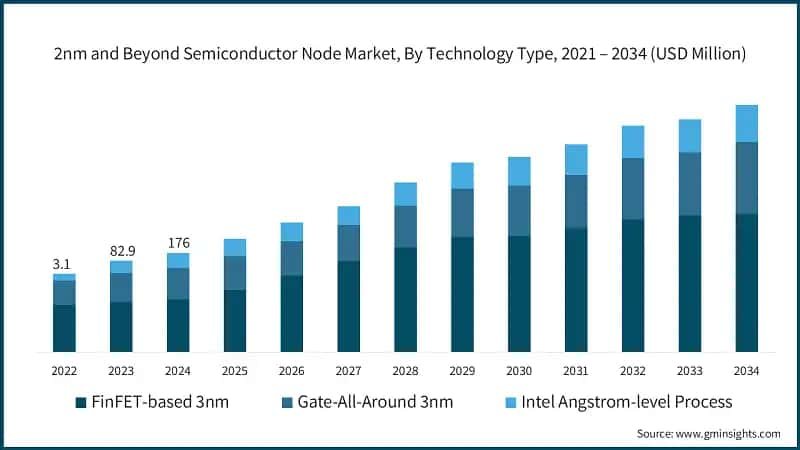
Advanced semiconductor manufacturing relies on extreme ultraviolet (EUV) lithography systems and intricate packaging technologies like Chip-on-Wafer-on-Substrate (CoWoS). While long-term demand for advanced node sizes (3nm and 2nm) remains high, immediate supply bottlenecks, higher electricity overhead costs, and extended construction timelines for new fab capacity in Arizona, Europe, and Japan are adding near-term margin pressure.
When key bellwethers modify revenue expansion velocity from ultra-bullish to realistic growth trajectories, automated trading algorithms and multi-strategy hedge funds quickly de-risk their derivative exposures. This creates down-drafts across downstream assembly, testing, and memory component vendors.
2. The High-Bandwidth Memory (HBM) Bottleneck
In South Korea, industry titans like SK Hynix and Samsung Electronics are engaged in a capital-intensive race to dominate the High-Bandwidth Memory (HBM3e) market, which is essential for pairing with high-performance graphics processing units (GPUs). While demand from AI server builders remains high, elevated research and development (R&D) overhead, combined with yield ramp-up challenges, has heightened investor sensitivity to near-term free cash flow yield ratios.
3. Hyperscaler Earnings Preview: The Buy-Side Crucible
The immediate catalyst for global chip stocks rests with the upcoming quarterly financial disclosures from major North American technology firms—Microsoft, Alphabet, Meta Platforms, and Amazon. Combined, these hyperscale cloud providers account for a massive share of total global orders for advanced computing clusters.
If these corporate titans indicate any deceleration or rationalization in their multi-year infrastructure capital expenditures, valuation multiples across the global semiconductor supply chain could face further compression. Conversely, re-affirmed or expanded CapEx guidance would likely serve as the catalyst for an immediate relief rally across Asian technology manufacturing hubs.
Frequently Asked Questions (People Also Ask)
Why are Asian semiconductor stocks falling despite high overall demand for AI technology?
Asian semiconductor equities are experiencing price compression due to valuation dynamics, interest rate sensitivities, and elevated market expectations. While structural long-term AI demand remains intact, many leading chipmakers and equipment suppliers were trading at elevated enterprise-value-to-EBITDA multiples based on aggressive growth projections. Rising global interest rates increase the discount rate applied to future earnings, reducing present cash valuations. Furthermore, investors are closely examining current capital expenditures versus short-term corporate profitability, leading to tactical gain-taking ahead of major earnings catalysts.
How do Federal Reserve interest rate decisions impact emerging market equity flows in Asia?
The Federal Reserve's monetary policy dictates global liquidity conditions and capital flows. When the Fed maintains high interest rates or hints at delayed rate cuts, US Treasury yields remain elevated, increasing the risk-adjusted return on dollar-denominated assets. This attracts global institutional capital away from high-beta emerging market equities and Asian export-driven technology sectors, steering capital into safe-haven US fixed income. Additionally, high US rates strengthen the dollar, which can increase import costs, inflate foreign-denominated corporate debt servicing, and constrain local monetary policy flexibility across Asia.
Why did crude oil prices drop from six-month highs, and how does it impact inflation expectations?
Crude oil prices fell due to a reduction in the geopolitical risk premium following targeted diplomatic mediation efforts in the Middle East, alongside unexpected builds in US commercial crude inventories. Geopolitical friction had previously driven Brent crude above $90 per barrel on fears of supply disruptions through vital transit routes. The pullback in energy prices helps soften headline producer and consumer price indexes globally, offering modest relief to central banks fighting sticky inflation. However, core inflation measures—excluding volatile energy and food—remain elevated, preserving central bank caution.
What key metrics are institutional investors watching during Big Tech earnings releases this quarter?
Institutional investors are focused on three core metrics during Big Tech earnings calls: capital expenditure (CapEx) guidance dedicated to AI infrastructure, cloud platform revenue growth acceleration (e.g., Microsoft Azure, AWS, Google Cloud), and operating margin preservation. Money managers are evaluating whether massive investments in hardware, advanced packaging, and energy infrastructure are yielding measurable cloud software enterprise revenue and expanded return on invested capital (ROIC).
Future Outlook: Strategic Milestones & Market Catalysts
The near-term trajectory for Asian equities, technology vendors, and global asset allocation hinges on several critical macro events over the coming trading sessions:
- FOMC Rate Decision & Guidance: Formal statements from Federal Reserve Chairman Jerome Powell regarding terminal interest rate duration and the timeline for balance sheet runoff (Quantitative Tightening) velocity.
- Hyperscaler CapEx Commitments: Quarterly earnings updates and forward guidance from major global cloud compute buyers detailing capital deployment for AI hardware over the remainder of the fiscal year.
- Bank of Japan Monetary Statement: Updates on JGB buying parameters, potential rate path adjustments, and direct currency intervention strategies to stabilize the yen.
- Semiconductor Wafer Delivery Data: Next-generation node yield metrics and export data from Taiwan and South Korea, offering primary evidence of end-market device, automotive, and data center demand.
As the market recalibrates capital allocations across fixed income, energy commodities, and technology infrastructure equities, institutional portfolios will prioritize balance sheet strength, free cash flow conversion, and visible enterprise demand over speculative long-term growth narratives. Until clarity emerges from central bank rate paths and hyperscaler capital expenditure allocations, risk assets across Asia are expected to trade in a volatile, highly macro-sensitive regime.