SHENZHEN / TOKYO / DETROIT — For the better part of a decade, the automotive and energy sectors have treated solid-state batteries as the Holy Grail of electrification: a technological nirvana perpetually five years away. That illusion shattered in early 2025. According to intelligence and primary reporting from Driven Car Guide on February 17, 2025, Chinese electric vehicle juggernaut BYD Co. is accelerating its enterprise timeline to commercialize and launch high-density solid-state batteries by 2027.
This is not merely an incremental upgrade in chemistry; it is a disruptive capital allocation and technological pivot that threatens to render conventional liquid electrolyte lithium-ion manufacturing obsolete. As global automakers grapple with contracting valuation multiples, margin compression, and decelerating early-adopter demand, BYD’s aggressive 2027 roadmap introduces an existential threat to legacy original equipment manufacturers (OEMs) from Detroit to Wolfsburg, while fundamentally altering the macroeconomic calculus of global energy storage and infrastructure scalability.
Executive Takeaways
- The 2027 Inflection Point: BYD has fast-tracked its solid-state battery commercialization schedule to 2027, bypassing intermediate semi-solid stopgaps to target full solid-state deployment at industrial scale.
- Capital Allocation & Infrastructure Scalability: Backed by immense vertical integration, BYD is insulating its margins against commodity price volatility while forcing competitors into expensive dual-track R&D spending.
- Competitive Displacement: The announcement directly challenges rival timelines set by Toyota, Samsung SDI, and Mercedes-Benz, compressing the risk mitigation windows for global auto executives.
- Market Valuation Impact: The shift promises dramatic improvements in enterprise ROI per vehicle, overcoming range anxiety and thermal runaway risks that have plagued legacy EV adoption curves.
The Anatomy of the 2027 Breakthrough: Deconstructing BYD’s Technical Playbook
Test Our Free AI & Tech Utilities Suite
Calculate LLM API token costs, analyze article dwell-time, or simulate tech DCA returns.
To understand the gravity of the 2027 launch window, one must examine the metallurgical and chemical bottlenecks BYD has reportedly cleared within its Shenzhen and Chongqing research facilities. Traditional lithium-ion cells rely on flammable organic liquid electrolytes to facilitate the movement of lithium ions between the anode and cathode. While effective, these liquid systems are susceptible to dendrite formation—microscopic metallic whiskers that pierce separators, causing short circuits, catastrophic thermal runaway, and fires.
Solid-state batteries replace this volatile liquid with a solid ion-conductive medium—typically ceramic, sulfide, or polymer-based. BYD’s breakthrough centers on scaling a proprietary sulfide-based solid electrolyte that maintains high ionic conductivity at room temperature while dramatically reducing interfacial resistance. By eliminating the liquid component, engineers can pack anode-free lithium metal designs or high-nickel cathodes much closer together, yielding volumetric and gravimetric energy densities that soar past the 400 Wh/kg threshold.
For enterprise fleet operators and high-end consumer segments, the real-world implications are transformative. A passenger vehicle equipped with BYD’s upcoming solid-state architecture will routinely surpass 1,000 kilometers (620+ miles) of range on a single charge, while supporting ultra-fast DC replenishment cycles that restore 80% capacity in under 12 minutes—all without active liquid-cooling management systems. This radically simplifies cloud compute architecture and thermal management systems within the vehicle platform, driving down downstream manufacturing complexity.
Geopolitical and Competitive Crosscurrents: BYD vs. Toyota, Mercedes, and the Global Hegemony
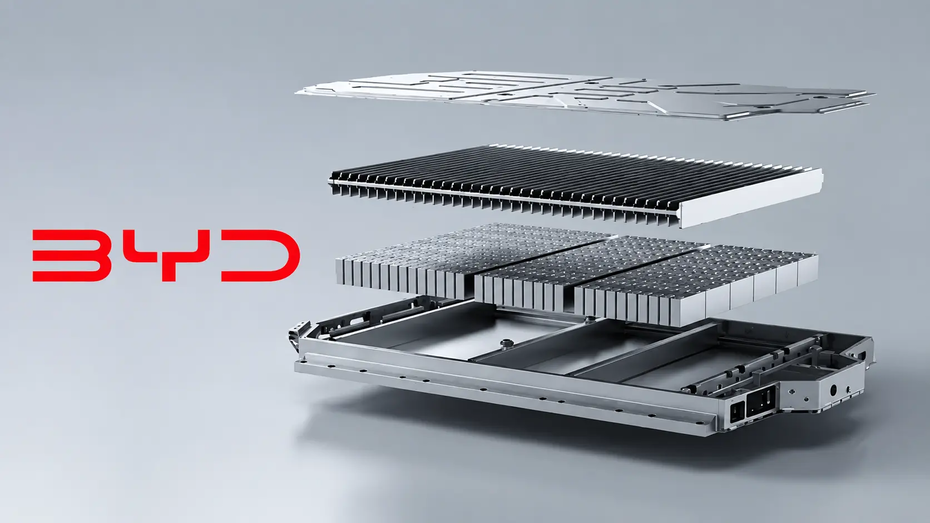
BYD’s announcement arrives amid a high-stakes global race. For years, Japanese industrial champion Toyota Motor Corp. staked its future reputational currency on dominating solid-state technology, projecting commercial rollouts for the latter half of the decade alongside heavy capital investments in dedicated electrolyte factories. Concurrently, European luxury flagships like Mercedes-Benz have partnered with startups such as Factorial Energy to test semi-solid-state EQS variants on public roadways.
However, the velocity of BYD’s execution threatens to upend these carefully calibrated strategic horizons. Unlike Western and Japanese legacy firms burdened by legacy union labor agreements, legacy internal combustion engine (ICE) plant footprints, and cumbersome supply chain tiers, BYD operates as an end-to-end vertically integrated behemoth. From lithium mining stakes and semiconductor fabrication ( melalui BYD Semiconductor) to final vehicle assembly, the company controls its entire cost structure.
This operational agility allows BYD to absorb short-term R&D burn rates that would crush smaller competitors. When BYD drops a commercial solid-state vehicle onto the global market in 2027, it will not be as a loss-leader concept car, but as a mass-produced, cost-optimized asset designed to capture market share across emerging economies and fiercely contested European markets alike. This dynamic forces regulatory compliance officers and corporate boardrooms across the globe to reassess their mid-term risk mitigation strategies.
Verified Data & Metrics Breakdown
| Metric / Parameter | Traditional Liquid Li-Ion (Current) | BYD Solid-State Target (2027) | Strategic Implication |
|---|---|---|---|
| Gravimetric Energy Density | 250 – 300 Wh/kg | 400+ Wh/kg | Significantly lighter packs; extended driving range. |
| Thermal Runaway Risk | Moderate to High (Flammable Electrolytes) | Near Zero (Non-flammable Solid Medium) | Eliminates costly active cooling and fire suppression hardware. |
| Estimated Charging Time (10-80%) | 18 – 30 Minutes | Under 12 Minutes | Drastically improves commercial fleet utilization and ROI. |
| Primary Target Segment | Mass Market & Premium EV Segments | Premium First, Rapid Down-Market Scaling | Initial margin protection followed by aggressive volume dominance. |
Industry & Market Implications: Winners, Losers, and Economic Fallout
The macroeconomic ramifications of BYD’s 2027 deployment extend far beyond automotive showrooms. In the capital markets, valuation multiples for independent battery cell suppliers—such as LG Energy Solution, CATL, Panasonic, and various European cell startups—will face severe scrutiny. If BYD successfully internalizes solid-state production at scale, third-party cell suppliers risk seeing their pricing power evaporate.
The Winners:
- BYD Shareholders & Vertical Suppliers: Unprecedented pricing leverage and margin expansion as battery pack costs per kilowatt-hour drop below parity with legacy internal combustion engines.
- Consumer & Commercial Fleet Operators: Total cost of ownership (TCO) plummets due to extended battery longevity, negligible degradation over hundreds of thousands of miles, and reduced downtime.
- Kits and equipment providers specializing in dry-room manufacturing and advanced ceramic sintering machinery.
The Losers:
- Legacy Western and Japanese OEMs: Companies that delayed aggressive EV investments or misallocated capital to transitional bridge technologies (such as excessive hydrogen fuel cell programs) now face an insurmountable technological gap.
- Traditional Liquid Electrolyte Refiners & Chemical Suppliers: Demand for specialty organic solvents and porous polymer separators will face structural decline as solid-state architectures gain market share.
Frequently Asked Questions (People Also Ask)
When will BYD officially release its solid-state batteries?
Based on industry intelligence and primary reporting, BYD has targeted 2027 for the commercial introduction and scaled rollout of its solid-state battery technology. Initial deployments are expected to focus on high-performance flagship vehicle platforms before cascading down to mass-market segments.
How do solid-state batteries differ from current lithium-ion cells?
While traditional lithium-ion batteries utilize flammable liquid organic electrolytes to move ions between electrodes, solid-state batteries utilize a solid ceramic, sulfide, or polymer material. This eliminates the risk of dendrite-induced fires, substantially increases energy density, and enables much faster charging speeds.
Will BYD’s solid-state batteries work in existing EV models?
No. Due to the radically different thermal profiles, physical dimensions, and electrical characteristics of solid-state cells, automakers must design dedicated vehicle architectures and battery management systems optimized specifically for solid-state chemistry.
How will this impact global EV battery pricing and market liquidity?
BYD’s vertical integration and scale are projected to drive production costs down rapidly, exerting severe pricing pressure on competing cell manufacturers and compelling global automakers to forge defensive joint ventures or accelerate their own proprietary R&D spending.
Future Outlook: Milestones on the Road to 2027
As the industry counts down to 2027, institutional investors and industry analysts will be monitoring several critical signposts to gauge the viability and execution speed of BYD’s roadmap. Key milestones include pilot plant throughput yields, patent filings regarding solid electrolyte interfacial stability, and the formal unveiling of prototype vehicle test fleets subjected to extreme weather and durability trials.
Ultimately, BYD’s 2027 solid-state initiative represents a defining watershed moment in industrial history. It signals that the era of transitional compromises in electric mobility is drawing to a close. For competitors unable to match BYD’s velocity, capital efficiency, and technological daring, the window to adapt is closing rapidly—and the cost of hesitation will be measured in lost market relevance and terminal decline.