Executive Takeaways
- Escalating Capital Exposure: Global cybercrime costs are projected to scale past $10.5 trillion annually by 2025, forcing chief risk officers to fundamentally recalibrate enterprise ROI and IT capital allocation.
- The AI Paradigm Shift: Adversaries are weaponizing generative artificial intelligence to automate polymorphic malware creation and hyper-realistic social engineering, outpacing legacy signature-based defenses.
- Cloud Infrastructure Vulnerabilities: As enterprise migration to hybrid and multi-cloud environments deepens, misconfigurations and API vulnerabilities remain the primary vectors for high-impact data breaches.
- Autonomous Remediation: Leading market players are transitioning from human-dependent incident response to autonomous, AI-driven detection and response platforms like SentinelOne to secure continuous operational resilience.
As corporate balance sheets face relentless pressure from macroeconomic headwinds, enterprise executives confront an even more volatile variable: the modern threat landscape. According to proprietary telemetry and threat intelligence frameworks released by SentinelOne, the convergence of geopolitical instability, rapid cloud compute architecture expansion, and the democratization of artificial intelligence has birthed a new era of digital warfare. For chief information security officers (CISOs), board directors, and institutional investors, understanding the 12 defining cyber security issues of 2025 is no longer merely an IT compliance exercise—it is a core determinant of corporate valuation multiples, regulatory compliance, and market liquidity.
The traditional perimeter defense model is officially obsolete. Modern enterprises operate in borderless, highly interconnected digital ecosystems where supply chain interdependencies and sprawling API surface areas provide sophisticated threat actors with endless vectors of entry. To protect infrastructure scalability and preserve enterprise value, organizations must dissect these 12 vulnerabilities and deploy advanced, autonomous mitigation strategies.
The 12 Defining Cyber Security Issues of 2025
Test Our Free AI & Tech Utilities Suite
Calculate LLM API token costs, analyze article dwell-time, or simulate tech DCA returns.
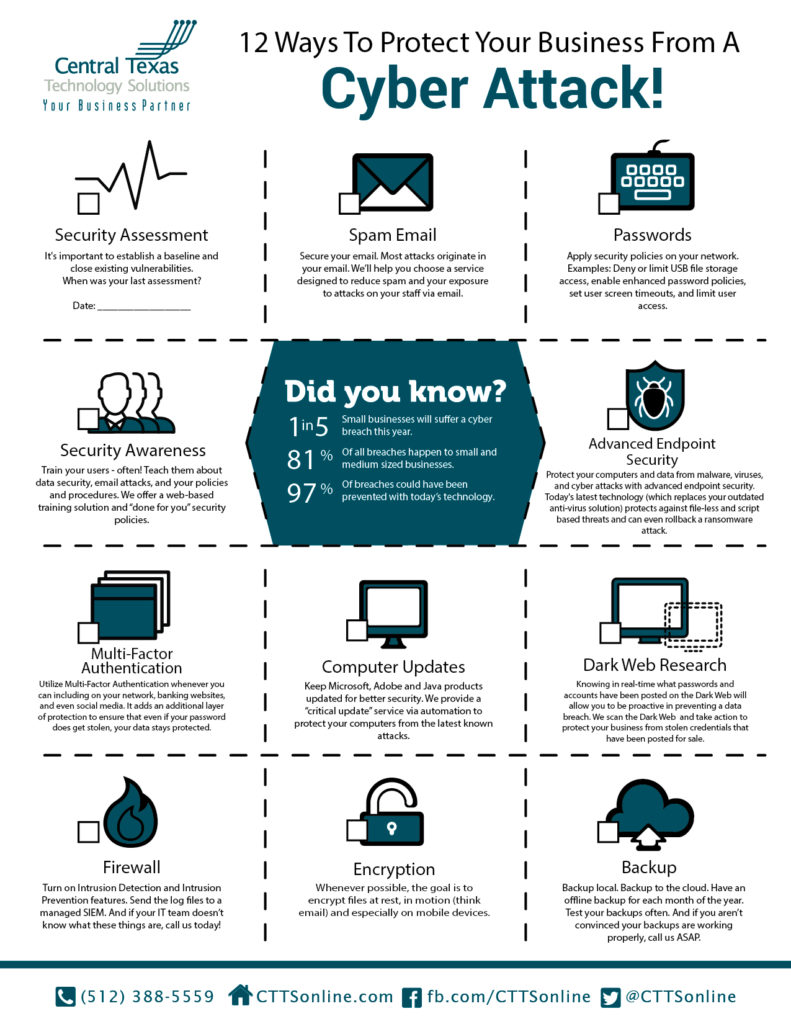
1. AI-Powered Polymorphic Malware
Adversaries are leveraging machine learning models to write and mutate code in real-time, bypassing traditional antivirus signatures. These polymorphic threats adapt their behavioral footprint upon interacting with sandbox environments.
Mitigation: Deploy behavioral-based endpoint detection and response (EDR) platforms that analyze system calls and process anomalies rather than static file hashes.
2. Cloud Native Misconfigurations
Rapid cloud compute architecture provisioning often outpaces security governance, leaving S3 buckets, Kubernetes clusters, and IAM roles dangerously exposed to public traversal.
Mitigation: Implement automated Cloud Security Posture Management (CSPM) tools to enforce least-privilege access and continuous compliance auditing.
3. Supply Chain and Third-Party API Exploitation
The interconnected nature of modern software development means a vulnerability in a single open-source library or third-party vendor can compromise an entire Fortune 500 supply chain.
Mitigation: Mandate rigorous software bill of materials (SBOM) tracking and continuous third-party risk management assessments.
4. Advanced Social Engineering & Deepfake Phishing
Phishing has evolved far beyond poorly worded emails. Attackers now use audio and video deepfakes to impersonate C-suite executives, successfully authorizing fraudulent wire transfers and credential handoffs.
Mitigation: Establish out-of-band verification protocols for high-value financial transactions and deploy advanced email security gateways with natural language processing.
5. Ransomware-as-a-Service (RaaS) Syndicates
The commoditization of cybercrime via RaaS models allows low-skilled affiliates to deploy enterprise-grade ransomware, focusing heavily on double and triple extortion tactics.
Mitigation: Maintain immutable, air-gapped backups and deploy autonomous endpoint isolation capabilities to halt lateral movement instantly.
6. Identity and Access Management (IAM) Fatigue
Multi-factor authentication (MFA) fatigue attacks—where users are flooded with push notifications until they inadvertently approve an unauthorized login—are bypassing standard MFA protections.
Mitigation: Upgrade to phishing-resistant MFA standards, such as FIDO2/WebAuthn hardware tokens and contextual risk-based authentication.
7. Operational Technology (OT) and IoT Convergence
As manufacturing, healthcare, and energy sectors digitize, legacy operational technology systems are exposed to internet-accessible enterprise networks, creating catastrophic physical risks.
Mitigation: Enforce strict network segmentation, zero-trust micro-segmentation, and passive network monitoring tailored for industrial control systems.
8. Insider Threats and Data Exfiltration
Economic uncertainty and remote work models have amplified both malicious insider risks and negligent employee data handling, leading to silent corporate espionage and data theft.
Mitigation: Utilize User and Entity Behavior Analytics (UEBA) to detect anomalous data access patterns before exfiltration occurs.
9. API Sprawl and Insecure Endpoints
As businesses build headless architectures and microservices, unmonitored and undocumented APIs provide unauthorized entry points for data harvesting.
Mitigation: Maintain a real-time API inventory and enforce continuous runtime application self-protection (RASP).
10. Living-off-the-Land (LotL) Attacks
Sophisticated adversaries increasingly rely on legitimate administrative tools—such as PowerShell, WMI, and remote management utilities—to execute attacks, leaving minimal forensic traces.
Mitigation: Restrict execution privileges for native administrative binaries and implement advanced endpoint telemetry correlation.
11. Regulatory Compliance Fragmentation
Navigating conflicting global mandates—such as GDPR, the EU NIS2 Directive, and SEC cybersecurity disclosure rules—strains corporate legal and technical resources.
Mitigation: Adopt a unified compliance framework mapped to top-tier standards like NIST CSF to automate reporting and minimize regulatory penalties.
12. Alert Fatigue and SOC Burnout
Security operations centers (SOCs) are overwhelmed by thousands of daily false-positive alerts, leading to delayed incident response times and critical oversight.
Mitigation: Integrate autonomous AI security analysts capable of triaging alerts, correlating threat intelligence, and executing remediation runbooks without human latency.
Verified Threat Data & Market Metrics
The financial ramifications of failing to mitigate these 12 security issues are starkly illustrated by current enterprise risk metrics. The table below outlines key industry benchmarks and mitigation efficacy rates based on recent telemetry.
| Security Vector | Average Breach Cost (2025) | Primary Attack Method | Autonomous Mitigation Impact |
|---|---|---|---|
| Cloud Misconfigurations | $4.45 Million | Exposed S3 / IAM Escalation | 94% Reduction in Exposure Window |
| Ransomware & RaaS | $5.12 Million (Excl. Extortion) | Phishing / Credential Stuffing | Instant Machine Isolation (Sub-sec) |
| Supply Chain Compromise | $4.88 Million | Third-Party API / Open Source | Automated SBOM Validation |
| AI-Driven Social Engineering | $3.95 Million | Deepfake Audio / Executive Impersonation | Out-of-Band Behavioral Verification |
Industry & Market Implications
The economic fault lines resulting from these cybersecurity challenges are reshaping capital allocation across global markets. Institutional investors increasingly penalize organizations with inadequate risk mitigation frameworks, directly impacting stock valuations and credit ratings. Conversely, enterprises that successfully modernize their infrastructure scalability through platforms like SentinelOne are realizing compressed insurance premiums, enhanced customer trust, and streamlined regulatory clearance.
Insurance underwriters are tightening policy requirements, frequently refusing coverage to organizations that fail to deploy autonomous endpoint detection and behavioral analytics. Consequently, cybersecurity spend has transitioned from a discretionary line item to an essential capital expenditure protecting the corporate foundation.
Frequently Asked Questions (People Also Ask)
What is SentinelOne's approach to mitigating modern cyber security issues?
SentinelOne leverages an autonomous, AI-driven security platform (Singularity) that unifies endpoint protection, cloud security, and identity threat detection. By utilizing machine learning models directly on endpoints and cloud workloads, SentinelOne detects, stops, and remediates threats in real-time without requiring human intervention or cloud connectivity during the initial attack phase.
How do polymorphic malware threats bypass traditional antivirus solutions?
Traditional antivirus software relies on static file signatures—essentially digital fingerprints of known malware strains. Polymorphic malware dynamically alters its code, appearance, and signature every time it replicates, rendering static blacklists useless. Modern mitigation requires behavioral analysis engines that monitor real-time process execution and malicious intent.
Why are cloud misconfigurations considered a top enterprise risk?
As enterprises scale their cloud compute architectures across AWS, Azure, and Google Cloud, manual management of complex permission settings often introduces human error. A single overlooked public permission or overly permissive IAM role can expose petabytes of proprietary customer data, leading to severe regulatory fines and catastrophic brand erosion.
How can organizations combat SOC alert fatigue?
Alert fatigue occurs when security analysts are flooded with thousands of low-fidelity alerts daily, causing burnout and missed indicators of compromise. Organizations mitigate this by deploying autonomous AI triage tools that aggregate related alerts into singular, contextualized incidents and automatically execute preliminary containment playbooks.
Future Outlook and Strategic Milestones
Looking toward the latter half of the decade, the cybersecurity arms race will be defined by the speed of automation. As generative adversarial networks (GANs) allow cybercriminals to launch hyper-targeted, zero-day campaigns at scale, human-led security operations will become mathematically obsolete.
Enterprise boards and executive leadership must track three critical milestones:
- Mandatory Autonomous Remediation: Transitioning from alerting systems to self-healing architectures that neutralize threats within milliseconds.
- Regulatory Harmonization: The consolidation of global compliance standards into automated, continuous auditing engines.
- AI-Driven Defensive Scaling: The integration of foundational security large language models (LLMs) capable of proactively hunting threats across distributed multi-cloud environments.
Ultimately, safeguarding the enterprise of tomorrow requires abandoning reactive postures in favor of autonomous, intelligence-led resilience. Organizations that invest in comprehensive mitigation strategies today will secure their market leadership and operational integrity for decades to come.