
NEW YORK & MUMBAI — The global electric vehicle (EV) market is undergoing what institutional analysts call the "Great Calibration." While short-term consumer demand has plateaued under the weight of high interest rates and infrastructure deficits, the underlying race for battery supremacy is accelerating toward a critical inflection point in 2026. This pivotal year represents the convergence of localized Western supply chains, the commercialization of next-generation solid-state chemistries, and the arrival of affordable $25,000 mass-market EV platforms.
According to deep-dive market intelligence from The Motley Fool and consensus Wall Street estimates, the global battery market is projected to reach an estimated $134 billion by the end of the decade. For forward-looking investors, the current valuation compression in clean energy equities offers a rare, highly asymmetric entry window. The winners of 2026 will not merely build vehicles; they will control the IP, chemistry, and supply chains of the batteries that power them.
The 2026 Catalyst: Why the Battery is the Ultimate Moat
The economic reality of the automotive transition remains unchanged: the battery pack constitutes roughly 30% to 40% of an EV's total cost. To achieve price parity with internal combustion engines (ICE) without relying on government subsidies, manufacturers must breach the elusive $100 per kilowatt-hour (kWh) cost threshold at the pack level.
Furthermore, stringent regulatory frameworks—such as the U.S. Inflation Reduction Act (IRA) and the European Union’s carbon mandates—will reach full enforcement by 2026. These regulations strip tax credits from vehicles utilizing components or critical minerals sourced from "Foreign Entities of Concern." Consequently, the market is bifurcating, rewarding companies with localized domestic manufacturing footprints and penalizing those reliant on unhedged import loops.
The 10 Best EV Battery Stocks for 2026
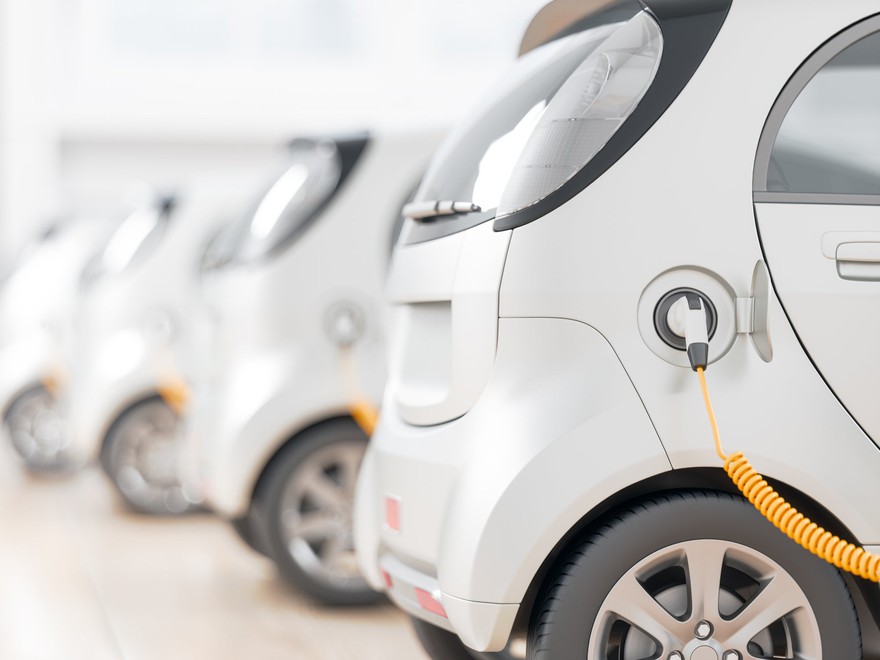
To navigate this complex landscape, Wall Street analysts categorize the investable universe into three distinct pillars: vertically integrated automakers, pure-play cell manufacturers, and critical material suppliers. Here are the ten standout equities positioned to lead the market by 2026.
1. Tesla Inc. (NASDAQ: TSLA)
As the world's most valuable automaker, Tesla remains a formidable force in battery innovation. The company's proprietary 4680 cylindrical cell program is marching toward structural cost reductions, utilizing a dry-electrode manufacturing process. Tesla's vertical integration—extending from direct mining contracts to domestic cathode refining in Texas—positions it as a primary beneficiary of IRA production tax credits.
2. BYD Co. Ltd. (OTC: BYDDF)
China's crown jewel, BYD, is the ultimate vertically integrated powerhouse. Unlike Western peers, BYD began as a battery manufacturer before producing cars. Its proprietary "Blade Battery"—a lithium-iron-phosphate (LFP) chemistry engineered into a singular, highly structural pack—is widely regarded as one of the safest and most cost-efficient chemistries globally, now being licensed by rival automakers.
3. Panasonic Holdings Corp. (OTC: PCRFY)
The long-standing manufacturing partner to Tesla, Panasonic is quietly expanding its North American footprint. With massive production hubs in Nevada and Kansas, Panasonic is scaling high-nickel cylindrical cells that offer superior energy density, shielding it from geopolitical supply shocks.
4. Contemporary Amperex Technology Co. Ltd. (CATL)
As the undisputed global leader in battery market share, CATL controls over a third of the world's EV battery market. Despite geopolitical headwinds, CATL's licensing model (such as its technology partnership with Ford in Michigan) allows it to capture Western market share without direct capital risk.
5. LG Energy Solution (KRX: 373220)
The premier South Korean cell manufacturer has established extensive joint ventures with legacy giants, including General Motors, Honda, and Hyundai. LG’s aggressive buildup of gigafactories across Ohio, Tennessee, and Michigan secures its dominance in the post-IRA North American ecosystem.
6. Albemarle Corporation (NYSE: ALB)
There are no batteries without lithium. As the world’s largest lithium producer, Albemarle operates world-class assets in Chile, Australia, and the United States. Despite recent cyclical downturns in lithium spot prices, Albemarle's low-cost production curve ensures it will reap outsized profits when demand accelerates into 2026.
7. QuantumScape Corporation (NYSE: QS)
The high-beta, high-reward play of the group. Backed by Volkswagen, QuantumScape is pioneering solid-state lithium-metal batteries. Delivering on its pilot-line targets could unlock charging speeds of under 15 minutes and vastly superior range, with commercial vehicle integration scheduled to begin around 2026.
8. Toyota Motor Corporation (NYSE: TM)
Though historically criticized for its cautious approach to pure battery electric vehicles (BEVs), Toyota is a dark horse in the battery IP race. Holding over 1,000 patents in solid-state battery technology, Toyota plans to commercialize its ultra-fast-charging solid-state batteries by 2026-2027, transforming its massive global scale into an instant EV juggernaut.
9. Arcadium Lithium plc (NYSE: ALTM)
Formed via the blockbuster merger of Livent and Allkem, Arcadium Lithium is a highly integrated global producer. Offering a diverse product mix—including battery-grade lithium hydroxide and carbonate—this newly consolidated titan possesses the scale and balance sheet strength to survive cyclical downturns and supply the premier Western battery joint ventures.
10. Solid Power, Inc. (NASDAQ: SLDP)
Operating as a developer of all-solid-state battery cell technology and sulfide-based electrolyte materials, Solid Power takes a capital-light approach. Backed by BMW and Ford, the company licenses its technology and electrolyte designs to manufacturing partners, minimizing the capital expenditure risks that typically plague early-stage hardware companies.
Key Metrics: How the Leaders Stack Up
To assist in portfolio allocation, the following table highlights key financial and operational dimensions of the top five institutional-grade players in this space:
| Company (Ticker) | Primary Strategic Focus | Key Geographical Base | 2026 Projected Catalyst |
|---|---|---|---|
| Tesla (TSLA) | Vertical integration & 4680 dry-electrode scaling | United States | Mass production of $25,000 "Next-Gen" platform |
| BYD Co. (BYDDF) | LFP chemistry & vertical market dominance | China / Global Expansion | Penetration of European and Latin American markets |
| Panasonic (PCRFY) | High-nickel cylindrical cells (Tier-1 Supplier) | Japan / United States | Full commercialization of Kansas Gigafactory |
| Albemarle (ALB) | Critical lithium extraction & refining | Global (US / Chile / Aus) | Lithium demand recovery and localized US refining scale |
| QuantumScape (QS) | Solid-state lithium-metal R&D | United States | First commercial automotive shipments with VW Group |
How to Strategically Invest in the Battery Space
Navigating the battery sector requires an understanding of both technological volatility and commodity cycles. Senior wealth managers suggest a bifurcated asset allocation strategy:
- Core Allocations via Legacy Leaders: Establish baseline exposure through highly capitalized, cash-flow-positive giants like Tesla, BYD, or Panasonic. These companies possess the balance sheets to absorb macro shocks and fund expensive R&D.
- Speculative Growth Allocations: Dedicate a smaller portion of capital (e.g., 5% to 10%) to pre-revenue solid-state innovators like QuantumScape or Solid Power. These stocks act as high-beta options on breakthrough technology.
- The Basket Approach (ETFs): For investors seeking to mitigate single-stock technology risks, exchange-traded funds such as the Global X Lithium & Battery Tech ETF (LIT) or the iShares MSCI Global Min Vol Factor ETF offer instant, diversified exposure across the raw material, chemical refining, and manufacturing segments.
Frequently Asked Questions (FAQ)
1. Why is 2026 considered a critical year for EV battery stocks?
The year 2026 is widely viewed as a watershed moment because of regulatory and technological timelines. Geopolitically, the strict localized sourcing mandates of the U.S. Inflation Reduction Act (IRA) will be fully realized, shifting profit pools toward companies with domestic supply chains. Technologically, multiple automakers and solid-state startups plan to transition their next-generation chemistries from pilot-line phases into commercial vehicle manufacturing.
2. What are the primary risks associated with investing in EV battery stocks?
The primary risks include commodity price volatility (particularly fluctuations in raw lithium, nickel, and cobalt prices), technological obsolescence (such as LFP displacing traditional nickel-manganese-cobalt chemistries faster than anticipated), and geopolitical trade barriers. Additionally, early-stage technology companies face execution and capital-burn risks as they attempt to scale complex manufacturing processes from lab scale to gigawatt-hour scale.