Executive Takeaways
- Massive Capital Commitment: Amazon’s total capital allocation toward Anthropic has scaled to a staggering $33 billion, anchoring one of the largest strategic alliances in enterprise software history.
- The Infrastructure Bottleneck: Beyond software capability and model parameters, the deal exposes critical, unpriced bottlenecks in power grid capacity, high-voltage substation availability, and specialized liquid-cooling architecture.
- Multiplexing Ecosystems: The partnership forces hyperscalers to simultaneously manage multi-cloud vendor dependencies, proprietary silicon development (Trainium/Inferentia), and fierce competition for scarce semiconductor supply chains.
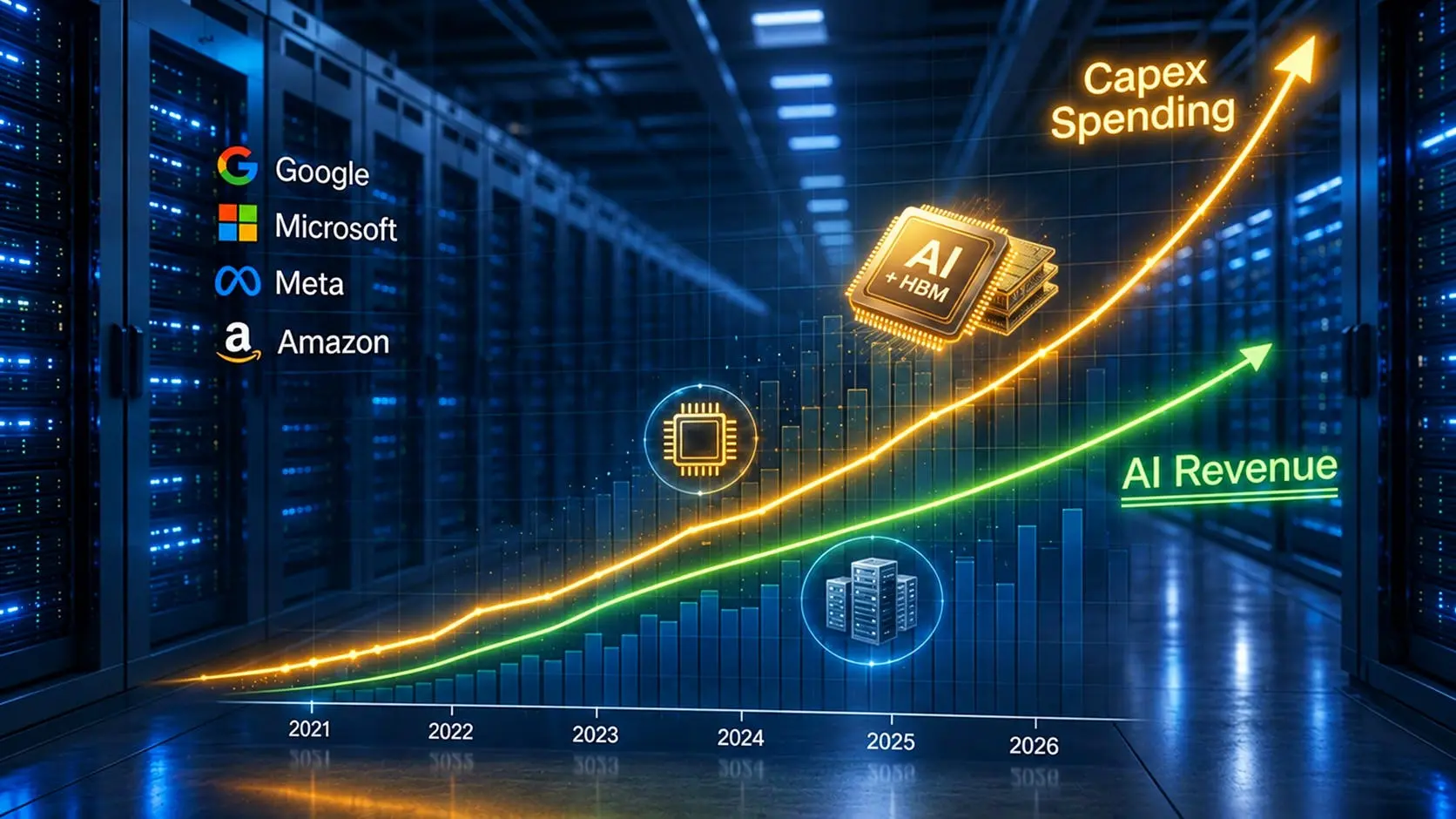
- Invesments face a rigorous re-rating as enterprise ROI demands outpace runaway capital expenditure cycles, threatening near-term valuation multiples for pure-play cloud providers.
For two years, Wall Street’s consensus narrative surrounding the generative artificial intelligence boom was written in the language of infinite scalability. Hyperscale cloud providers—Amazon Web Services, Microsoft Azure, and Google Cloud—poured hundreds of billions of dollars into capital expenditures, treating silicon, server racks, and data center real estate as interchangeable inputs in a grand race toward artificial general intelligence. But as Amazon’s cumulative capital commitment to foundation model pioneer Anthropic reaches an eye-watering $33 billion, the illusion of frictionless infrastructure expansion has officially shattered.
Behind the corporate press releases and celebratory earnings calls lies a sobering reality that institutional investors and cloud architects are only beginning to price in: the physical limits of the modern electrical grid, extreme supply chain choke points, and the hard thermodynamic laws governing next-generation compute clusters. This investigative report examines how the Amazon-Anthropic axis exposes the hidden constraints threatening the global AI infrastructure supercycle, redefining risk mitigation, enterprise ROI, and cloud compute architecture for the decade ahead.
The Catalytic Escalation: Anatomy of a $33 Billion Bet
Test Our Free AI & Tech Utilities Suite
Calculate LLM API token costs, analyze article dwell-time, or simulate tech DCA returns.
The trajectory of the Amazon-Anthropic partnership shifted from a standard venture-style strategic investment into a multi-billion-dollar infrastructure entanglement. Initially sparked by Amazon’s initial $4 billion infusion and a commitment to utilize AWS as Anthropic’s primary cloud training partner, the partnership rapidly accelerated as foundation model sizing law—often referred to as Kaplan’s or Chinchilla scaling laws—demanded orders of magnitude more compute.
To power successive iterations of Claude, Anthropic required access to massive clusters of specialized accelerators. Amazon responded by not only provisioning standard NVIDIA hardware but by aggressively integrating its proprietary custom silicon—specifically the AWS Trainium and Inferentia chips—into the equation. However, scaling these clusters revealed a harsh operational truth: building software models in a sandbox is fundamentally different from sustaining gigawatt-scale power loads in the physical world.
The constraint nobody priced into financial models is not software talent, nor is it model architecture; it is the physical grid. Modern hyperscale data centers hosting these advanced clusters require between 100 to 1000 megawatts of continuous power—equivalent to the electrical demand of a mid-sized city. Utility companies, constrained by aging transmission lines, regulatory backlogs, and multi-year interconnection queues, simply cannot deliver power at the velocity demanded by Silicon Valley boardroom timelines.
Three Ecosystems Multiplexing: The Strategic Complexities

To understand the friction points within the $33 billion alliance, one must analyze how three distinct technological ecosystems are currently multiplexing inside AWS:
- The Proprietary Silicon Push: Amazon is attempting to break its heavy reliance on NVIDIA’s H100 and Blackwell chips by scaling AWS Trainium. While this strategy aims to protect operating margins over the long term, software migration friction and optimizing training workloads for non-CUDA architectures introduce engineering delays.
- The Multi-Cloud Arbitrage: Anthropic, acutely aware of single-provider lock-in risks, maintains parallel infrastructure commitments with Google Cloud. This creates a high-stakes competitive dynamic where AWS must continuously prove superior infrastructure scalability to retain its anchor tenant status.
- The Enterprise Software Layer: Integrating Claude into Amazon Bedrock requires hyper-secure, low-latency API wrappers and enterprise-grade data governance tools. As Fortune 500 corporations demand strict regulatory compliance and verifiable enterprise ROI, the operational overhead on AWS infrastructure multiplies exponentially.
This intricate web of dependencies means that any bottleneck in power generation, advanced packaging (CoWoS) for chips, or liquid-cooling deployment immediately ripples through both companies' financial statements and product roadmaps.
Verified Data & Metrics Breakdown
The following table outlines the key parameters, financial commitments, and operational specifications governing the current phase of the Amazon-Anthropic infrastructure ecosystem:
| Metric / Parameter | Initial Phase (2023) | Current Scale (2026) | Strategic Implication |
|---|---|---|---|
| Total Capital Commitment | $4.0 Billion | $33.0 Billion | Significantly increases balance sheet exposure and capital allocation risk. |
| Average Data Center Power Load | 30 – 50 Megawatts | 300 – 1,000+ Megawatts | Triggers acute transmission grid bottlenecks and reliance on nuclear/renewable PPAs. |
| Primary Compute Engine | NVIDIA A100 / H100 | NVIDIA Blackwell & AWS Trainium2 | Shifts focus toward custom silicon yield rates and specialized liquid cooling. |
| Cooling Architecture | Air Cooling (Standard HVAC) | Direct-to-Chip Liquid Cooling | Mandates major structural retrofits of existing legacy data center facilities. |
Industry & Market Implications: Winners, Losers, and Economic Realities
The realization that physical infrastructure imposes a hard ceiling on generative AI expansion is fundamentally altering market liquidity and valuation multiples across the technology sector. As institutional investors pivot from growth-at-all-costs models to rigorous cash-flow scrutiny, the market is bifurcating sharply.
The Winners: Energy providers with nuclear and baseload generation assets are emerging as the ultimate gatekeepers of the AI era. Hyperscalers who successfully secure direct power purchase agreements (PPAs) with carbon-free energy sources gain an immediate competitive moat. Furthermore, specialized engineering firms specializing in high-voltage substation construction and closed-loop liquid cooling systems command unprecedented pricing power.
The Losers: Second-tier cloud providers lacking the balance sheet strength to subsidize multi-billion-dollar power and silicon acquisitions face severe margin compression. Additionally, enterprise software buyers who rushed into premature AI deployments without calculating total cost of ownership (TCO) are experiencing elongated payback periods, forcing CFOs to demand stricter proof of enterprise ROI before greenlighting further model expansion.
Frequently Asked Questions (People Also Ask)
Why is the Amazon-Anthropic deal valued at $33 billion, and how is the capital disbursed?
The $33 billion figure represents the cumulative strategic commitment made by Amazon across equity investments, convertible instruments, and dedicated cloud compute credits over an extended multi-year timeline. Rather than a singular cash payout, the funds are progressively unlocked as Anthropic hits specific research milestones, migrates workloads to AWS infrastructure, and utilizes AWS Trainium chips.
What specific infrastructure bottlenecks are limiting AI data center expansion?
The primary constraints are electrical grid interconnection backlogs, a shortage of high-voltage transformers, and thermal dissipation limits. Traditional air cooling is insufficient for high-density AI server racks, forcing data centers to undergo expensive retrofits for direct-to-chip liquid cooling. Simultaneously, securing hundreds of megawatts of reliable baseload power often requires multi-year regulatory approvals.
How does AWS Trainium fit into a partnership dominated by NVIDIA hardware?
AWS Trainium is Amazon's custom-designed silicon built specifically for deep learning training and inference. By deploying Trainium alongside NVIDIA chips, Amazon aims to reduce its long-term cost of compute and insulate its cloud margins from external semiconductor pricing pressures, though developers must adapt workflows to leverage custom instruction sets.
What does this mean for enterprise ROI on generative AI initiatives?
As infrastructure costs—driven by power, cooling, and hardware scarcity—remain stubbornly high, cloud providers must pass these costs on or absorb margin dilution. This forces enterprise buyers to demand higher operational efficiencies, moving away from exploratory generative AI pilots toward highly optimized, high-margin vertical implementations.
Future Outlook: Milestones to Watch
As the industry moves past the initial gold-rush phase of the generative AI boom, the next 24 to 36 months will test the resilience of hyperscale business models. Key milestones that executive teams, equity analysts, and cloud architects must monitor include:
- Grid Interconnection Reform: Regulatory decisions regarding regional transmission organizations (RTOs) and priority queue access for behind-the-meter data center power generation.
- Silicon Yield and Efficiency: Real-world performance benchmarks of AWS Trainium2 and next-generation NVIDIA architectures at true multi-tenant scale.
- Capital Expenditure ROI Pivot: Wall Street's tolerance for sustained high capital expenditures versus tangible acceleration in enterprise cloud revenue growth.
Ultimately, the $33 billion Amazon-Anthropic alliance is more than a corporate partnership; it is a stress test for the modern digital economy. It proves that while artificial intelligence models can scale at the speed of software, the physical infrastructure required to sustain them remains stubbornly anchored to the laws of the physical world.